
REVIEW · COOKING CLASSES
Chiang Mai: Cooking Class, Market & Thai Herbs Garden Tour
The smell of Thai herbs hits fast. This Chiang Mai market and cooking class pairs a guided ingredient hunt with hands-on cooking, and I love that you get to build your meal from scratch, including curry paste made with a mortar and pestle, but note the pace is not for slow days. You’ll also dine in a Thai kitchen garden setting, and the food is flexible, spicy or non-spicy, with options for vegan, vegetarian, gluten-free, halal, and allergies. As a small consideration, the pickup window depends on traffic, so plan for a little extra waiting.
What makes this experience work so well is the full loop. You see ingredients at a local market, learn what Thai cooks look for, then return to cook dishes using your selections with an English-speaking instructor, often hosts like Wave or Flook known for clear, funny teaching. The Thai herb garden stop also gives you a practical reason to care about basil, turmeric, lemongrass, and the rest, not just pretty explanations.
If you want Thai food you can actually reproduce at home, you’ll like that you get a digital recipe book (PDF) after the class. I also appreciate that you can tell the team your spice level and dietary needs ahead of time, and they offer alternative ingredients. This is best for adults and older kids, since it is not suitable for children under 5, and the class is not designed for people over 95.
In This Review
- Key Things You Will Love Here
- First Stop, Hotel Pickup, and the Half-Day Timing
- Chiang Mai Market Walk: Picking Real Ingredients You Will Cook With
- Thai Herb Garden: Where the Cooking Logic Starts
- Choose Your Starter and Main: Your Meal, Your Rules
- Starters you can choose
- Main dishes you can choose
- Your Curry Paste Moment: Mortar and Pestle Cooking Skills
- Chicken Coconut Milk Curry: Turning Paste Into a Sauce
- Mango Sticky Rice: The Sweet Finish That’s Worth Staying For
- Eating in the Organic Kitchen Garden: The Whole Point of Cooking
- Price and Value: Does $31 Make Sense for All This?
- Who Should Book This Cooking Class in Chiang Mai
- Small Logistics to Know Before You Go
- Should You Book This Chiang Mai Market and Cooking Class?
- FAQ
- How long is the Chiang Mai cooking class, market, and Thai herb garden tour?
- Is hotel pickup and drop-off included?
- What does the tour include?
- Do you get to make your own curry paste?
- Can you choose which dishes you cook?
- Can the food be made spicy or non-spicy?
- Are dietary restrictions and allergies accommodated?
- Is the instructor speaking English?
- What should I bring and what is not allowed?
- What are the cancellation rules?
Key Things You Will Love Here
- Market to mortar and pestle, so you understand what goes in and why
- Curry paste from scratch with your choice of red, green, Phanaeng, Massaman, or Khao Soi
- Thai herb garden time that connects herbs to real dishes
- Hands-on cooking led by an English instructor, with host energy like Wave, Tu, Kat, or Toey
- You finish with what you made, eating in an organic kitchen garden setting
- A PDF recipe book so your Thai cooking does not end when the tour ends
Thai kitchens got sat through and written up
- Half-Day Thai Cooking Class at Organic Farm in Chiang Mai★ 5.0 · 19,087 reviews
- Chiang Mai: Cooking Class, Market & Thai Herbs Garden Tour★ 4.9 · 4,824 reviews
- Chiang Mai: Authentic Cooking Class with Market & Farm Visit★ 4.9 · 4,546 reviews
- Thai and Akha Cooking Class in Chiang Mai★ 5.0 · 4,358 reviews
First Stop, Hotel Pickup, and the Half-Day Timing
This is a 210-minute (about three and a half hour) cooking workshop that runs as a true half-day activity. Hotel pickup and drop-off are included, with free transfer if you are within 3 km of Chiang Mai Old Town. Expect the pick-up team to collect you 15 to 30 minutes before class, and yes, traffic can push things later, so I keep a little buffer in my schedule.
From a practical standpoint, that timing matters. Cooking classes live and die by prep flow, and this one is set up so you are not just watching, you’re actively involved while ingredients are still fresh and station-work is still organized. If your schedule is tight, it is still doable, but I suggest you keep this day lighter and avoid stacking another booked activity right after drop-off.
Chiang Mai Market Walk: Picking Real Ingredients You Will Cook With
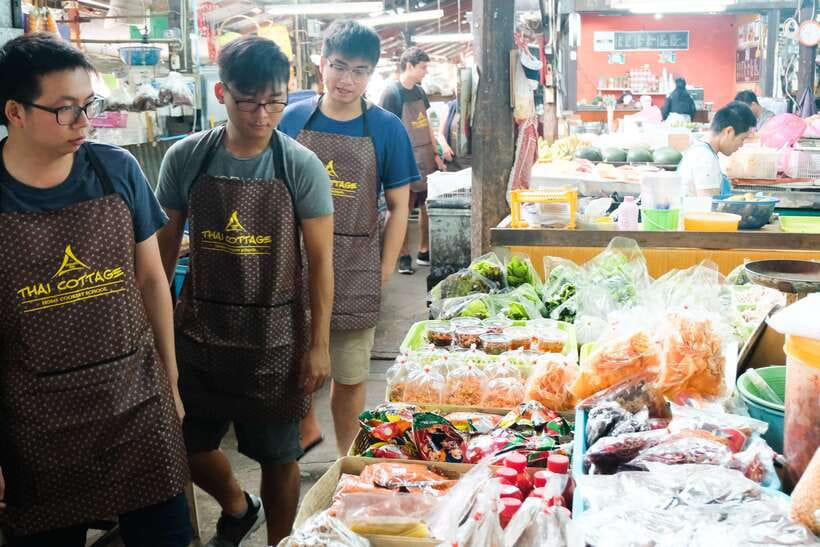
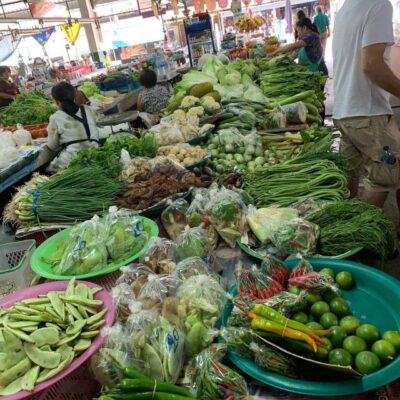
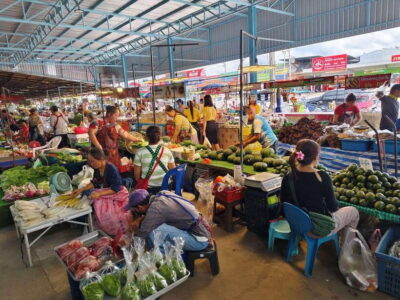
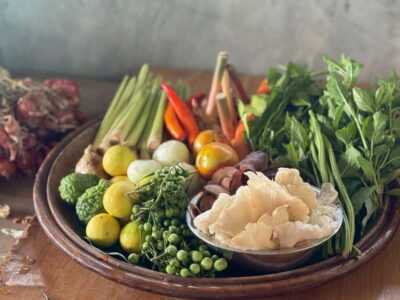
The market segment is more than a quick photos stop. You head to a local market to pick herbs and ingredients, then you use what you selected later in your cooking. The value is in the ingredient literacy, because Thai flavor comes from combinations, not one magic paste or one sauce.
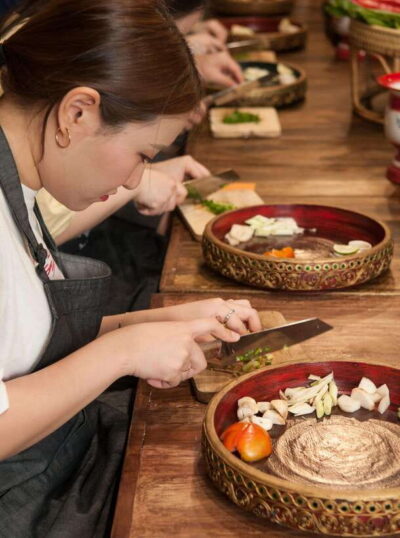
You’ll likely notice how Thai cooks think about texture and aroma: pungent herbs, fragrant roots, and dried pantry items that add depth. The class setup is designed so you can ask questions while you’re walking, then translate that knowledge into what happens on your cutting board.
A lot of the best comments you’ll hear about this style of class come down to the guide energy and how much you learn. Names that show up often include Wave, Flook, Tu, Balloon, and Toey, and the common theme is that they explain ingredients in a way that feels simple and fun, not like a lecture.
Thai Herb Garden: Where the Cooking Logic Starts
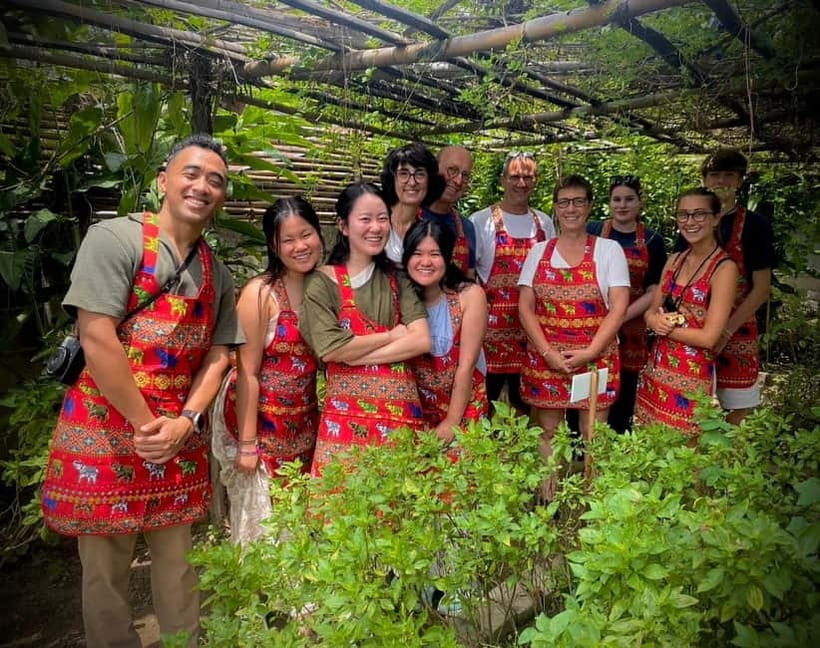
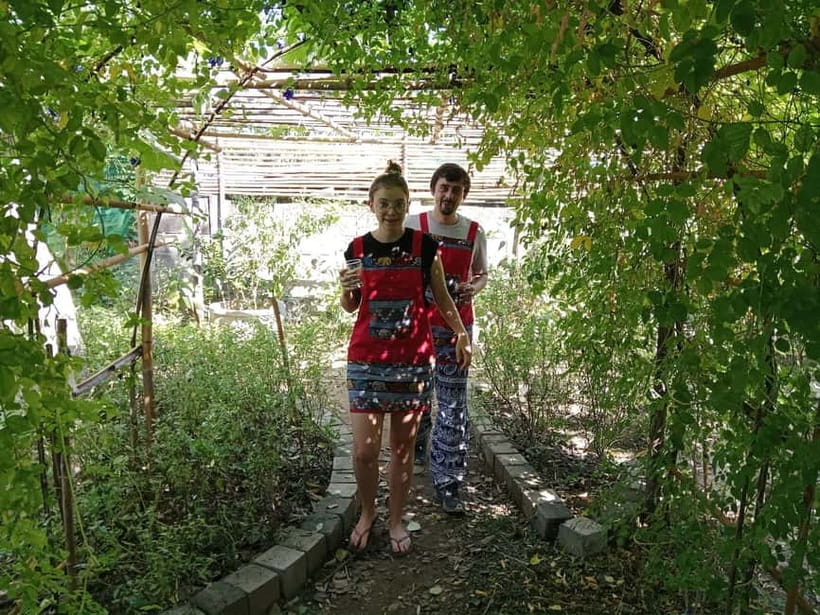
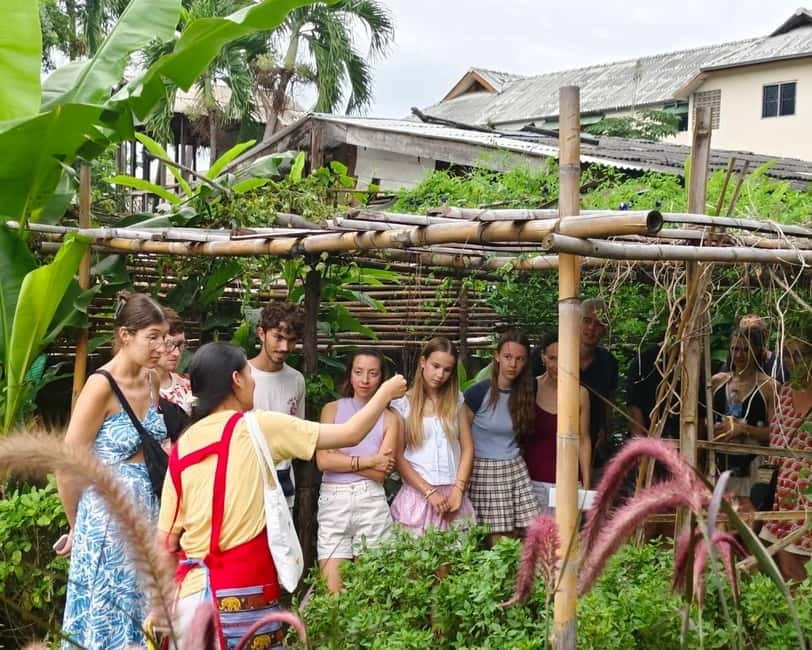
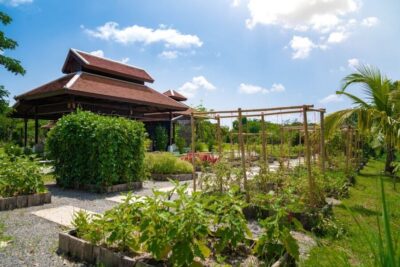
After the market, you move into the Thai Herb Garden and organic kitchen garden environment where the lesson gets grounded. This is where herbs stop being random green leaves and start becoming specific flavors you can recognize while cooking.
Even if you are not a hardcore gardener, you’ll benefit from seeing herbs growing and learning how they show up in Thai dishes. It also helps that you’re cooking soon after, so your brain does not have time to forget what you just learned.
For me, this garden step is one of the quiet wins. It makes your curry and stir-fries taste more like what you expected when you ordered Thai food before, because you start noticing the herb notes instead of only chasing spice heat.
Choose Your Starter and Main: Your Meal, Your Rules
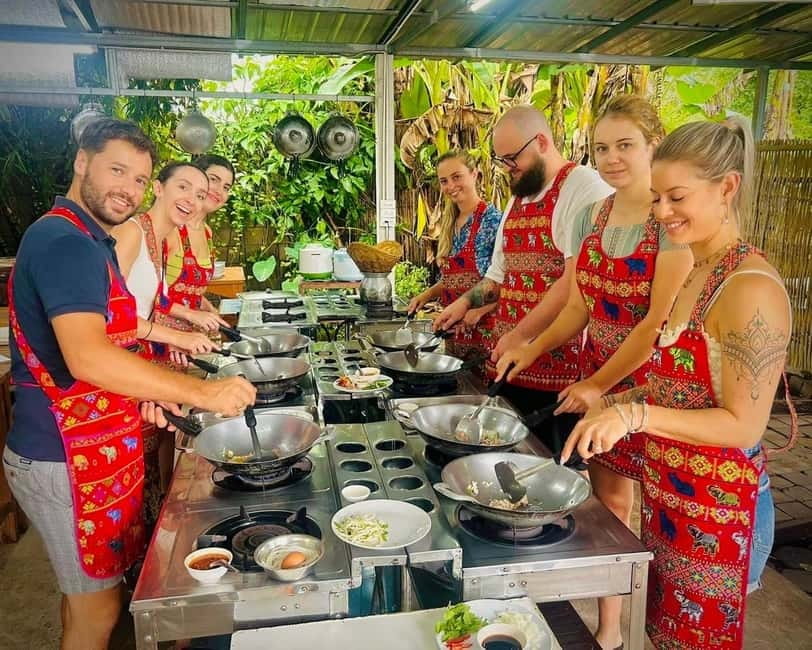
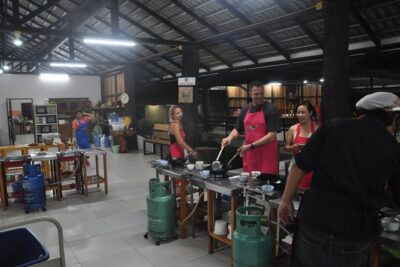
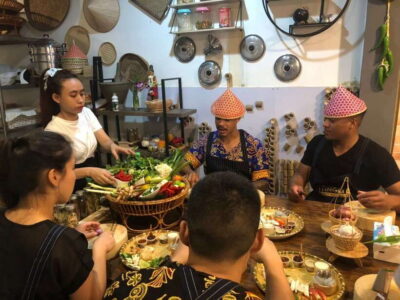
One of the best parts is that you choose. The workshop lets you pick from starter options and main course options, so you are not stuck with the same menu as everyone else.
Thai market visits sat in the same notebook
Starters you can choose
You might select dishes such as:
- Hot and sour prawn
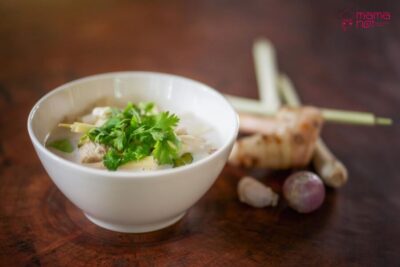
- Local chicken soup
- Chicken in coconut milk
- Turmeric chicken soup
Main dishes you can choose
For your main, you can select classics like:
- Pad Thai
- Chicken fried rice
- Fried chicken with cashew nuts
- Pad Kra Pao
This choice matters because it shifts you from being a passive learner to an active cook. If you love noodles, you pick Pad Thai. If you like rice, you lean into fried rice. And if you know you react badly to certain flavors, you can steer your choices early and adjust your cooking approach.
Also, the class can be spicy or non-spicy, based on what you want. That means you can enjoy the herbs and technique even if you keep heat low.
Your Curry Paste Moment: Mortar and Pestle Cooking Skills
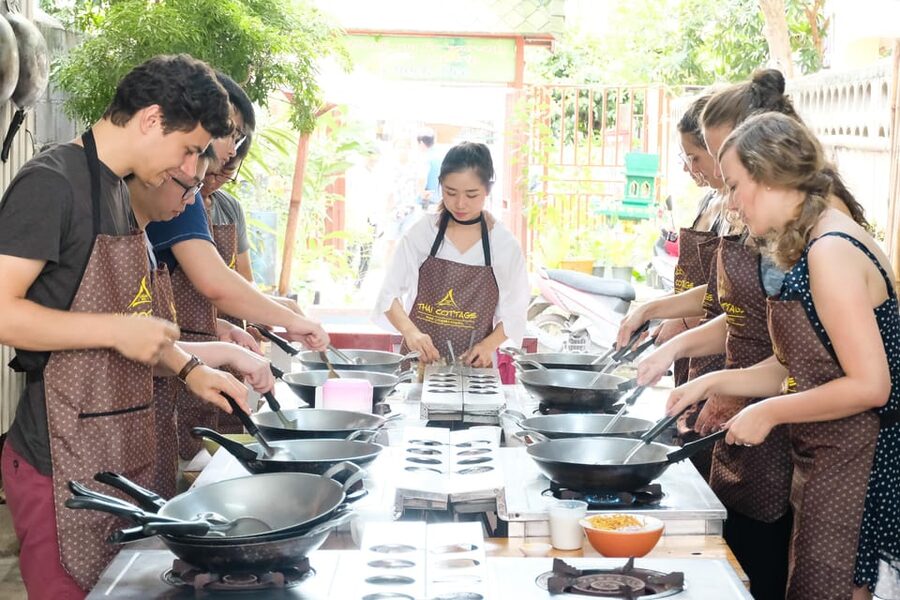
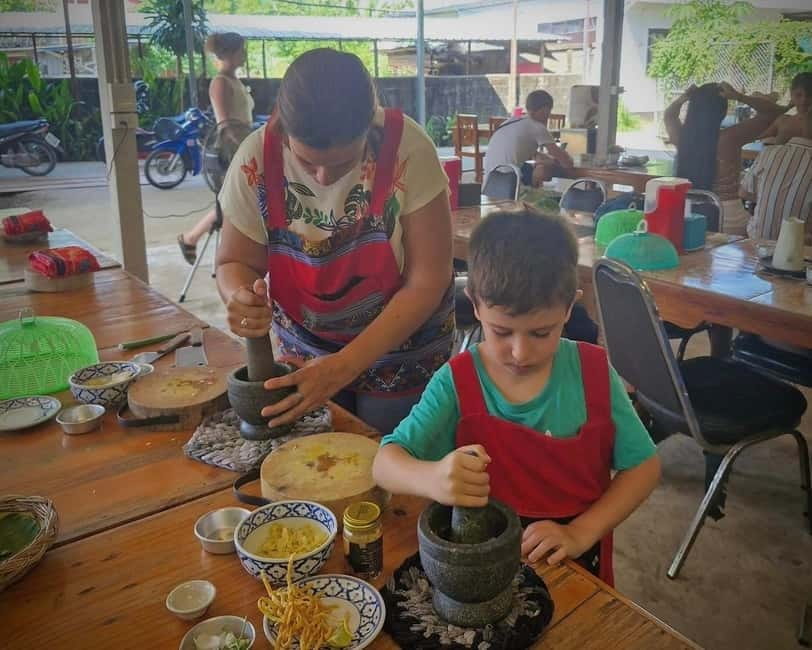
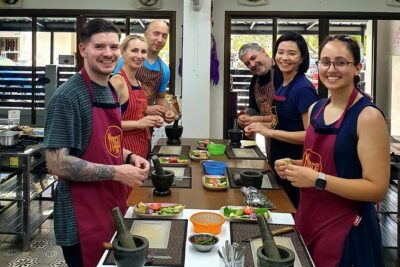
Now comes the centerpiece skill: you craft your own curry paste from scratch using a mortar and pestle. This is not a shortcut class where you skip the hard part. You feel the texture change, and you learn how grinding affects aroma release.
You can choose the curry paste style, with options including:
- Red
- Green
- Phanaeng
- Massaman
- Khao Soi
From a home-cooking perspective, this is huge. Most people struggle not because they cannot follow a recipe, but because they do not understand how Thai curry paste is built and balanced. When you make it yourself, the flavors start making sense, and you can adjust future batches with more confidence.
Tip I’d give you: if you want maximum success at home, pay attention to consistency. The class is set up for you to work step by step, but the “feel” of the paste is what you will recreate later.
Chicken Coconut Milk Curry: Turning Paste Into a Sauce
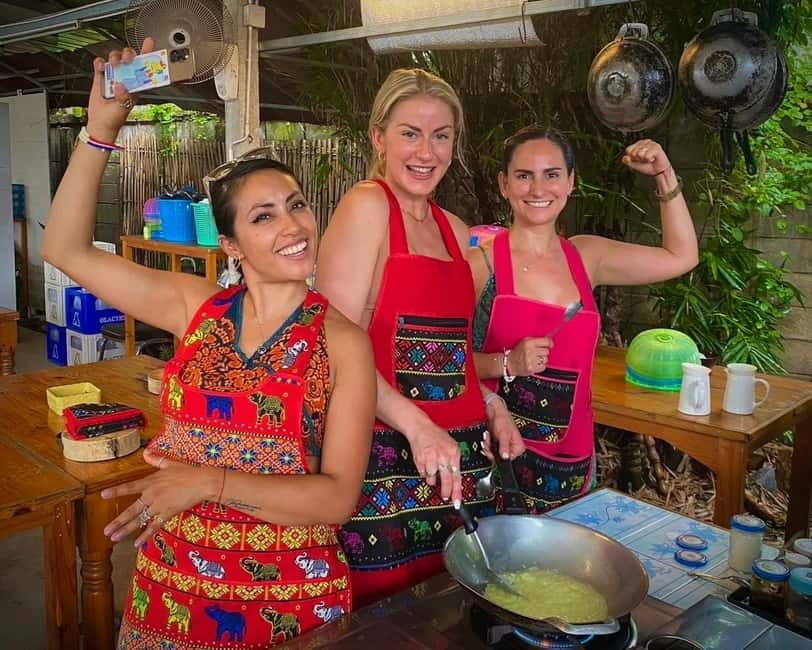
Once your paste is ready, you use it to cook a chicken and coconut milk curry. This is where the lesson connects technique to taste. You go from thick, aromatic paste to a simmering sauce that should smell warm, herbal, and layered.
Since you’ve built the paste yourself, you can also better understand what changes when you alter ingredients or spice levels. If you tell the instructor you want it mild, they can guide the balance so it still tastes like Thai curry, not like bland coconut soup.
This is a good moment to ask questions. The cooking process explains how Thailand turns bold raw ingredients into something smooth and comforting.
Mango Sticky Rice: The Sweet Finish That’s Worth Staying For
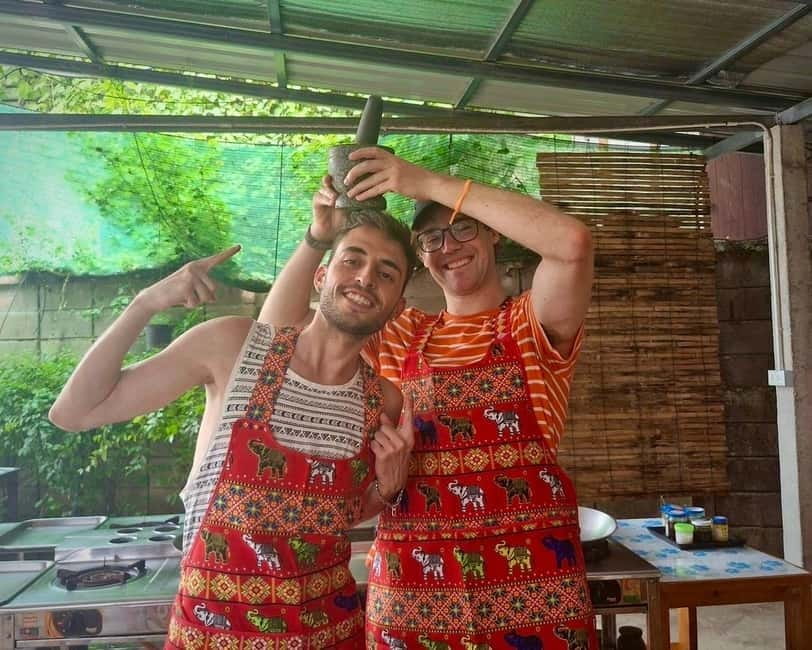
After the savory work, you finish with dessert: sweet sticky rice with mango. It is a classic ending for Thai cooking lessons because it’s approachable, recognizable, and a nice contrast to curry heat and herb intensity.
If you think Thai cooking is only about spice, this helps correct that view. The sweet, coconut-sweet rice side shows you how Thai dessert flavor is built with texture and aroma, not just sugar.
Also, this last dish gives you a practical win: it’s one of the recipes that feels doable again later, even if you do not want to make a full feast.
Eating in the Organic Kitchen Garden: The Whole Point of Cooking
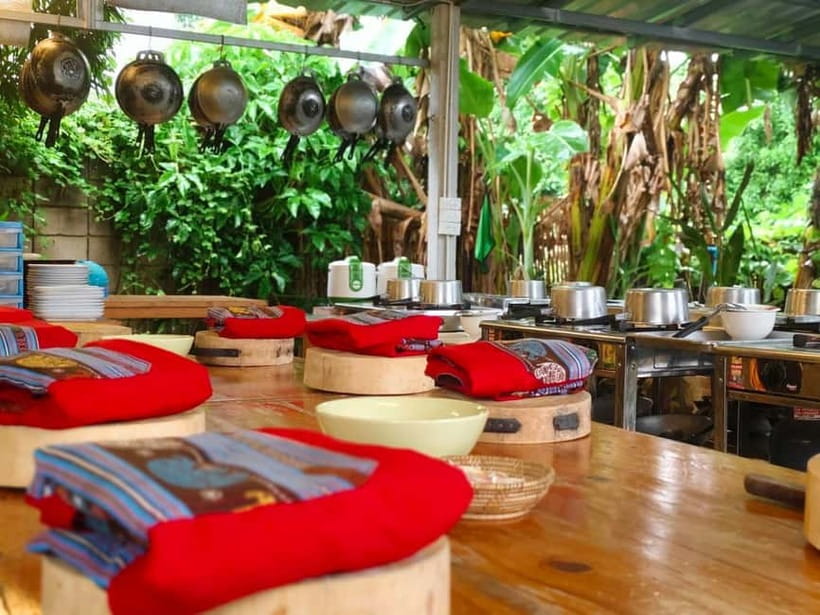
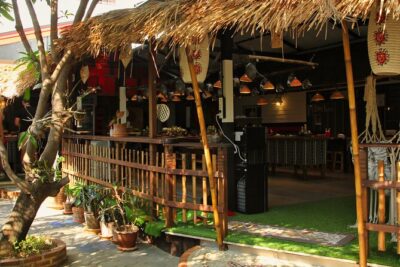
Then you eat. The meal happens in true Thai tradition, in the organic kitchen garden setting. This matters more than people expect, because it changes how you taste what you cooked.
When you eat outdoors in a garden environment, the meal feels like part of the ecosystem. You are not hunched over a classroom table. You’re sharing food you made, with the herbs and garden setting around you, which makes the flavors feel more vivid and memorable.
It’s also when the group energy makes sense. Instructors often keep things light and interactive, and you get to see the end result without rushing.
Price and Value: Does $31 Make Sense for All This?
At $31 per person for a 210-minute class, this is strong value, mainly because you’re paying for four things, not just instruction:
- Pickup and drop-off
- Market and herb garden visits that teach ingredient choices
- Hands-on cooking with ingredients provided
- A meal you cook yourself, plus a digital PDF recipe book
If you compare it to doing a market tour plus a separate cooking class, you would usually pay more. Here, the market time is built directly into your cooking, and the PDF gives you a way to carry the skill forward. That recipe book also matters if you get the itch to recreate your favorite dishes quickly after your Thai trip.
The big “hidden value” is confidence. Once you make curry paste and use it in a coconut curry, you start understanding Thai flavors as a system. That turns a fun afternoon into a skill you can reuse.
Who Should Book This Cooking Class in Chiang Mai
This tour fits best if you:
- Want a Thai cooking class that includes a market and herb garden, not just a kitchen lesson
- Enjoy hands-on cooking, especially curry paste with a mortar and pestle
- Want adjustable spice levels and dietary options, including vegan, vegetarian, gluten-free, halal, and allergies
It also works well if you travel with friends or family and want everyone to cook something different, because the menu choices help break up the monotony.
You may want to skip this if you:
- Need a very low-effort, watch-only experience
- Are traveling with very young children, since it is not suitable for kids under 5
- Have mobility or health needs that make a kitchen-class pace hard, since it is not designed for people over 95
Small Logistics to Know Before You Go
You’ll want comfortable clothes. The class also asks you not to bring alcohol or drugs. Alcoholic beverages can be available for purchase, but they are not included.
If you have dietary needs, you should tell the team. The good news is that the class explicitly welcomes vegan, vegetarian, gluten-free, halal, and allergies, and alternative ingredients are available.
And remember, your spice level is adjustable. If you like Thai flavors but not intense heat, set that preference from the start so your dishes still taste balanced.
Should You Book This Chiang Mai Market and Cooking Class?
If your goal is Thai cooking you can repeat at home, I think this class is a solid pick. The standout skill is the curry paste you make yourself, and it’s paired with a market and herb garden that explain why Thai ingredients matter. You also get a full meal, plus a PDF recipe book to extend the experience.
Book it if you like structure with real choice, meaning you pick your starter and main, then you master curry paste and finish with mango sticky rice. Skip it if you want a low-touch, minimal cooking experience, or if your schedule cannot handle a bit of pickup timing uncertainty.
If you do book, arrive with curiosity and appetite. This is the kind of afternoon where you leave knowing what’s in your curry, not just what it tastes like.
FAQ
How long is the Chiang Mai cooking class, market, and Thai herb garden tour?
The duration is 210 minutes.
Is hotel pickup and drop-off included?
Yes. Hotel pickup and drop-off are included. There is free transfer within 3 km of Chiang Mai Old Town, and you should wait in your hotel lobby while the team picks you up 15 to 30 minutes before class.
What does the tour include?
It includes hotel pickup and drop-off, a visit to a local market, the Thai herb garden, a hands-on cooking class, all ingredients for cooking, a local Thai food instructor, and a digital PDF recipe book.
Do you get to make your own curry paste?
Yes. You prepare your own curry paste from scratch using a mortar and pestle, and you can choose from red, green, Phanaeng, Massaman, or Khao Soi curry paste.
Can you choose which dishes you cook?
Yes. You can choose from a variety of starters and main courses, and the class also includes curry and mango sticky rice.
Can the food be made spicy or non-spicy?
Yes. You can make your food spicy or non-spicy to suit your preference.
Are dietary restrictions and allergies accommodated?
Yes. Vegan, vegetarian, gluten-free, halal, and allergies are welcome, and alternative ingredients are available.
Is the instructor speaking English?
Yes. The instructor is English-speaking.
What should I bring and what is not allowed?
Bring comfortable clothes. Alcohol and drugs are not allowed, and alcoholic beverages are not included (though beverages may be available for purchase).
What are the cancellation rules?
Free cancellation is available up to 24 hours in advance for a full refund.
Thai kitchens you can book into
Guided Thai outings, continued
What else made it into the Thailand notebook
What else made it into the Chiang Mai notebook
- Half day Long Neck hill tribe and Hmong hill tribe village
★ 5.0 · 21 reviews - Chiang Rai One Day: Golden Triangle, Laos Border, Long Neck Tribe
★ 3.5 · 21 reviews - Old Town Chiang Mai Food Tour with 10+ Local Dishes Tastings
★ 5.0 · 21 reviews - 5 Day Tuk Tuk Adventure in Chiang Mai – with driver
★ 5.0 · 21 reviews - 1 Hour Foot Relaxing – Free Transportation
★ 5.0 · 21 reviews - Rantong elephant sanctuary Chiangmai
★ 4.4 · 21 reviews
Cooking Classes, compared.
 ★ 5.0Half-Day Thai Cooking Class at Organic Farm in Chiang MaiFrom $2919,087 reviews
 ★ 4.9Authentic Cooking Class with Market & Farm VisitFrom $344,546 reviews
 ★ 5.0Thai and Akha Cooking Class in Chiang MaiFrom $424,358 reviews
 ★ 5.0Phuket Thai Cooking Class with Market Tour OptionFrom $652,665 reviews
 ★ 4.9Hands-on Thai Cooking Class and Market TourFrom $451,614 reviews
 ★ 4.9Cooking Class with Market and PickupFrom $251,365 reviews
 ★ 4.9Tingly Thai Cooking School Half-Day Cooking ClassFrom $411,191 reviews
 ★ 4.9Cooking Class with Organic Farm at Mama NoiFrom $321,151 reviews
Browse the lists this tour appears in