
REVIEW · COOKING CLASSES
Aroidee’s Farm-Fresh Thai Cooking Experience
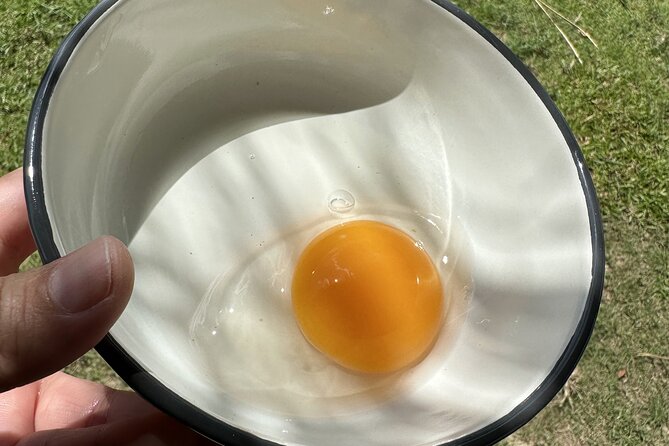
You can taste the farm in this Thai class. You start at 8:00 am near Wat Suan Dok, then spend time harvesting from an organic garden, collecting eggs, and meeting farm animals before you cook. I especially like the hands-on herb and vegetable picking and the way the instruction leads you from curry paste to finished dishes you can actually recreate later.
My other big win is the food lineup. You cook classics like Pad Thai and Tom Yum Kung, then end with mango sticky rice. One thing to consider: it’s an outdoor, farm-based experience that depends on good weather, so wear something you can get a bit sweaty in.
In This Review
- Key highlights you should care about
- Your morning start: Wat Suan Dok to the organic kitchen
- Harvesting herbs, picking vegetables, and learning the organic rhythm
- Meeting buffaloes, chickens, geese, and goats
- The outdoor kitchen: cooking Pad Thai, Tom Yum Kung, and curry paste
- Pad Thai: why this class format helps
- Tom Yum Kung: learning the sour, spicy, salty balance
- Curry paste and spicy soup: the skill that keeps paying off
- Mango sticky rice: finishing with a Thai dessert you can remember
- Price and value: why $41.95 can make sense
- Who should book this class in Chiang Mai?
- Food needs: vegan, vegetarian, and allergy adjustments
- Booking timing and what to expect from a small group
- What to bring and how to get comfortable outside
- Should you book A Roi Dee in Chiang Mai?
- FAQ
- Where does the class start, and when is it scheduled?
- How long is the A Roi Dee Thai cooking class?
- Is pickup available?
- What dishes do I cook during the class?
- Can the menu accommodate vegan, vegetarian, or allergies?
- What happens if the weather is poor or I need to cancel?
Key highlights you should care about
- Organic garden harvest first, so your ingredients feel connected to the meal, not just delivered to the table
- Farm animals (including buffaloes, chickens, geese, and goats) with time to feed and interact
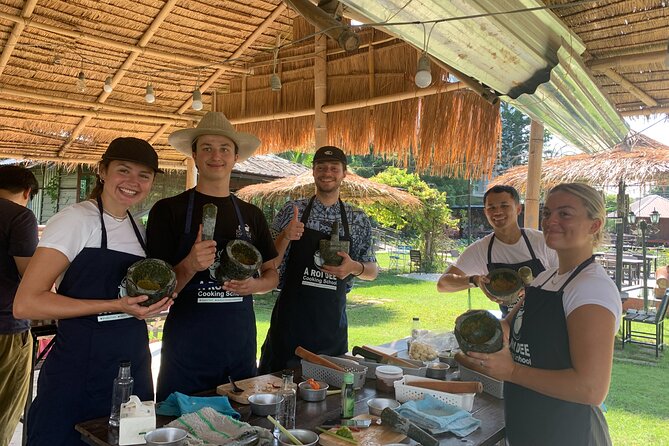
- Outdoor kitchen instruction that gets you cooking well-known Thai dishes in a shared group setting (max 15 people)
- Curry paste lesson you use to build a flavorful spicy soup, not just a one-off garnish
- Mango sticky rice at the end, turning the class into a full Thai dessert moment
- Aom and the team get consistently praised for friendliness and clear communication
Thai kitchens got sat through and written up
- Half-Day Thai Cooking Class at Organic Farm in Chiang Mai★ 5.0 · 19,087 reviews
- Chiang Mai: Cooking Class, Market & Thai Herbs Garden Tour★ 4.9 · 4,824 reviews
- Chiang Mai: Authentic Cooking Class with Market & Farm Visit★ 4.9 · 4,546 reviews
- Thai and Akha Cooking Class in Chiang Mai★ 5.0 · 4,358 reviews
Your morning start: Wat Suan Dok to the organic kitchen
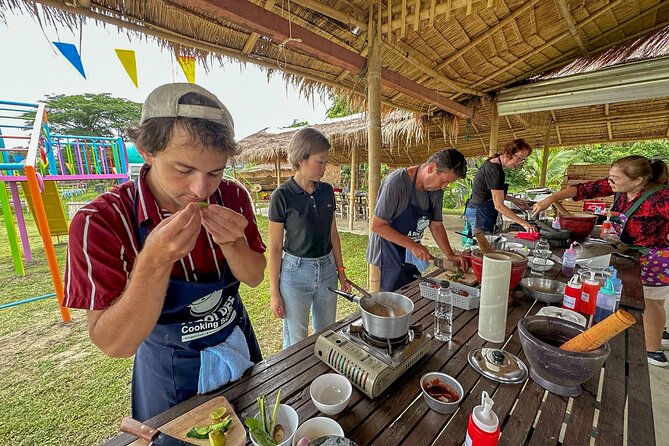
This class runs about 4 hours, and it starts early. Your meeting point is Wat Suan Dok, 139 Suthep Rd (Tambon Su Thep, Amphoe Mueang Chiang Mai), with the class beginning at 8:00 am. You’ll also return to that same point when it ends, so you don’t need to worry about figuring out a second drop-off.
The early timing matters more than it sounds. Chiang Mai can warm up quickly, and beginning in the morning keeps the garden work comfortable. It also helps the pacing. You’re not rushing through the fun part, the farm portion, just to reach the food at the end.
A practical note: the class uses a mobile ticket, and you get confirmation after booking. If you’re planning your day around other Chiang Mai sights, this half-day format is a nice anchor. It’s long enough to learn, short enough to keep the rest of your itinerary flexible.
Harvesting herbs, picking vegetables, and learning the organic rhythm
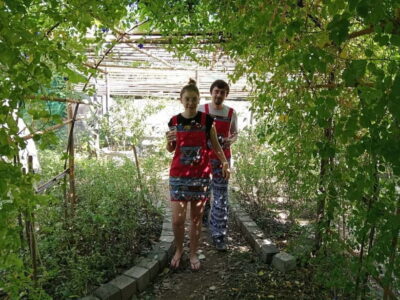
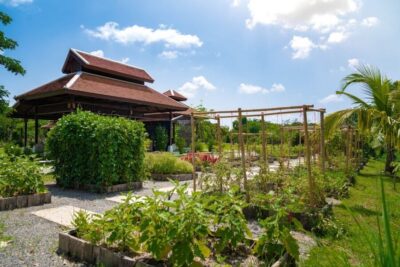
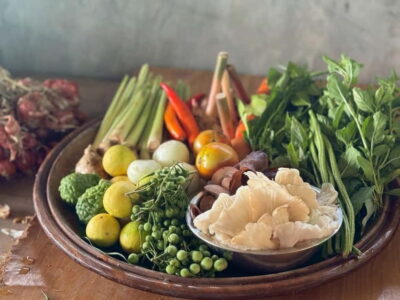
The farm portion is the heart of this experience. Before you ever touch a wok, you’re out in the organic plots, learning how they grow the ingredients that go into Thai cooking. The best part is that the lesson isn’t abstract. It connects plant to flavor.
You’ll be guided to pick the herbs and vegetables used in the cooking portion, and you’ll also get an explanation of what you’re choosing and why. One of the most repeated points from prior participants is how much they appreciated the time spent on herbs and vegetables in the garden plots. That attention makes you more confident when you cook later, because you understand what’s doing the work in the dish.
On top of the garden work, you can also collect eggs and learn a bit about farming practices. You’ll be around different farm routines that make the whole operation feel real, not staged.
A small-group experience helps here. The tour caps at 15 travelers, so the guide can actually answer questions while you’re harvesting. If you’re the kind of person who likes to know how things grow, this format is a lot more satisfying than a fast, photo-only stop.
Meeting buffaloes, chickens, geese, and goats
One of the most memorable parts is the animal time. You’ll visit and interact with multiple kinds of farm animals, including buffaloes, chickens, geese, and goats. You don’t just stand nearby while someone else does the talking. You get a chance to feed and engage, with staff guiding you on how to be around the animals safely and respectfully.
For families, this is often where the smiles happen first. A past family group with kids aged 8 to 14 highlighted how much everyone enjoyed the animal visit alongside the cooking. Even if your main goal is Thai food, the animal portion changes the pace of the morning. It breaks up the sensory load, so when you reach the outdoor kitchen, you’re ready to focus.
Do expect some farm vibes. Depending on weather and ground conditions, you might get a little dusty or muddy. I’d treat it like a casual outdoor activity, not a spotless museum moment.
The outdoor kitchen: cooking Pad Thai, Tom Yum Kung, and curry paste
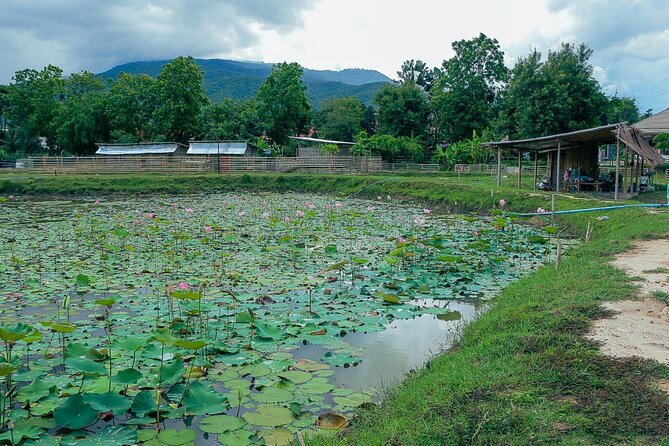
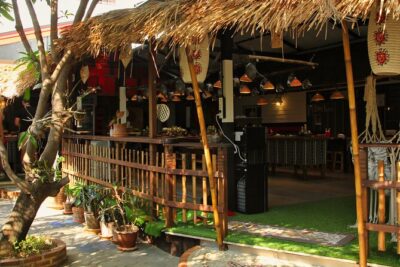
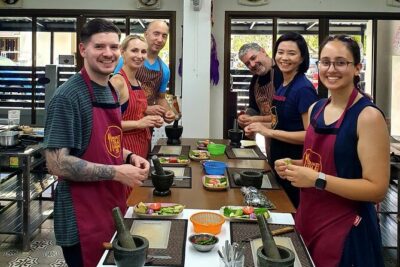
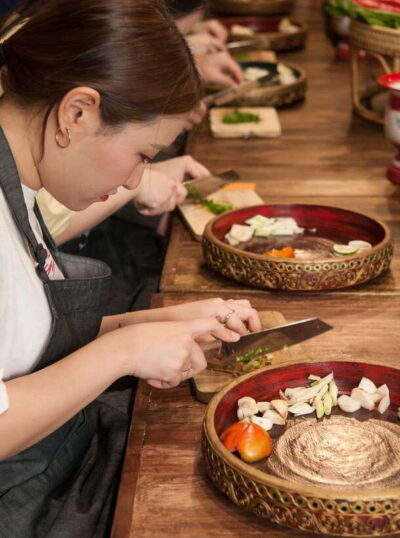
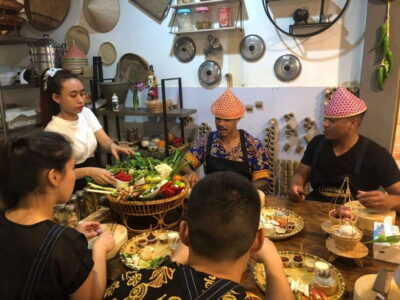
After the farm work, you move into the cooking portion: an outdoor kitchen classroom where instruction is part cooking session, part technique lesson. The core structure is straightforward. The guide shows you what to do, you follow along at your station, and you learn by making.
The dish list is a big reason people book this class. You’ll cook popular Thai dishes including Pad Thai and Tom Yum Kung. Depending on how the lesson is paced, you can expect to make around six to seven dishes, plus the key curry paste work that builds flavor for a spicy Thai soup.




Pad Thai: why this class format helps
Pad Thai can feel simple until you try it. Getting the right balance of flavors and textures usually takes practice. In a guided class, you can ask questions and get feedback before your noodles go cold or your sauce turns too sweet or too sour.
Also, knowing your earlier garden picks helps. Ingredients like herbs and vegetables aren’t just part of the food, they become part of the recipe logic. You’ll better understand why certain Thai dishes rely on fresh aromatics.
Tom Yum Kung: learning the sour, spicy, salty balance
Tom Yum Kung is famous for a specific kind of punch. It’s not only spicy. It’s sharp, sour, and salty, with an aroma that hits quickly. In this class, the cooking instruction focuses on building that character through the ingredients and steps you follow.
If you’ve ever eaten Tom Yum and thought, I can never recreate this at home, classes like this are your shortcut. You get guided practice with the steps that matter most.
Curry paste and spicy soup: the skill that keeps paying off
The curry paste lesson is where value multiplies. You don’t just mix something and call it done. You learn how to make curry paste and then use it to create a flavorful spicy soup. That matters because curry paste is the flavor engine for many Thai dishes, not just one soup.
If you want a takeaway you can use long after Chiang Mai, this is it. Curry paste technique, once you understand it, turns into a foundation for future cooking.
And yes, it’s hands-on. You’ll be working with ingredients and learning process, not only watching.
Mango sticky rice: finishing with a Thai dessert you can remember
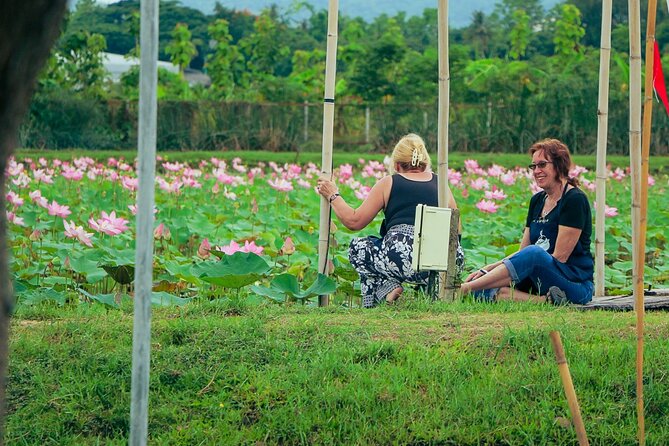
Every Thai cooking class should end with something that feels like Thailand. Here, you make mango sticky rice as the finale. It’s the kind of dish that makes the whole day feel complete, sweet and satisfying after savory cooking.
What I like about a dessert finish is that it ties back to Thai flavor preferences. You get the full arc: herbs and farm produce, savory mains, spicy soup, then a dessert that’s comforting and bright.
Also, if you’re cooking with kids, dessert timing can be a sanity saver. It gives everyone a clear finish line.
Price and value: why $41.95 can make sense
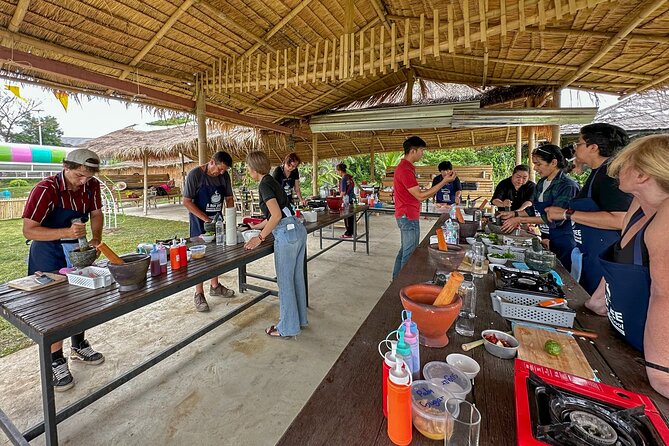
At $41.95 per person for about 4 hours, this class is priced in the budget-to-midrange range for Chiang Mai cooking experiences. Here’s the value logic that makes it feel fair.
First, you get more than cooking instruction. You get a farm visit with garden harvesting, egg collection, animal interactions, and a look at sustainable farming practices. That adds time and meaning, not just extra stops.
Second, you get a real cooking outcome. You’re not leaving with a list of recipes only. You cook multiple Thai dishes including Pad Thai, Tom Yum Kung, curry paste used in a spicy soup, and mango sticky rice. That’s a lot of food for one morning.
Third, the small group size of up to 15 people helps the experience feel personal. Better attention during cooking is the difference between learning something and just going through the motions.
If you’re in Chiang Mai and you want one activity that feels local, edible, and not overly complicated, this checks those boxes.
Who should book this class in Chiang Mai?

This is a great fit if you want Thai cooking with a farm connection. I’d especially recommend it for:
- Families who want something active and educational, not only a meal
- Couples looking for a date activity that includes hands-on learning and food
- Solo diners who like structured group instruction but still want a lot of personal guidance
- Anyone who loves Thai herbs, spices, and the idea of learning curry paste at home
It’s also a smart choice if you care about organic farming and sustainability. You’ll hear about organic practices as part of the garden activity, not as a separate lecture.
And because the class is about 4 hours, you can still fit in temple visits or night markets the same day, depending on your energy level.
Food needs: vegan, vegetarian, and allergy adjustments
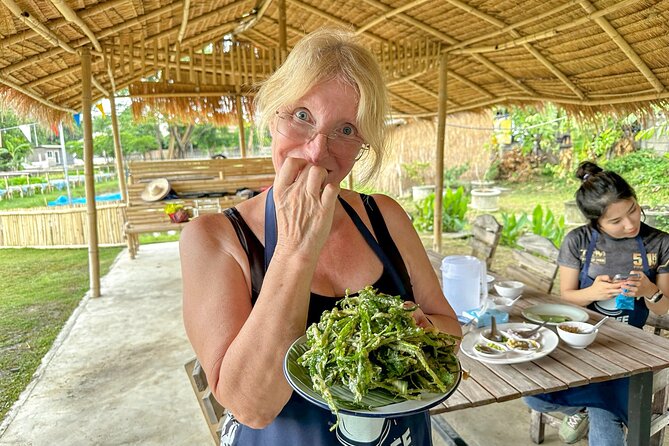
This class supports vegan and vegetarian menus, and ingredients can be adjusted for allergies. That’s a big deal because Thai cooking relies on specific flavor components that may not be safe for everyone, especially if you avoid certain proteins or ingredients.
If you have an allergy, don’t rely on vague assumptions. When you book, be specific about what you can’t eat. The class states that ingredients can be adjusted, which suggests they’re set up to handle practical needs, not just general diet labels.
One more angle: vegan and vegetarian versions can still teach technique. You’ll still learn curry paste making and how dishes balance flavor. You just swap the appropriate components so you can eat what you make with confidence.
Booking timing and what to expect from a small group
On average, this class is booked about 19 days in advance. That’s not a must-book-this-week situation, but it tells you the schedule can fill up, especially for popular meal times and during high season.
The group size cap of 15 is a sweet spot. In a larger class, you often lose instruction time. Here, you’re more likely to get help when you’re chopping, mixing, or adjusting seasoning.
Because the activity depends on good weather, check the forecast close to your date. If it’s canceled for poor weather, you’ll be offered a different date or a full refund, so you won’t get stuck.
What to bring and how to get comfortable outside
Since a major part of the day is farm-based, plan for outdoor movement. Wear comfortable clothes you can move in, and expect to handle produce. Shoes that work on uneven ground are a good idea.
You’ll be cooking too, so think about practical clothing and hygiene. Also, if you’re someone who gets cold easily, bring a light layer, because mornings can feel cooler before the day heats up.
If you’re sensitive to sun, use sunscreen. You’ll be outside enough that you’ll notice it.
Should you book A Roi Dee in Chiang Mai?
I think you should book this if you want Thai cooking that feels grounded in real food. The standout strengths are clear: the garden harvest and herb explanation, the animal interaction, and the hands-on cooking of recognizable dishes like Pad Thai, Tom Yum Kung, curry paste for a spicy soup, and mango sticky rice. Add in friendly staff, including Aom being specifically noted for warmth and clear communication, and this becomes one of those activities that feels worth your morning.
Skip it if your ideal day is strictly indoor, very fast, or you want a purely restaurant-style tasting. This is farm-first, cook-along second, eat-what-you-made third. Embrace that rhythm and you’ll probably have a great time.
If you’re traveling with kids, this is also a strong choice because it balances learning, movement, and food. If you have dietary needs, confirm details when booking so adjustments are ready.
FAQ
Where does the class start, and when is it scheduled?
The cooking experience starts at Wat Suan Dok, 139 Suthep Rd, in Chiang Mai. The start time is 8:00 am, and the activity ends back at the meeting point.
How long is the A Roi Dee Thai cooking class?
It lasts about 4 hours.
Is pickup available?
Pickup is offered.
What dishes do I cook during the class?
You’ll learn to cook several Thai dishes, including Pad Thai and Tom Yum Kung. You’ll also learn how to make curry paste for a flavorful Thai spicy soup, and the class ends with mango sticky rice.
Can the menu accommodate vegan, vegetarian, or allergies?
Yes. Vegan and vegetarian menus are available, and ingredients can be adjusted for any allergy.
What happens if the weather is poor or I need to cancel?
The experience requires good weather. If it’s canceled due to poor weather, you’ll be offered a different date or a full refund. You can also cancel for a full refund up to 24 hours before the experience’s start time.
Thai kitchens you can book into
What else made it into the Thailand notebook
What else made it into the Chiang Mai notebook
- Walk With Monks Collecting Alms(meeting point maybe change)
★ 4.9 · 8 reviews - Doi Suthep and Hmong Hilltribe Half Day Tour in Chiang Mai
★ 3.5 · 8 reviews - Aroidee’s Farm-Fresh Thai Cooking Experience
★ 5.0 · 8 reviews - 2- Days in Doi Inthanon National Park
★ 4.5 · 8 reviews - Khantoke Dinner Experience & Cultural Dance Show with Transfers
★ 4.0 · 8 reviews - Sticky Waterfalls Private Half Day Fun Escapades
★ 4.5 · 8 reviews
Cooking Classes, compared.
 ★ 5.0Half-Day Thai Cooking Class at Organic Farm in Chiang MaiFrom $2919,087 reviews
 ★ 4.9Cooking Class, Market & Thai Herbs Garden TourFrom $314,824 reviews
 ★ 4.9Authentic Cooking Class with Market & Farm VisitFrom $344,546 reviews
 ★ 5.0Thai and Akha Cooking Class in Chiang MaiFrom $424,358 reviews
 ★ 5.0Phuket Thai Cooking Class with Market Tour OptionFrom $652,665 reviews
 ★ 4.9Hands-on Thai Cooking Class and Market TourFrom $451,614 reviews
 ★ 4.9Cooking Class with Market and PickupFrom $251,365 reviews
 ★ 4.9Tingly Thai Cooking School Half-Day Cooking ClassFrom $411,191 reviews
Browse the lists this tour appears in