
REVIEW · COOKING CLASSES
Bangkok: Tingly Thai Cooking School Half-Day Cooking Class
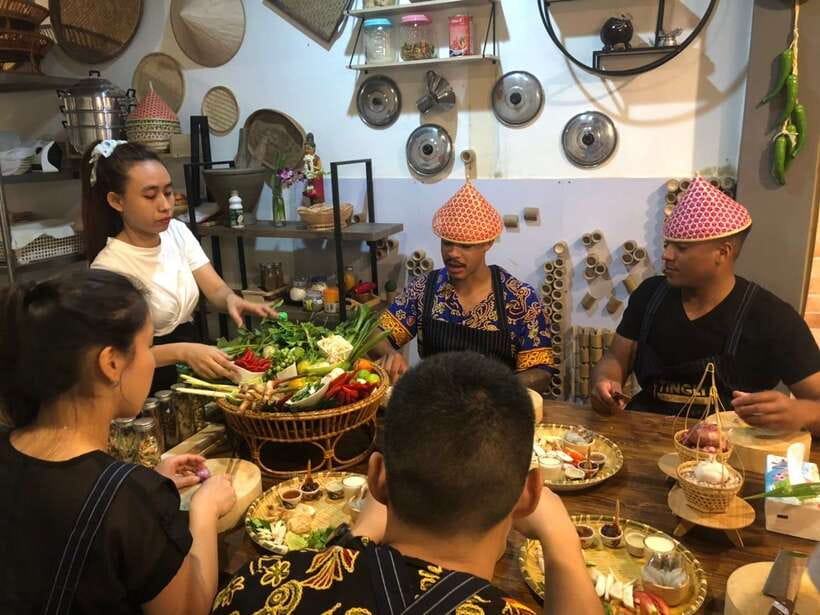
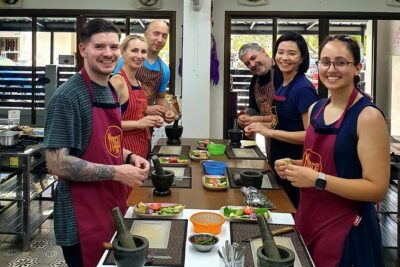
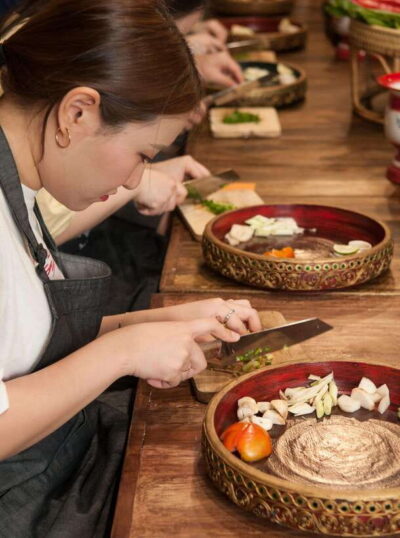
Thai food feels different when you cook it. This half-day Bangkok class takes you from a local market walk (on the morning sessions) to a hands-on kitchen where you make Thai dishes from scratch and sit down to eat what you cooked. If you want more than a demo, this is the kind of experience that actually teaches the how, not just the what.
I especially like two things: first, you get a real ingredient game plan through the market tour with an English-speaking guide, and you’ll see what you’re shopping for before you start cooking. Second, the class format is focused on skills you can repeat at home, including learning how to make curry paste from scratch and cooking classics like Tom Yum and Pad Thai.
One thing to consider: you’ll be cooking and eating for the full 3 hours, so if you’re looking for a quick, light bite, this may feel more like a meal than a snack.
In This Review
- Key highlights worth planning around
- From Marriott Surawong to the market with your guide
- What you cook: the 4-course Thai lineup you can repeat
- The kitchen rhythm: prep, cook, taste, and adjust
- Tom Yum Kung: hot and sour, with the right balance
- Pad Thai Kung: noodles, sauce, and timing
- Curry day: curry paste from scratch plus a real weekday choice
- Mango sticky rice: the sweet finish that makes sense
- Market tour lessons you can actually use at home
- Recipes, equipment, and why the take-home part matters
- Price and value: $41 for four courses plus real skills
- Who should book this class in Bangkok
- Should you book Tingly Thai Cooking School?
- FAQ
- What dishes are included in the class?
- Does the class include a market tour?
- How long is the cooking class?
- Is the class taught in English?
- Are vegetarian options available?
- What is included in the price?
- What is not included?
- Where do I meet the class?
- Can I cancel or pay later?
Key highlights worth planning around
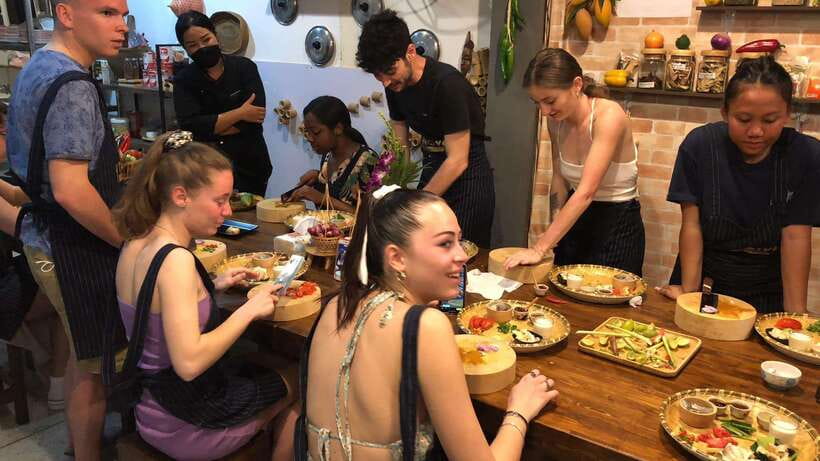
- Market tour (morning only) to pick ingredients with a guide
- 4 dishes, all made from scratch, including curry paste
- English instruction with teachers known for high energy and clear guidance
- A weekday-dependent curry menu (green, red, Penang, or Massaman)
- Take-home recipes so you can cook again after Bangkok
- Vegetarian options available, plus attention to allergies when possible
Thai kitchens got sat through and written up
- Bangkok: Hands-on Thai Cooking Class and Market Tour★ 4.9 · 1,614 reviews
- Bangkok: Tingly Thai Cooking School Half-Day Cooking Class★ 4.9 · 1,191 reviews
- Bangkok: Maliwan Thai Cooking Class with Market Tour★ 4.9 · 1,133 reviews
- Tingly Thai Cooking Class with Morning Market Tour★ 5.0 · 589 reviews
From Marriott Surawong to the market with your guide
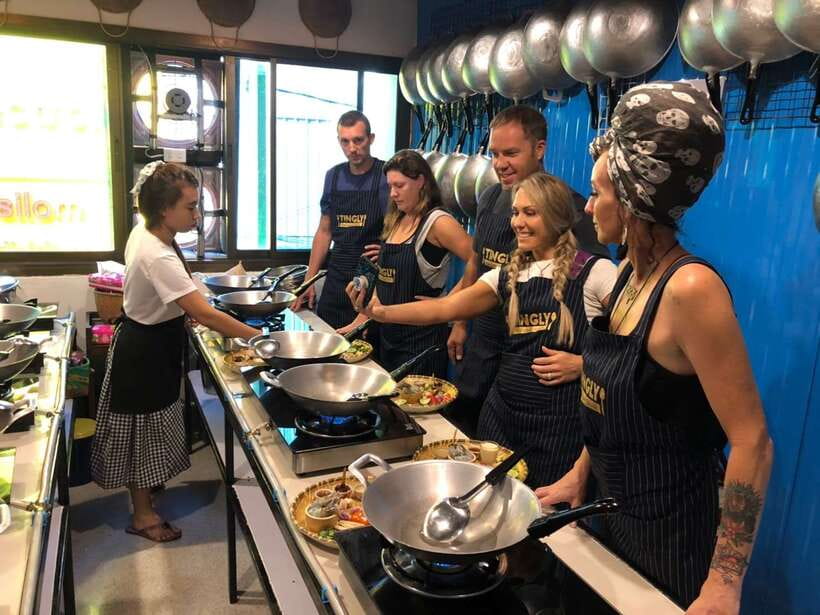
The meeting point is straightforward: Tingly Thai Cooking School, opposite Marriott Hotel Surawong. From there, you’re set up for your cooking day, and if you booked the morning session, the first step is the market walk.
The market part matters because Thai cooking starts with fresh ingredients and the right pantry staples. Your guide shows you what to buy, explains what you’re looking at, and helps you connect ingredients to flavors you’ll taste later in class. One practical tip: if you do the morning class, try not to eat breakfast beforehand, because by the end, you’ll be glad your stomach is ready.
Also, plan your pace for timing. The morning market visit is scheduled so it wraps up before the market closes, and then you move to the school to start prep.
What you cook: the 4-course Thai lineup you can repeat
No matter which day you attend, you’ll cook two core dishes plus dessert. You’ll make Tom Yum Kung, a hot and sour prawn soup, and Pad Thai Kung, a Thai-style fried noodle dish with prawns. You’ll also end with mango sticky rice, called Khao Neeaw Mamuang.
Then the “curry slot” changes depending on the weekday, based on what’s available and the menu plan. On Mondays and Fridays, you cook green curry with chicken. On Tuesdays and Saturdays, you cook red curry with chicken.
On Wednesdays and Sundays, it’s Panang (spelled Penang in many listings) chicken curry. On Thursdays, the menu shifts to Massaman curry with chicken. If you have a favorite, choose your day around it, and if you’re flexible, treat it as part of the fun.
The kitchen rhythm: prep, cook, taste, and adjust
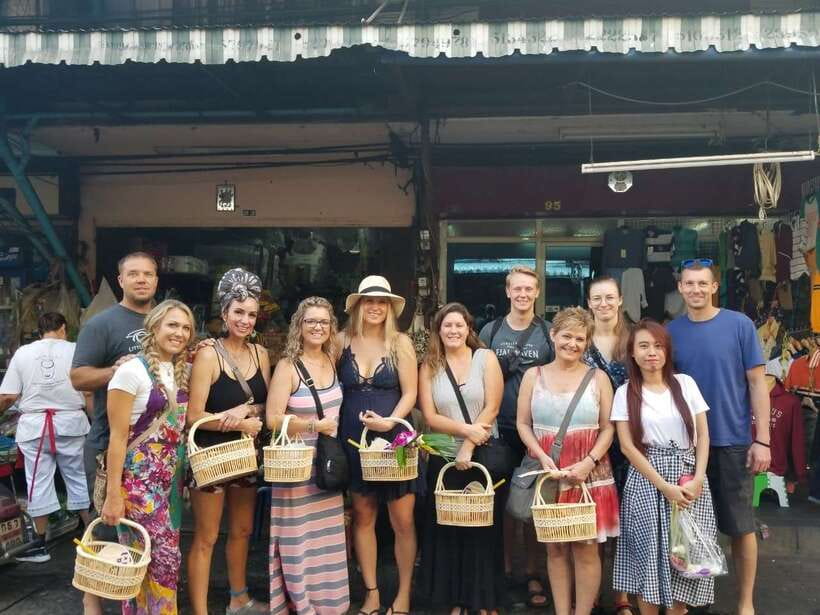
A good cooking class doesn’t just hand you steps, it keeps you moving. This one uses a hands-on setup where you prep ingredients and cook as you go, so the time passes faster than you expect. The pacing is also built around learning, like making curry paste from scratch rather than relying on a jar.
You’ll learn key practical things, not only recipes. The class includes instruction on how to store Thai food, which is the sort of detail that makes a big difference when you try to cook again later. And because curry paste is usually where people get stuck, this is one of the most valuable skills in the menu.
Most importantly, you’re not left to figure it out alone. The instructors teach in English, and many classes run with high-energy personalities, like Song, Cho, Naam, and Nam. The overall feel is that you’ll be coached through the prep and cooking stages, then you’ll eat right away.
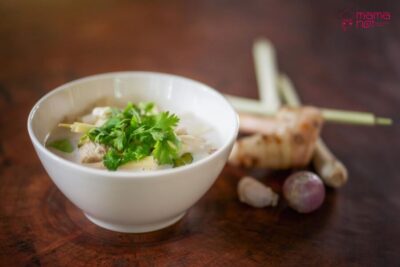
Tom Yum Kung: hot and sour, with the right balance
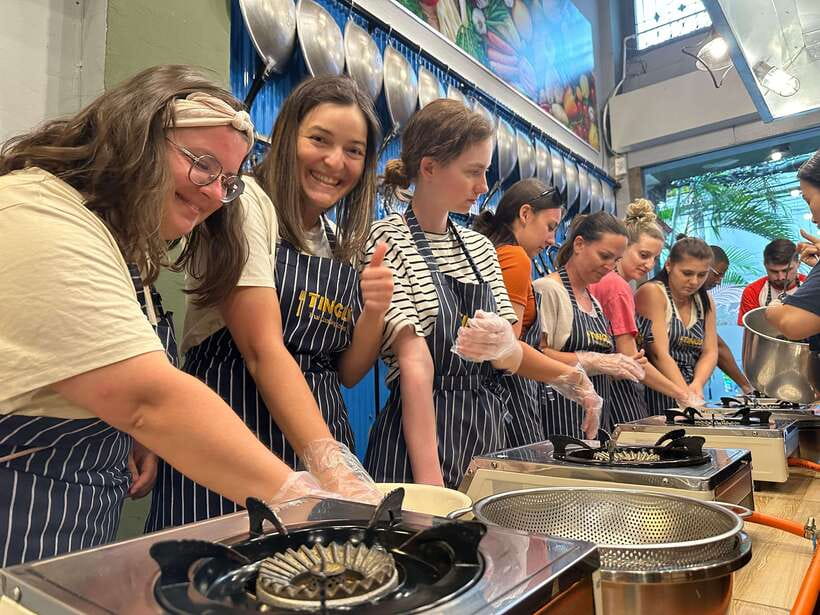
Tom Yum Kung is the first flavor test, and it’s a great one for beginners because it teaches balance. You get the chance to understand what makes it hot, what makes it sour, and how prawn and broth flavors work together.
Expect to work with a set of ingredients and learn how to bring the flavors together in a way that doesn’t feel mysterious. Once you taste your own pot, you’ll understand how Thai cooks build punch, not just heat.
If you’re the kind of person who loves adjust-and-taste cooking, this course format fits you. You can often shift toward what you like as you go, rather than being stuck with one fixed outcome.





Pad Thai Kung: noodles, sauce, and timing
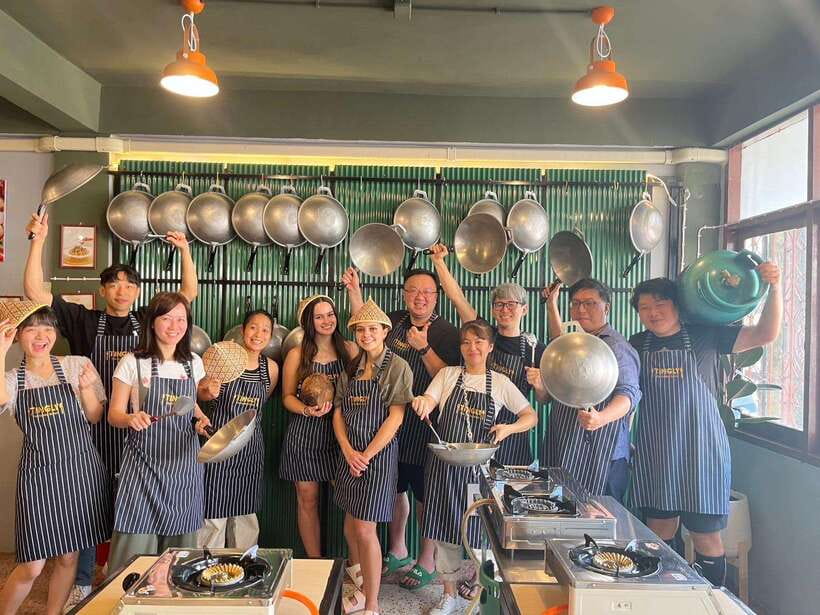
Pad Thai is where technique meets timing. Even if you’ve eaten it in Bangkok restaurants, cooking it yourself is a different experience because noodles, sauce, and heat have to line up.
In this class, you’ll make the Thai-style fried noodle dish with prawns. You’ll see the difference between having ingredients and having the right consistency and heat level to make the dish come together.
Pad Thai can go wrong fast if sauce gets overcooked or noodles clump. The advantage of a guided class is that you learn what to watch for while it’s cooking, so you can repeat the method at home without guessing.
Curry day: curry paste from scratch plus a real weekday choice
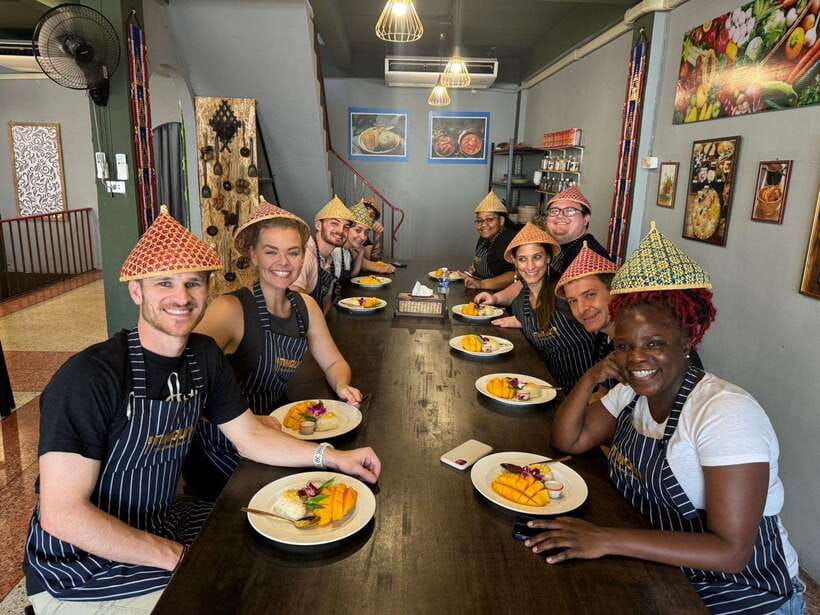
Curry is the centerpiece, and that’s exactly why it’s worth paying attention to. You’ll make curry paste from scratch as part of the lesson, which means you’re not only cooking, you’re learning the flavor engine.
The class menu swaps the curry style by weekday:
- Green curry with chicken (Mondays and Fridays)
- Red curry with chicken (Tuesdays and Saturdays)
- Penang chicken curry (Wednesdays and Sundays)
- Massaman curry with chicken (Thursdays)
Each curry has its own character, so the day you choose changes the whole experience. If you love aromatic, herb-forward flavors, green curry is a solid match. If you like deeper, slightly sweeter richness, red or Massaman may land better. Penang tends to feel bolder and thicker, depending on how you build the paste.
And since the class covers how Thai food is stored, you can also think beyond the meal. You’ll walk away with a way to handle leftovers more intelligently than the usual takeout approach.
Mango sticky rice: the sweet finish that makes sense
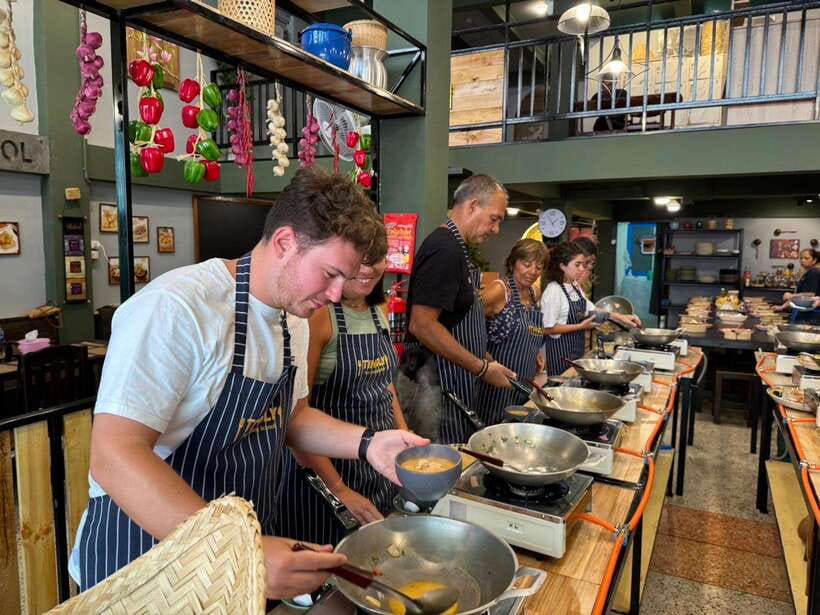
Khao Neeaw Mamuang is the dessert that keeps showing up in Thai cooking lessons for a reason. It’s simple in concept, but it teaches you how sweetness and texture work together.
You’ll make mango sticky rice as part of the four-course meal, and the point isn’t just the taste. It’s learning how to combine ingredients so the texture stays right when you serve it.
If you’ve ever thought dessert looks easy in videos, this is a nice reality check. You’ll see how much small choices matter for how it turns out.
Market tour lessons you can actually use at home
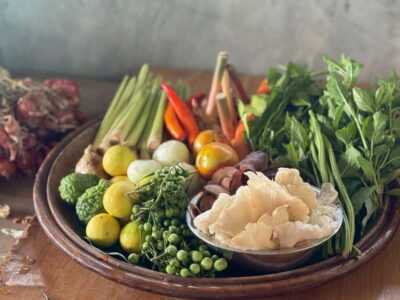
The market walk isn’t just sightseeing. It’s a shortcut to better cooking because Thai dishes depend on specific aromatics and ingredients that can be hard to recognize later.
Your guide helps you pick ingredients and spot what you need. That means you’re not starting from a blank list once you get home. Even if you can’t source exactly the same brands, you’ll understand what ingredient category matters.
This is also where you learn what matters for flavor beyond chili heat. You start connecting herbs, pastes, and protein choices to the final taste you’ll eat in class.
Recipes, equipment, and why the take-home part matters
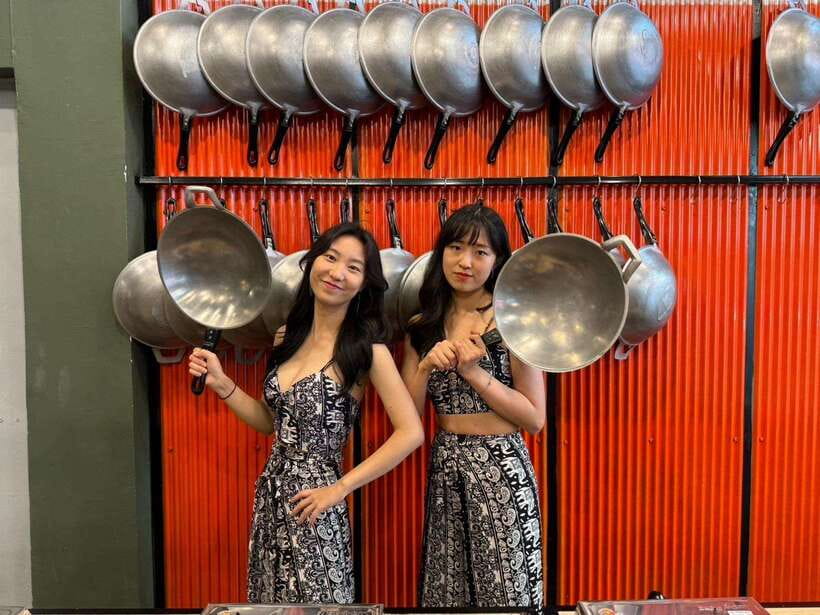
You’ll get recipes to take home, which is where the class earns its value. A lot of cooking experiences are fun in the moment, but they don’t give you a path to remake the food later.
Here, the ingredients and equipment are included, so you’re learning with the right tools and the right baseline. Then the recipe set bridges the gap between “I cooked it once” and “I can do this again.”
Also, drinking water is included, so you’re not managing extra purchases while you cook. Alcohol is not included, but it can be purchased, which helps if you want a drink with your meal.
Price and value: $41 for four courses plus real skills
$41 for a 3-hour, four-course class is strong value if you compare it to both restaurant meals and other cooking experiences. You’re not just eating Thai food, you’re making it in a guided way, including curry paste from scratch, which is a skill most home cooks never tackle successfully.
You also get a lot included:
- four-course meal
- cooking equipment
- all ingredients
- recipes to take home
- drinking water
- market tour for morning sessions
- vegetarian options
In other words, you’re paying for the whole learning package. The biggest reason it feels worth it is that you leave with both knowledge and materials you can reuse.
The one cost item to watch is alcohol, since that’s not included. If your plan is to keep it simple, you can easily do that.
Who should book this class in Bangkok
This is a great fit if you’re curious about authentic Thai flavor and you want practical cooking skills, even if you don’t cook much at home. Multiple classes describe beginners feeling comfortable because instructors guide you step by step and keep you organized.
It’s also a smart pick for people traveling with others, since the cooking process naturally creates shared moments. There’s enough structure to keep it from feeling chaotic, but enough hands-on work that everyone participates.
Two notes from the info: it’s not suitable for children under 3 years, and babies under 1 year. If you’re booking as a family with older kids, you’ll want to check what your child’s comfort level is for cooking and tasting during the class.
And if you have food allergies, the data indicates accommodation is possible in some cases. Still, message ahead with details so the team can plan substitutes.
Should you book Tingly Thai Cooking School?
Book it if you want a hands-on Bangkok food experience that leaves you with recipes you can actually use. The biggest draw is the combination of a morning market tour (if you choose the morning class) and four dishes that cover the Thai flavor spectrum, from hot and sour Tom Yum to curry paste and the sweet finish of mango sticky rice.
Skip it if you’re only looking for a short taste experience. This is a full meal experience, and it’s best when you come hungry and ready to cook.
If you want the most “Bangkok grounding,” choose the morning session for the market walk. And if you want the curry you care about most, line up your day for green, red, Penang, or Massaman.
FAQ
What dishes are included in the class?
You’ll learn to make Tom Yum Kung (hot and sour prawn soup) and Pad Thai Kung (Thai-style fried noodles with prawns). You’ll also cook a curry that depends on the day of the class and finish with mango sticky rice (Khao Neeaw Mamuang).
Does the class include a market tour?
Yes, the market tour is included for the morning class only. You’ll head out with your guide to shop for fresh ingredients, then return to the school to cook.
How long is the cooking class?
The class lasts 3 hours.
Is the class taught in English?
Yes, the instructor teaches in English.
Are vegetarian options available?
Yes, vegetarian options are available.
What is included in the price?
The price includes the four-course meal, cooking equipment, all ingredients, recipes, drinking water, and the market tour for morning sessions.
What is not included?
Alcoholic drinks are not included, though they are available for purchase.
Where do I meet the class?
Meet at Tingly Thai Cooking School, opposite Marriott Hotel Surawong.
Can I cancel or pay later?
Cancellation is free up to 24 hours in advance for a full refund. You can also reserve now and pay later, which means you pay nothing today.
Thai kitchens you can book into
What else made it into the Thailand notebook
What else made it into the Bangkok notebook
- Mahanakhon SkyWalk Entry Ticket
★ 4.3 · 20 reviews - Bangkok: Nimitr Rooftop by 137 Pillars
★ 4.8 · 20 reviews - Bangkok: Cook authentic Thai food with Smart Cook
★ 5.0 · 20 reviews - Bangkok: Travstore Original Bangkok Discovery Tour
★ 4.5 · 20 reviews - Bangkok: Chao Phraya Princess Dinner Cruise & Hotel Transfer
★ 4.2 · 20 reviews - 1 Hr Private Bangkok Canal Boat Tour: Traditional Flat Boat
★ 4.5 · 20 reviews
Cooking Classes, compared.
 ★ 5.0Half-Day Thai Cooking Class at Organic Farm in Chiang MaiFrom $2919,087 reviews
 ★ 4.9Cooking Class, Market & Thai Herbs Garden TourFrom $314,824 reviews
 ★ 4.9Authentic Cooking Class with Market & Farm VisitFrom $344,546 reviews
 ★ 5.0Thai and Akha Cooking Class in Chiang MaiFrom $424,358 reviews
 ★ 5.0Phuket Thai Cooking Class with Market Tour OptionFrom $652,665 reviews
 ★ 4.9Hands-on Thai Cooking Class and Market TourFrom $451,614 reviews
 ★ 4.9Cooking Class with Market and PickupFrom $251,365 reviews
 ★ 4.9Cooking Class with Organic Farm at Mama NoiFrom $321,151 reviews
Browse the lists this tour appears in