
REVIEW · COOKING CLASSES
Team Aim Thai Cooking School (#1 Cooking Class in Chiang Mai)
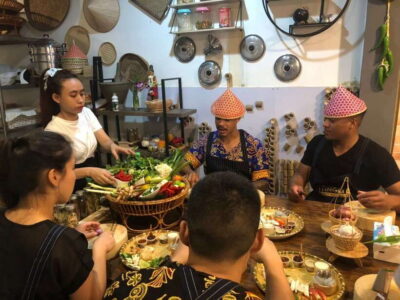
Starting at a real market changes everything. This cooking class in Chiang Mai turns Thai food from something you order into something you can actually make. You’ll shop ingredients with a guide named Cindy, then head to an open-air kitchen where the focus is hands-on cooking with one person per wok. You’ll also get an organized, upbeat teacher experience under Chef Aim’s instruction, so you’re not just watching, you’re cooking.
Two things I especially like: you build your meal from what you pick up at Somphet Market, and you cook a full set of dishes, not one single recipe. The small class size, usually 2 to 9 people, means you get attention while you chop, stir, and taste. One thing to consider: this is a long, food-heavy session, so plan to skip a big meal before you go, and note that it requires good weather.
In This Review
- Key things that make this class feel worth your time
- Arriving at Somphet Market: where Thai flavor starts
- The open-air kitchen setup: built for real cooking
- What you’ll cook: spring rolls, soup, curry, and more
- One session, two schedules: morning and evening timing
- Food you eat, take away, and why you should skip pre-class eating
- Spice control and dietary options that feel real
- Small-group size, hands-on attention, and English support
- Price and value: why $34.01 can make sense in Chiang Mai
- Weather and expectations: the one thing that can change your plan
- Should you book Team Aim Thai Cooking School in Chiang Mai?
- FAQ
- How long is the Team Aim Thai Cooking School cooking class?
- What time are the morning and evening courses?
- Where do I meet for the class?
- Is pickup offered, and where?
- What dishes can I cook in the class?
- Can the menu be vegetarian, vegan, or adjusted for spice?
- What should I do if the weather is bad?
Key things that make this class feel worth your time
- Somphet Market shopping with ingredient commentary so you understand what you’re buying and why it matters
- Open-air kitchen cooking with a hands-on setup designed for active participation
- Choose your menu (4 dishes plus curry paste, and sticky rice with mango) with vegetarian or vegan swaps
- Control your spice level by adjusting heat to your own taste
- Small-group format (2 to 9 people) that keeps the class moving without feeling rushed
- You eat what you make, or take it away, so there’s no wasted effort
Thai kitchens got sat through and written up
- Half-Day Thai Cooking Class at Organic Farm in Chiang Mai★ 5.0 · 19,087 reviews
- Chiang Mai: Cooking Class, Market & Thai Herbs Garden Tour★ 4.9 · 4,824 reviews
- Chiang Mai: Authentic Cooking Class with Market & Farm Visit★ 4.9 · 4,546 reviews
- Thai and Akha Cooking Class in Chiang Mai★ 5.0 · 4,358 reviews
Arriving at Somphet Market: where Thai flavor starts
The class begins with a trip to Somphet Market, with a guide leading you through what to buy. You meet at McDonald’s at 17/1 Kotchasarn Rd, Tambon Chang Khlan, Amphoe Mueang Chiang Mai, Chang Wat Chiang Mai 50100. From there, you shop like a local would shop for dinner, not like a tourist who only wants photos.
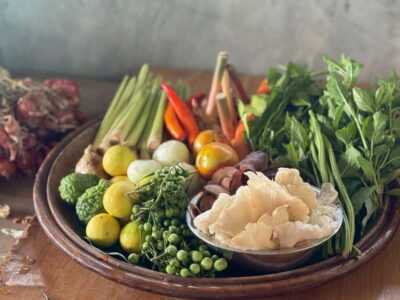
What makes this market stop valuable is how it connects ingredients to finished dishes. You’ll be buying items that later show up in things like curry paste, soups, stir-fries, spring rolls, and Thai salad. That’s the difference between tasting Thai food and learning Thai food. When you understand what herbs, aromatics, and sauces do in the pan, you can recreate the flavors later at home.
Even if your Thai is basic, the guide commentary helps you keep up. One review highlighted how Cindy gave a quick tour while shopping and explained which ingredients would be used in each dish. That kind of guidance matters because it turns the market into a classroom, not a walk-and-hope situation.
Practical tip: bring a little appetite, but also be ready to eat later. Since you’re doing both market shopping and full cooking, you’ll likely be grateful you didn’t overdo breakfast.
The open-air kitchen setup: built for real cooking
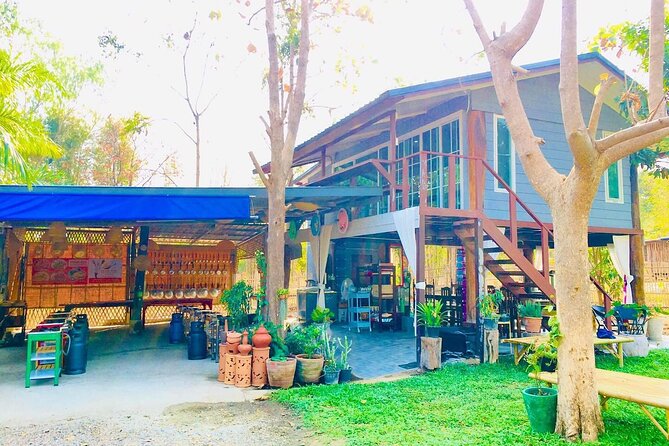
After the market, you drive to the cooking school. Before the cooking starts, you get a welcome drink, and there’s tea or coffee while you settle in. Then the real part begins: cooking and eating, in a cycle that keeps the class lively.
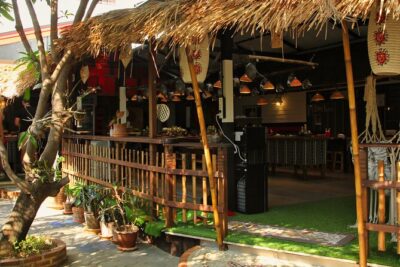
The kitchen is described as open-air, which means you cook in a more breathable space than you’d get in a closed studio. That also helps the experience feel like you’re part of local daily life rather than sitting in a staged demonstration.
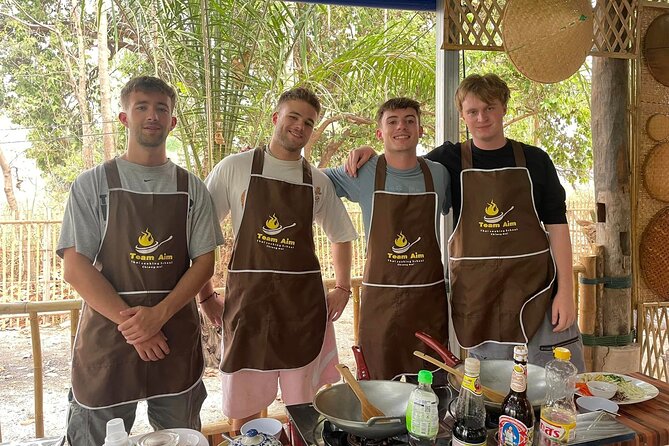
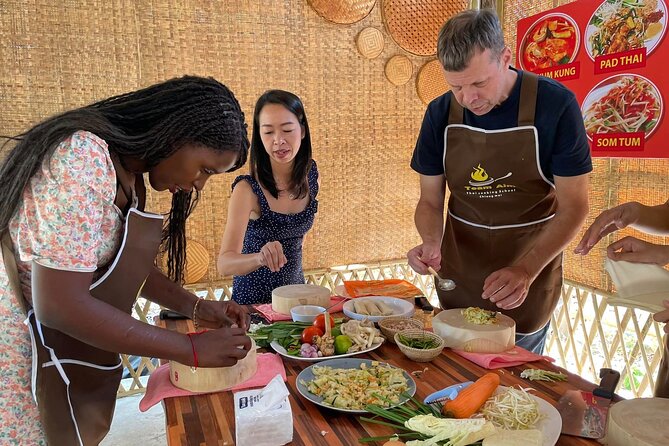
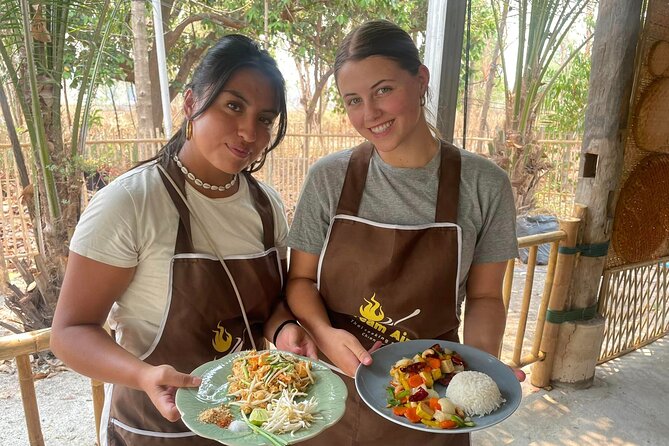
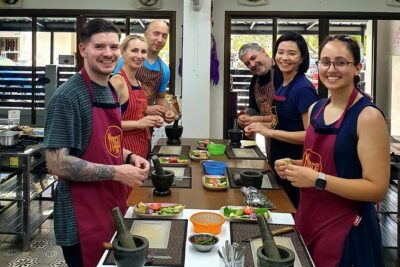
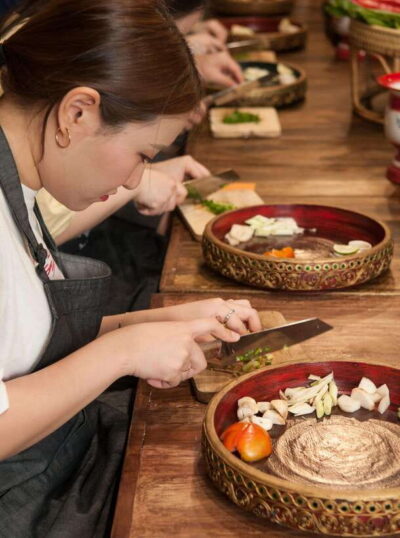
The biggest win here is how the class is set up. You get one person per wok, which is a big deal. Instead of hovering near someone else’s stove, you’re actively stirring, frying, and assembling your own dishes. It’s hands-on throughout, and that changes how confident you feel by the end of the session.
You also get practical support: ingredients are provided, and you receive a recipe book step by step. Even if you’re a cautious cook, having written guidance reduces the frustration of translating instructions while things are happening fast.
And yes, you’ll drink water, tea, and coffee during the class. There’s also tea and fruit in season. That helps, because a Thai cooking class is not just chopping for an hour and calling it a day. You’ll work.
What you’ll cook: spring rolls, soup, curry, and more
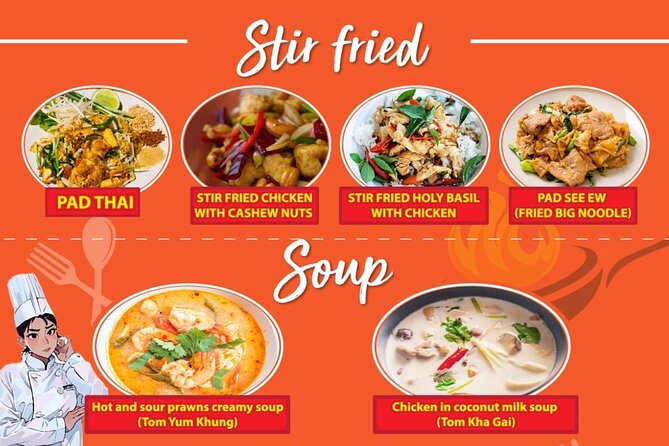
The class includes cooking items like spring rolls, soup, stir-fried dishes, curry paste, curry, Thai traditional salad, and Thai tea. That list is useful because it covers different cooking styles, not just one technique.
Here’s how the menu choices work in a way that’s smart for different skill levels:
- You can choose 4 dishes + 1 curry paste + sticky rice with mango
- Everyone in your group can make a different menu, even though you share the same class setting
- You can make dishes vegetarian or vegan
- You can adjust spice level to be mild or spicy based on your preference
That menu flexibility is a major reason this class works for families and mixed groups. If someone is cautious about spice, you can tone it down without feeling like you’re missing out. If someone prefers plant-based food, you’re not forced into a separate “weird version” meal.
Also, you’re not only cooking curry. You’re learning how curry paste connects to curry, and how other dishes balance that richness with fresher flavors like Thai salad and crispy spring rolls. Thai tea adds a bonus dimension too, since it teaches you about sweetness and tea flavoring rather than just savory cooking.
One session, two schedules: morning and evening timing
This experience runs in two course windows.
Morning course:
- 09:00 am to 02:30 pm
- pickup time around 08:20 am to 08:55 am
Evening course:
- 04:30 pm to 09:00 pm
- pickup time around 03:30 pm to 03:55 pm
That matters for planning. If you like a full day in Chiang Mai, the morning session gives you a late afternoon finish. If you prefer to explore markets and temples earlier, the evening session can fit neatly into your day.
Another timing detail that’s easy to miss: the meeting point pickup and transportation are tied to proximity to the Old City. The class includes free round-trip transportation within 2.5 km from Chiang Mai Old City. If your hotel is outside that radius, you may need to meet at the stated start point.
My practical advice: pick the session that matches your energy, not just your schedule. A 5.5 hour cooking class is long enough that you’ll want to be alert and ready to participate, especially during the hands-on stages.


Food you eat, take away, and why you should skip pre-class eating
This class is structured so you eat what you make. The experience explicitly includes eating all of your food or taking it away. That’s not a small detail. When you’re cooking, the best moment is tasting your own food right when it’s hot and freshly made. If you go in hungry, the class feels like it “clicks” faster.
So, don’t treat this like a snack. One review strongly suggested you should go hungry and avoid doing breakfast or lunch beforehand. I agree with the logic. Even if you eat a light snack, you’ll likely still feel better if you save your appetite.
Also, the pacing is built for multiple dishes, which means you won’t be waiting forever between steps. The class includes welcome drinks, cooking time, and then eating and cooking again. The cycle keeps you involved, and the end result is a meal you can actually recreate later with the recipe book.
Spice control and dietary options that feel real
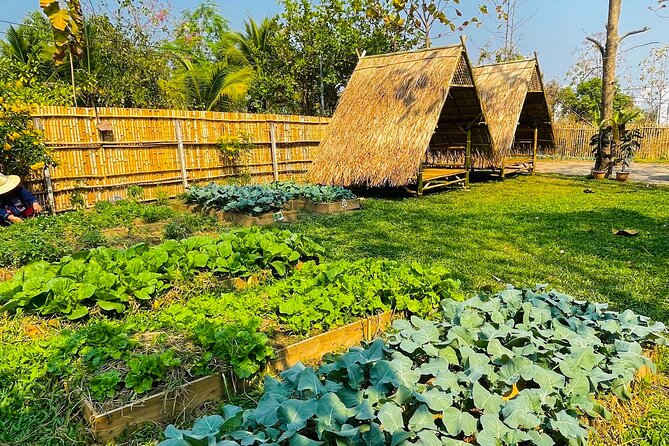
Many cooking classes can say vegetarian, then quietly hand you something bland. Here, the class notes you can make dishes vegetarian or vegan, and you can adjust to make them spicy or mild yourself.
That’s valuable because Thai cooking often uses spicy elements as a balance, not just as a heat punch. If you lower spice, you’re not necessarily losing flavor, especially when the recipe book and ingredient setup are guiding you. It also helps you learn how heat interacts with salty, sour, and sweet elements, which is the core of Thai flavor.
The practical upside for you: if you travel with someone who avoids chili, you can still all be part of the same cooking process. And if you want to challenge yourself with spice, you can do that too.
Small-group size, hands-on attention, and English support
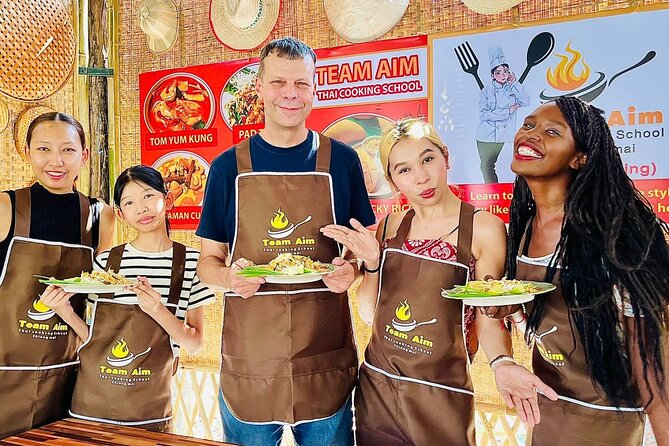
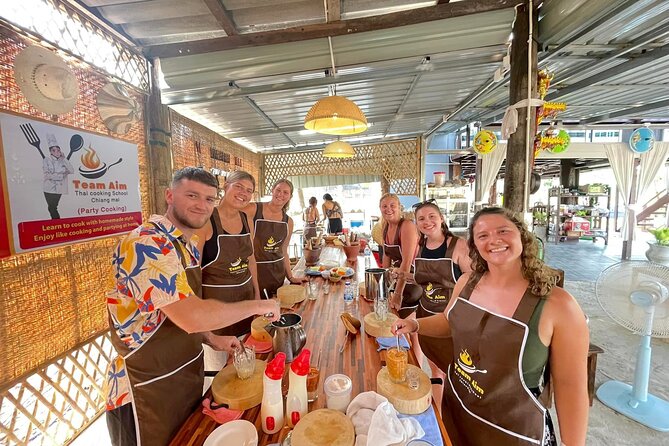
The class runs as a small group of 2 to 9 people. That’s the sweet spot. Big groups often mean you get a few minutes of instruction and then you’re on your own. In a small class, you’re more likely to get corrections when your curry paste or spring roll assembly needs adjustment.
One review mentioned that the chef speaks good English and the group stays small enough to work well. That kind of communication support makes a difference. Thai cooking has a lot of small technique moments, like how fine you grind curry paste ingredients or how you handle textures for stir-fries and spring rolls.
With one person per wok, you’re also less likely to feel like you’re just standing around. It’s a full participation setup.
Price and value: why $34.01 can make sense in Chiang Mai
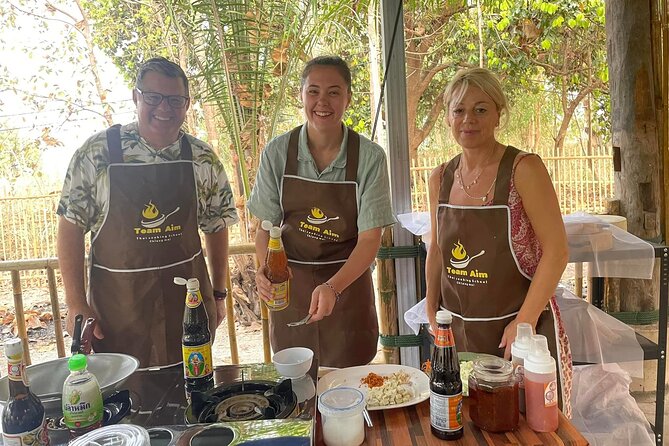
At $34.01 per person, this class can feel like a bargain if you compare it to paying for a decent Thai meal plus a guided market visit plus cooking instruction. You’re not just eating out. You’re learning the ingredient logic and technique for multiple dishes.
The value is especially strong because several “extra” items are included:
- Market ingredient shopping as part of the experience
- All ingredients for cooking
- Recipe book step by step
- Drinks like water, tea, and coffee
- Tea and fruit in season
- Transportation within 2.5 km of Chiang Mai Old City
- Free Wi-Fi internet
That combination is the real reason it feels worth it. You’re paying for a full guided food education, with logistics handled, and with enough structure that you can repeat what you learned later.
Where cost can shift for you is location. If your hotel isn’t within the stated pickup radius, you may have to plan your own way to the meeting point. Still, the core experience remains the same.
Weather and expectations: the one thing that can change your plan
This experience requires good weather. If weather conditions cancel the class, you’ll be offered another date or a full refund. Open-air cooking also means conditions matter more here than in a fully indoor class.
So if you’re in Chiang Mai during a period when rain is common, I’d treat the booking like a plan with a backup mindset. If the session goes ahead, you’ll likely enjoy the open-air setup even more because it keeps the space comfortable.
Should you book Team Aim Thai Cooking School in Chiang Mai?
If you want more than a meal, I think you should book it. This is built for people who like to learn by doing, and it covers a lot of Thai food basics in one go: spring rolls, soup, stir-fries, curry paste, curry, Thai salad, and Thai tea.
It’s a great fit if:
- you enjoy hands-on activities more than watching
- you want to shop for ingredients and connect them to the recipes
- you’re traveling with mixed dietary needs, since vegetarian and vegan options are supported
- you like small groups where you can get real guidance
Skip it, or at least adjust expectations, if:
- you prefer short classes and light bites, since this is a full 5.5 hour cooking-and-eating session
- your hotel is far beyond the Old City area and you don’t want to arrange your own transport to the meeting point
If you’re on the fence, my call is simple: book the session that matches your hunger and your schedule, then show up ready to cook. This one rewards participation.
FAQ
How long is the Team Aim Thai Cooking School cooking class?
The class runs about 5 hours 30 minutes.
What time are the morning and evening courses?
The morning course is 09:00 am to 02:30 pm, with pickup around 08:20 am to 08:55 am. The evening course is 04:30 pm to 09:00 pm, with pickup around 03:30 pm to 03:55 pm.
Where do I meet for the class?
You meet at McDonald’s, 17/1 Kotchasarn Rd, Tambon Chang Khlan, Amphoe Mueang Chiang Mai, Chang Wat Chiang Mai 50100, Thailand.
Is pickup offered, and where?
Round-trip transportation is included for hotels within 2.5 km of Chiang Mai Old City.
What dishes can I cook in the class?
You cook items such as spring rolls, soup, stir-fried dishes, curry paste, curry, Thai traditional salad, and Thai tea. You can choose 4 dishes plus 1 curry paste, and sticky rice with mango.
Can the menu be vegetarian, vegan, or adjusted for spice?
Yes. The class says you can make dishes vegetarian or vegan, and you can adjust spice level to be mild or spicy yourself.
What should I do if the weather is bad?
The class requires good weather. If it is canceled due to poor weather, you’ll be offered a different date or a full refund.
Thai kitchens you can book into
What else made it into the Thailand notebook
What else made it into the Chiang Mai notebook
- Half day Long Neck hill tribe and Hmong hill tribe village
★ 5.0 · 21 reviews - Chiang Rai One Day: Golden Triangle, Laos Border, Long Neck Tribe
★ 3.5 · 21 reviews - Old Town Chiang Mai Food Tour with 10+ Local Dishes Tastings
★ 5.0 · 21 reviews - 5 Day Tuk Tuk Adventure in Chiang Mai – with driver
★ 5.0 · 21 reviews - 1 Hour Foot Relaxing – Free Transportation
★ 5.0 · 21 reviews - Rantong elephant sanctuary Chiangmai
★ 4.4 · 21 reviews
Cooking Classes, compared.
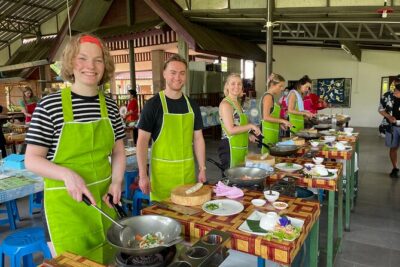 ★ 5.0Half-Day Thai Cooking Class at Organic Farm in Chiang MaiFrom $2919,087 reviews
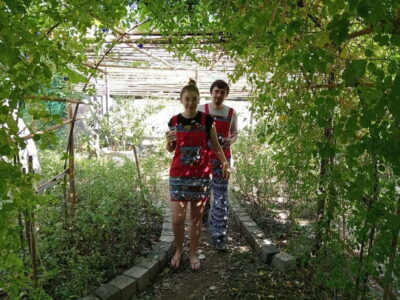 ★ 4.9Cooking Class, Market & Thai Herbs Garden TourFrom $314,824 reviews
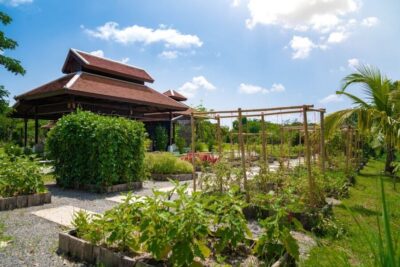 ★ 4.9Authentic Cooking Class with Market & Farm VisitFrom $344,546 reviews
 ★ 5.0Thai and Akha Cooking Class in Chiang MaiFrom $424,358 reviews
 ★ 5.0Phuket Thai Cooking Class with Market Tour OptionFrom $652,665 reviews
 ★ 4.9Hands-on Thai Cooking Class and Market TourFrom $451,614 reviews
 ★ 4.9Cooking Class with Market and PickupFrom $251,365 reviews
 ★ 4.9Tingly Thai Cooking School Half-Day Cooking ClassFrom $411,191 reviews
Browse the lists this tour appears in