
REVIEW · COOKING CLASSES
Half-Day Thai Cooking Class on a Local Farm Near Chiang Mai
Farm cooking beats Chiang Mai food tours. I love that this class mixes a real organic farm visit with a hands-on kitchen workshop, so you understand Thai flavors instead of just tasting them. I also like the fact that you can pick seasonal fruit yourself, like longans in July-August or mangoes in March-May, then use what you gathered as part of the day.
One thing to think about first: the cooking focuses on classic dishes such as Tom Yum Goong, so prawns and bold, spicy flavors are part of the experience. If you do not eat seafood or you are heat-sensitive, ask the instructor what can be adjusted before you go.
In This Review
- Key things you will like about this farm class
- Why this Thai farm cooking class feels more real than a demo
- Getting to the farm: how the 6 hours usually flow
- Starting at the market: choosing Thai ingredients the practical way
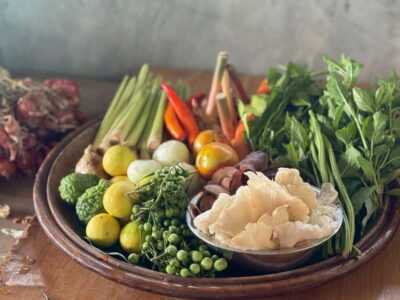
- Organic farm herb garden walk: where the flavors begin
- Hands-on cooking workshop: from curry paste to spring rolls
- Curry paste and curry foundation
- Soup, stir-fry, and spring rolls
- Pad Thai and Tom Yum Goong
- The fruit-picking moment: longans and mangoes from the trees
- Poolside chill time after you cook
- English instruction, and what the class gives you to take home
- Price and value: what $28 gets you in the real world
- Who should book this class, and who should think twice
- A quick checklist before you go
- Should you book Smile Organic Farm Cooking School near Chiang Mai?
- FAQ
- How long is the Thai cooking class?
- What is the price per person?
- Where does pickup happen?
- Is the cooking class taught in English?
- What dishes will I cook?
- Can I pick fruit during the class?
- Is pool time included?
- What is included in the price besides the class?
- Is there free cancellation?
- Do I need to pay right away?
Key things you will like about this farm class
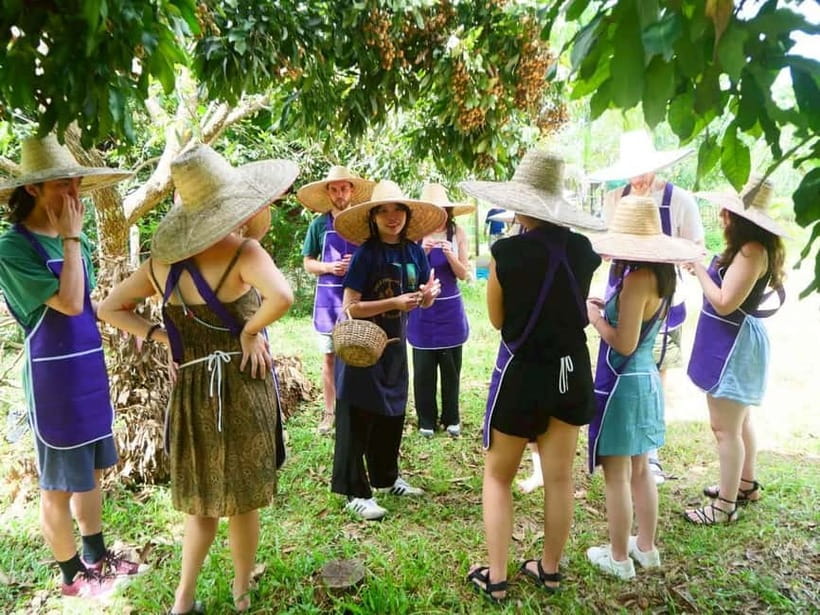
- Market first, not just a kitchen: you learn how to choose ingredients for Thai cooking right from the start.
- Herb garden walkthrough: you connect herbs and vegetables to the dishes you will cook.
- Make curry paste and more: from curry paste to stir-fry, soup, and spring rolls, you cook the foundations.
- Seasonal fruit picking: longans or mangoes depending on the month.
- Poolside downtime: after cooking, you can relax or even take a dip.
Thai kitchens got sat through and written up
- Half-Day Thai Cooking Class at Organic Farm in Chiang Mai★ 5.0 · 19,087 reviews
- Chiang Mai: Cooking Class, Market & Thai Herbs Garden Tour★ 4.9 · 4,824 reviews
- Chiang Mai: Authentic Cooking Class with Market & Farm Visit★ 4.9 · 4,546 reviews
- Thai and Akha Cooking Class in Chiang Mai★ 5.0 · 4,358 reviews
Why this Thai farm cooking class feels more real than a demo
This is not a show-and-tell class where you stand back and watch. You start with ingredients, learn what they are and why they matter, then cook. That shift is what makes the day stick with you after you head back to your hotel.
I also like the farm setting because it slows everything down. You get a proper countryside break outside the city, with time to walk through herbs and see how produce fits into the meal plan. And then, when you are done cooking, there is a chill area by the swimming pool.
The other big plus is the range of dishes. You are not limited to one plate. You work through building blocks like curry paste and then apply them across curry, soup, stir-fry, and spring rolls, plus Thai favorites such as Pad Thai.
Getting to the farm: how the 6 hours usually flow
You will be picked up in an air-conditioned vehicle from a hotel or accommodation within about 3 kilometers of Chiang Mai Old City. Morning pickup typically runs from 8:00 to 8:30, while the afternoon option usually runs from 3:00 to 3:30.
In practice, this kind of half-day schedule is great when you want Chiang Mai food without losing an entire day. It also means you can pair it with something else afterward, like a night market stroll or a relaxing massage, since you will still have energy.
The class is designed to run about 6 hours, so plan to dress for work and comfort. You will be moving around in the farm area and then cooking, so bring shoes you can stand in for a while.
Starting at the market: choosing Thai ingredients the practical way
Your day begins at a local market, where you explore fresh ingredients and learn how to pick what works best for Thai cooking. This part matters more than it sounds because Thai dishes rely on balance. If you pick the wrong aromatics or the wrong produce stage, your flavor profile can drift.
You will also get a sense of what the instructors consider essential. That helps when you cook later at home, because you will know what to prioritize instead of chasing every single item.
One theme I like from the experience feedback is the friendly guidance during this start. A guide named Louna is specifically noted for keeping the mood light, staying helpful, and stepping in when someone needs extra support. That is exactly the vibe you want when you are learning by doing.
Organic farm herb garden walk: where the flavors begin
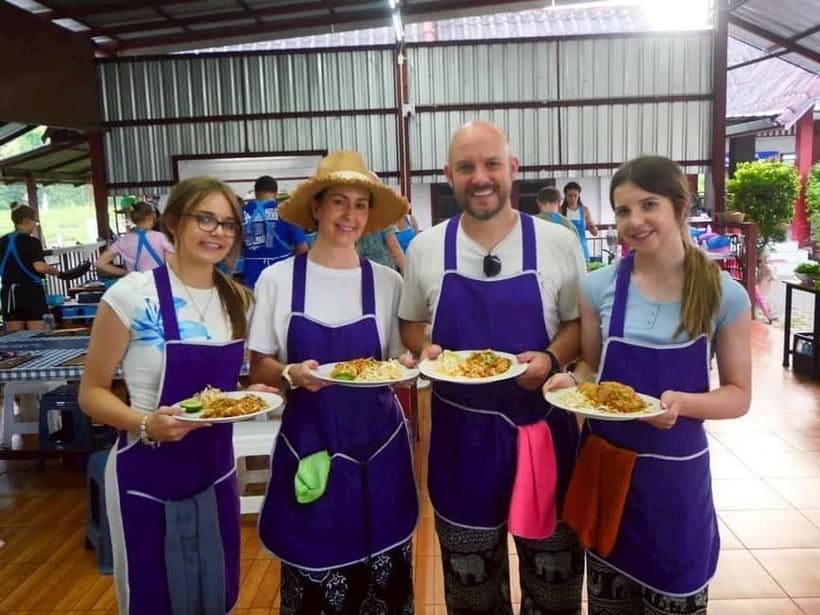
After the market, you head back to the farm for a stroll through the herb garden. This is where you connect the dots between what you bought and what you will cook.
You will see local herbs and ingredients used in class, and you get expert tips on how herbs and vegetables grow. Even if you are not planning to garden, it gives you better intuition for Thai cooking. You start to understand why certain flavors taste the way they do, and why fresh herbs matter.
This farm stop also gives you a breather. You are not rushing straight into a chopping frenzy. You get a little context, you learn the names, and you get your bearings so the kitchen part feels less chaotic.


Hands-on cooking workshop: from curry paste to spring rolls
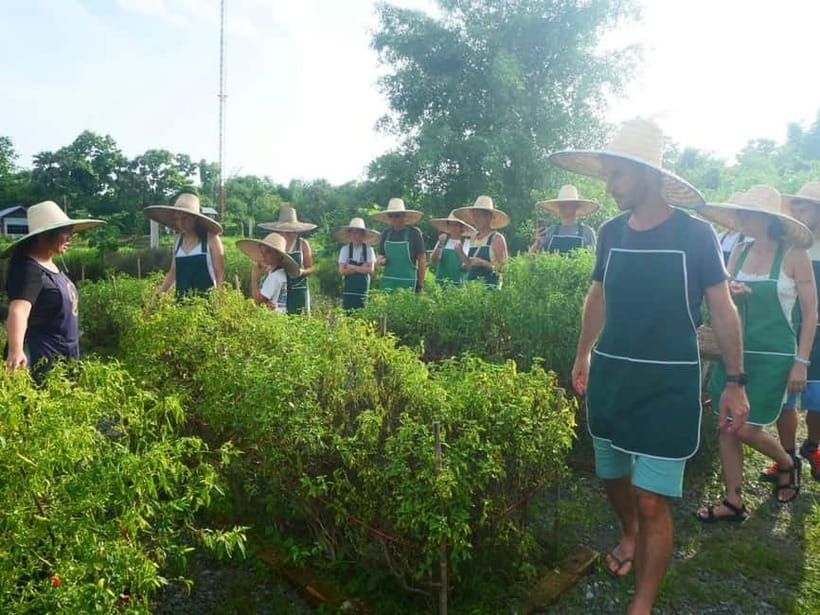
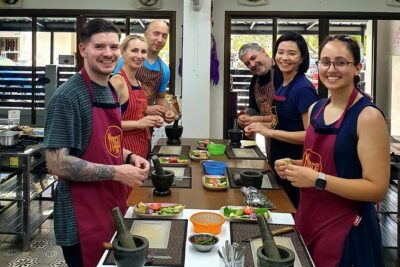
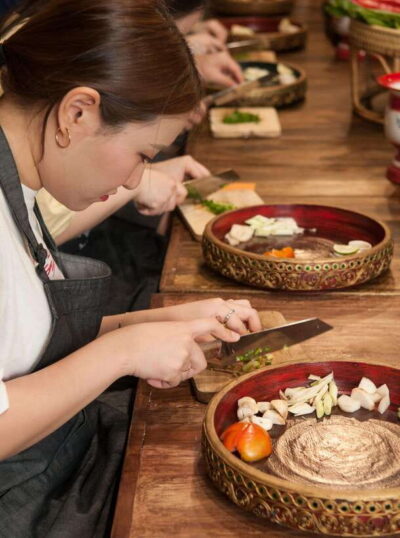
This is the heart of the experience. You cook classic Thai dishes in a workshop that is built around active participation, not watching from the sidelines.
Curry paste and curry foundation
You will learn how to make curry paste, then use it to build a curry. Curry paste is one of those Thai “core skills” because it controls depth and aroma. Once you understand the paste, the rest of Thai cooking becomes much easier to follow later.
The same principle carries into curry beyond paste. You learn how to apply the paste and balance the final flavors, rather than just following steps without context.
Soup, stir-fry, and spring rolls
Beyond curry, you also work on dishes like soup and stir-fry. You will cook spring rolls as well, which adds a different set of skills and textures compared with wet dishes.
This mix is a value point because it gives you a broader skill set. At home, you can recreate multiple styles, not just one curry.
Pad Thai and Tom Yum Goong
You will also make Thai favorites such as Pad Thai and Tom Yum Goong, a spicy prawn soup. The inclusion of these dishes is smart because they represent two major Thai flavor directions, one noodle-based and one sour-spicy and aromatic.
One consideration, again, is seafood and spice. If you cannot eat prawns or you dislike heat, you should communicate that early so the instructor can advise what can be adjusted.
The fruit-picking moment: longans and mangoes from the trees
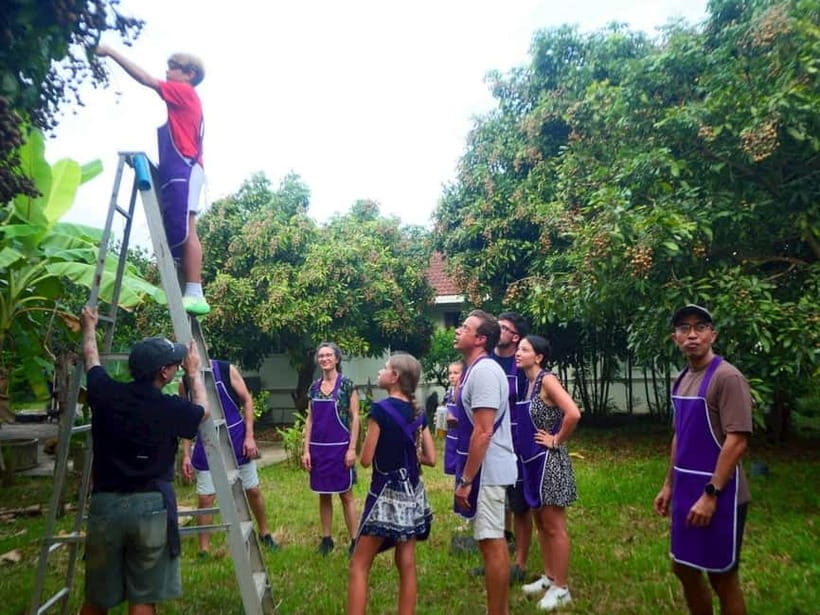
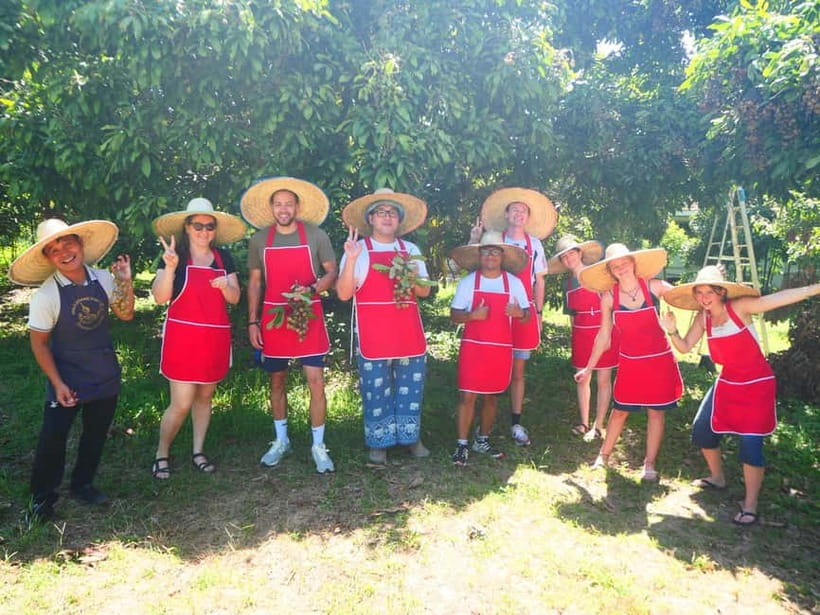
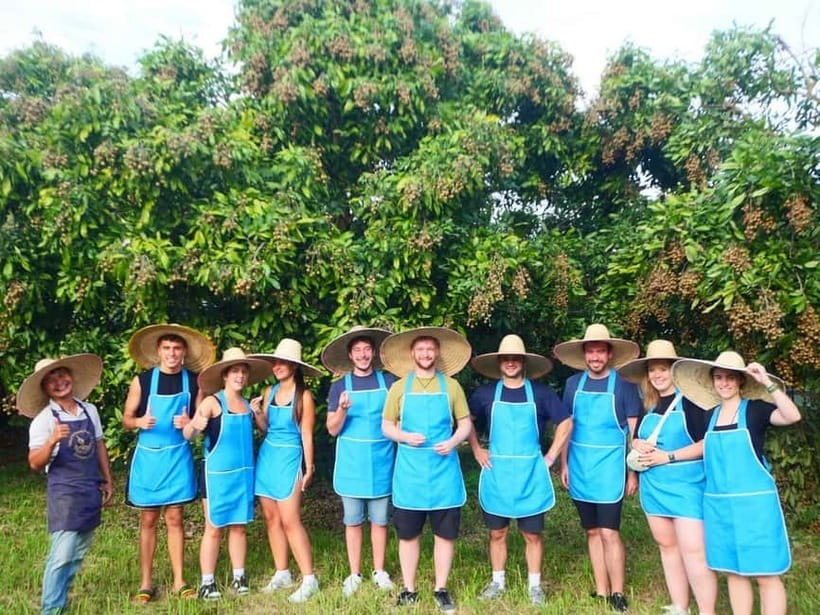
A fun, memorable part of the day is the chance to pick seasonal fruits directly from the trees. You can pick longans during July-August, and mangoes during March-May.
This is more than a cute photo stop. Fruit picking reinforces the farm connection and shows how seasonal produce influences what people eat and how dishes feel in different months.
If you are going outside those windows, you might not get the same fruit options, but you will still get the farm visit and ingredient-focused cooking experience.
Poolside chill time after you cook
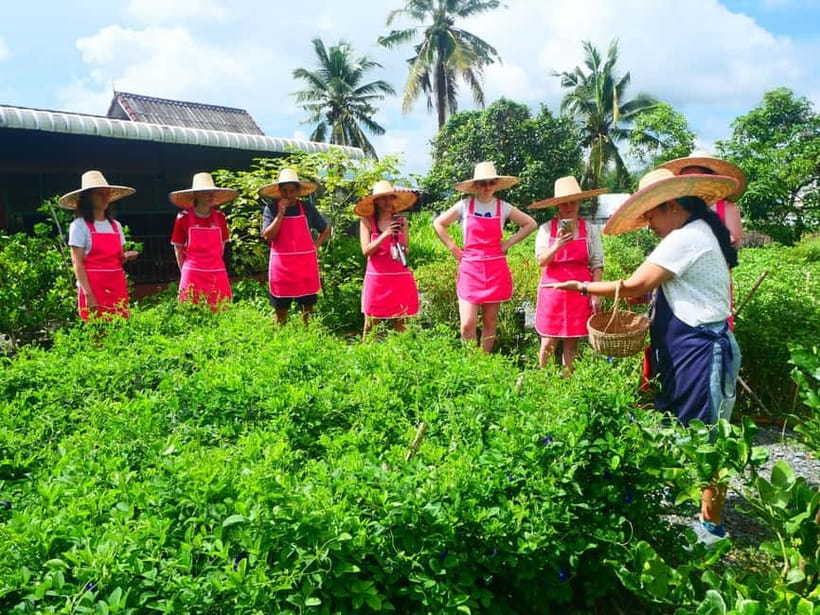
Once you finish cooking and eating, you can relax in the chill-out area by the swimming pool. If you feel like cooling off, you can take a refreshing dip.
That may sound like a small detail, but it is actually a quality-of-life win. Half-day classes can leave you cooked, tired, and sweaty. Here, you can reset your body and mood before you head back into the city.
It also helps you pace yourself. Cooking can be fast and hands-on. The pool time gives you a gentle landing, especially if you came from an early morning start.
English instruction, and what the class gives you to take home
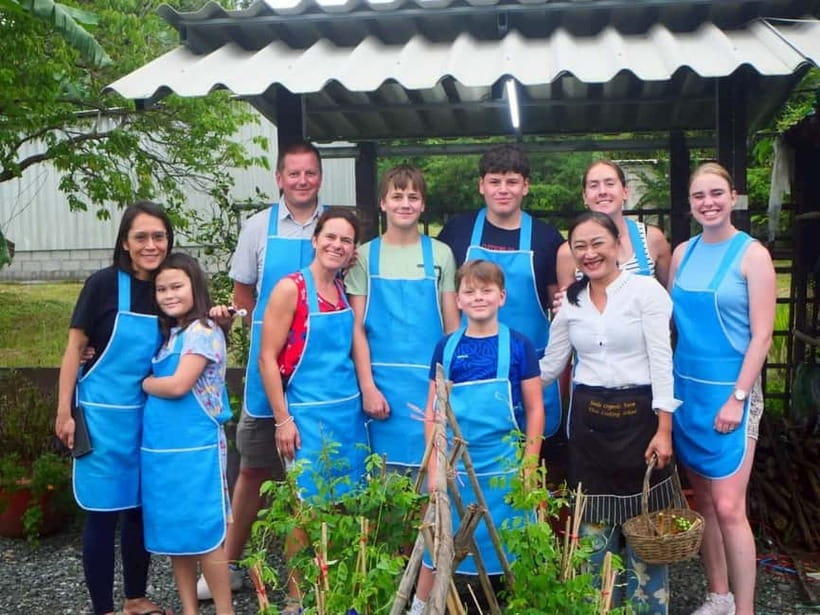
The instructor speaks English, and that matters because cooking class quality comes down to clarity. You need to understand what you are doing, not just follow motions.
You also receive an e-book with all recipes. That is useful because it turns a fun day into something you can reproduce later. Recipes are only half the story, though. The other half is the cooking foundation you build, like how curry paste works and how herbs are used.
There is also a photo album posted on Facebook. It is a nice extra if you want a visual reminder of what you made and how the day looked.
Price and value: what $28 gets you in the real world
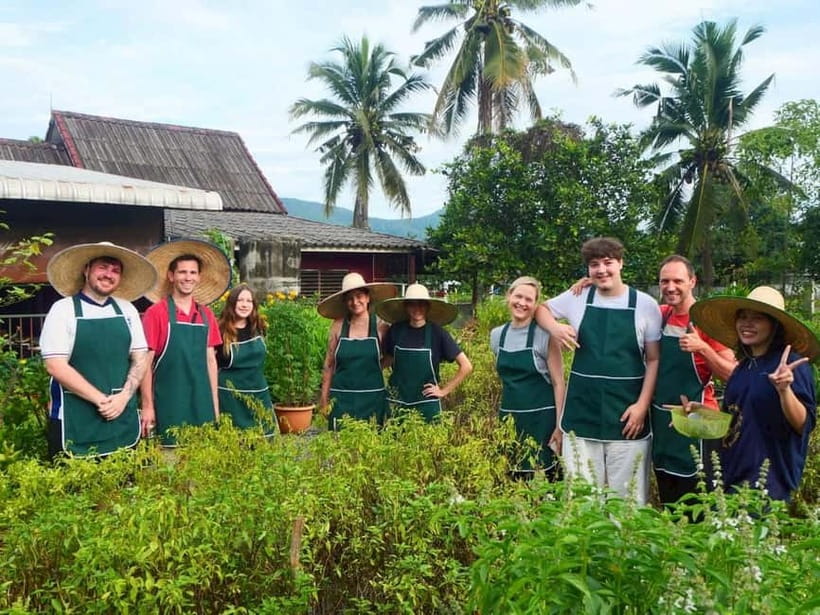
At $28 per person for around 6 hours, this is strong value for Chiang Mai. You are not only paying for a kitchen session. You are paying for a full experience loop: pickup, market ingredient learning, herb garden time, cooking instruction, and all ingredients.
It also includes air-conditioned transport, which is not always standard in more informal cooking setups. Add the e-book and recipe materials, plus a farm setting with a pool area, and the value becomes clearer.
Most importantly, you are paying for skills. If you only cared about eating, you could find Thai food anywhere. Here, you leave with technique, plus a way to think about flavors when you cook again later.
Who should book this class, and who should think twice
This class is ideal for:
- Food lovers who want to cook, not just eat
- People who like practical learning and hands-on instruction
- Anyone who wants a calmer countryside break outside Chiang Mai
- First-timers who want Thai staples explained through real ingredients
It might not be the best fit if:
- You avoid seafood and are not comfortable with dishes like Tom Yum Goong
- You strongly dislike spicy food and do not want heat adjustments
- You want a more “tour” style day with sightseeing only, not cooking effort
If you fall into a dietary or spice category, message ahead and ask what substitutions or adjustments are possible. Since the focus is classic dishes, communication helps you get the day you want.
A quick checklist before you go
Bring:
- Comfortable shoes for farm walking and time at the workshop
- Light, breathable clothing
- Any note about dietary needs, so the instructor can guide you
- Water bottle habits, since you are out in the morning or afternoon heat
Also, be ready to get your hands involved. This is a working cooking class, not a passive one.
Should you book Smile Organic Farm Cooking School near Chiang Mai?
Yes, I would book it if you want Thai food that makes sense. This experience is built around learning where flavors come from, then using those ingredients to cook curry paste, curry, soup, stir-fry, spring rolls, plus Pad Thai and Tom Yum Goong.
The best reasons to choose it are practical: you start at a market, you walk an herb garden, you cook multiple dishes, and you get a recipe e-book afterward. Then you get to cool down by the pool, which is a simple but welcome touch.
If spice and prawns are a dealbreaker, ask questions before you go. But if you are flexible and excited to cook, this is a solid half-day plan that feels authentic and worth the time.
FAQ
How long is the Thai cooking class?
It runs for about 6 hours.
What is the price per person?
The price is $28 per person.
Where does pickup happen?
Pickup is included from your hotel or accommodation within 3 kilometers of Chiang Mai Old City. Pickup time is between 8:00 and 8:30am for the morning course, or between 3:00 and 3:30pm for the evening course.
Is the cooking class taught in English?
Yes, the instructor teaches in English.
What dishes will I cook?
You will cook a variety of classic Thai dishes, including curry paste, curry, stir-fry, soup, spring rolls, Pad Thai, and Tom Yum Goong (spicy prawn soup).
Can I pick fruit during the class?
Yes. You can pick seasonal fruit from trees, including longans (July-August) and mangoes (March-May).
Is pool time included?
There is a chill-out area by the swimming pool, and you can take a refreshing dip if you want.
What is included in the price besides the class?
Air-conditioned vehicle, all cooking ingredients, an e-book with all recipes, and a photo album posted on Facebook are included.
Is there free cancellation?
Yes. You can cancel up to 24 hours in advance for a full refund.
Do I need to pay right away?
No. The option to reserve now and pay later is available, so you can book your spot without paying today.
Thai kitchens you can book into
What else made it into the Thailand notebook
What else made it into the Chiang Mai notebook
- Half day Long Neck hill tribe and Hmong hill tribe village
★ 5.0 · 21 reviews - Chiang Rai One Day: Golden Triangle, Laos Border, Long Neck Tribe
★ 3.5 · 21 reviews - Old Town Chiang Mai Food Tour with 10+ Local Dishes Tastings
★ 5.0 · 21 reviews - 5 Day Tuk Tuk Adventure in Chiang Mai – with driver
★ 5.0 · 21 reviews - 1 Hour Foot Relaxing – Free Transportation
★ 5.0 · 21 reviews - Rantong elephant sanctuary Chiangmai
★ 4.4 · 21 reviews
Cooking Classes, compared.
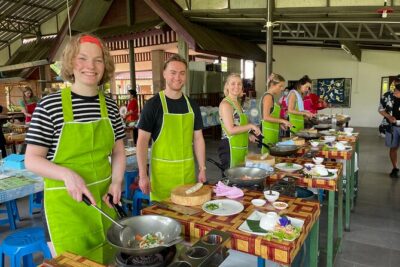 ★ 5.0Half-Day Thai Cooking Class at Organic Farm in Chiang MaiFrom $2919,087 reviews
 ★ 4.9Cooking Class, Market & Thai Herbs Garden TourFrom $314,824 reviews
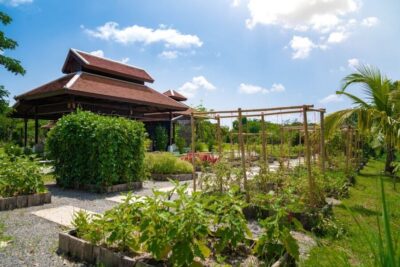 ★ 4.9Authentic Cooking Class with Market & Farm VisitFrom $344,546 reviews
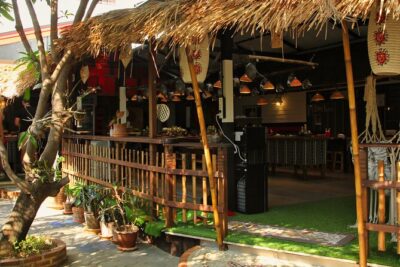 ★ 5.0Thai and Akha Cooking Class in Chiang MaiFrom $424,358 reviews
 ★ 5.0Phuket Thai Cooking Class with Market Tour OptionFrom $652,665 reviews
 ★ 4.9Hands-on Thai Cooking Class and Market TourFrom $451,614 reviews
 ★ 4.9Cooking Class with Market and PickupFrom $251,365 reviews
 ★ 4.9Tingly Thai Cooking School Half-Day Cooking ClassFrom $411,191 reviews
Browse the lists this tour appears in