
REVIEW · YOGA, MEDITATION AND MONK CHATS
Chiang Mai Temples Visit Walking Tour with Ex-Monk Guide Part 1
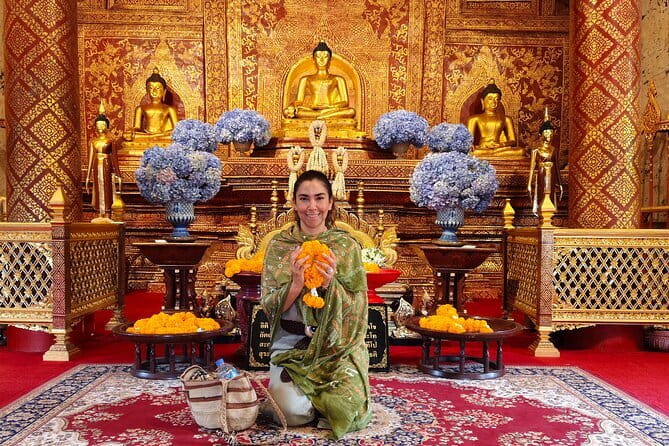
This Chiang Mai walking tour turns temple sightseeing into a real learning walk, led by an English-speaking guide with TAT license and former monastic experience. What I like most is the way you get context fast, not just photos and facts, plus the route stays friendly at a walking pace for most people. One thing to plan for: a couple of temple entrances are not included, so you may need to pay onsite at Wat Phra Singh and Wat Chedi Luang.
You’ll also feel the practical value right away. The tour starts at the Three Kings Monument, and the guide sets the scene before you move, so the old city feels easier to understand as you go. And if you want a first-day orientation to Buddhism in Thailand, this is the kind of outing that helps you leave with a clearer sense of what you’re actually seeing.
In This Review
- What makes this temple walk worth your time
- A former monk guide, and why that changes everything
- Three Kings Monument start: a quick orientation before you walk
- Wat Sadeu Muang: the city pillar idea makes Chiang Mai feel grounded
- Wat Phra Singh: a 14th-century star, with an extra entrance fee
- Wat Phan Tao: teakwood ordination hall and Lanna style in one stop
- Wat Chedi Luang Varavihara: the biggest stupa moment
- Walking pace, timing, and the small-group advantage
- Price and value: $25.96 feels fair for what you actually get
- Who should book this temple walk (and who might not)
- Tips to get the most out of the walk
- Should you book Chiang Mai Temples Visit Walking Tour with Ex-Monk Guide Part 1?
- FAQ
- What time does the tour start, and where do I meet?
- How long is the Chiang Mai temple walking tour?
- Is the entrance fee included for all the temples?
- Who guides the tour, and what languages are offered?
- How large is the group?
- Is the ticket available on your phone?
- What if the weather is bad or I need to cancel?
What makes this temple walk worth your time
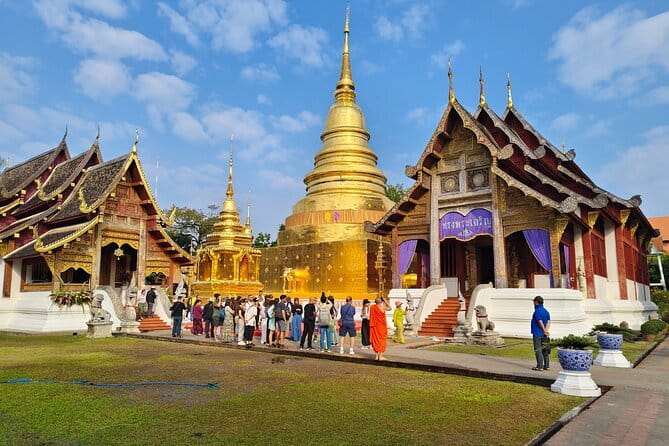
- Former monk perspective: You’re not only looking at buildings, you’re hearing how Buddhism thinks about merit, practice, and everyday life.
- Small group size: Maximum 20 people, which makes questions easier and keeps the pace comfortable.
- Easy old-city flow: The stops are close enough that the walking feels light for a 3.5-hour tour.
- A guide you can request: In the feedback, people consistently recommend the ex-monk guide named Katoon, often also written as Cartoon.
- Balanced mix of temple types: From city pillars to ordination halls and a huge stupa, you see different expressions of Lanna religious life.
- Free entry at several stops: Some temples are listed as free, but two key sights require paid entrance.
Thai retreat mornings got a slower read
- Wat Phra That Doi Suthep spiritual Sunrise Tour with an Ex-monk★ 5.0 · 798 reviews
- Spiritual Sunrise Wat Doi Suthep, Pha Lat, Alms & Meditation★ 4.9 · 674 reviews
- Meditation Retreat and Self-Care in Nature★ 5.0 · 46 reviews
- Half-Day Yoga, Meditation, and Thai Cultural Immersion in Chiang Mai★ 5.0 · 40 reviews
A former monk guide, and why that changes everything
The biggest reason this tour lands so well is the guide. You’re walking with someone who has lived Buddhist practice from the inside, not just studied it on paper. In the feedback, people repeatedly highlight how the guide explains Buddhism in plain language, with patience, and with enough detail that you understand the meaning behind what you’re looking at.
I also like that the tour is run by an English or Chinese-speaking guide with a TAT license. That matters. It signals a level of professionalism, and it usually means you get more than random “point and shoot” narration.
Finally, the “Part 1” feel is smart. You start with some of the best-known historic and symbolic spots in central Chiang Mai. It’s a great setup for the rest of the city temple loop later, because you build a mental map early instead of bouncing around guessing.
Three Kings Monument start: a quick orientation before you walk
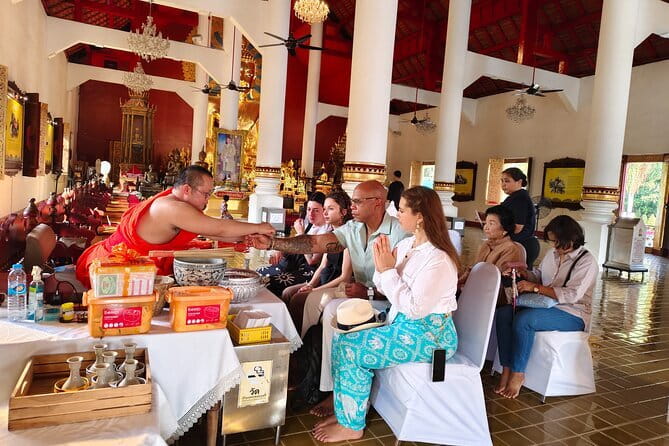
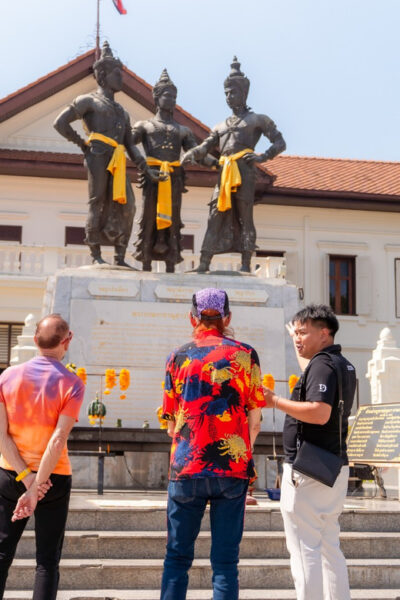
Your tour begins at the Three Kings Monument. This is not just a random pin on a map. It’s a logical kickoff point for understanding the city, because you can gather context immediately before you enter the temple world.
Expect the guide to introduce the route at the start and set expectations for what you’ll see. That early orientation helps you stay focused during the stops. It’s also a nice way to reduce first-day stress if you’re new to Chiang Mai, since you’re not trying to figure out “what goes where” while tired.
The tour runs about 3 hours 30 minutes, and it starts at 9:00 am. That morning timing is a practical advantage. Temples are more pleasant to visit earlier, and you get a calmer start to your day.
Wat Sadeu Muang: the city pillar idea makes Chiang Mai feel grounded
Next up is Wat Sadeu Muang, where you’ll hear about the Inthakhin temple and the city pillar concept. This stop matters because it links religious space to the living city. Instead of treating temples as stand-alone monuments, the guide frames them as part of Chiang Mai’s spiritual and civic structure.
You’ll spend about 30 minutes here. The time is short enough that the tour keeps moving, but long enough for a real explanation, which is where this kind of guided walk earns its keep. If you’re the type who likes to know why a place is important, this is a strong early anchor.
Also, this stop is listed as free entry. That’s not a headline feature, but it’s a helpful value point when you’re budgeting your day.
Wat Phra Singh: a 14th-century star, with an extra entrance fee
Wat Phra Singh is one of Chiang Mai’s headline temples, and you’ll feel it right away. This is where the tour gives you the classic “big temple experience” in a focused way, including a look at the architecture and key temple elements tied to Lanna artistic style.
You’ll be there about 45 minutes, which is a good length. It gives you time to slow down, notice design details, and absorb what the guide explains instead of rushing through.
One practical consideration: entrance is not included for Wat Phra Singh. You’ll want to budget for that onsite fee and keep it in mind when you decide if this $25.96 tour is your best value today. The good news is you’re not paying for only a quick glance. This is a major stop on the walk, so it fits the time spent.
Thai walking routes sat in the same notebook

Wat Phan Tao: teakwood ordination hall and Lanna style in one stop
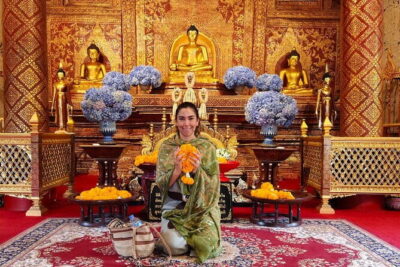
Wat Phan Tao is known for its ordination hall (Wihan) built entirely of teakwood. The tour highlights that craftsmanship, and the guide’s explanations help you see beyond the “pretty hall” factor.
You’ll also hear about how the space served as a throne hall during the reign of King Mahotara Prateth. That detail matters because it shows how religious spaces in Chiang Mai were never isolated. They also supported power, ceremony, and social structure.
This stop is free entry. So you get strong cultural value without an extra fee, which helps balance the two paid temples later in the route.
You’ll spend about 30 minutes. It’s enough time to notice the woodwork vibe and listen to the meaning behind it, without turning the day into an endurance test.
Wat Chedi Luang Varavihara: the biggest stupa moment
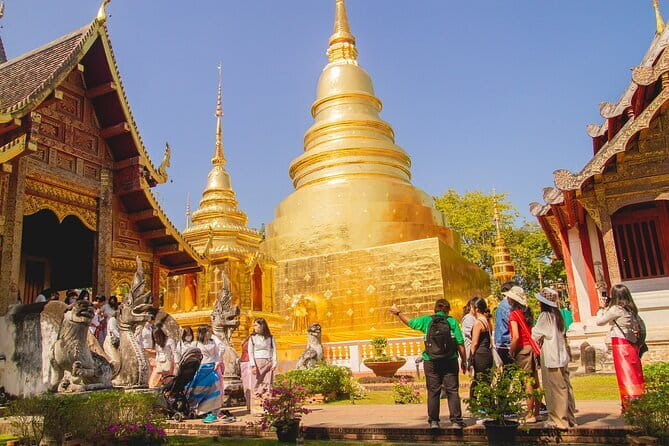
The last temple stop is Wat Chedi Luang Varavihara, and this is a big finale. The tour frames it as having the largest stupa in Chiang Mai, and walking around the compound gives you that classic Lanna-style impression at close range.
You’ll spend about 45 minutes here. That length works well because a major stupa site can feel visually dense. You need time for your eyes to adjust, and you benefit from a guide who can tell you what to look for.
This is another place where entrance is not included. So if you’re trying to keep the day cheap, plan ahead. If you’re okay paying for the biggest sights, this is the trade you make to see the most iconic temple form in the route.
The payoff is that you end the tour in a place that feels “destination level,” not just a quick stop for a landmark photo.
Walking pace, timing, and the small-group advantage
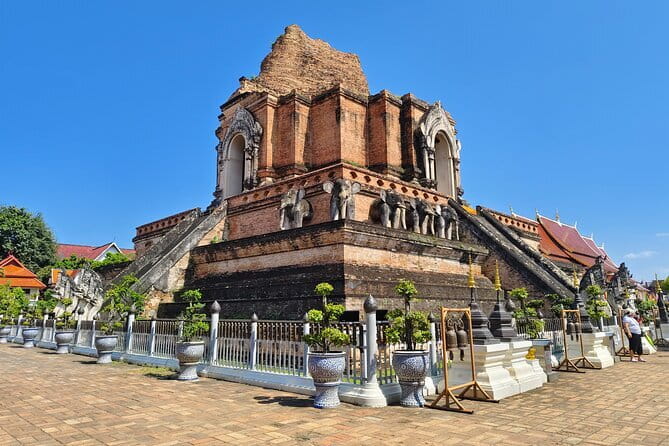
This is billed as a walking tour, and the route works. A consistent theme in the feedback is that nothing is very far apart, and the walking feels light. That lines up with the stop pattern too: five stops over about 3.5 hours.
The tour size cap is 20 travelers, which you can feel in the experience. Smaller groups mean you get a little more attention and fewer long waits at each temple. It also tends to keep the guide’s explanations clear, rather than turning into a hurried “everyone listen at once” lecture.
The tour also notes it’s near public transportation. That’s useful if you’re staying somewhere slightly off the tourist core and don’t want to overthink getting to the start.
One more real-world point: the experience requires good weather. If skies are bad, expect possible rescheduling or a refund option (offered by the operator). So check the forecast before you lock it in, especially if you hate shifting plans.
Price and value: $25.96 feels fair for what you actually get
At $25.96 per person, this tour is priced like a “smart add-on day,” not a luxury experience. Here’s why it can still feel like good value.
You get a licensed guide and language support (English or Chinese). That alone can be worth more than the ticket cost in many places, especially when the guide’s background includes former monastic experience, which changes the quality of the explanations.
You also get a mix of stops, with some listed as free entry and others not included. So your final spending isn’t just the tour fee. But it’s still a budget-friendly way to hit several key temples in one go, with guided context for each.
The time matters too. Three and a half hours is long enough to learn, but short enough that you’re not losing your whole day. It’s a strong option if you want temple depth without turning Chiang Mai into a full-day temple marathon.
Who should book this temple walk (and who might not)
This is a great fit if you:
- Want an intro to Buddhism in Chiang Mai that helps you interpret what you’re seeing.
- Like guided storytelling tied to real religious practice, not just architecture trivia.
- Are on a first day in town and want a route that gives you confidence moving around the old city.
- Prefer a small-group walking format with room for questions.
You might consider a different option if you:
- Only want to “see temples fast” with minimal explanation.
- Expect every entrance fee to be included in the ticket price.
- Have mobility limits that make steady walking in temple areas uncomfortable (the tour is described as walking, and most temple grounds require some walking and stairs).
Tips to get the most out of the walk
A temple tour runs on attention. The guide’s best material is the “why,” so come with curiosity and show up on time at the meeting point.
Bring comfortable walking shoes. Even if the walking is described as light, you’re still moving between temple compounds for several hours.
Also, since Wat Phra Singh and Wat Chedi Luang entrance fees are not included, it’s smart to set aside a bit of money before you start the tour. That way, the only surprise you’ll have is how much you understand by the end.
Finally, if possible, try to align with the guide name you see recommended most often in feedback, Katoon (also written as Cartoon). People consistently describe this guide as warm, clear, and especially strong at explaining Buddhism and temple meaning.
Should you book Chiang Mai Temples Visit Walking Tour with Ex-Monk Guide Part 1?
I’d book it if you want more than temple postcards. This tour’s strength is the guide perspective. When someone explains the logic of Buddhist practice and the significance of sacred spaces, the temples stop being random stone and start feeling like living culture.
The price is reasonable for the time and the licensed guidance. The main caution is budget and timing around entrance fees for two stops, plus the weather requirement.
If you want a first taste of Chiang Mai temples with real explanations, this is a solid choice.
FAQ
What time does the tour start, and where do I meet?
The tour starts at 9:00 am and the meeting point is Three Kings Monument.
How long is the Chiang Mai temple walking tour?
The duration is about 3 hours 30 minutes.
Is the entrance fee included for all the temples?
No. Entrance is listed as not included for Wat Phra Singh and Wat Chedi Luang Varavihara. Other stops on the route are listed as free.
Who guides the tour, and what languages are offered?
The tour includes an English or Chinese-speaking guide holding a TAT license. Feedback also highlights a former monk guide named Katoon (sometimes written as Cartoon).
How large is the group?
The tour has a maximum of 20 travelers.
Is the ticket available on your phone?
Yes, the tour uses a mobile ticket.
What if the weather is bad or I need to cancel?
The experience requires good weather. If it’s canceled due to poor weather, you’ll be offered a different date or a full refund. You can cancel for a full refund up to 24 hours in advance.
Guided Thai outings, continued
What else made it into the Thailand notebook
Meditation mornings and monk chats, continued
What else made it into the Chiang Mai notebook
- Half day Long Neck hill tribe and Hmong hill tribe village
★ 5.0 · 21 reviews - Chiang Rai One Day: Golden Triangle, Laos Border, Long Neck Tribe
★ 3.5 · 21 reviews - Old Town Chiang Mai Food Tour with 10+ Local Dishes Tastings
★ 5.0 · 21 reviews - 5 Day Tuk Tuk Adventure in Chiang Mai – with driver
★ 5.0 · 21 reviews - 1 Hour Foot Relaxing – Free Transportation
★ 5.0 · 21 reviews - Rantong elephant sanctuary Chiangmai
★ 4.4 · 21 reviews
Yoga, Meditation and Monk Chats, compared.
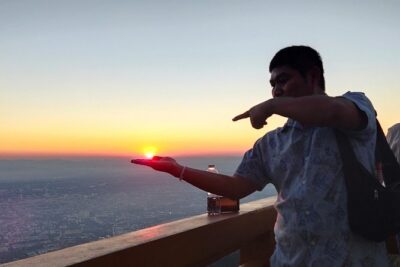 ★ 5.0Wat Phra That Doi Suthep spiritual Sunrise Tour with an Ex-monkFrom $64798 reviews
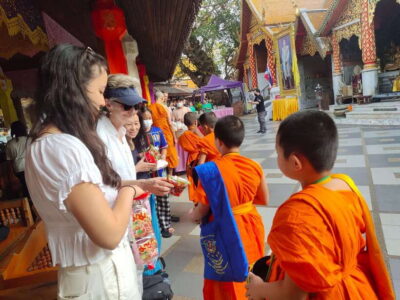 ★ 4.9Spiritual Sunrise Wat Doi Suthep, Pha Lat, Alms & MeditationFrom $59674 reviews
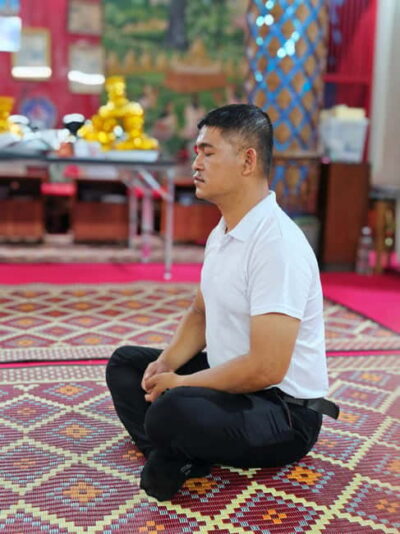 ★ 4.5Evening Chanting & MeditationFrom $2069 reviews
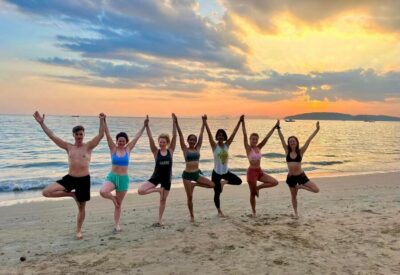 ★ 4.7Sunset Yoga Balance Join-in ClassFrom $2357 reviews
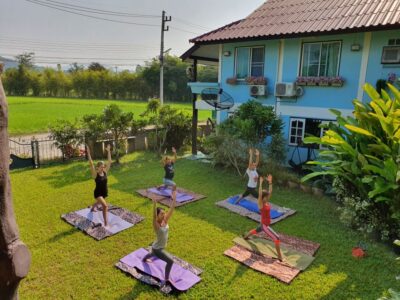 ★ 5.0Meditation Retreat and Self-Care in NatureFrom $4846 reviews
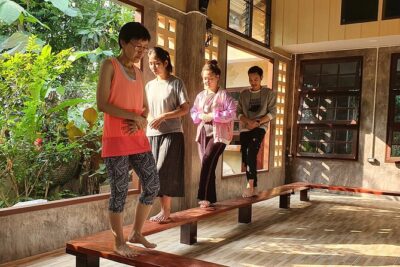 ★ 5.0Half-Day Yoga, Meditation, and Thai Cultural Immersion in Chiang MaiFrom $7140 reviews
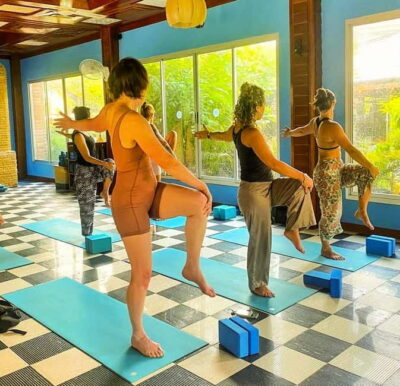 ★ 4.8Yoga Class In Paradise – All Levels Welcome!From $1130 reviews
 ★ 4.9Sunrise Yoga Balance Join-in ClassFrom $2322 reviews
Browse the lists this tour appears in