
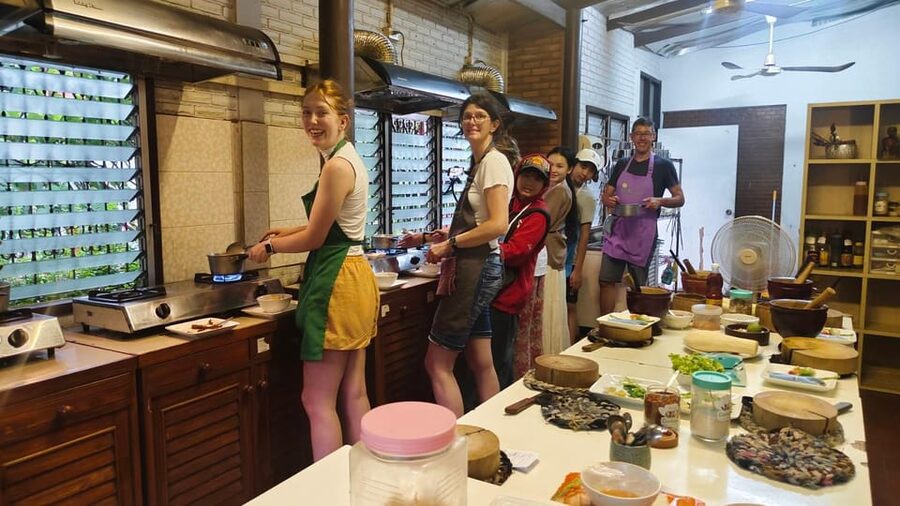
REVIEW · COOKING CLASSES
Chiang Mai: Morning Cooking Class with Market Visit
Thai flavors start before the first wok.
This half-day in Chiang Mai combines a local market visit with an organic garden stop, then turns it into hands-on Thai cooking in an air-conditioned studio.
I especially love the way you shop for ingredients first, so recipes make sense when you start cooking. I also like that the class uses an English-speaking instructor and lets you choose from classic dishes like Pad Thai, green curry, and Tom Yum Kung.
One thing to plan carefully: pickup timing is strict. The driver waits no longer than 5 minutes after the scheduled time, and you want to be ready so you do not miss the market portion.
In This Review
- Key highlights worth waking up for
- Morning pickup and why empty-stomach planning helps
- Market visit: how you learn Thai flavor by shopping first
- Organic garden and herb picking that makes cooking feel more exact
- Inside the air-conditioned studio: learning Thai cooking skills, not just recipes
- Your choose-your-menu cooking flow: appetizer, soup, stir-fry, curry paste, dessert
- Starters you can choose
- Main course options
- Soup choices
- Curry choices
- Dessert finish
- Eating your work, then taking the recipes home in PDF form
- Price and value check: what $41 buys you in Chiang Mai
- Who should book this cooking class, and who might not love it
- Should you book the Chiang Mai morning cooking class with market visit?
- FAQ
- How long is the Chiang Mai morning cooking class?
- What does the class cost, and what is included?
- Do I get to choose which dishes to cook?
- What about dietary needs like vegan, Halal, or gluten-free?
- Is hotel pickup included, and what time does it happen?
- What should I bring or avoid?
Key highlights worth waking up for
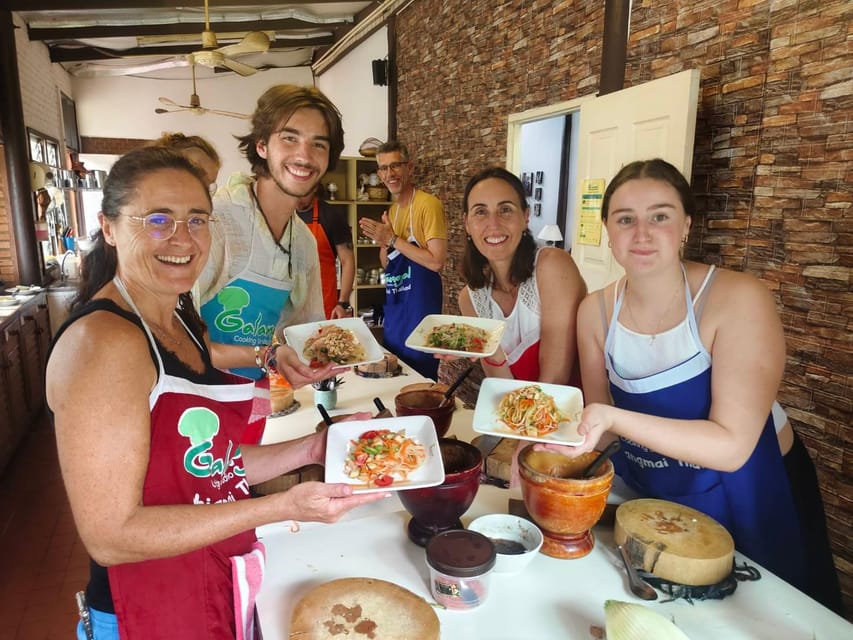
- Fragrant market shopping for the real ingredients behind Thai flavor
- Organic garden and herb picking to understand Thai produce the practical way
- Choose your own menu from popular starters, mains, soups, and curry styles
- Cook a total of 6 dishes, including a curry paste component and a sweet finish
- English instruction that works even if you are new to Thai cuisine
- Take-home PDF recipes so you can recreate your favorites at home
Thai kitchens got sat through and written up
- Half-Day Thai Cooking Class at Organic Farm in Chiang Mai★ 5.0 · 19,087 reviews
- Chiang Mai: Cooking Class, Market & Thai Herbs Garden Tour★ 4.9 · 4,824 reviews
- Chiang Mai: Authentic Cooking Class with Market & Farm Visit★ 4.9 · 4,546 reviews
- Thai and Akha Cooking Class in Chiang Mai★ 5.0 · 4,358 reviews
Morning pickup and why empty-stomach planning helps
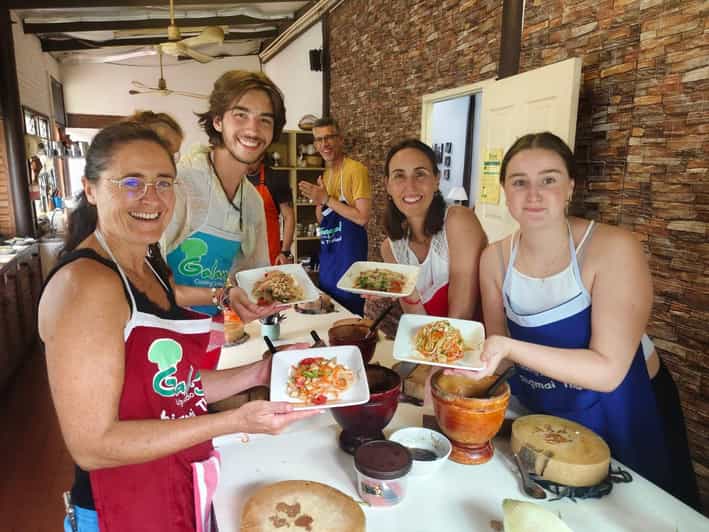
This runs as a true morning activity, with hotel pickup in Chiang Mai between about 8:30 and 9:00 AM. The driver should arrive before 9:00 AM, but traffic and the number of pickup points can affect the exact moment, and the driver will wait no longer than 5 minutes after your scheduled pickup.
That matters because the day starts with ingredients, not just cooking. You will want your mind fully switched on, ready to smell, look, and ask questions at the market. The operator also asks you to come with an empty stomach, which sounds intense, but it helps because you are not rushing through the food portion while you are already full.
Pickup covers many hotels in the old city area, Santitham, and along Huay Keaw Road up to Maya Shopping Mall, plus some additional roads in select parts of Nimmanhaemin, Sirimongkrajan, Wat Ket, and a few neighborhood areas. If your hotel is not in the pickup zone, you will be told in advance and you can go on your own to the market or cooking studio.
Duration is about 5 hours, so you get a complete arc without burning your whole day. It is long enough to cook multiple dishes, short enough to still do temples or a café break later.
Market visit: how you learn Thai flavor by shopping first
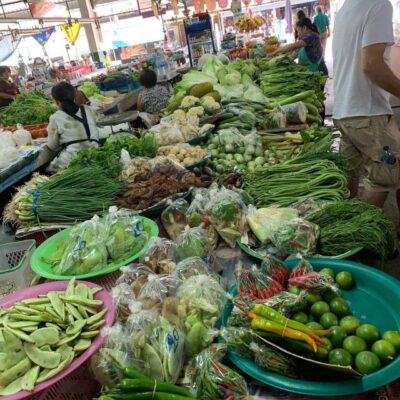
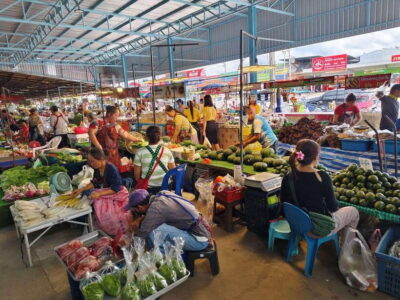
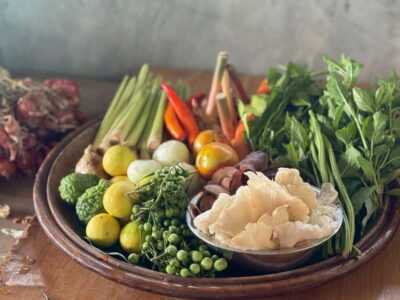
The day’s first big moment is the market stop, where you can smell the ingredients as you walk the stalls. This is not just wandering. You are there to see what Thai cooks actually buy when they are building flavor, especially the aromatics that show up in curry pastes, soups, and stir-fries.
What I like about the market segment is that it trains your eye. You start noticing the practical differences between herbs you might only recognize as “green stuff” back home. You also get a sense of which items look fresh enough to matter once they hit the pan.
The class includes a market tour depending on interest, so if you want extra time to ask about ingredients, you should lean into it right away. If you are unsure what to look for, that is exactly when an English-speaking instructor helps, because you can translate the experience into names and uses.
A nice detail from real-world class experiences is how instructors explain what ingredients do, and how some of them can show up in other cuisines too. That makes the market feel useful, not just scenic. You also learn the rhythm of the Thai ingredient list, so when you get to the studio, it is less guessing.
Organic garden and herb picking that makes cooking feel more exact
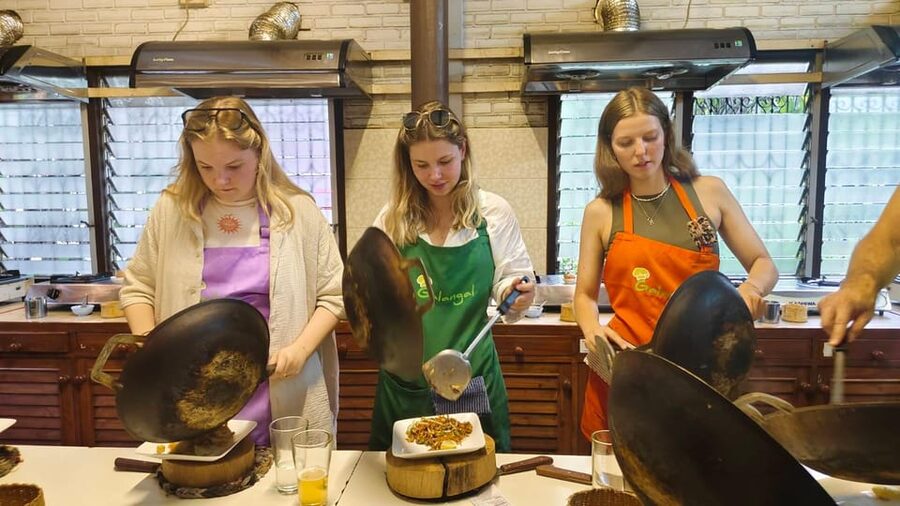
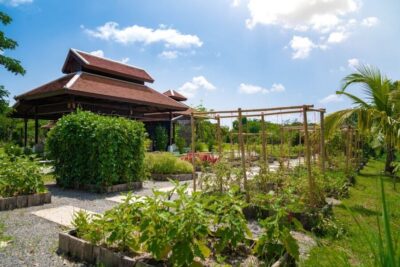
After the market, you head to an organic garden and explore a small organic farming setup. This part is where the class turns from shopping to understanding.
You can pick your own herbs and ingredients, which is a subtle but important difference. Instead of only reading about Thai flavors, you handle the plants and connect them to what you will cook later. It also helps you learn how Thai vegetables and herbs grow, which makes sense of why certain herbs are used so often in Thai dishes.
This stop is also a great reset from city smells. The pace shifts a little, and you get time to focus. If you cook at home, that memory stays with you. You will remember that the ingredient came from a garden, not a sealed package, and you will likely cook with more attention to freshness.
One practical consideration: garden time means you might get a little warm and walk around a bit. Wear comfortable shoes, especially if you plan to pick herbs and stand while asking questions.
Inside the air-conditioned studio: learning Thai cooking skills, not just recipes
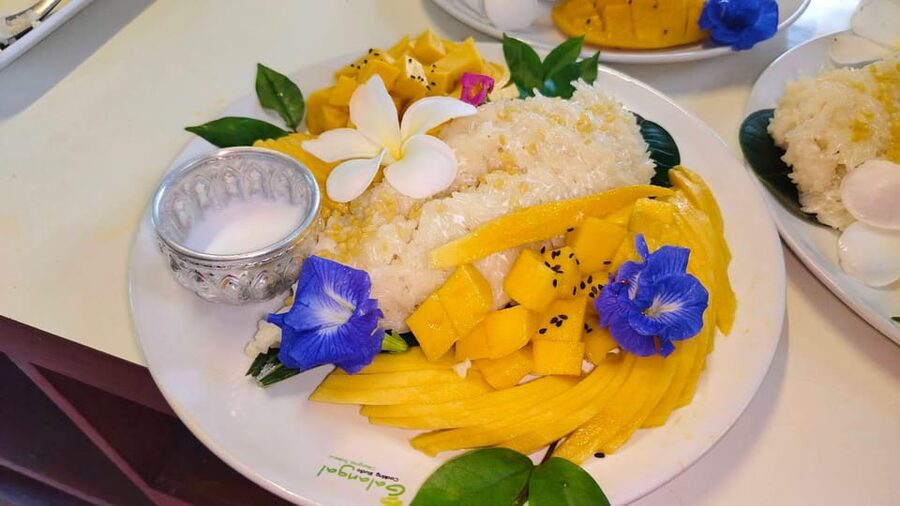
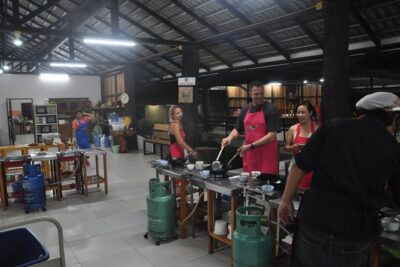
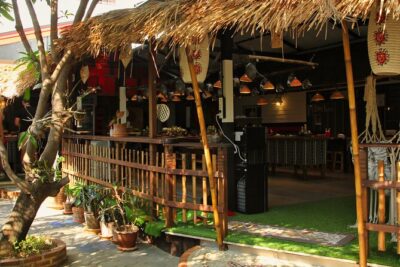
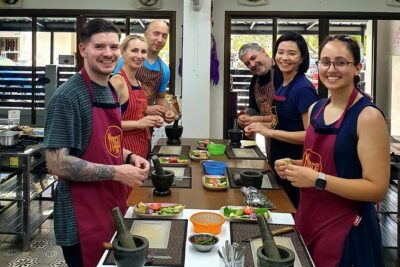
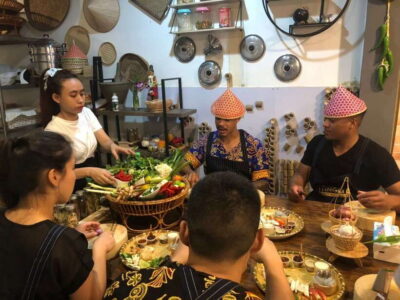
Once you arrive at the cooking studio, the tone changes from “look around” to “learn technique.” The class uses an indoor kitchen and air-conditioned dining room, which is a relief in Chiang Mai humidity.
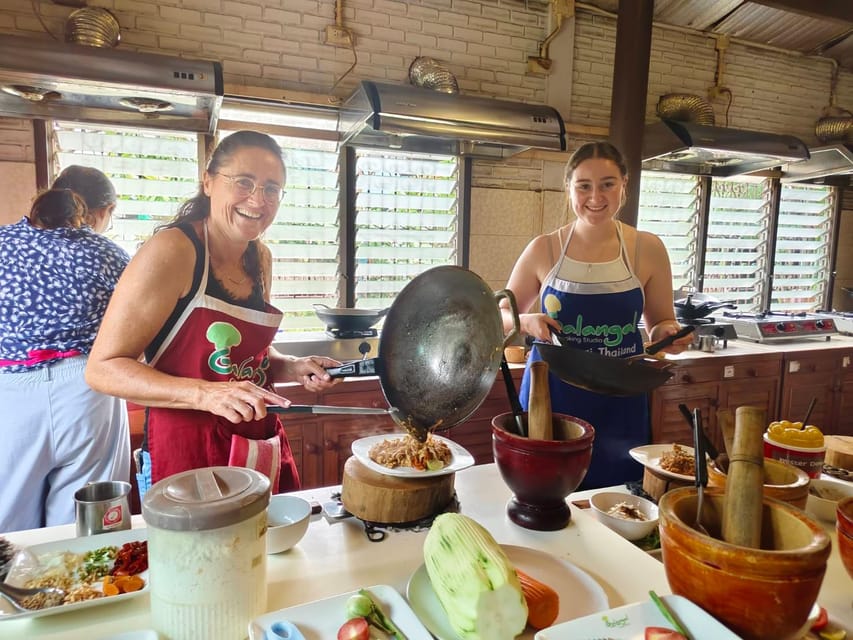
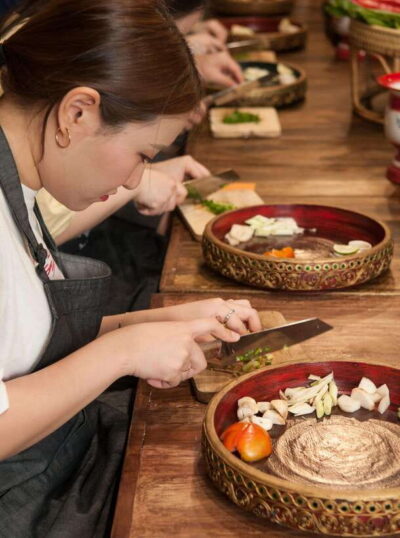
This is where you start learning Thai cooking skills and practice them with guidance from the expert staff. The instruction is English, and multiple people highlight how clearly the instructor explains steps. That clarity matters when you are making sauces and pastes, because Thai cooking depends on small decisions: how finely to chop, how to combine aromatics, and when to stop cooking so flavor stays bright.
You will cook a total of 6 dishes. You choose categories like an appetizer, a soup, a stir-fried main, and a curry paste component, plus you finish with a dessert. Even if you are a complete beginner, this structure works because you build from simpler items to stronger flavor profiles.
The studio experience can also be very personal depending on the day. Some schedules can run with fewer people, which means you get more step-by-step feedback. If you do best with lots of attention, that is a real benefit.
Dietary needs are handled too. The class is available for vegan, vegetarian, Halal, and gluten-free diners, and it also supports allergies. That does not mean every single ingredient is always identical across every option, but it does mean the class is used to adapting plans. If you have allergies, treat it as a conversation: be clear, and ask how your dish will be adjusted.
Thai market visits sat in the same notebook
Your choose-your-menu cooking flow: appetizer, soup, stir-fry, curry paste, dessert
This is not a fixed “one-size-fits-all” menu. You pick what you want to cook from several classic options. That is one of the biggest reasons this class feels worth the time, because you are steering the experience toward your taste.
Starters you can choose
Pick one:
- Som Tam (papaya salad)
- Por Pia Thod (spring rolls)
- Larb Kai (chicken salad)
- Yam Woon Sen (glass noodle salad)
If you want something tangy and fresh, Som Tam is a strong choice. If you want crunch and a snack vibe, spring rolls work well. If you like savory herb-forward salads, Larb Kai and Yam Woon Sen are good directions.
Main course options
Pick one:
- Pad Thai (Thai fried noodles)
- Pad See Ew (stir-fried chicken with fresh noodles)
- Kai Pad Med Mamuang Him Ma Pan (chicken with cashew nuts)
- Pad Kaphao Kai (minced chicken with holy basil)
Pad Thai is the most familiar for many people, and it is a good way to learn the Thai balance of sweet, sour, salty, and savory. If you like sauce-heavy noodle dishes, Pad See Ew is a great match. If you prefer deeper savory comfort, cashew chicken and holy basil chicken tend to satisfy.
Soup choices
Pick one:
- Tom Yum Kung (hot and sour prawn soup)
- Tom Kha Kai (chicken soup with coconut milk)
- Tom Kha Je (vegan soup with coconut milk)
- Tom Zap Kai (hot and sour with chicken)
Tom Yum Kung is the classic “hot and sour” hit. If you prefer creamy coconut notes, Tom Kha Kai or Tom Kha Je is the move, and Tom Kha Je is your vegan coconut option.
Curry choices
You can choose curry style:
- green, red, yellow, Massaman, or Panang curry
Curry is where Thai flavor can feel both bold and structured. The class also includes working with curry paste, so you are not just eating curry. You are learning the flavor engine.
Dessert finish
After your main dishes, you make a sweet:
- mango sticky rice with ice cream
- Kuay Tod (fried banana)
Mango sticky rice tends to feel like the clean finish. Fried banana gives you warm, crispy sweetness. Either way, it is a satisfying end to a cooking marathon that stays around 5 hours total.
Eating your work, then taking the recipes home in PDF form
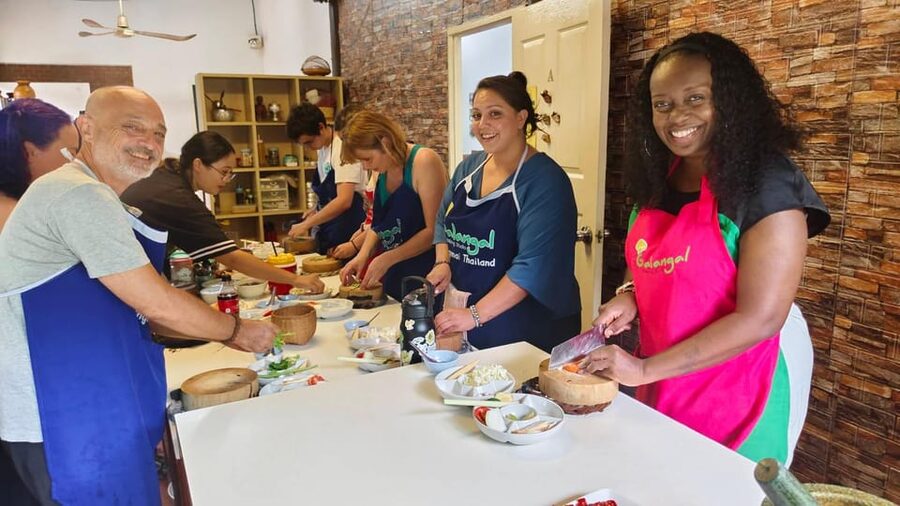
After cooking, you eat what you made. That sounds obvious, but in cooking classes it is not always guaranteed that you get to enjoy the food you spent time making. Here, you finish by eating your creations, which helps everything click. You learn what it should taste like, not just what it looks like.
Then you get PDF versions of the recipe book to take home. For me, that is the main practical takeaway. Memories fade fast, but a recipe file becomes a repeatable reference for when you want to cook these dishes again.
This PDF format is also useful for substitutions later. If you travel again, you can compare ingredient availability and still follow the method and flavor logic.
Price and value check: what $41 buys you in Chiang Mai
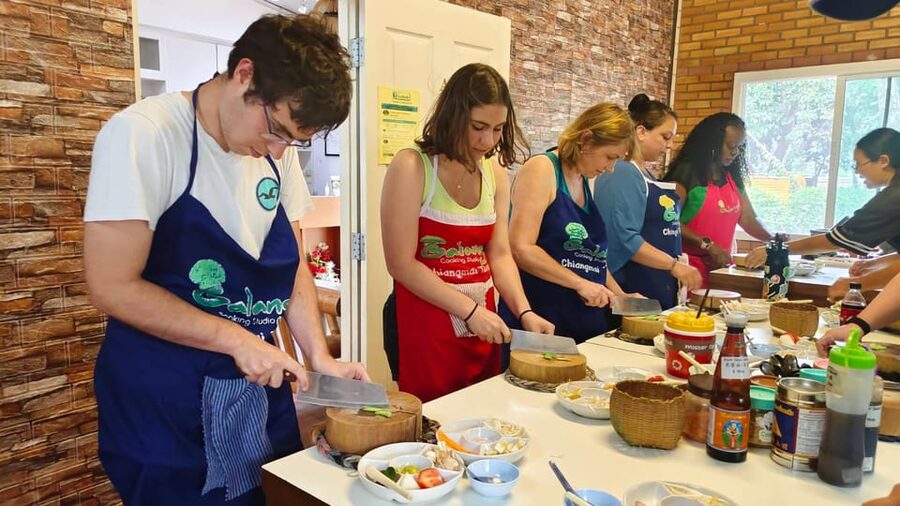
At $41 per person for a 5-hour experience, the value comes from what is included, not just the cooking part.
You get:
- hotel pickup and drop-off
- market visit (depending on interest)
- instruction from expert staff in English
- water, tea, and coffee
- all ingredients and equipment for the class
- PDF recipe versions
- skip the ticket line benefit
In other words, you are paying for logistics, teaching, and ingredient handling, with fewer shopping headaches than a DIY day.
Two costs you should know about:
- A visitor adult fee of 500 baht per person is not included
- A visitor child fee (6 to 12 years) of 350 baht per person is not included
Those fees are listed separately, so I recommend you confirm exactly what the fee covers and when it is due, especially if you are budgeting tightly.
Also note: personal medication is on your list of what to bring. Alcohol and drugs are not allowed, which is standard and keeps things comfortable.
When I judge value for this kind of class, the real question is whether you come away knowing what to do next. With a market start plus organic ingredient context plus curry paste skills plus a take-home recipe file, you do. You are not just tasting Thai food, you are learning how it gets built.
Who should book this cooking class, and who might not love it
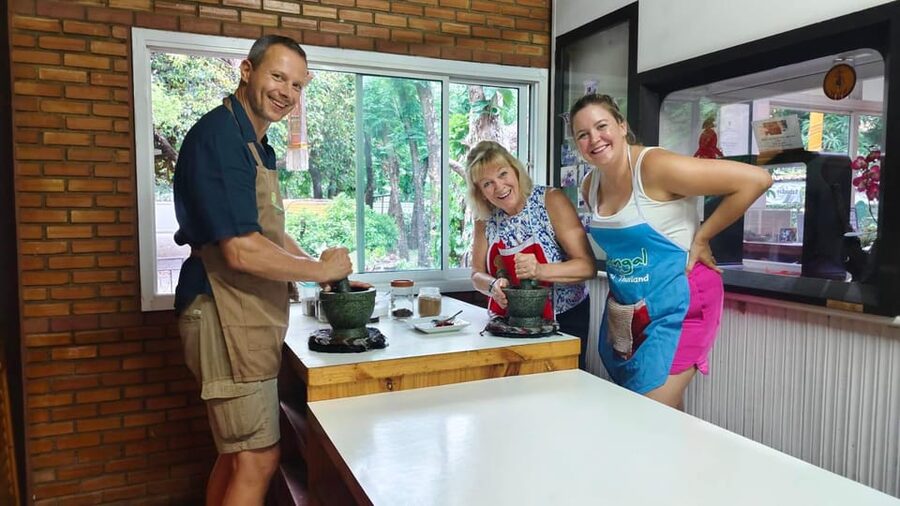
This class is a strong fit if you want a hands-on Thai cooking day that includes market ingredients and organic herb context, not just a cookbook-style cooking session.
It is also a good choice if:
- you are a beginner who wants clear, step-by-step instruction in English
- you love classic Thai dishes and want to cook a mix, like Pad Thai, green curry, or Tom Yum Kung
- you have dietary needs (vegan, vegetarian, Halal, gluten-free) and want a class that can adapt
- you want practical recipes you can repeat at home via PDF
It might be less ideal if:
- you hate early mornings or strict timing, because pickup waits only 5 minutes after the scheduled time
- you are not interested in a market stop, since the market segment is part of the core flow
- you are staying outside the pickup zones and do not want to arrange your own transport to reach the market or studio
The good news is you can come directly to the cooking studio if you skip transfers. That flexibility helps when your hotel is far from the pickup routes.
Should you book the Chiang Mai morning cooking class with market visit?
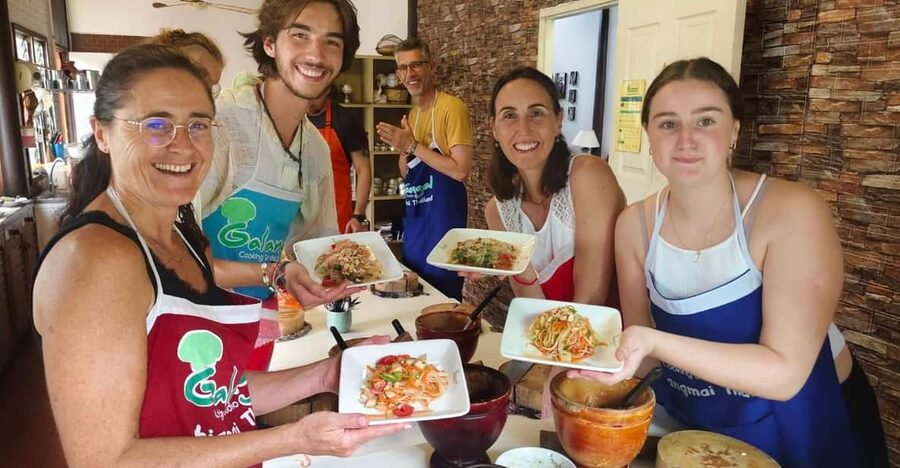
If you want an authentic-feeling food day that connects shopping, farming, and cooking, I think this is a great booking. The combination of market visit plus organic herb picking, then cooking multiple Thai dish types with English guidance, is exactly the kind of learning that sticks.
Book it if you want to leave with:
- a menu you actually care about (you choose starters, mains, soups, and curry style)
- a hands-on curry paste component
- a dessert finish
- take-home PDF recipes you can use right away
Hold off if your schedule is too tight for a 5-hour morning start or if you do not want to do the market portion at all. In that case, you may prefer a pure studio class with less walking and fewer ingredient stops.
Either way, do yourself a favor and confirm pickup coverage before you rely on transfer. Then show up ready to learn, and you will come away with Thai cooking skills you can use at home.
FAQ
How long is the Chiang Mai morning cooking class?
The experience runs for about 5 hours.
What does the class cost, and what is included?
The price is $41 per person. Included features are hotel pickup and drop-off, an ingredient-focused market visit depending on interest, instruction from English-speaking staff, water, tea, and coffee, and all ingredients and equipment. You also receive PDF versions of the recipe book.
Do I get to choose which dishes to cook?
Yes. You can choose a starter (Som Tam, spring rolls, Larb Kai, or glass noodle salad), a main (Pad Thai, Pad See Ew, cashew chicken, or holy basil chicken), a soup (Tom Yum Kung, Tom Kha Kai, vegan Tom Kha Je, or Tom Zap Kai), and a curry type (green, red, yellow, Massaman, or Panang). You also make a dessert (mango sticky rice with ice cream or fried banana).
What about dietary needs like vegan, Halal, or gluten-free?
The activity is available for vegan, vegetarian, Halal, and gluten-free participants, and it can accommodate people with allergies.
Is hotel pickup included, and what time does it happen?
Yes, hotel pickup and drop-off are included for many hotels in specific Chiang Mai areas. Pickup is scheduled between about 8:30 and 9:00 AM, and the driver waits no longer than 5 minutes after the scheduled pickup time.
What should I bring or avoid?
Bring personal medication if needed. Alcohol and drugs are not allowed. You should also come with an empty stomach.
Thai market mornings, continued
Thai kitchens you can book into
What else made it into the Thailand notebook
What else made it into the Chiang Mai notebook
- Half day Long Neck hill tribe and Hmong hill tribe village
★ 5.0 · 21 reviews - Chiang Rai One Day: Golden Triangle, Laos Border, Long Neck Tribe
★ 3.5 · 21 reviews - Old Town Chiang Mai Food Tour with 10+ Local Dishes Tastings
★ 5.0 · 21 reviews - 5 Day Tuk Tuk Adventure in Chiang Mai – with driver
★ 5.0 · 21 reviews - 1 Hour Foot Relaxing – Free Transportation
★ 5.0 · 21 reviews - Rantong elephant sanctuary Chiangmai
★ 4.4 · 21 reviews
Cooking Classes, compared.
 ★ 5.0Half-Day Thai Cooking Class at Organic Farm in Chiang MaiFrom $2919,087 reviews
 ★ 4.9Cooking Class, Market & Thai Herbs Garden TourFrom $314,824 reviews
 ★ 4.9Authentic Cooking Class with Market & Farm VisitFrom $344,546 reviews
 ★ 5.0Thai and Akha Cooking Class in Chiang MaiFrom $424,358 reviews
 ★ 5.0Phuket Thai Cooking Class with Market Tour OptionFrom $652,665 reviews
 ★ 4.9Hands-on Thai Cooking Class and Market TourFrom $451,614 reviews
 ★ 4.9Cooking Class with Market and PickupFrom $251,365 reviews
 ★ 4.9Tingly Thai Cooking School Half-Day Cooking ClassFrom $411,191 reviews
Browse the lists this tour appears in