
REVIEW · HISTORICAL TOURS
Chiang Mai: Historical and Culture Exploration Walking Tour
Old Chiang Mai makes sense on foot. This walking tour connects Three Kings Monument to two of the old town’s most important temples, with clear explanations of how the Lanna kingdom shaped everyday spiritual life. I love that it feels focused, not rushed, and you get time inside the sites instead of just snapping photos from the gate. I also like the value, since the price covers entrance tickets, water, and an English speaking guide.
One thing to plan for: it is not built for wheelchair access, and the dress code is strict. No shorts or short skirts, so bring breathable long pants for temple time, even if the weather is warm.
In This Review
- Key highlights worth knowing before you go
- First stop: Three Kings Monument and the Lanna story
- Wat Phra Singh: woodcarvings, murals, and the Lai Kam Assembly Hall
- Wat Phra Singh pagoda symbolism and the culture behind the details
- Wat Chedi Luang: ruins, chedi scale, and a Buddha you can actually see
- Listening to monks and understanding what temples mean here
- Walking route, timing, and how to avoid getting tired at the wrong moments
- Dress code and comfort rules you should follow before you get turned away
- Small group size: why it changes the whole feel of the tour
- Price and value: $15 covers more than you think
- Who this tour is best for, and who should skip it
- Final verdict: should you book this Chiang Mai walking tour?
- FAQ
- Where does the tour meet?
- Do I get hotel pickup or drop-off?
- How long is the guided tour?
- How big is the group?
- What is included in the ticket price?
- What should I wear or bring?
- Is the tour wheelchair accessible?
Key highlights worth knowing before you go
- Three Kings Monument orientation to the Lanna story, including King Mangrai and Chiang Mai’s origins
- Wat Phra Singh architecture and murals, plus the Lai Kam Assembly Hall
- Wat Chedi Luang’s 600-year-old chedi with the Buddha view inside
- Monk talks that add context to what you are seeing in the temples
- Small group limit of 8, so your questions do not get lost
Thai walking routes sat in the same notebook
- Chiang Mai: 3 Hour Old City and Temples Guided Walking Tour★ 4.6 · 1,568 reviews
- Chiang Mai: Historic Temples and City Guided Walking Tour★ 4.7 · 650 reviews
- Chiang Mai: Temple And City Walking Tour Part I★ 4.7 · 244 reviews
- Chiang Mai: Local Food and Markets Guided Walking Tour★ 4.3 · 175 reviews
First stop: Three Kings Monument and the Lanna story
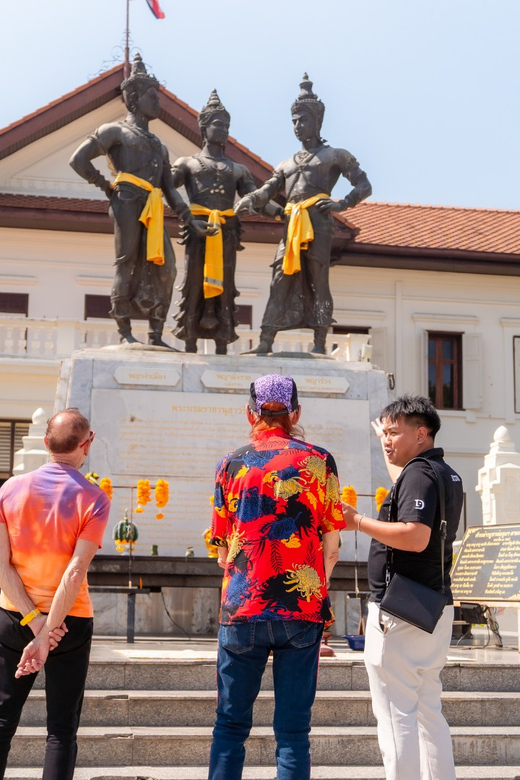
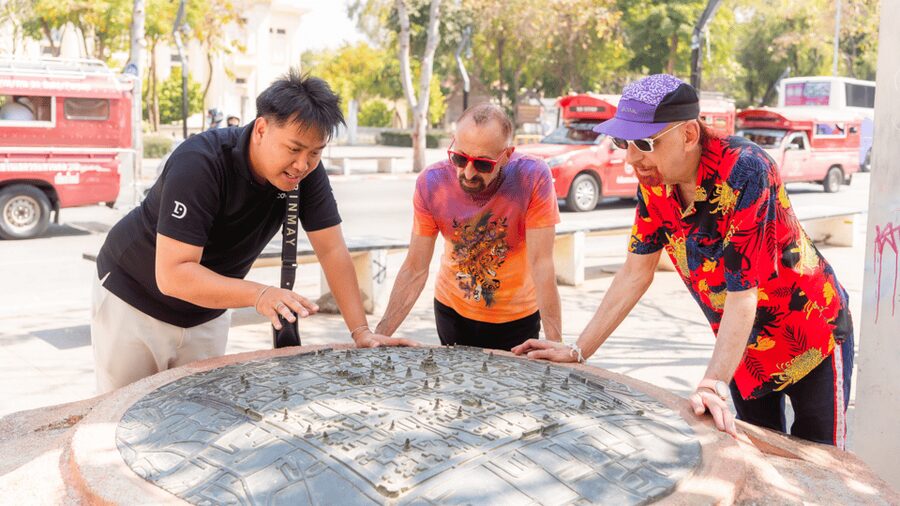
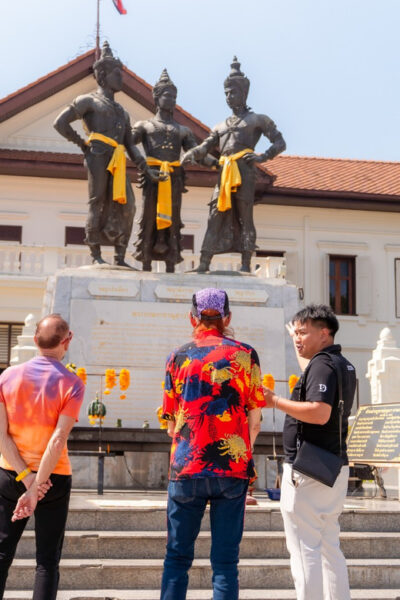
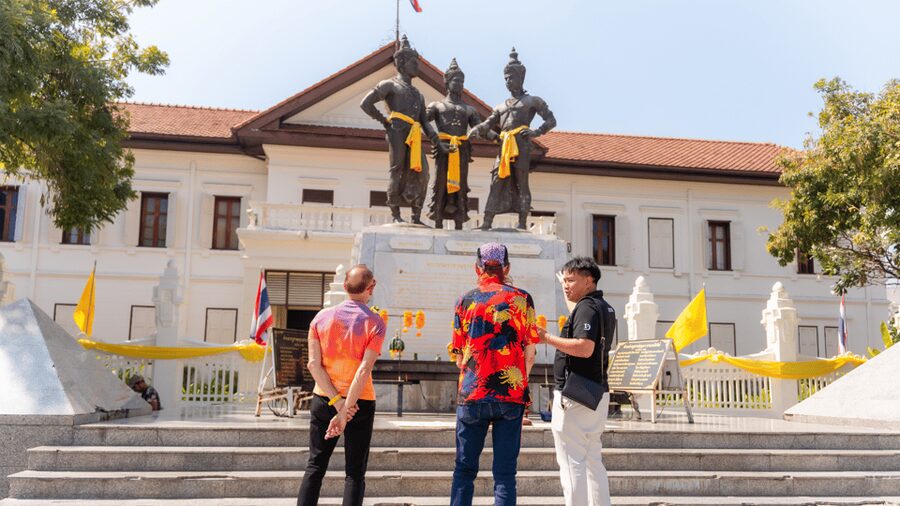
The tour starts at Three Kings Monument, right in the middle of Chiang Mai’s historic old town. Before you start walking, you get a quick safety briefing and the tour’s main storyline: King Mangrai, the founder of the Lanna Kingdom, and the later kings who helped shape the city you see today. It is a good way to get your bearings fast, because the rest of the route suddenly has meaning.
What I like here is that it sets expectations without drowning you in dates. You learn why the old town matters, and you also understand that these temples are not museum pieces. They are still active parts of local spiritual life, so when you step into the next sites, you are not just looking, you are interpreting.
If you land with a guide like Bim (a name that pops up often), you tend to get the kind of explanations that feel personal, not scripted. And if you are lucky enough to have Emmy, Farm, Amy, or Bin, the common thread is the same, friendly guidance with lots of room for questions.
Wat Phra Singh: woodcarvings, murals, and the Lai Kam Assembly Hall
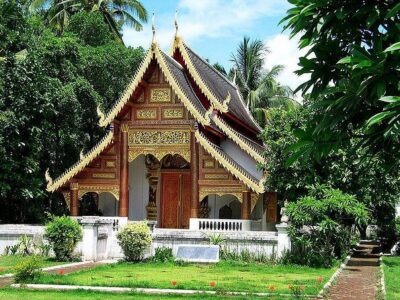
After a short walk, you reach Wat Phra Singh, widely respected in Chiang Mai and known for its northern Thai style. This stop is a standout because you get more than the main prayer areas. You also spend time at the Lai Kam Assembly Hall and a pagoda area linked to a Buddhist symbolism tied to birthdays.
Wat Phra Singh is famous for intricate design, especially the woodcarving details and the northern Thai murals. These are the kinds of things you can miss if you only glance and keep moving. With a guide, you learn what to look for, and the artwork becomes easier to read. Instead of feeling like a blur of gold and patterns, you start seeing how the temple’s design points to belief and community.
One practical tip for this part: take your camera, but also look without it for a few minutes. It is the easiest way to catch the layered meaning in murals and carving. A photo is fine, but the real payoff is recognizing what you are seeing.
Wat Phra Singh pagoda symbolism and the culture behind the details
At Wat Phra Singh, the pagoda area connects to Buddhist symbolism based on the Thai zodiac, including a reference for people born in the Year of the Dragon. Even if you are not born in that year, this is useful for two reasons.
First, it helps you notice how Thai Buddhism works through daily life, family identity, and tradition. Second, it gives you a simple framework for interpreting what otherwise looks like purely decorative features. Temples in Chiang Mai often mix beauty and meaning on purpose. When you understand the why, you spend less time guessing and more time appreciating.
This is also where I found the tour’s pacing to work. You do not get stuck in one place forever, but you also do not get marched past the details. You get enough time to look carefully, then enough context to make those details click.
Wat Chedi Luang: ruins, chedi scale, and a Buddha you can actually see
Next comes Wat Chedi Luang, one of the big anchors of the old town. The site is about 600 years old, and your guide explains that it was originally built by King Mangrai. You also get time to walk around the complex and appreciate the ruins and the way the area evolved over time.
The main reason this stop matters is simple: it is a hands-on history lesson. You are not reading about the past in air-conditioned comfort. You are standing in a real place where age shows, where structure and restoration coexist, and where ongoing worship continues to shape what the site feels like.
One highlight here is the chedi itself, plus the chance to view the Buddha inside. If you love architecture, you will enjoy how the chedi’s scale changes your perspective. If you are more spiritually minded, you will appreciate that the space is treated as living religious ground, not just a historic backdrop.
Thai history outings also got written up
Listening to monks and understanding what temples mean here
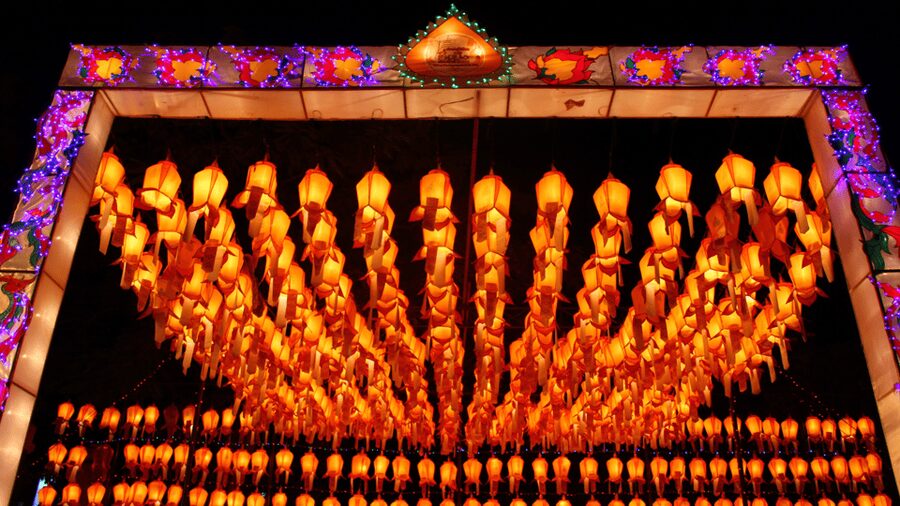
The tour includes opportunities to hear talks by monks during the visit to Wat Chedi Luang. Even if you do not catch every single word, you still benefit from the tone and the structure of the message. It helps you see the temple as a place of teaching, not only a place of prayer.
This is where the tour’s biggest value shows up. Chiang Mai has temples everywhere, but without context you can treat them like a checklist. With a guide, the talks and explanations help you connect what you see with why people care for these spaces.
You also learn how Lanna traditions still influence daily behavior, from the respect shown in temple areas to the way spiritual beliefs are woven into community routines. You start noticing posture, gestures, and small etiquette cues, and suddenly the whole old town feels more understandable.
Walking route, timing, and how to avoid getting tired at the wrong moments
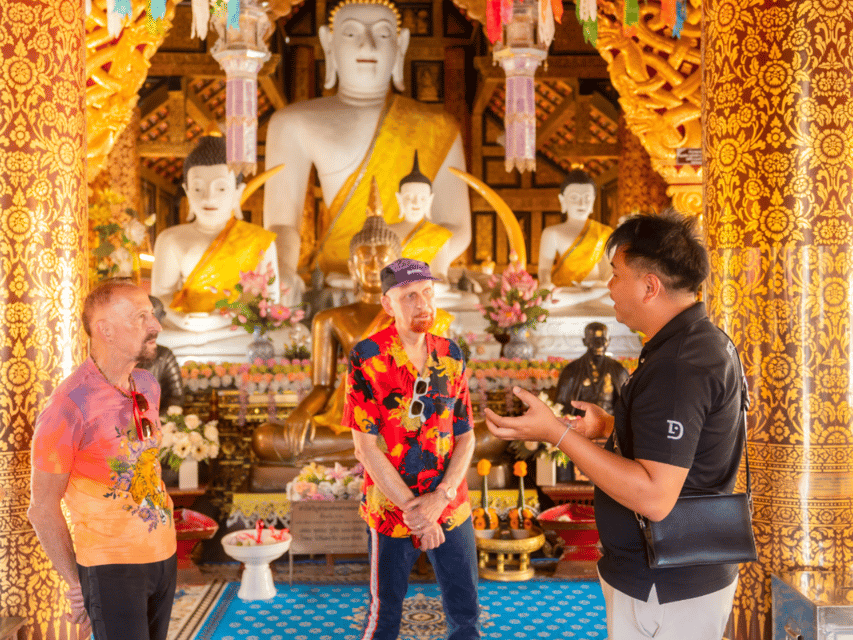
This is a true walking tour. The route includes a walk between stops, and the total guided time is about 2.5 hours. The exact walking rhythm is manageable if you wear comfortable shoes and you keep your body moving between temple entrances.
I recommend you plan your day around this. Do not schedule it like you are trying to sprint from one appointment to the next. Let it be a first-or-second activity that helps you orient yourself in the old city. Afterward, you will know what you just learned and you will recognize similar symbols elsewhere.
If you can choose a later departure, it can help with comfort. One favorite departure time shared in guide feedback is the late afternoon session, loved for softer light around the temples. Even if you do not chase the perfect photo angle, cooler conditions make a walking tour much more pleasant.
Dress code and comfort rules you should follow before you get turned away
The tour has a clear dress requirement: no shorts and no short skirts. That means you should bring long pants or something that covers your legs comfortably. It is not about being difficult, it is about keeping things respectful in active religious spaces.
You will also want comfortable clothes and shoes you trust on uneven temple ground. Bring your camera if you want it, but remember that temples reward quiet attention, not constant filming.
Water is included, which helps in Chiang Mai’s heat and humidity. Still, if you are the type who likes to have extra, you might want to carry your own small bottle too, especially if you are arriving in the middle of the day.
Small group size: why it changes the whole feel of the tour
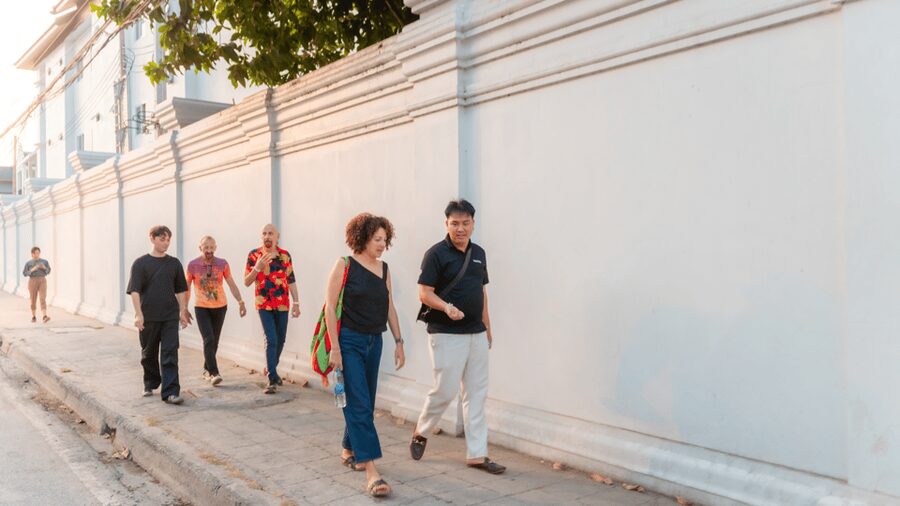
This tour is limited to 8 participants. That small number matters. With fewer people, your guide can actually respond to questions instead of rushing you along. It also makes it easier to hear the explanations clearly, especially during the temple visits where sounds and space are less controlled.
In practice, the experience tends to feel flexible. When the group is small, your guide can slow down for details you care about, whether that is artwork, temple layout, or the story behind a specific king or symbol. The best version of this tour is when you do not feel like you have to stay silent to keep the pace moving.
It also helps that the tour is offered with an English speaking guide, and the guide can be Thai as well. So even if your Thai is basic, you still get good interpretation.
Price and value: $15 covers more than you think
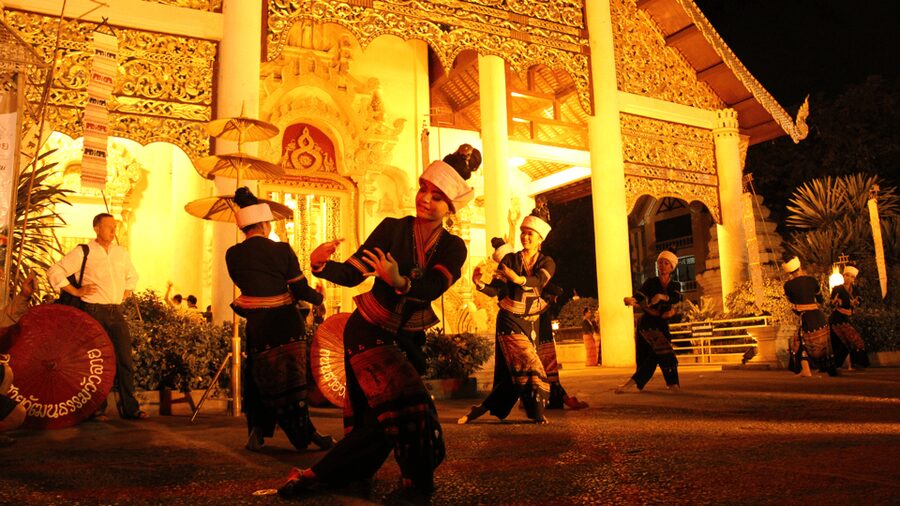
At about $15 per person, this tour is good value for an old-city temple walk. The big reason is what is included: an English speaking guide, temple entrance tickets, water, and tour insurance.
Many city tours with temples charge separately for entry fees. Here, you can spend your money on the experience rather than on a surprise list of costs after you start. That makes it a smart choice if you want a guided introduction without needing to research ticket prices on the spot.
The one cost consideration is transportation logistics. There is no hotel pickup or drop-off. You will need to get yourself to the Three Kings Monument meeting point.
If you are already spending time in the old town, that is a small hassle. If you are staying farther out, factor in the time and effort to reach the start area.
Who this tour is best for, and who should skip it
This is a strong fit if you want a fast, understandable overview of Chiang Mai’s historic core. It is ideal for first-time visitors who want their temple visits to make sense, especially if you enjoy learning how belief shows up in everyday life.
It also works well if you travel solo or as a couple and like asking questions. The small group size helps, and the guides mentioned in feedback often show up as friendly and engaging, with a strong focus on history, arts, culture, and Buddhist ritual context.
You might want to skip it if you need wheelchair accessibility, since it is not suitable for wheelchair users. Also, if you hate walking, this might feel like too much, since the whole point is doing the route on foot.
Final verdict: should you book this Chiang Mai walking tour?
If you want Chiang Mai temples with context, book this. The route focuses on the major old-town sites, and the guides add the kind of explanation that turns temples into a real story instead of a checklist. The combination of included tickets, small group size, and time at Wat Phra Singh and Wat Chedi Luang makes the price feel fair.
Before you go, get ready for the practical stuff: long pants, comfy shoes, and arriving at Three Kings Monument on time. If you do that, you will come away with a clearer sense of the Lanna Kingdom and why these places still matter to local life today.
FAQ
Where does the tour meet?
The tour meets at Three Kings Monument. Your guide will be waiting there, so arriving on time is important.
Do I get hotel pickup or drop-off?
No. Hotel pickup and drop-off are not included. You will need to make your way to the meeting point on your own.
How long is the guided tour?
The guided tour runs for about 2.5 hours.
How big is the group?
It is a small group, limited to 8 participants.
What is included in the ticket price?
The price includes an English speaking tour guide, all temple entrance tickets, water, and tour insurance.
What should I wear or bring?
Bring comfortable shoes, a camera, and comfortable clothes. Shorts and short skirts are not allowed.
Is the tour wheelchair accessible?
No. The tour is not suitable for wheelchair users.
Thailand at walking pace, continued
Guided Thai outings, continued
What else made it into the Thailand notebook
What else made it into the Chiang Mai notebook
- Half day Long Neck hill tribe and Hmong hill tribe village
★ 5.0 · 21 reviews - Chiang Rai One Day: Golden Triangle, Laos Border, Long Neck Tribe
★ 3.5 · 21 reviews - Old Town Chiang Mai Food Tour with 10+ Local Dishes Tastings
★ 5.0 · 21 reviews - 5 Day Tuk Tuk Adventure in Chiang Mai – with driver
★ 5.0 · 21 reviews - 1 Hour Foot Relaxing – Free Transportation
★ 5.0 · 21 reviews - Rantong elephant sanctuary Chiangmai
★ 4.4 · 21 reviews
Historical Tours, compared.
 ★ 4.6Ayutthaya Historical Park Guided Day TripFrom $283,020 reviews
 ★ 4.5UNESCO’s Ayutthaya Historical Park: Full-Day Tour from BangkokFrom $281,559 reviews
 ★ 4.6Historical Day Tour to River KwaiFrom $51868 reviews
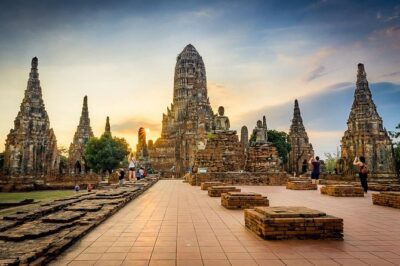 ★ 5.0Historical City of Ayutthaya – Unesco Full Day Tour From BangkokFrom $41847 reviews
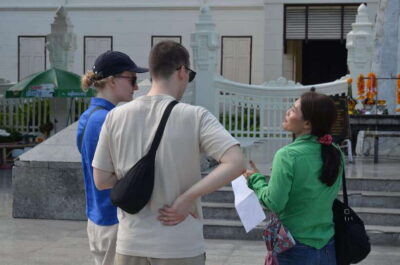 ★ 4.7Historic Temples and City Guided Walking TourFrom $21650 reviews
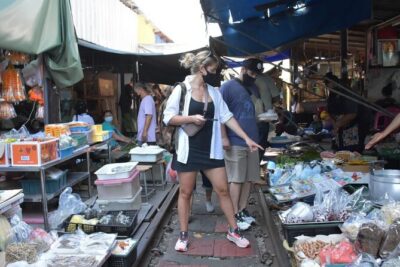 ★ 5.0Private Excursion to Floating Market and Ayutthaya World HeritageFrom $184515 reviews
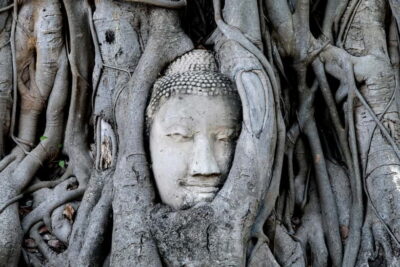 ★ 4.5Ayutthaya Heritage Tour with Sunset Boat RideFrom $32490 reviews
 ★ 5.0Private Excursion to Ayutthaya, UNESCO World Heritage site with Boat TourFrom $159460 reviews
Browse the lists this tour appears in