
REVIEW · COOKING CLASSES
Chiang Mai: Asia Scenic Thai Cooking School
Thai cooking starts with what you pick. This half-day class takes you from Chiang Mai’s market to an organic farm garden, then into an open-air kitchen where you cook and eat what you make. I especially like the ingredient-first approach, and how the day ends with a cookbook you can actually use at home. The team is friendly too, with guides like Nami and Tommy known for making the process feel practical, not intimidating.
One consideration: time gets split. The transfer between the market area and the farm can cut into how long you can linger at stalls, so if you want an extended wandering browse, plan to go back to the market on your own another day.
In This Review
- Key highlights to look for
- Where this Chiang Mai class fits in your day
- Starting with pickup, then heading straight to ingredients
- The market stop: what you learn before the chopping begins
- Organic farm garden time: herbs, produce, and flavor logic
- Picking your dishes: how the menu works
- The open-air kitchen: your hands-on cooking station
- Sticky rice: the small lesson that changes how you serve Thai food
- Eating what you made: why the meal style matters
- The take-home cookbook: your “repeat it at home” tool
- Value check: what $41 buys, and when it’s a great deal
- Who should book this cooking school in Chiang Mai
- Should you book this Chiang Mai Thai cooking class?
- FAQ
- How long is the Chiang Mai Thai cooking class?
- Does the tour include pickup from downtown Chiang Mai?
- Is the group small?
- Can I choose which dishes I will cook?
- What dishes are available to choose from?
- Does the class accommodate dietary preferences?
- What’s included besides cooking?
- What language is the guide?
- What age is the activity suitable for?
- Final decision: quick fit check
Key highlights to look for
- Market shopping plus herb tasting before you start cooking
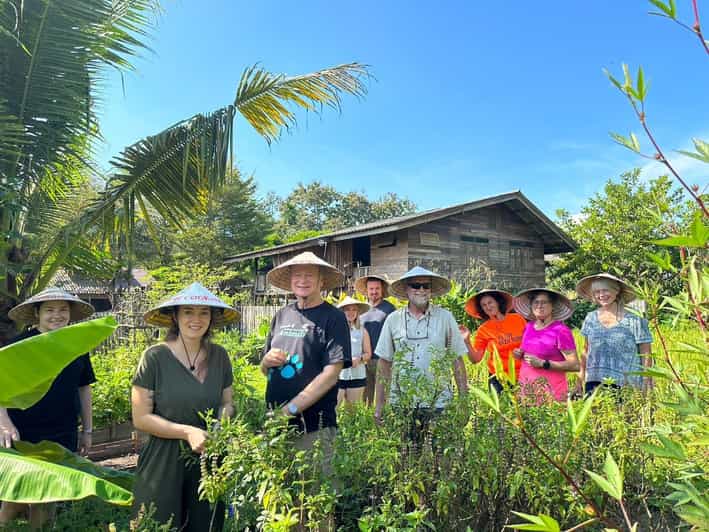
- Organic farm garden visit focused on herbs and produce used in Thai flavor
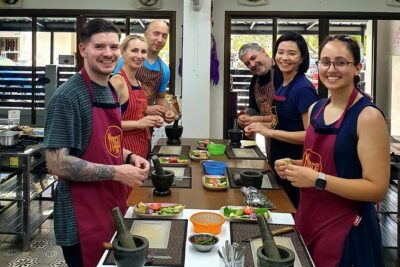
- Small group (up to 10) with an individual cooking station
- Choose 5 dishes from the menu, then cook them and eat your results
- Sticky rice lesson while you’re in the kitchen area
- Take-home cookbook so you can repeat the dishes later
Thai kitchens got sat through and written up
- Half-Day Thai Cooking Class at Organic Farm in Chiang Mai★ 5.0 · 19,087 reviews
- Chiang Mai: Cooking Class, Market & Thai Herbs Garden Tour★ 4.9 · 4,824 reviews
- Chiang Mai: Authentic Cooking Class with Market & Farm Visit★ 4.9 · 4,546 reviews
- Thai and Akha Cooking Class in Chiang Mai★ 5.0 · 4,358 reviews
Where this Chiang Mai class fits in your day
This is a 270-minute, about 6-hour experience that’s built for a real-world schedule. You get a pickup for hotels within 3 km of downtown Chiang Mai, and the day is structured so you’re not just watching. You’re handling ingredients, chopping, stirring, and assembling meals at your own station with the group kept small, capped at 10.
The price, $41 per person, is actually where this experience makes sense. You’re paying for more than a “show.” You’re paying for (1) market and farm guided time, (2) ingredients set up for cooking, (3) tea and coffee plus a welcome snack or seasonal fruit, and (4) a recipe book to take home. For many visitors, that mix is the difference between a fun activity and something that changes how you cook when you’re back in your own kitchen.
Starting with pickup, then heading straight to ingredients
Downtown pickup is one of the smartest bits for first-timers. It saves you from figuring out transport on your own right at the start of the day. The operator confirms the exact pickup time by email, and you’ll want to meet your guide at your hotel lobby about 10 minutes early. If you arrive more than 10 minutes late, you risk being marked as a no-show.
Once you’re collected, the day turns quickly toward food basics. Instead of starting with sauces and techniques, you start with choices: what you buy, what you taste, and what’s in season. That matters in Thai cooking because many flavors depend on fresh herbs and aromatics, not just bottled paste.
The market stop: what you learn before the chopping begins
The market segment is where you get the “why” behind Thai dishes. You hand-pick ingredients and see how Thai cooking connects to what’s available right now. You also do a market tour that focuses on Thai culinary traditions, not just a generic shopping walk.
If you love food markets, you’ll like this part most. You’re not just looking, you’re selecting. And you’re not selecting blindly, either. There’s guidance from an English and Thai-speaking live guide, and the class framework is designed so those ingredients become your cooking ingredients later.
A small heads-up based on timing reality: one thing to watch is that the day still has a farm component. If you want extra time to browse, compare prices, or keep tasting after the group is ready to move on, you might feel the market window is tighter than you’d like. In that case, treat this market as your “ingredient starter lesson,” then plan an extra market visit on a separate day for pure wandering.
Organic farm garden time: herbs, produce, and flavor logic
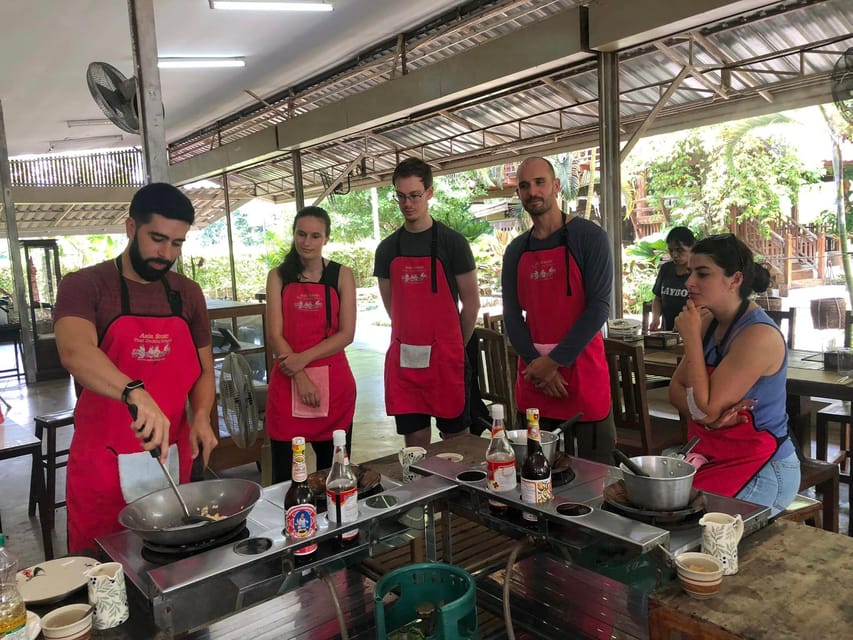
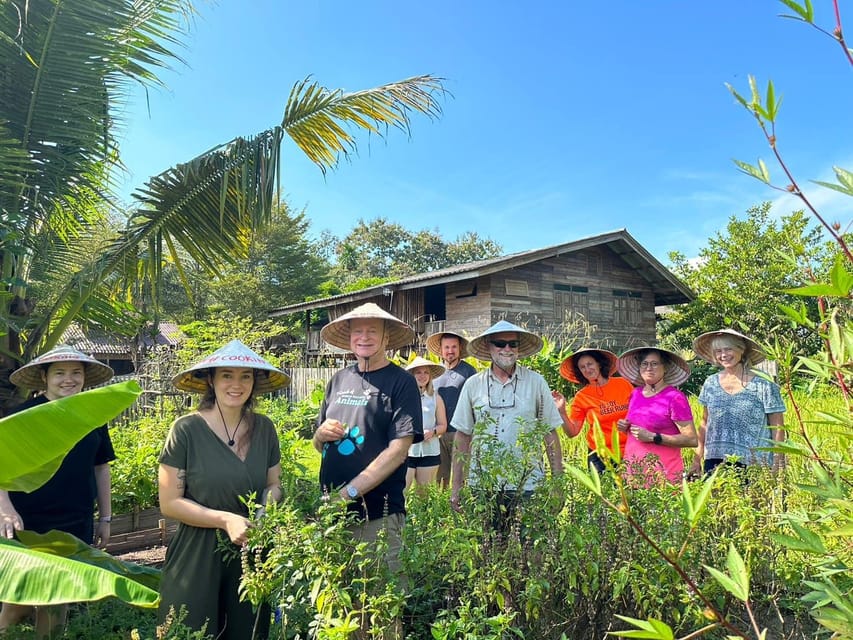
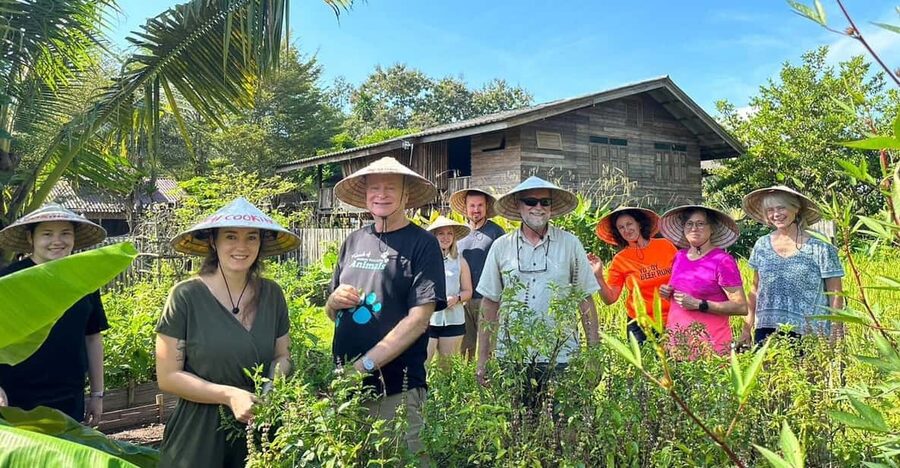
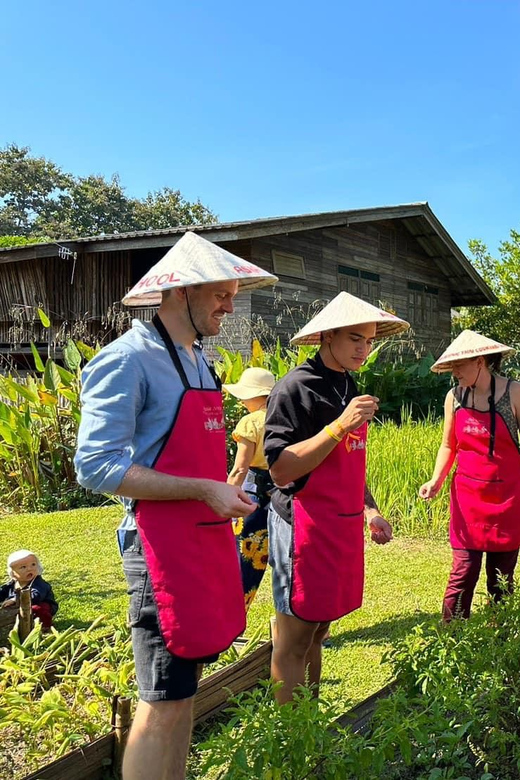
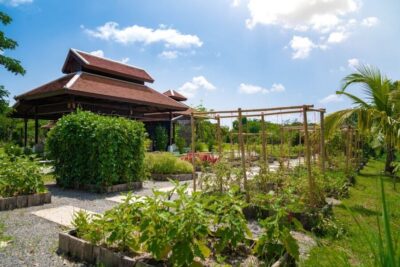
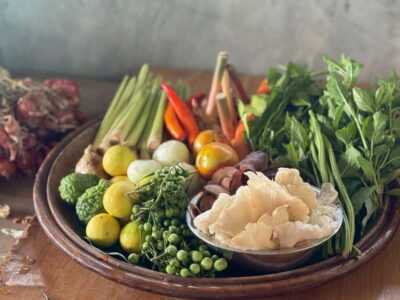
After the market, you head to an organic farm or herb garden area. This is one of the most praised parts of the experience because it connects food to growth. You visit and taste herbs in an organic kitchen garden, and you explore the vegetable patch so you can see ingredients in their natural form.
Why it matters for you: Thai cooking is all about balance, and a lot of that balance starts with fresh plant ingredients. When you understand what herb comes from where and what it’s used for, your cooking decisions at home become easier. You’re not guessing. You’re remembering what you saw and learned in the garden.
A few practical perks show up here too. Some classes in this format include a relaxed break setup at the farm, with facilities and downtime like hammocks mentioned in reviews. That kind of pause helps you stay focused for the cooking hours, especially if you tend to get tired by mid-morning.




Picking your dishes: how the menu works
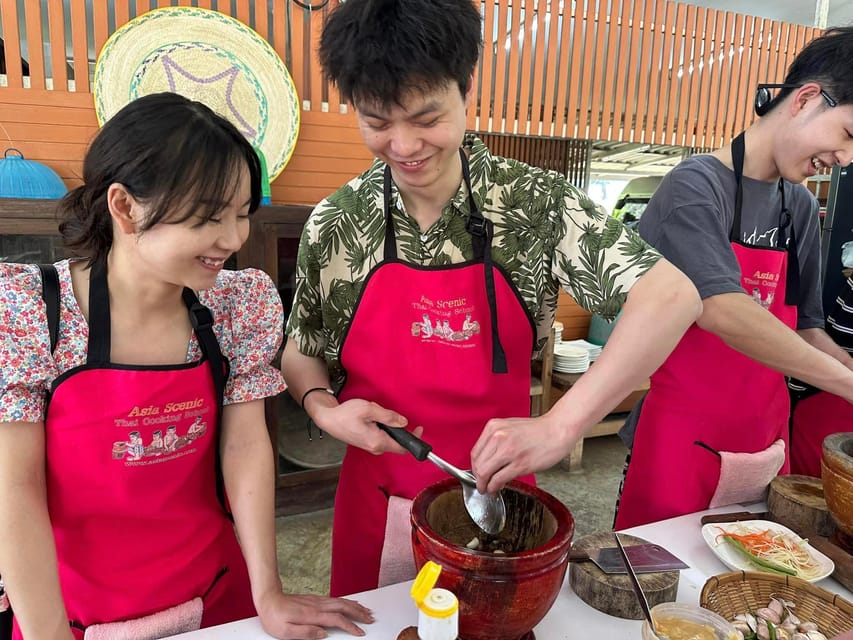
You can choose 5 dishes from the class menu. That choice is a big value point because it shapes your skill set. If you’re more into stir-fries, pick from options like Pad Thai, Pad See Uw, Hot Basil Stir Fried, or Cashewnut With Chicken. If soups are your thing, you can choose from Tom Yum, Tom Sab, or a Coconut Milk Soup option. For curries, the menu includes Red, Green, Massaman, Panang, and Khaw Soi across both curry paste and curry dishes. There’s also Spring Rolls.
How to think about it: the selection isn’t just about variety. It’s about which flavor techniques you practice. Stir-fries teach high-heat speed and timing. Soups teach how to layer aromatics into a balanced broth. Curries teach how paste and coconut base come together, and how thicker, richer flavors differ from brighter ones.
Also, the class says recipes can be tailored to your dietary preferences. Reviews include examples where staff adjusted for vegan and vegetarian needs. So if you have restrictions, this is a better fit than classes that only offer a generic substitution.
The open-air kitchen: your hands-on cooking station
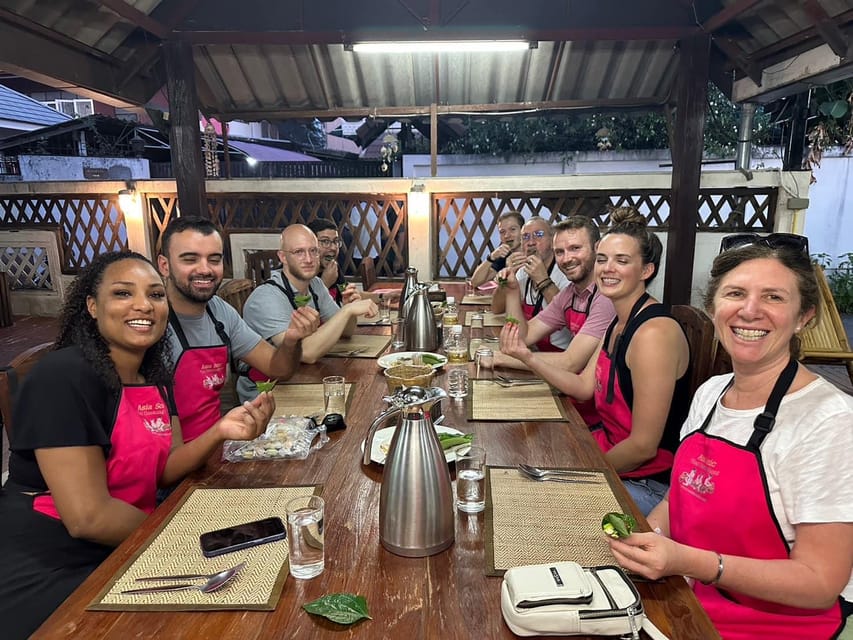
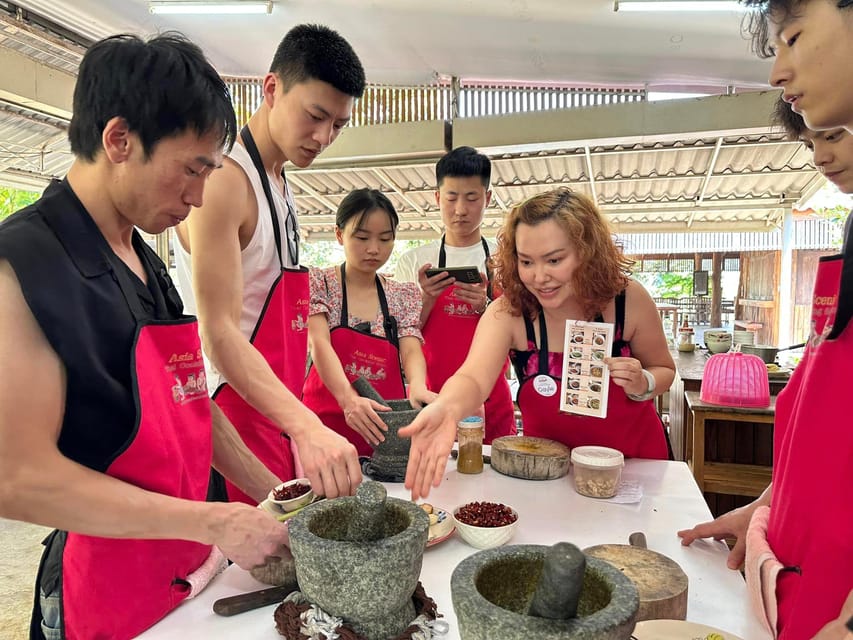
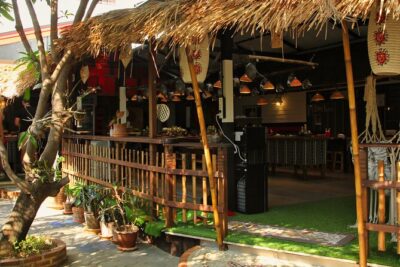
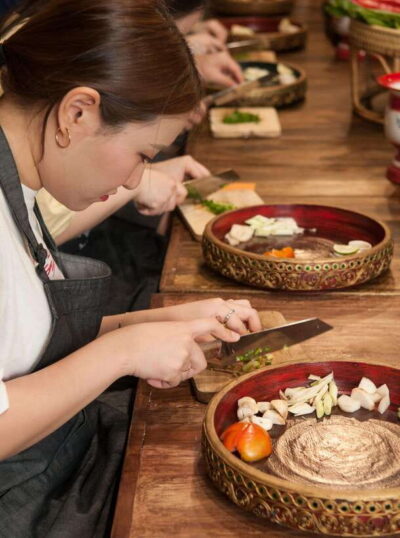
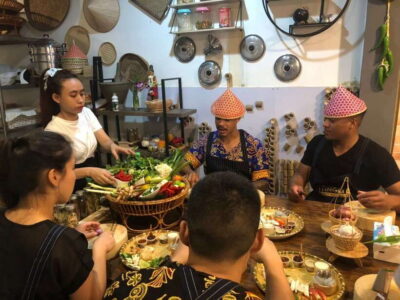
Now the fun part. You move into an open-air kitchen setup where you’ll have an individual cooking station. That matters because Thai cooking is hands-on and timing sensitive. With separate stations, you’re not waiting for a shared pot while your group forgets what you were supposed to be doing.
You’ll cook 6 traditional dishes, and you’ll also watch sticky rice being cooked. There’s a subtle mismatch in the way the day is described, because you choose 5 dishes from the menu. In practice, the format is set up so the sticky rice moment and the full dish count line up with what you learn and eat, even if the exact “extra” item depends on the schedule that day. What you can count on is that you’ll leave with a full plate of cooking results, not just one single dish lesson.
The kitchen flow typically goes like this:
- you get guided instructions in English with Thai support
- you cook your selected dishes step-by-step
- you share the meal you make in a relaxing setting
And yes, this is where a good host makes the day. Reviews highlight instructors like Noon, Olive, Marium, and Dev for teaching clearly and keeping the mood light, even when tasks are detailed.
Sticky rice: the small lesson that changes how you serve Thai food
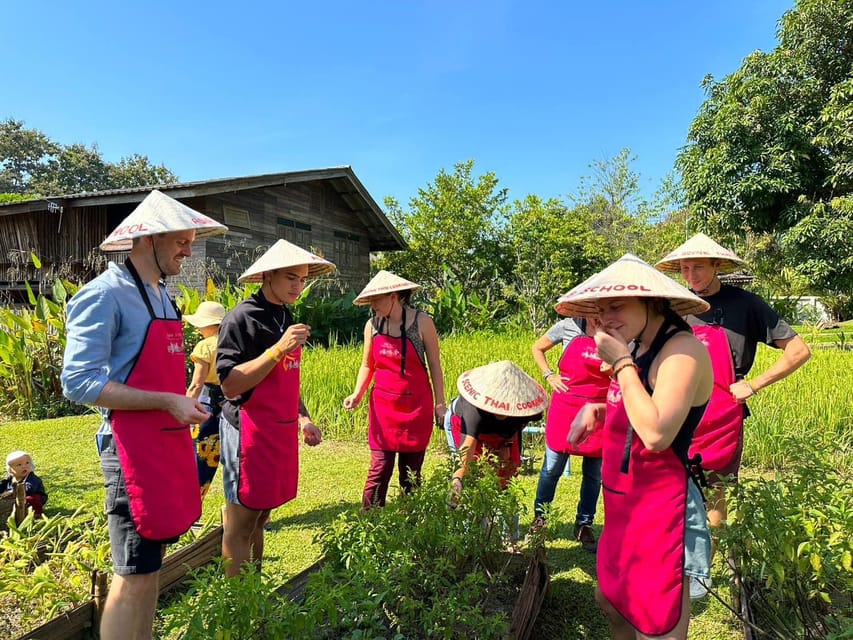
Sticky rice is one of those Thai staples that can be disappointing if you only ever try it from memory. Here, you watch how it’s cooked, which helps you understand why texture matters. Sticky rice is designed to hold together in a particular way, and it’s part of the reason many Thai meals feel complete.
Even if you’ve eaten sticky rice in Thailand before, this is still a useful lesson because it shifts sticky rice from a “side dish” into a technique. After watching the process, you can be more confident when you make it later, and you’ll know what you’re aiming for.
Eating what you made: why the meal style matters
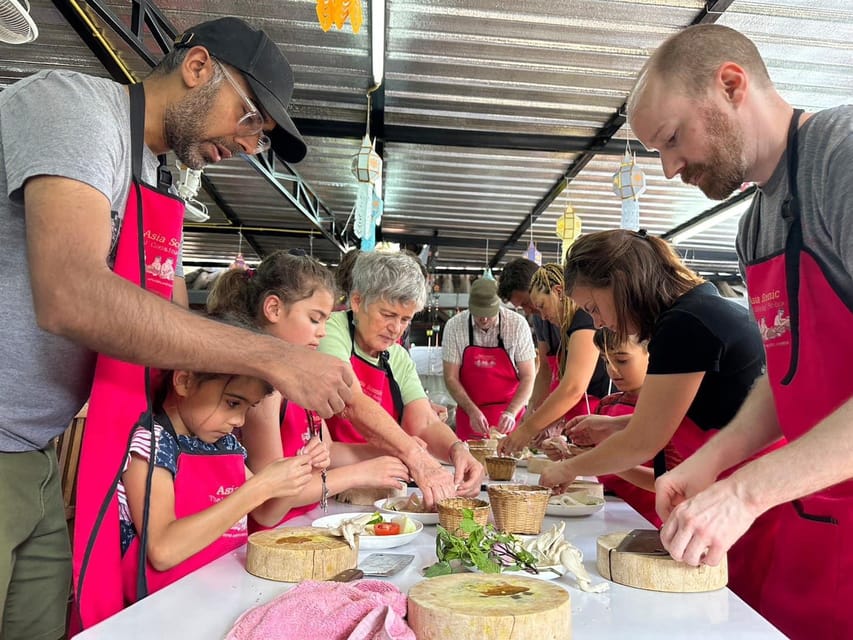
You’re not just cooking and leaving. The class is built so you enjoy your handmade meals together in a relaxing atmosphere. That’s a quiet but important detail. Cooking lessons can feel like assembly lines. This format is designed to let you taste what you created, ask questions while the food is fresh, and adjust based on guidance.
You’ll also have coffee and herbal tea during the experience, plus a welcome snack or seasonal fruit at the start. These touches keep the day comfortable, especially if you’re cooking with a group and staying active for hours.
The take-home cookbook: your “repeat it at home” tool
This is one of the most consistently praised parts of the experience: you take home a cookbook that includes the dishes you could have picked, with recipes you can recreate.
That’s big for you because most cooking classes stop at the day itself. Here, the written guide means you can practice again. It also helps you remember ingredient choices you made at the market and farm stop. When you’ve got the recipe in hand, you can turn your Thai cooking lesson into a habit rather than a one-time memory.
Value check: what $41 buys, and when it’s a great deal
At $41 for about 6 hours, you’re paying for a full food experience, not just a single workshop block. You get:
- pickup within 3 km of downtown Chiang Mai
- market tour plus tastings
- organic farm/herb garden visit
- individual cooking stations and all necessary ingredients
- coffee and herbal tea, plus a welcome snack or fruit
- cookbook and market tour as part of the package
If you’re in Chiang Mai for a short trip, this kind of value is hard to beat. It’s one of the few activities where you learn skills and also eat well. And since the group size is small, you’re more likely to get real help rather than a rushed, scripted experience.
If you’re the type who only wants a quick bite and doesn’t care about learning, you might find this runs long. But if you want a structured Thai cooking lesson, it’s priced like a smart add-on, not a splurge.
Who should book this cooking school in Chiang Mai
This class is a strong match if:
- you’re a food enthusiast who wants authentic Thai cooking techniques
- you want a guided market experience without guessing what ingredients mean
- you like learning by doing, with your own station and step-by-step instruction
- you’re traveling with family, a couple, solo, or a small group (the cap is 10)
It’s also a good fit if you care about dietary needs. The class is described as tailored to your preferences, and reviews specifically mention vegan and vegetarian adaptations.
If you dislike multi-stop days, or you’re hoping for a long, slow market wander, you may feel the schedule is tight. The market-to-farm transfer happens within a fixed half-day window.
Should you book this Chiang Mai Thai cooking class?
Book it if you want a hands-on Thai cooking lesson that starts with real ingredients, includes an organic herb and produce visit, and ends with a cookbook you can use again. The market plus farm combo is the secret sauce for learning beyond recipes, and the small group setup with individual stations helps you actually cook, not just watch.
Skip it or plan differently if you mainly want a relaxed, unstructured market stroll. This day is scheduled, and the time needs to cover market, farm, and a full cooking session. If that sounds fine, you’ll likely love how much you learn and eat for the money.
FAQ
How long is the Chiang Mai Thai cooking class?
The class runs 270 minutes, about 6 hours.
Does the tour include pickup from downtown Chiang Mai?
Yes. Pickup is available for hotels within a 3 km radius from downtown Chiang Mai. The operator confirms the exact pickup time by email, and you should arrive at your hotel lobby at least 10 minutes early.
Is the group small?
Yes. It is limited to 10 participants.
Can I choose which dishes I will cook?
You can choose 5 dishes from the menu listed for the class.
What dishes are available to choose from?
Options include stir-fries like Pad Thai, Pad See Uw, Hot Basil Stir Fried, and Cashewnut With Chicken. Soups include Coconut Milk Soup, Tom Yum, and Tom Sab. Curry options include Red, Green, Massaman, Panang, and Khaw Soi across both curry paste and curry categories, plus Spring Rolls.
Does the class accommodate dietary preferences?
The experience is described as tailored to dietary preferences, and reviews mention adaptations for vegan and vegetarian needs.
What’s included besides cooking?
The class includes visiting and tasting herbs in an organic kitchen garden or organic farm, transportation within 3 km of downtown, a welcome snack or seasonal fruit, fresh coffee and herbal tea, a cookbook, and a market tour.
What language is the guide?
The live tour guide speaks English and Thai.
What age is the activity suitable for?
It is not suitable for children under 4 years old.
Final decision: quick fit check
If you want a structured cooking day that teaches you how to build Thai flavors from fresh ingredients, this is a solid booking. If your priority is long free time to roam markets, plan to add your own extra market visit outside the class window.
Thai kitchens you can book into
What else made it into the Thailand notebook
What else made it into the Chiang Mai notebook
- Full-Day Doi Inthanon National Park Tour with Trek and Pagodas
★ 4.5 · 20 reviews - Chiang Mai Private Tourist Guide with Private Transportation
★ 5.0 · 20 reviews - Private Luxury Car rental + English speaking driver:
★ 5.0 · 20 reviews - Half day Long Neck hill tribe and Hmong hill tribe village
★ 5.0 · 21 reviews - Chiang Rai One Day: Golden Triangle, Laos Border, Long Neck Tribe
★ 3.5 · 21 reviews - Old Town Chiang Mai Food Tour with 10+ Local Dishes Tastings
★ 5.0 · 21 reviews
Cooking Classes, compared.
 ★ 5.0Half-Day Thai Cooking Class at Organic Farm in Chiang MaiFrom $2919,087 reviews
 ★ 4.9Cooking Class, Market & Thai Herbs Garden TourFrom $314,824 reviews
 ★ 4.9Authentic Cooking Class with Market & Farm VisitFrom $344,546 reviews
 ★ 5.0Thai and Akha Cooking Class in Chiang MaiFrom $424,358 reviews
 ★ 5.0Phuket Thai Cooking Class with Market Tour OptionFrom $652,665 reviews
 ★ 4.9Hands-on Thai Cooking Class and Market TourFrom $451,614 reviews
 ★ 4.9Cooking Class with Market and PickupFrom $251,365 reviews
 ★ 4.9Tingly Thai Cooking School Half-Day Cooking ClassFrom $411,191 reviews
Browse the lists this tour appears in