
REVIEW · COOKING CLASSES
Thai Cooking Class with Market Visit by Maliwan
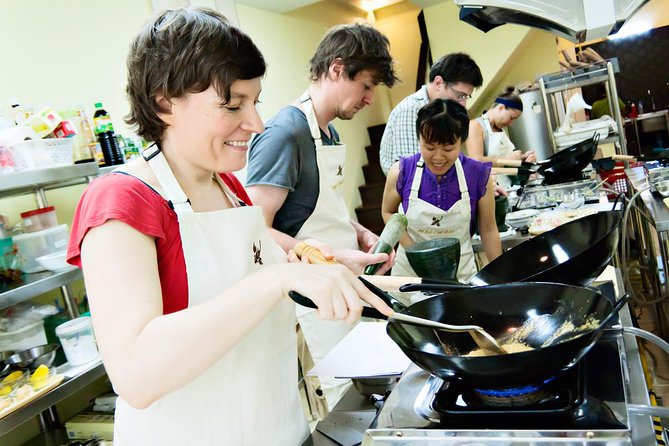
Cooking starts with shopping, not leftovers. In Maliwan Thai Cooking Class in Bangkok, you take a tuk-tuk to a local market and come back to cook the dishes you chose, not just eat something pretty in a restaurant. I especially love the hands-on station style, where you’re working right there with your instructor watching and guiding.
This is also a great way to learn Thai flavors you can actually repeat at home, because the lesson focuses on technique and customization, including spice control. One possible drawback is the market itself can be wet and muddy, and it’s not recommended if you have back or leg problems.
In This Review
- Key highlights before you go
- A tuk-tuk market run that teaches you how Thai cooking really works
- Shopping at a local market: what to buy and what to notice
- Practical note: bring shoes you won’t baby
- Inside the Maliwan cooking school: small-group energy and clear direction
- Spice and flavor control is part of the lesson
- What dishes you’ll make, and how to recreate them at home
- Why this beats a restaurant meal
- The meal, recipes, and the certificate: what you actually take home
- A comfort detail you might care about
- Bangkok logistics that make or break a half-day
- Timing matters more than you think
- What’s included, and what costs extra
- Price and value: why $43.86 can be a good deal
- Who should book this class, and who should skip it
- Should you book Maliwan Thai Cooking Class with market visit?
- FAQ
- How long is the Thai cooking class?
- Is hotel pickup or drop-off included?
- What is included in the price?
- What should I wear for the market?
- What dietary restrictions can be accommodated?
- What is the minimum age?
Key highlights before you go
- Tuk-tuk market visit: pick ingredients first, then cook them immediately
- Max 7 people: you get real attention, not a classroom lecture
- Step-by-step cooking flow: instructor demos, then you cook, dish by dish
- Customize your flavors: adjust spice and seasoning to your taste
- Printed recipes plus an e-certificate: take the skill home, not just the photos
- Clear advice on what to bring: sturdy closed shoes matter in the market
Thai kitchens got sat through and written up
- Bangkok: Hands-on Thai Cooking Class and Market Tour★ 4.9 · 1,614 reviews
- Bangkok: Tingly Thai Cooking School Half-Day Cooking Class★ 4.9 · 1,191 reviews
- Bangkok: Maliwan Thai Cooking Class with Market Tour★ 4.9 · 1,133 reviews
- Hands on Thai Cooking Class and Market Tour★ 5.0 · 660 reviews
A tuk-tuk market run that teaches you how Thai cooking really works
A Thai cooking class can be two things: either you eat, or you learn. This one leans hard into learning, and it starts with the market, not the stove. First you head out in a tuk-tuk to shop for ingredients, then you cook with what you selected. That order matters. When you understand what goes into a dish and why, you stop guessing at home.
The class runs about 4 hours, and it stays small, with a maximum of 7 travelers. In practical terms, that small size changes everything. You can ask questions. You can see what to do next. And if your chopping, stirring, or tasting is off, you get help before it turns into a ruined pot.
You also get a welcome drink, plus a proper rice serving with the meal. So yes, you’ll leave fed. But more importantly, you’ll leave knowing what you did.
Shopping at a local market: what to buy and what to notice
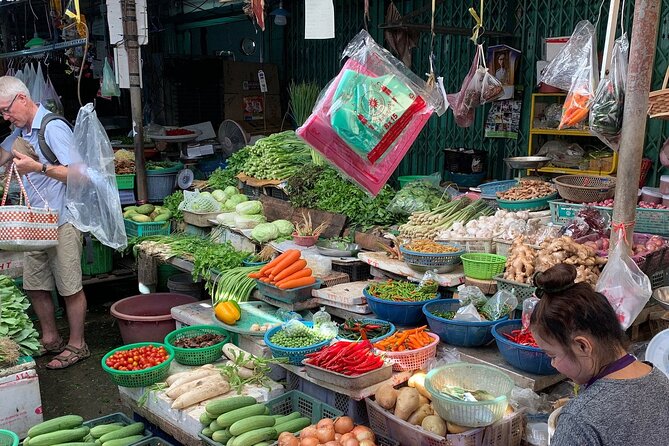
The market stop is a big part of why this class feels authentic. You’re not just walking past stalls for scenery. You’re choosing ingredients with guidance, so you learn what to look for and what each item contributes to flavor and texture.
From the way the market visit is described, you get a tour through different stalls, with explanations about ingredients and how they’re processed. That is the kind of detail that usually gets skipped when you only ever buy ingredients at a supermarket. In Thai cooking, tiny differences can change the dish, like the balance of sweet, sour, salty, and heat, or how aromatics are used.
Here are a few things I think you should pay attention to during the market walk:
- What sauces, pastes, and herbs look like (color and texture)
- How ingredients are labeled or described by the vendors
- Which items look freshest and most fragrant
- How you can swap ingredients if you cannot find the exact Thai version later
Practical note: bring shoes you won’t baby
The market is a little wet and muddy. That means sturdy, closed-toe footwear is not optional. Bring shoes you’re okay getting dirty, because you’ll walk around enough to actually justify comfort and grip.
If you’re planning your Bangkok day around this, also remember that the market stop is part of a tight 4-hour session. You don’t want sore feet or wet socks to steal your focus from learning.
Inside the Maliwan cooking school: small-group energy and clear direction
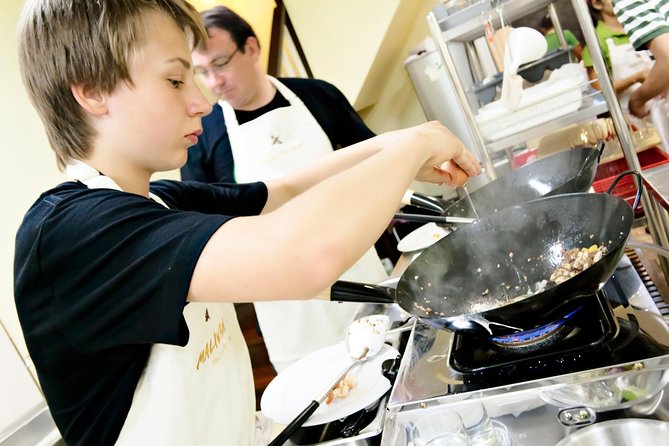
Back at the cooking location, you’ll cook at your own station with all ingredients and equipment provided. That removes the biggest headache of cooking classes: you do not have to hunt down supplies or figure out what tools you need once you get there.
In many cooking classes, the instructor demonstrates and you watch. Here, the flow is different: you get demonstrations, then you prepare the dish yourself before moving on. That dish-by-dish pacing helps you retain what you just learned, because you’re using it immediately instead of waiting until the end.
The teaching style also comes through in the names people mention. Instructors such as May, Mei, Mae, Matinee, and Mai are described as friendly, organized, and helpful, with assistants stepping in when needed. You can feel the advantage of a well-run team because the kitchen stays efficient and hygienic, and you aren’t left wondering what you should do next.
Thai market visits sat in the same notebook



Spice and flavor control is part of the lesson
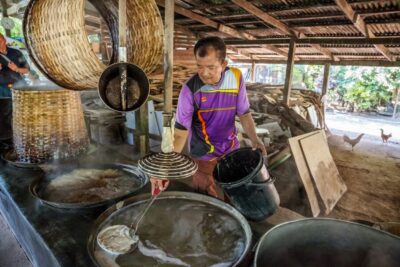
One of the most valuable parts for real-home cooks is that you can tailor flavor. You learn the base method, then adjust seasoning and spice to match what you like. This is especially useful because Thai food is not one fixed taste. It’s a system you can calibrate.
If you have dietary needs, you should tell the operator within 2 hours of booking. Vegetarian, vegan, gluten-free, and allergy requests are explicitly mentioned as things you can communicate. And people report that vegetarian adjustments and allergy accommodations were handled when they were requested ahead of time.
What dishes you’ll make, and how to recreate them at home
The menu is decided by the instructor prior to your date of travel, so what you cook is not identical every time. The good news is that the class is built around classic Thai recipes, with enough flexibility that the learning still transfers to your kitchen.
Across the experience, people mention cooking 4 or 5 dishes, and that fits the half-day structure. Expect a mix of Thai favorites, guided by your instructor. Even if the exact dishes vary, the method is consistent: ingredients first, then technique, then cooking in sequence.
Why this beats a restaurant meal
Restaurants teach you what Thai food tastes like. Cooking classes teach you how it’s built.
What makes this class especially practical is that your instructions are tied to the ingredients you saw at the market. So when you get home and try to recreate the dish, you have mental shortcuts:
- I remember what that ingredient looked like
- I remember what it did in the dish
- I remember what to adjust if the balance feels off
You also leave with printed recipes. These are not just decorative. They help you repeat the dishes without trying to guess measurements from memory.
If you’re the type who cooks at home already, you’ll likely enjoy the way this lesson explains taste balance. If you’re new to Thai cooking, you’ll still get a solid foundation because the dishes are taught in an approachable sequence.
The meal, recipes, and the certificate: what you actually take home
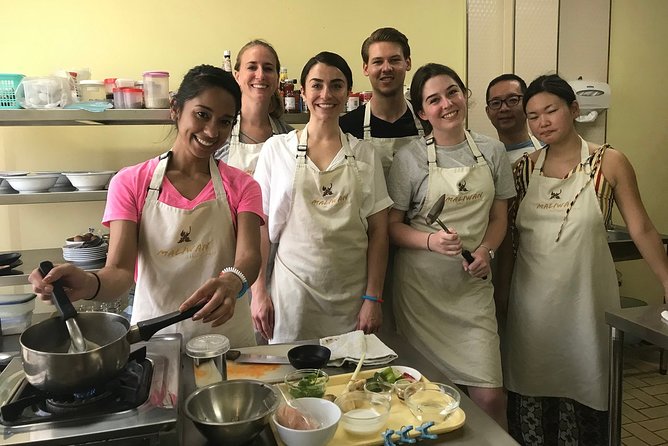
At the end, you eat what you cooked. People describe the food as delicious, and you’re not just tasting a bite. You get a full meal experience, including rice.
Then you take home two learning tools:
- Printed recipes you can follow later
- An e-certificate of completion
That certificate might sound minor, but it’s part of what makes this feel like a structured class instead of a casual demo. You finish with something concrete in hand, even if you’re traveling light.
A comfort detail you might care about
Some sessions are described as having an air-conditioned space for enjoying the meal, with temple views in certain setups. Even if your specific room view differs, the key point for you is comfort. Thai cooking can get hands-on and warm, so having a place to sit and eat after is a plus.
Bangkok logistics that make or break a half-day
This class is not built around hotel pickup and drop-off. You’ll need to get yourself to the meeting point:
9 Thanon Sap Sam Hang, Taladyod Khet Phra Nakhon, Krung Thep Maha Nakhon 10200, Thailand
The good part is that it’s near public transportation. One of the smartest ways to approach Bangkok days is to choose activities that connect easily to your walking, transit, or ferry route. You can also plan this as part of a broader neighborhood day, since you start and end back at the meeting point.
Timing matters more than you think
Arriving an hour late results in a no-show, and you cannot join the rest of the class. That rule is strict, but it keeps the kitchen workflow on track. If traffic is unpredictable, give yourself buffer time.
Also, bring the mindset that the session is structured. This is not a slow hang-out. It’s a half-day rhythm: market selection, then cooking in order.
What’s included, and what costs extra
Included:
- Market visit
- Rice serving
- Welcome drink
- All ingredients and equipment
- Printed recipes
- Tuition fee
- E-certificate of Completion
Not included:
- Extra drinks
So you’re paying for the full learning loop, not only the cooking part. That matters for value. You get the ingredients, tools, instruction, and meal, all wrapped into a single price.
Price and value: why $43.86 can be a good deal
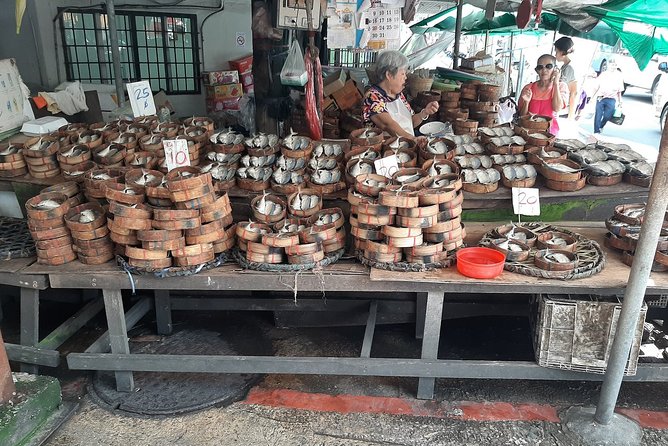
At $43.86 per person for about 4 hours, this sits in the reasonable range for Bangkok cooking classes, especially because it includes the market visit. Many classes focus only on cooking, and the market time is either optional or not guided.
Here’s where you get value:
- You get a tuk-tuk ride that’s part of the experience, not a transfer afterthought
- You buy ingredients with instruction, then cook with them
- Small-group size means your questions do not bounce off the wall
- Printed recipes and an e-certificate help you carry the lesson home
Is it the cheapest option? Likely not. But it is priced like a real class with a real market component and hands-on participation.
For me, the deciding factor is the repeat value. If you cook Thai at home even a few times afterward, this is money well spent.
Who should book this class, and who should skip it
You’ll probably love this if:
- You’re a food-focused traveler who wants to learn technique, not only eat dishes
- You like marketplaces and want guidance on what to buy
- You want a small class where you can ask questions and actually cook
- You want a recipe handout you can use later
It might be less ideal if:
- You have back or leg issues. The market walk and standing at the kitchen stations could be challenging.
- You hate being on your feet for a chunk of time, since this is active and hands-on.
- You want a class that is completely flexible on pacing. This one is structured for efficiency.
Age-wise, the minimum age is 13 years, so it can work for some teens who are curious and comfortable cooking.
Should you book Maliwan Thai Cooking Class with market visit?
If you want a Bangkok food experience that teaches you something you can repeat, I’d book it. The market visit by tuk-tuk sets you up with real ingredient context, and the small-group kitchen format makes the cooking time effective. You also get printed recipes and an e-certificate, so the value lasts beyond the meal.
Just go in prepared for the market conditions with sturdy shoes, and plan to arrive on time. If you do that, you end the day with both a full stomach and a clearer path to cooking Thai dishes at home.
FAQ
How long is the Thai cooking class?
It runs about 4 hours.
Is hotel pickup or drop-off included?
No. Hotel pickup and drop-off are not included.
What is included in the price?
The price includes the market visit, rice serving, welcome drink, all ingredients and equipment, printed recipes, tuition fee, and an e-certificate of completion.
What should I wear for the market?
Wear sturdy, closed footwear. The market can be wet and muddy.
What dietary restrictions can be accommodated?
You can inform the provider of dietary restrictions such as vegetarian, vegan, gluten-free, or allergies within 2 hours of booking. Last-minute changes may not be possible.
What is the minimum age?
The minimum age is 13 years.
Thai market mornings, continued
Thai kitchens you can book into
What else made it into the Thailand notebook
What else made it into the Bangkok notebook
- Bangkok hotel to Pattaya hotel transportation
★ 4.5 · 20 reviews - Private Longtail Boat Bangkok Canal Tour
★ 4.5 · 20 reviews - Nakhon Nayok adventure full day trip with lunch
★ 5.0 · 20 reviews - Mystical Waterfall and River Kwai Tour (Private & All-Inclusive)
★ 5.0 · 20 reviews - From Bangkok: Full Day Customizable Private Tour to Pattaya City
★ 5.0 · 20 reviews - Bangkok by Night Tuk Tuk Tour: Markets, Temples & Food
★ 4.5 · 20 reviews
Cooking Classes, compared.
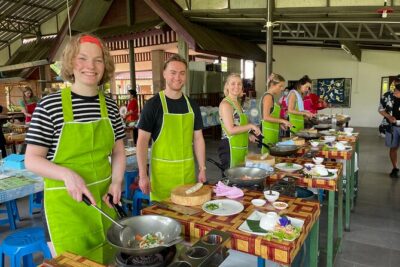 ★ 5.0Half-Day Thai Cooking Class at Organic Farm in Chiang MaiFrom $2919,087 reviews
 ★ 4.9Cooking Class, Market & Thai Herbs Garden TourFrom $314,824 reviews
 ★ 4.9Authentic Cooking Class with Market & Farm VisitFrom $344,546 reviews
 ★ 5.0Thai and Akha Cooking Class in Chiang MaiFrom $424,358 reviews
 ★ 5.0Phuket Thai Cooking Class with Market Tour OptionFrom $652,665 reviews
 ★ 4.9Hands-on Thai Cooking Class and Market TourFrom $451,614 reviews
 ★ 4.9Cooking Class with Market and PickupFrom $251,365 reviews
 ★ 4.9Tingly Thai Cooking School Half-Day Cooking ClassFrom $411,191 reviews
Browse the lists this tour appears in