
REVIEW · COOKING CLASSES
Sathon: Hands-on Thai Cooking Class & Market Tour in Bangkok
Thai cooking gets hands-on, right away. I love the Suan Phlu market tour outside your door and the fact that you make coconut milk and curry paste from scratch, then eat everything hot. The main drawback is simple: this is not a sit-and-watch show. You will chop, pound, and cook.
The class is centered near Silom, with an English and Thai instructor and a small, friendly vibe. In particular, Pitch brings the laughs and the clear guidance, and you end up with food you actually know how to recreate.
In This Review
- Key Highlights You’ll Feel Immediately
- First Stop: Suan Phlu Market, Where Your Curry Starts
- From Scratch: Coconut Milk and Curry Paste in Your Own Hands
- Four Courses of Classic Thai Cooking, Hot Off the Stoves
- Monday Menu
- Tuesday Menu
- Wednesday Menu
- Thursday Menu
- Friday Menu
- Saturday Menu
- Sunday Menu
- How the 210-Minute Format Keeps You Focused (Not Rushed)
- Picking the Right Day: A Menu That Matches Your Thai Mood
- Dietary Needs and Substitutions, Done the Practical Way
- Price and Value: Why $45 Feels Fair Here
- Meeting Point and Getting There Near Silom
- The Human Factor: Pitch Makes It Cozy and Fun
- Should You Book This Sathon Thai Cooking Class?
- FAQ
- Where is the meeting point for Sathon cooking class?
- How long is the cooking class and market tour?
- What’s included in the $45 per person price?
- Can the class accommodate dietary restrictions?
- Does the menu change depending on the day?
- Are alcoholic drinks included?
- Which public transit stops are closest?
Key Highlights You’ll Feel Immediately
- Suan Phlu ingredient shopping first: pick produce and pantry items before you cook
- Coconut milk and curry paste from scratch: get your hands on the foundations of Thai flavor
- Four-course meal, hot and fresh: you cook and eat the dishes you make
- Day-by-day Thai menu rotation: you get a different set of classics depending on the day
- Recipes to take home: leave with a practical guide for repeat dinners
Thai kitchens got sat through and written up
- Bangkok: Hands-on Thai Cooking Class and Market Tour★ 4.9 · 1,614 reviews
- Bangkok: Tingly Thai Cooking School Half-Day Cooking Class★ 4.9 · 1,191 reviews
- Bangkok: Maliwan Thai Cooking Class with Market Tour★ 4.9 · 1,133 reviews
- Hands on Thai Cooking Class and Market Tour★ 5.0 · 660 reviews
First Stop: Suan Phlu Market, Where Your Curry Starts
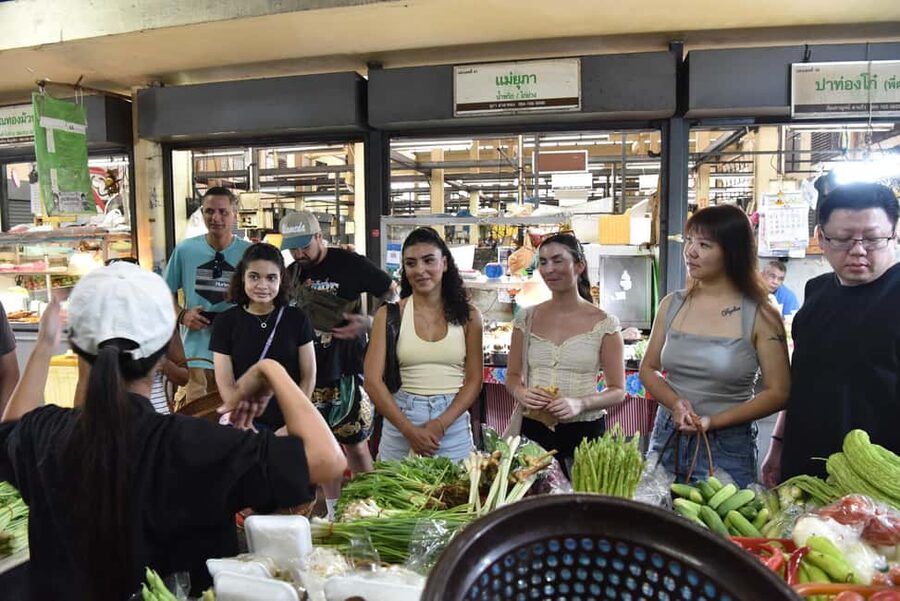
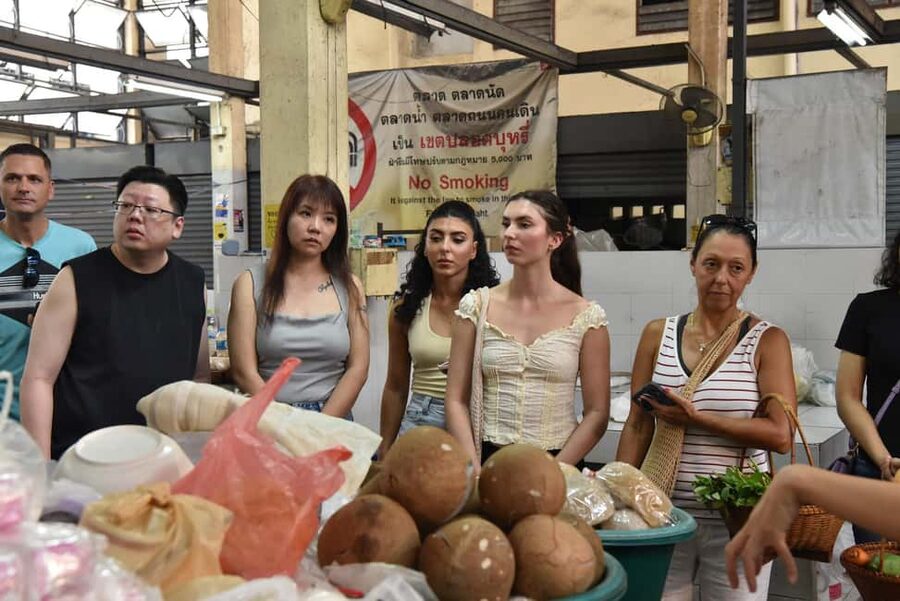
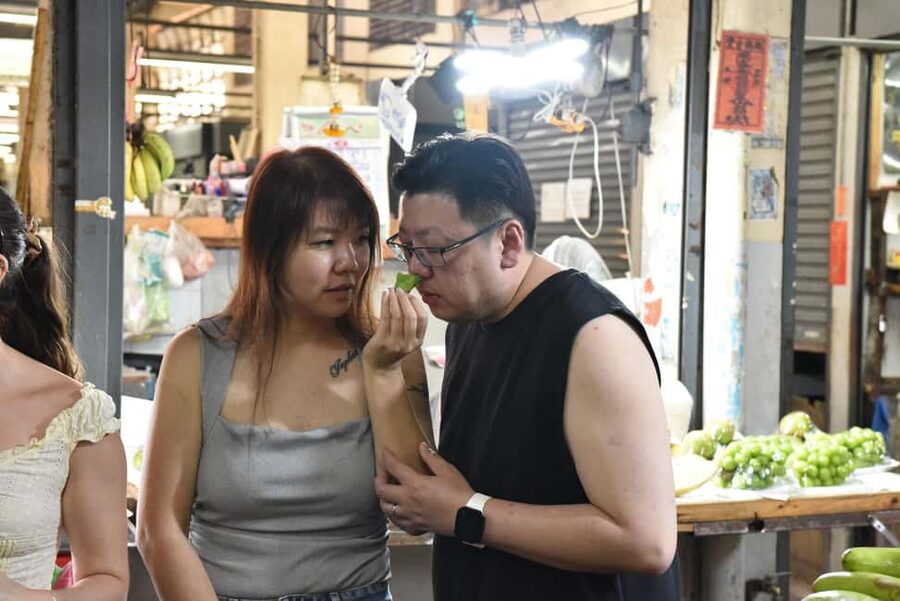
You meet at the school in Suan Phlu, Sathon, near Silom. The location is practical because the Suan Phlu fresh market is just a 1-minute walk away. That matters. When your cooking starts with the right ingredients, you taste the difference fast.
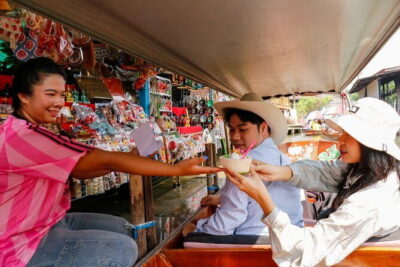
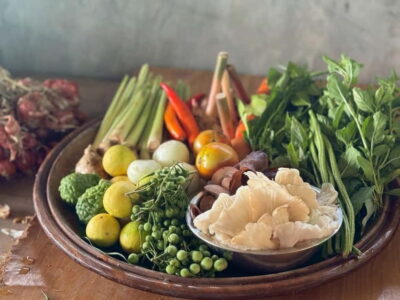
Once you’re there, you’ll shop with a guide. You’re not just wandering with a checklist. You’ll learn what to look for in vegetables, rice, herbs, and spices, then choose what you’ll cook with. This is one of the best parts of Bangkok cooking classes, because markets are where Thai cooking becomes real, not just theoretical.
A small detail I really like is how direct the whole flow is. You select ingredients, then you cook with them. If you tend to forget what you bought at a market, this format helps you connect the purchase to the final dish.
The one thing to consider is pacing. Market time plus cooking time means you’ll want energy from the start. Wear comfortable shoes. You’ll be on your feet while you learn how Thai cooks think about freshness.
From Scratch: Coconut Milk and Curry Paste in Your Own Hands
Here’s where the class earns its keep. You don’t only learn recipes. You make two key elements from scratch: fresh coconut milk and curry paste.
Thai curries rise and fall on these components. Store versions can be fine for a quick weeknight meal, but making your own changes everything about aroma, texture, and balance. You also understand why Thai chefs treat curry paste like a living flavor base, not a one-time ingredient.
You’ll get hands-on with the curry paste process. That can mean pounding, mixing, and testing as you go, based on the instructions from your guide. The payoff is big: once you’ve made a paste yourself, the next curry you cook at home feels less like following instructions and more like cooking.
And yes, you’ll learn about exotic ingredients along the way. You’ll see how vegetables and herbs fit into Thai flavor, and you’ll pick up practical cues for identifying ingredients in Thai markets later. If you plan to cook Thai food again, that ingredient knowledge is worth as much as the dishes themselves.
Four Courses of Classic Thai Cooking, Hot Off the Stoves
The structure is built for taste and confidence. After the market part, you spend about two hours cooking your four dishes. Then you eat them while they’re still hot and fresh. That is not a small thing.
Thai food can get dull fast if it sits. The class format keeps the food at its best, and it also makes your learning more effective. You can taste the results immediately and understand what worked.
Your class always includes mango sticky rice as the sweet finish. It shows up every day on the menu, so you get consistency in the dessert course. The other three courses rotate by day, and that keeps the experience from feeling repetitive.
Here are the classic dishes you can cook during the week:
Monday Menu
- Thai Papaya Salad, Som Tum
- Stir-Fried Noodles with Shrimp, Pad Thai
- Green Curry with Chicken
- Mango Sticky Rice
If you like bright flavors and crunchy textures, Monday leans that way. Som Tum and Pad Thai are both good at teaching technique. They also help you understand how Thai cooking balances sour, sweet, salty, and spicy without making it messy.
Thai market visits sat in the same notebook


Tuesday Menu
- Spicy Coconut Soup with Chicken, Tom Kha Gai
- Stir-Fried Thai Basil Chicken, Pad Krapow Gai
- Red Curry with Chicken
- Mango Sticky Rice
This day is a great choice if you want variety. Tom Kha Gai brings creamy warmth. Pad Krapow Gai gives you that stir-fry heat and basil aroma. Red curry then teaches curry depth after you’ve already learned soup and stir-fry basics.
Wednesday Menu
- Hot and Sour Soup with Shrimp, Tom Yum Goong
- Stir-Fried Flat Rice Noodles with Chicken, Pad See Ew
- Green Curry with Chicken
- Mango Sticky Rice
Wednesday is for fans of bold soups. Tom Yum Goong is a huge Thai flavor lesson in one bowl. Pad See Ew adds a different texture and noodle technique, which keeps the cooking day from feeling one-note.
Thursday Menu
- Spicy Minced Chicken Salad, Larb Gai
- Stir-Fried Noodles with Shrimp, Pad Thai
- Panang Curry with Chicken
- Mango Sticky Rice
Larb Gai is a great pick when you want a salad that still feels like a main event. It’s also a useful lesson in seasoning and balance. Panang curry then gives you a different curry personality than the other curry days.
Friday Menu
- Thai Papaya Salad, Som Tum
- Stir-Fried Thai Basil Chicken, Pad Krapow Gai
- Red Curry with Chicken
- Mango Sticky Rice
Friday brings back two favorites with a curry. If you missed one of these flavors earlier in the week, this menu is a tidy second chance.
Saturday Menu
- Spicy Coconut Soup with Chicken, Tom Kha Gai
- Stir-Fried Noodles with Shrimp, Pad Thai
- Green Curry with Chicken
- Mango Sticky Rice
Saturday has a comforting rhythm: soup, noodles, then curry. If you like familiar Thai staples, this is an easy day to choose.
Sunday Menu
- Hot and Sour Soup with Shrimp, Tom Yum Goong
- Stir-Fried Flat Rice Noodles with Chicken, Pad See Ew
- Panang Curry with Chicken
- Mango Sticky Rice
Sunday combines two of the most recognizable Thai meal types: hot-and-sour soup and noodle stir-fry, then finishes with Panang curry.
How the 210-Minute Format Keeps You Focused (Not Rushed)
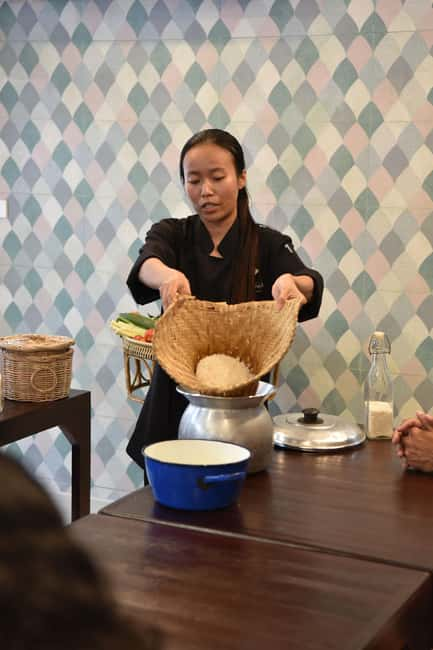
The class runs about 210 minutes. That’s long enough for real cooking, but not so long that you start feeling fried halfway through.
The flow usually looks like this:
You arrive at the school, meet your instructor, and then head into the Suan Phlu market with a guide. You pick ingredients for the dishes, and you learn what makes each ingredient work in Thai cooking. Then you move back to the kitchen and spend roughly two hours cooking and tasting the four-course meal.
What makes this format effective is that it avoids the common cooking-class problem of disconnect. In many classes, you learn recipes but never feel the ingredient logic. Here, the market step explains why certain herbs, spices, and produce matter, and the cooking step proves it on your plate.
Also, the setup includes a personal locker, all ingredients, and cooking equipment. That’s part of why the schedule works. You aren’t spending time hunting for utensils, or worrying about missing staples.
If you’re the kind of person who loves organization, you’ll appreciate this. If you hate waiting around, you’ll still be busy, hands-on and tasting.
Picking the Right Day: A Menu That Matches Your Thai Mood
Because the menu changes by day, your best strategy is to pick the flavor mood you want most.
If you’re craving bright heat and crunch, go for Som Tum days. If you want curry technique with a clear payoff, choose one of the green curry or red curry days. If soups are your thing, either Tom Kha Gai or Tom Yum Goong is waiting. And if you want to learn the difference between noodle styles, you’ll get Pad Thai on some days and Pad See Ew on others.
I especially like that the class is built around classics you’ll recognize later. Mango sticky rice appears every day, and it gives you a satisfying end point regardless of which savory dishes you cooked.
One practical note: this makes planning easier if you’re staying in Bangkok for several days. You can match the class to your itinerary and still get a complete experience without repeating the same menu.
Dietary Needs and Substitutions, Done the Practical Way
This class can accommodate dietary preferences and restrictions. The key detail is that the team provides suitable substitute ingredients for vegetarian, halal, kosher, and allergy-sensitive guests.
That matters because Thai cooking uses herbs, pastes, and cooking methods that can be altered while still keeping the flavor structure. You’re not stuck with a bland substitute. You should still be able to follow along, taste, and learn techniques.
If you have allergies, be upfront. The class is designed to help, but you still need to communicate your needs clearly so substitutions are accurate.
Price and Value: Why $45 Feels Fair Here
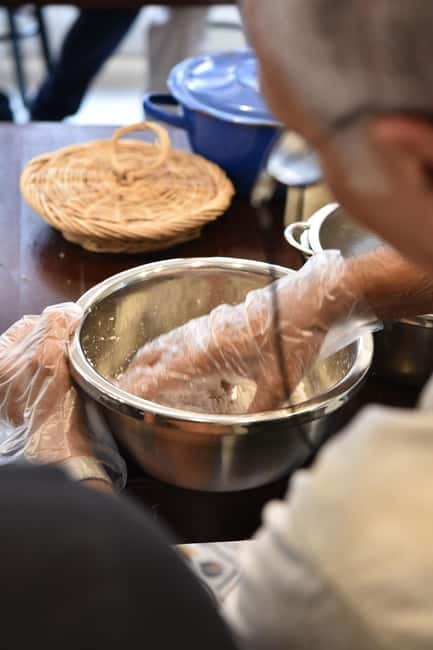
The price is $45 per person for about 210 minutes. At this cost, you’re not just paying for recipes or a seat at the table. You’re paying for the whole market-to-meal experience.
Here’s what you get included:
- a four-course meal
- all ingredients and cooking equipment
- drinking water
- a personal locker
- standard recipes to take home
- a market tour included in every class
That adds up quickly. Markets can be expensive if you buy everything yourself, and ingredients for curry paste plus coconut milk are not small potatoes. You also get the instructional component, plus the support of your guide while you cook.
Alcohol is not included, but it’s available for purchase. So if you plan to drink, factor that in. If you want a focused food experience, you can just stick to water and enjoy the dishes as they come.
Compared to buying the ingredients and booking separate activities, this has the advantage of one unified plan. You learn, cook, and eat without extra coordination.
Meeting Point and Getting There Near Silom
The meeting point is at the school in Suan Phlu, Sathon. Search this exact map location:
33, Thanon Suan Phlu, behind Suan Phlu Market, Thung Maha Mek, Sathon Bangkok 10120
Getting there is fairly straightforward. Public transportation options nearby include:
- BTS Saint Louise Exit 1
- BTS Chongnonsi Exit 2
- BTS Sala Daeng Exit 2
- MRT Lumphini Exit 2
- MRT Silom Exit 2
From there, you can take a motorcycle or taxi to the school.
If you’re arriving from another part of Bangkok, I’d plan extra time for the last stretch. Bangkok traffic can be unpredictable, but taxi or motorcycle makes the final approach easier than walking the whole distance.
The Human Factor: Pitch Makes It Cozy and Fun
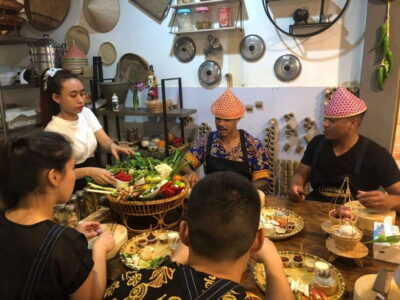
The best cooking classes have a personality. This one does. The instructor Pitch has a gift for keeping things relaxed while still moving the class forward. People feel comfortable asking questions, and you can tell the guide enjoys teaching.
One review highlight that lines up with how this class feels in practice: the group vibe is cozy, and chatting happens naturally. That helps if you’re traveling solo or you want to meet other people while still focusing on food.
Also, the food you make is genuinely yours. Because you do the chopping, paste making, and cooking, the final meal feels earned. When you’re done, you leave with recipes and a new mental map of Thai flavors. That is the difference between a fun activity and a skill you can repeat later.
Should You Book This Sathon Thai Cooking Class?
Book it if you want a hands-on Bangkok Thai cooking class that teaches technique, not just tasting. Choose it if you care about where flavor comes from, especially through the Suan Phlu market tour and the curry paste and coconut milk steps. If you like the idea of cooking four classics and eating them hot, this format fits.
Skip it if you only want a light snack experience or you hate kitchen work. This class expects active participation.
One more decision tip: pick the day based on the dishes you’re most curious about. If you’re a soup fan, choose Tom Yum Goong or Tom Kha Gai days. If you want curry variety, choose between green curry, red curry, or Panang curry days. And if you want a noodles lesson, make sure you choose the day that matches your noodle cravings.
If that sounds like your kind of Bangkok day, you’ll likely leave happy, full, and with recipes you can actually use at home.
FAQ
Where is the meeting point for Sathon cooking class?
You meet at 33, Thanon Suan Phlu, behind Suan Phlu Market, Thung Maha Mek, Sathon Bangkok 10120.
How long is the cooking class and market tour?
The experience lasts about 210 minutes.
What’s included in the $45 per person price?
It includes a four-course meal, drinking water, all ingredients and cooking equipment, personal locker, standard recipes, and a market tour included in every class.
Can the class accommodate dietary restrictions?
Yes. Dietary preferences and restrictions can be accommodated with suitable substitute ingredients for vegetarian, halal, kosher, and allergy-sensitive guests.
Does the menu change depending on the day?
Yes. Each day has a different set of dishes, though mango sticky rice is included every day.
Are alcoholic drinks included?
No. Alcoholic drinks are not included, but they are available for purchase.
Which public transit stops are closest?
Near options include BTS Saint Louise Exit 1, BTS Chongnonsi Exit 2, BTS Sala Daeng Exit 2, MRT Lumphini Exit 2, and MRT Silom Exit 2. From there, you can take a motorcycle or taxi to the school.
Thai kitchens you can book into
Guided Thai outings, continued
What else made it into the Thailand notebook
What else made it into the Bangkok notebook
- Discover UNESCO World Heritage Sites – Ayutthaya to Khao Yai National Park
★ 5.0 · 7 reviews - Damnoen Saduak Floating Market & Maeklong Train Market Tour
★ 5.0 · 7 reviews - Unique and Scenic Slow Boat Tour from Bangkok to Ayutthaya
★ 5.0 · 7 reviews - Bangkok Tour: Highlights & Hidden Gems & Long Tail Boat
★ 4.5 · 7 reviews - Silom Thai Cooking Experience with Market Visit
★ 5.0 · 7 reviews - Private Tour: Grand Palace,Wat Phra Kaew, Museum&Cooking Class
★ 5.0 · 7 reviews
Cooking Classes, compared.
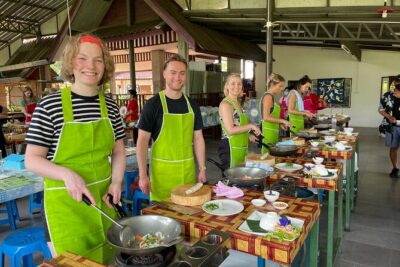 ★ 5.0Half-Day Thai Cooking Class at Organic Farm in Chiang MaiFrom $2919,087 reviews
 ★ 4.9Cooking Class, Market & Thai Herbs Garden TourFrom $314,824 reviews
 ★ 4.9Authentic Cooking Class with Market & Farm VisitFrom $344,546 reviews
 ★ 5.0Thai and Akha Cooking Class in Chiang MaiFrom $424,358 reviews
 ★ 5.0Phuket Thai Cooking Class with Market Tour OptionFrom $652,665 reviews
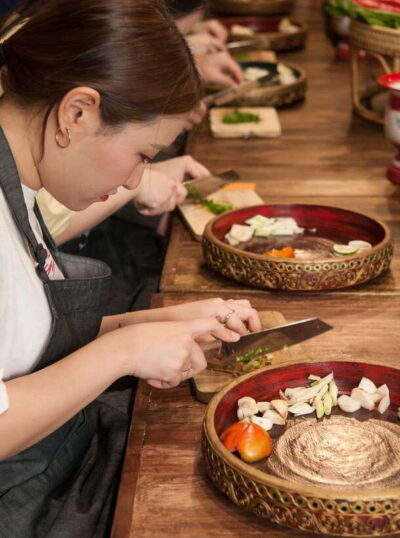 ★ 4.9Hands-on Thai Cooking Class and Market TourFrom $451,614 reviews
 ★ 4.9Cooking Class with Market and PickupFrom $251,365 reviews
 ★ 4.9Tingly Thai Cooking School Half-Day Cooking ClassFrom $411,191 reviews
Browse the lists this tour appears in