
REVIEW · COOKING CLASSES
Krabi: Morning/Afternoon Thai Cooking Class at Ya’s Cookery
Cooking in Krabi, with chef Ya as your guide, feels practical and fun. You shop fresh ingredients, cut and stir your way through Thai classics, and finish by eating what you made. The class runs as a small-group experience, so you get real hands-on time, not just watching.
I especially like the way you choose your own dishes (4 per session) from a clear menu, morning or afternoon. I also like the spiciness control, so your plates come out the way you actually want, including vegetarian-friendly options when needed.
One thing to consider: the class is not set up for mobility impairments, and it’s easier if you show up with minimal luggage since there’s no allowance for large bags.
In This Review
- Key things to know before you cook
- A Krabi morning or afternoon that smells like Thai food
- Pickup from Ao Nang and Ao Nam Mao, plus other-area transfer notes
- Choosing your dishes: the smartest part of the class
- Morning menu options
- Afternoon menu options
- The herb garden start: you cut, chop, and get moving fast
- What Southern Thai cooking feels like in your hands
- Spiciness control and vegetarian swaps that actually work
- The dishes you’ll likely master (and what to expect while cooking)
- Curries (Massaman, Panang, green, red, yellow)
- Pad Thai and fried rice
- Tom Yam Goong
- Salads and fresh-herb dishes (Lab Kai, Papaya Salad, and similar)
- Stir-fries (cashew chicken, sweet and sour, holy basil, morning glory)
- Eating your own meal, and why the class ends the right way
- The cookbook you take home, plus real “practice value”
- Price and value: why $53 can be a smart buy in Krabi
- Who this Krabi cooking class suits best
- Should you book Ya’s Cookery School in Krabi?
- FAQ
- How long is the Ya’s Cookery Class in Krabi?
- Is pickup included from my hotel?
- Can I choose which Thai dishes I cook?
- Do I get a cookbook to take home?
- Can you adjust dishes for spice level or vegetarian preferences?
- What should I wear or bring?
- Are luggage or large bags permitted?
- Is the class suitable for people with mobility impairments?
Key things to know before you cook
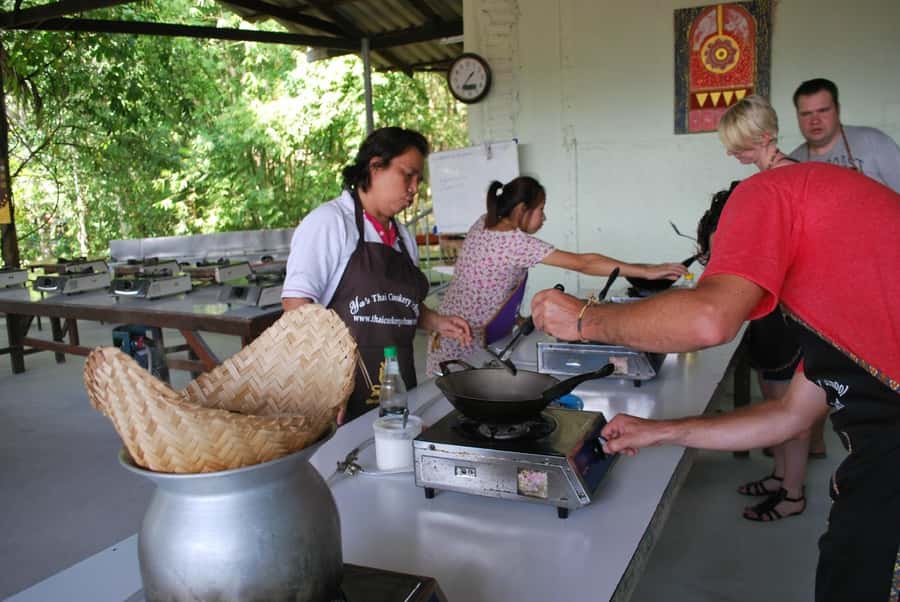
- Chef Ya teaches Southern-style Thai cooking with a small-group setup.
- Pick 4 dishes from the morning or afternoon menus, then cook them step by step.
- Herb garden and fresh ingredient sourcing happens right at the start, before you cut anything.
- Spice level is adjustable, and dishes can be adapted to taste or vegetarian preferences.
- You take home a cookbook with recipes and English instruction.
- Round-trip transfer is included only from Ao Nang and Ao Nam Mao, with add-ons for other areas.
Thai kitchens got sat through and written up
- Krabi: Traditional Thai Cooking Class with Local Chef★ 4.9 · 537 reviews
- Ao Nang: Authentic Thai Local Cooking Class★ 4.8 · 291 reviews
- Ao Nang: Half-Day Thai Cooking Class Krabi Province★ 4.8 · 124 reviews
- Krabi: Ya’s Cookery Late Afternoon Thai Cooking Class★ 4.7 · 35 reviews
A Krabi morning or afternoon that smells like Thai food
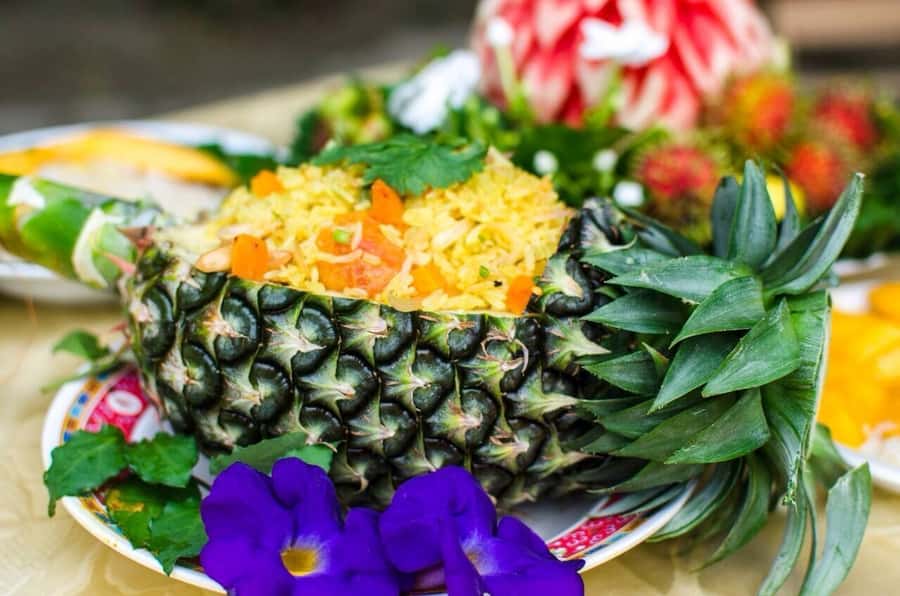
If you want a Krabi activity that goes beyond photos and into real life skills, this Ya Thai Cookery School class is a strong bet. You’re not just learning names of dishes. You’re cooking them. And that matters in Thailand, where the difference between good and great food often comes down to technique, timing, and seasoning.
The setting also helps. You get picked up from your hotel area and ride to the school by local truck, described as being on a small stream. That short travel time keeps the class feeling like an event, not a long chore.
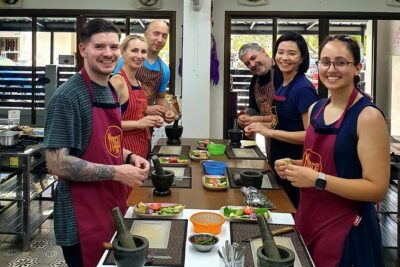
Most of all, this class is set up for actual participation. Ingredients are measured out in trays and plates. So you’re cutting, slicing, chopping, and stir-frying, not doing heavy prep math for hours.
Pickup from Ao Nang and Ao Nam Mao, plus other-area transfer notes
The class includes hotel round-trip transfer if you’re staying in Ao Nang or Ao Nam Mao. Your exact pickup time is confirmed by email after you book, and you meet the driver at your hotel lobby.
If you’re staying elsewhere, you do have options, but they’re add-ons at checkout:
- Klong Muang: 250 THB per person (round-trip, with minimum 2 and maximum 6 people)
- Tubkaek Beach: 300 THB per person (same group limits)
- Krabi Town: 250 THB per person (same group limits)
Why I think this matters for your planning: a cooking class works best when you arrive relaxed. If you’re already worrying about timing and getting there, you lose the whole point of the experience.
Also, plan to travel light. There’s guidance that luggage or large bags aren’t allowed, so avoid bringing anything bulky.
Choosing your dishes: the smartest part of the class
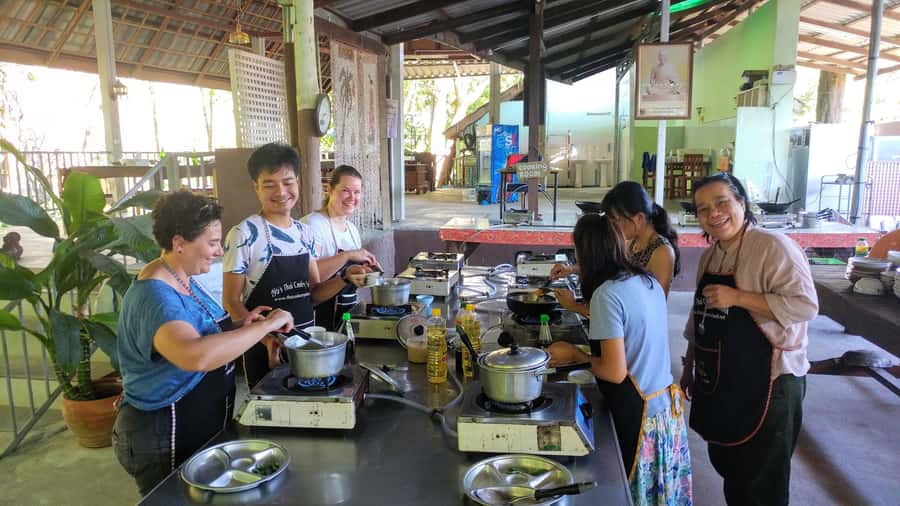
This class runs for about 4 hours, and you can join either a morning or an afternoon session. The key advantage is control. You choose 4 dishes from a defined list. That means you’re not stuck with whatever the instructor picked for the group.
Morning menu options
For the morning class, you choose 4 dishes from:
- Massaman Curry
- Red Curry
- Chicken with Vegetable Yellow Curry
- Lab Kai (Chicken Mint Salad)
- Pad Thai
- Stir-Fried Chicken with Cashew Nuts
- Stir-Fried Sweet and Sour Chicken
- Vegetable Fried Rice with Chicken or Vegetables
- Spicy Prawn Soup (Tom Yam Goong)
- Chicken in Coconut Milk





Afternoon menu options
For the afternoon class, you choose 4 dishes from:
- Spring Rolls
- Sweet Sticky Rice with Mango Curry
- Green Curry
- Panang Curry
- Pad Thai
- Chicken in Coconut Milk
- Stir-Fried Chicken & Holy Basil
- Papaya Salad
- Stir-Fried Morning Glory
- Spicy Prawn Soup
A practical way to choose: pick one curry or soup, one stir-fry, one salad, and one crowd-pleaser like Pad Thai or fried rice. That mix covers the major Thai flavor categories you’ll want to recreate later at home.
The herb garden start: you cut, chop, and get moving fast
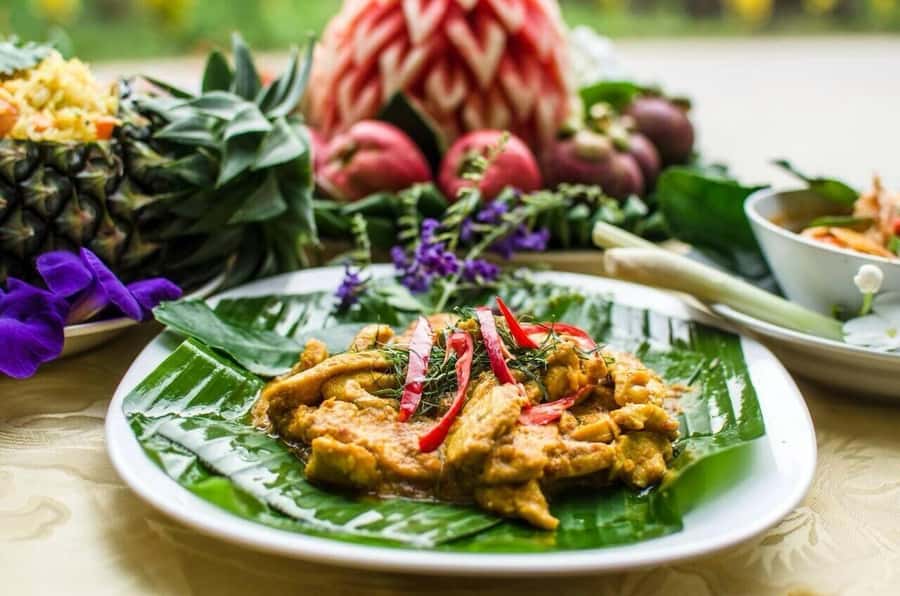
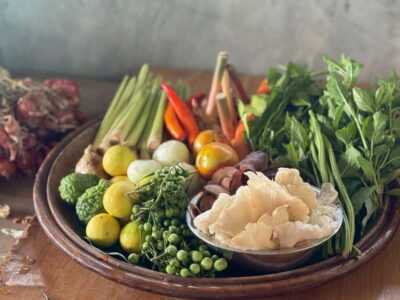
The class begins with a shopping-style moment. You select fresh ingredients for your meals, and they’re set up in measured portions on plates and trays. The idea here is simple: you do the cutting and prepping, but you’re not forced into tedious measurement steps.
You’re also choosing from fresh ingredients described as coming from the potteries and plant areas in the herb garden. It’s not just scenic. It helps you connect ingredients with flavors, like how herbs used in salads and stir-fries show up as bright notes, while aromatics support curries and soups.
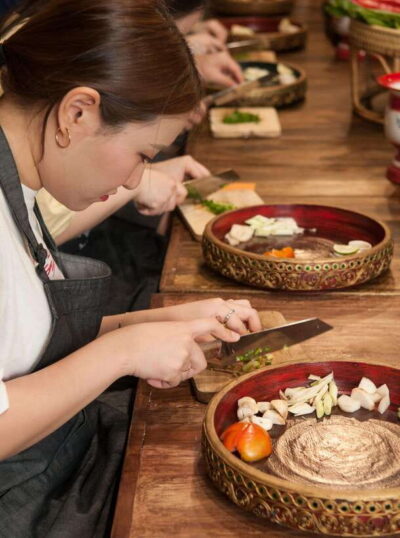
Then you start cutting, slicing, chopping, and dicing. This is where the class gets satisfying quickly. Your hands are busy, and Thai cooking makes more sense when you physically practice the prep.
What Southern Thai cooking feels like in your hands
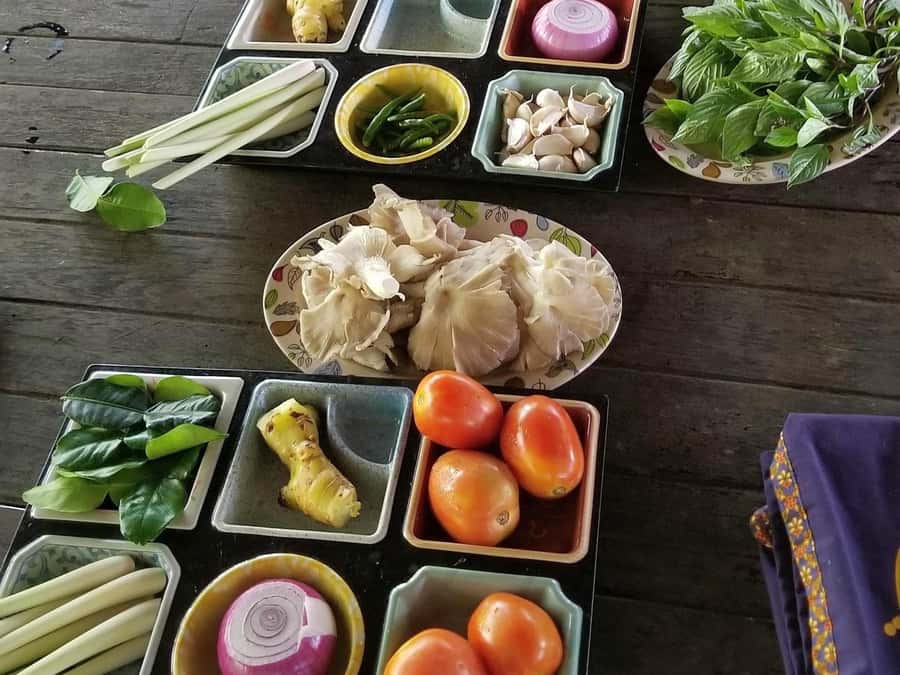
This is a Southern Thailand-focused class, and you can taste that direction in the lineup. Curries and soups are built around fragrant seasoning, not just heat. Dishes like Massaman Curry, Panang Curry, and green or red curry are all there, and they teach you how coconut milk, chili, and spice paste work together.
Soups and salads also matter. If you pick Som Tam-style flavors, Papaya Salad, or Lab Kai, you’ll see how acidity and fresh herbs balance the heavier parts of a meal. And if you choose Tom Yam Goong, you’ll learn that this famous sour-spicy profile is a technique, not a guess.
One of the biggest wins is the way everything connects. You prep ingredients for multiple dishes, then you stir-fry, curry, and build soups and salads as one coordinated food day.
Spiciness control and vegetarian swaps that actually work
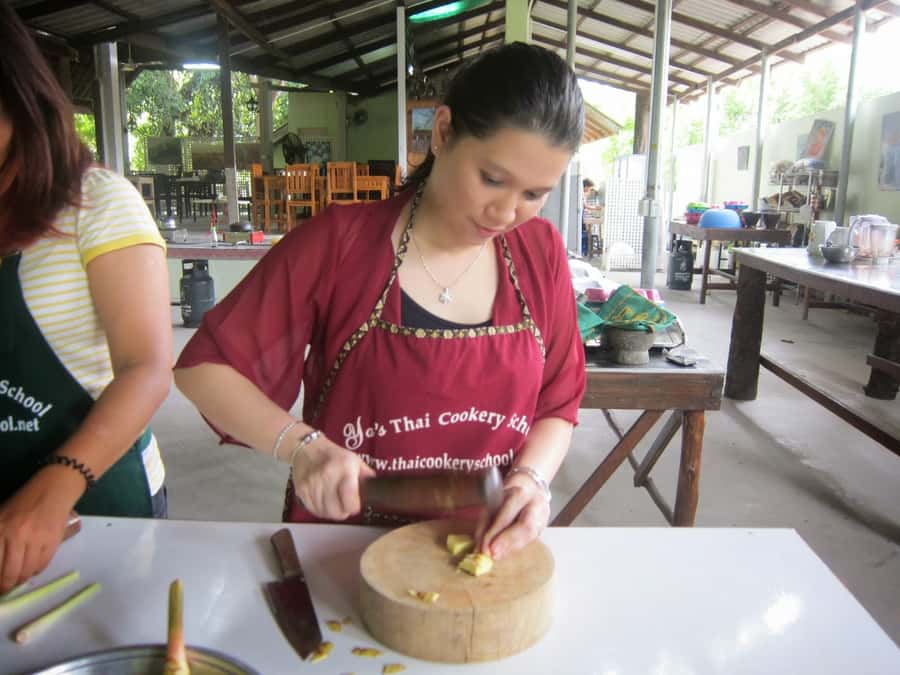
This class is designed so you can adjust flavor to your preference. Dishes can be adapted to taste, and they can be tailored for vegetarian preferences too.
In a country where spice levels can vary wildly from one kitchen to the next, this is a big deal. It means you’re not locked into being uncomfortable for the sake of authenticity. You can keep the character of Thai seasoning while dialing it to your tolerance.
How you’ll feel during the cooking: you’ll likely do better when you can tell the instructor what you want, early. If you want mild curry, say so. If you want more herbs in a salad, say so. The class structure gives you that chance.
The dishes you’ll likely master (and what to expect while cooking)
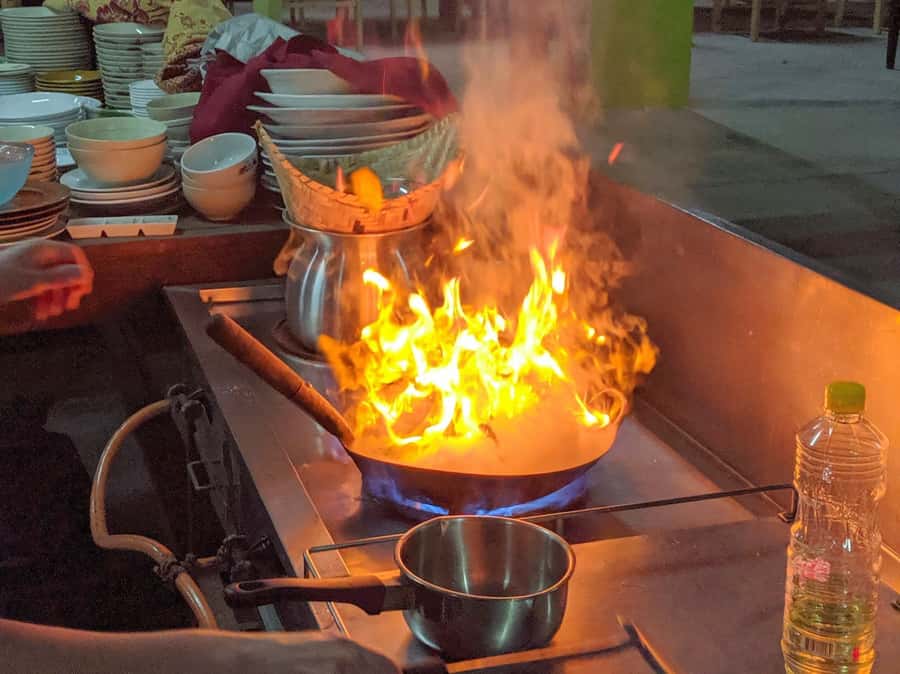
You’ll cook a total of four dishes per session. Even if the exact order can shift, the experience is consistent: prep first, then cooking stations for stir-fries, curry work, noodle tossing, soup building, or salad mixing.
Here are a few practical pointers tied to the types of dishes in the menu:
Curries (Massaman, Panang, green, red, yellow)
These teach you how curry paste and aromatics translate into sauce. You’ll work with coconut milk as a core component in multiple options, including Chicken in Coconut Milk and the curry selections.
Look for how the sauce thickens and how the spice smell changes as it cooks. That’s the Thai cooking lesson that pays off at home.
Pad Thai and fried rice
If you choose Pad Thai, expect a hands-on noodle and sauce experience, where balance matters. Fried rice options also show you how to build flavor fast through stir-frying, then adjust seasoning at the end.
This is where cooking classes become worth it, because you learn the process, not just the ingredient list.
Tom Yam Goong
If you select Spicy Prawn Soup, you’re learning Thai sour-spicy construction. Even if you’ve had it before, cooking it helps you understand that the flavor comes together from multiple components, not just one spicy ingredient.
Salads and fresh-herb dishes (Lab Kai, Papaya Salad, and similar)
Dishes like Lab Kai and Papaya Salad teach a different Thai logic. You’re balancing fresh herbs, acidity, and seasoning so the salad feels lively, not heavy.
It’s also a great choice if you want at least one dish that stays bright while the curries and stir-fries do their thing.
Stir-fries (cashew chicken, sweet and sour, holy basil, morning glory)
Stir-fries are where you get speed and technique. Holy Basil and morning glory options show how fragrant herbs and vegetables cook quickly and keep their character.
These dishes are also the easiest to replicate after your trip because they rely on familiar steps: heat, quick cook, then sauce and finishing adjustments.
Eating your own meal, and why the class ends the right way

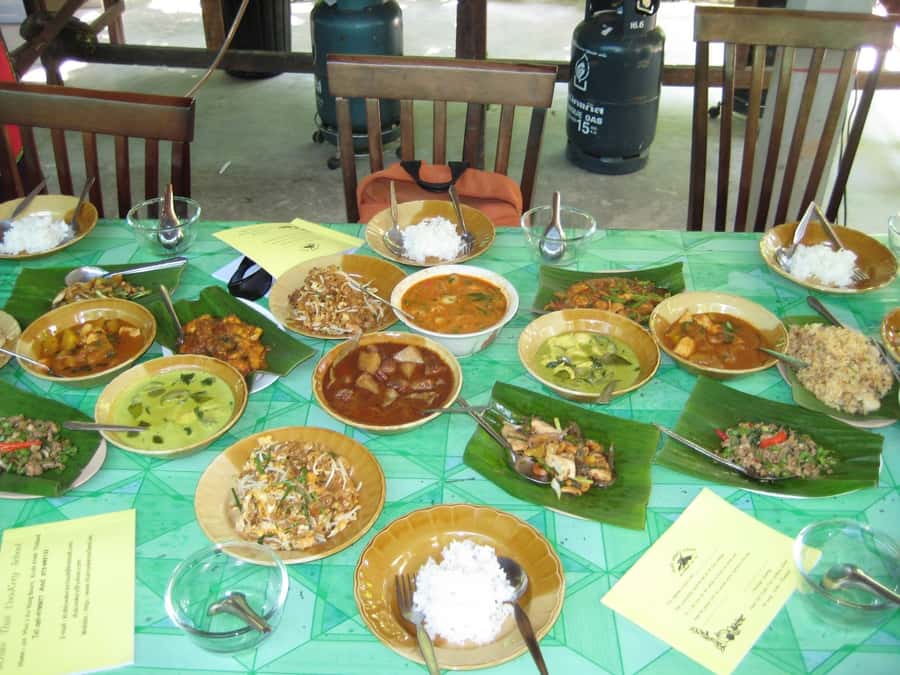
The payoff happens at the end. You sit down and eat the Thai specialties you prepared. That’s not just a nice finish. It’s part of the learning loop.
When you taste what you made, you can actually connect decisions you made earlier. If a curry tastes too strong, you understand what you might adjust next time. If a salad needs more pop, you learn how herbs and sour notes should behave.
And because the dishes include classics across curries, soups, salads, and stir-fries, you leave with a full meal memory, not a single highlight.
The cookbook you take home, plus real “practice value”
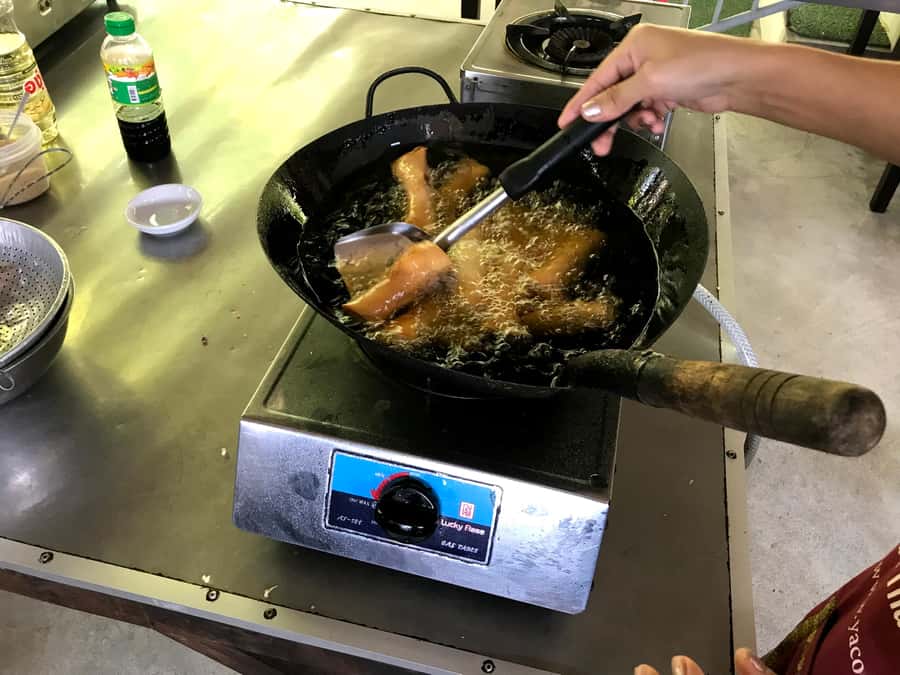
You’ll receive a cookbook to take home with recipes and instruction in English. That means you’re not relying on memory when you get back to your kitchen.
This part is key for value. Lots of classes give you food, and that’s it. Here, you get a reference you can use to recreate what you cooked, including guidance for ingredients and steps.
Based on the way the class is set up, this cookbook helps because your cooking sessions likely follow a structured pattern: ingredient prep, combination, cooking method, then finishing and adjustment.
If you like cooking already, this book helps you turn Thai flavors into something you can make again without a guessing game.
Price and value: why $53 can be a smart buy in Krabi
At $53 per person, this isn’t a budget snack. But it also isn’t just paying for a meal. You’re paying for instruction, hands-on cooking time, ingredients, English recipe materials, and a full experience from pickup to eating.
You’re also getting:
- Round-trip transfer from Ao Nang and Ao Nam Mao (so you’re not spending time and money figuring out transport)
- Ingredients and instructions in English
- Fruits and preparation of spicy Thai salads
- Food and water included
That package is what makes the price make sense. If you’re staying in Ao Nang or Ao Nam Mao, the included transfer is a meaningful part of the overall value. Even if you’re staying elsewhere, the add-on transfer pricing is clear.
And the reviews backing this up are consistent in one way: people tend to feel they got a lot back for what they paid, especially because the teaching is welcoming and you get to choose dishes and spice level.
Who this Krabi cooking class suits best
This is a strong match if you:
- Want a hands-on food activity in Krabi that feels local and practical
- Like cooking, or at least want a real skill you can repeat later
- Prefer experiences where you get to pick what you make
- Care about adjusting spiciness and possibly going vegetarian
It’s less of a match if:
- You rely on mobility support, since it’s stated as not suitable for mobility impairments
- You’re arriving with bulky luggage, since large bags are not allowed
- You want an ultra-short activity, since this runs about 4 hours
Should you book Ya’s Cookery School in Krabi?
I’d book this if you want a Thai cooking experience that’s structured, flexible, and actually teaches you how to cook, not just what to eat. The combination of chef-led instruction, fresh ingredient choosing, dish selection, spice control, and a take-home English cookbook makes it feel like good value for the time.
Skip it only if you’re not comfortable with chopping, cooking, and standing through a half-day activity, or if mobility needs make it unrealistic. If you’re good with that, you’ll leave with something better than a memory. You’ll leave with the ability to make Thai dishes back home.
FAQ
How long is the Ya’s Cookery Class in Krabi?
The class duration is listed as 4 hours. Starting times vary by availability, so it’s best to check the schedule when you book.
Is pickup included from my hotel?
Round-trip hotel transfer is included from Ao Nang and Ao Nam Mao. If you are staying in Klong Muang, Tubkaak Beach, or Krabi Town, round-trip transfers are available as add-ons during checkout.
Can I choose which Thai dishes I cook?
Yes. In both the morning and afternoon sessions, you choose 4 dishes from a specific menu of options.
Do I get a cookbook to take home?
Yes. You receive a cookbook with recipes and instructions in English.
Can you adjust dishes for spice level or vegetarian preferences?
All dishes can be adapted to taste, and the class notes that dishes can be adapted to vegetarian preferences as well.
What should I wear or bring?
You should wear closed-toe shoes. It’s also a good idea to travel light because luggage or large bags are not allowed.
Are luggage or large bags permitted?
No. The class states that luggage or large bags are not allowed.
Is the class suitable for people with mobility impairments?
No. It is listed as not suitable for people with mobility impairments.
Thai kitchens you can book into
What else made it into the Thailand notebook
What else made it into the Ao Nang notebook
- From Ao Nang Hong Island Longtail Cruise with Sunset Dinner
★ 4.0 · 21 reviews - Krabi: Sunrise Yoga Balance Join-in Class
★ 4.9 · 22 reviews - ATV adventure (30 min) and Archery (30 min)
★ 4.7 · 23 reviews - Krabi kayaking Ao thalane
★ 4.5 · 24 reviews - Krabi ATV Extreme Experience with Transfer and Adventure
★ 4.5 · 24 reviews - Krabi: Saitai Mountain Tail ATV Adventure
★ 4.7 · 25 reviews
Cooking Classes, compared.
 ★ 5.0Half-Day Thai Cooking Class at Organic Farm in Chiang MaiFrom $2919,087 reviews
 ★ 4.9Cooking Class, Market & Thai Herbs Garden TourFrom $314,824 reviews
 ★ 4.9Authentic Cooking Class with Market & Farm VisitFrom $344,546 reviews
 ★ 5.0Thai and Akha Cooking Class in Chiang MaiFrom $424,358 reviews
 ★ 5.0Phuket Thai Cooking Class with Market Tour OptionFrom $652,665 reviews
 ★ 4.9Hands-on Thai Cooking Class and Market TourFrom $451,614 reviews
 ★ 4.9Cooking Class with Market and PickupFrom $251,365 reviews
 ★ 4.9Tingly Thai Cooking School Half-Day Cooking ClassFrom $411,191 reviews
Browse the lists this tour appears in