
REVIEW · COOKING CLASSES
Hands On Thai Cooking Class & Market Tour in Sathon, Bangkok
Four dishes start with one curry paste. This hands-on Thai cooking class pairs a guided trip to the Suan Phlu fresh market with learning ingredients and techniques you can actually repeat at home. You also get a small-group feel, capped at 18 people, and the teaching style comes through in the reviews, especially under chef Jay.
I especially like that you make the curry paste from scratch and learn how the ingredients work together, not just what to do. I also like the practical payoff, you cook for two hours and then eat what you made while it is hot and fresh, plus you take all the recipes home. One consideration, the class is designed to be hands-on and food-heavy, so expect some mess during paste-making and a lot of food by the end.
In This Review
- Key things that make this class worth it
- Where the class starts near Silom, in Suan Phlu
- Suan Phlu market tour: picking ingredients you can recognize later
- Curry paste and coconut milk from scratch: the flavor base lesson
- Cooking four dishes in two hours: hands-on, hot, and ready to eat
- The recipes you take home: why this class keeps paying off
- Price and value: what $45.64 buys you in Bangkok
- Who should book this Thai cooking class, and who should skip it
- Should you book House of Taste Thai Cooking Class?
- FAQ
- Where is the meeting point?
- How long does the cooking class and market tour take?
- What do I do during the tour?
- Is the market tour included?
- How many people are in the group?
- Which dishes do we cook?
- What is the cancellation policy?
Key things that make this class worth it
- Suan Phlu fresh market, 1-minute walk away, with a guided ingredient hunt built into the experience
- Curry paste from scratch, plus fresh coconut milk, so you are working from the flavor base
- Four authentic Thai dishes, cooked over about two hours and eaten hot from your own pan
- Small group size (max 18), which usually keeps the class feeling more like a shared workshop
- Recipes to take home, so the value lasts beyond the 3.5 hours
Thai kitchens got sat through and written up
- Bangkok: Hands-on Thai Cooking Class and Market Tour★ 4.9 · 1,614 reviews
- Bangkok: Tingly Thai Cooking School Half-Day Cooking Class★ 4.9 · 1,191 reviews
- Bangkok: Maliwan Thai Cooking Class with Market Tour★ 4.9 · 1,133 reviews
- Tingly Thai Cooking Class with Morning Market Tour★ 5.0 · 589 reviews
Where the class starts near Silom, in Suan Phlu
The action begins at House of Taste Thai Cooking School in Suan Phlu, Sathon, near Silom. The meeting point address is 33 Thanon Suan Phlu, Khwaeng Thung Maha Mek, Khet Sathon, Krung Thep Maha Nakhon 10120, Thailand. That matters because this is not a “show up, get a briefing, then leave” kind of tour. The market and the cooking are set up around this base, so you get a smooth flow from shopping to cooking.
Getting there is straightforward using public transport. You can take a taxi or motorcycle to the school, then connect using nearby rail stops like BTS Saint Louise (Exit 1), BTS Chongnonsi (Exit 2), BTS Sala Daeng (Exit 2), MRT Lumphini (Exit 2), or MRT Silom (Exit 2). If you are staying anywhere around Silom, Sathorn, or nearby business hotels, this location is a practical match. It keeps the “logistics tax” low, which is a big deal for short activities like a 3 hours 30 minutes class.
You’ll also have a mobile ticket, which is handy in Bangkok. It means less fuss at check-in, so you can spend your energy on the food portion instead of paper.
Suan Phlu market tour: picking ingredients you can recognize later
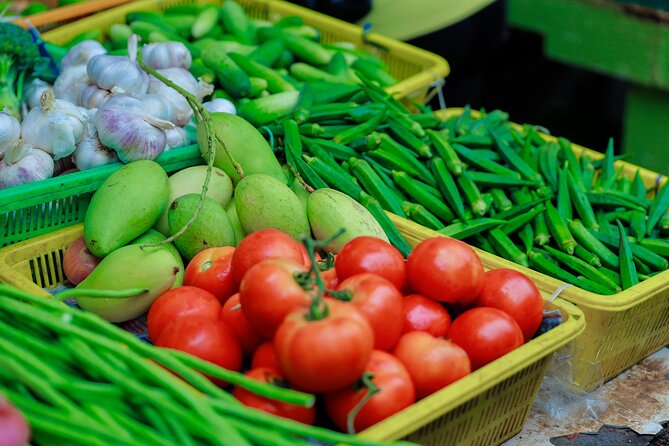
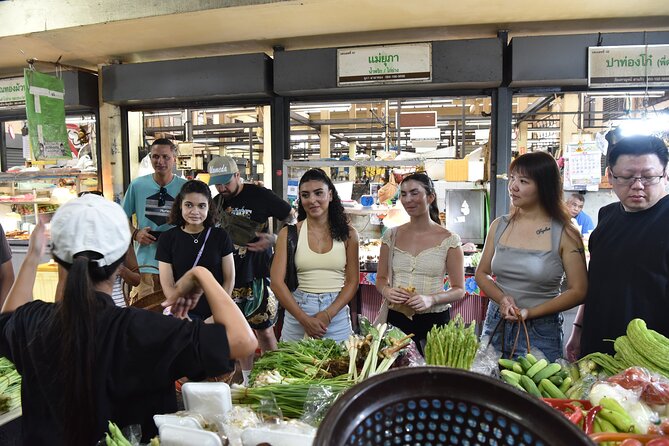
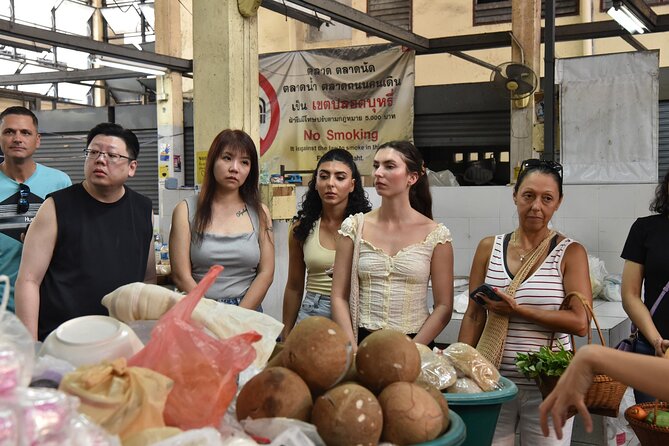
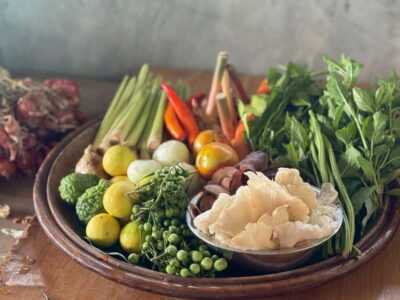
Right next door, literally a 1-minute walk from the school, is the Suan Phlu fresh market. The class builds a guided market tour into the experience, with the goal being simple: you choose fresher ingredients and you learn what each category contributes to Thai cooking.
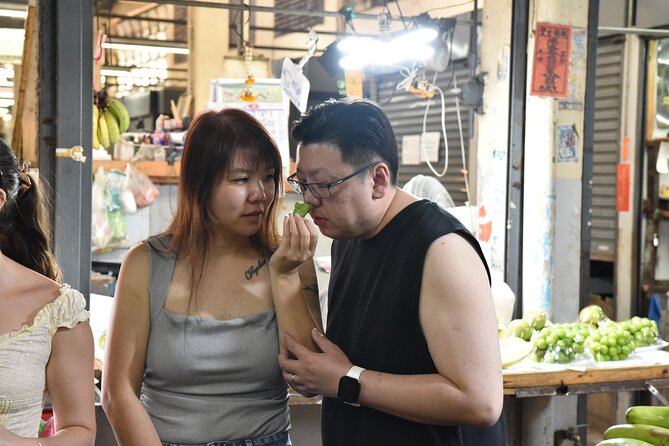
Here’s what that means for you. You are not just buying a random basket of items. You’re guided while selecting vegetables, rice, herbs, and spices for the dishes you will cook. That guided ingredient choice is one of the most valuable parts of the class because it teaches you how to think like the cook. When you recreate dishes later, you will know what you are aiming for, not just which store shelf to grab from.
The market segment also sets expectations about flavor. Thai cooking often depends on the freshness and balance of herbs, the right texture of ingredients, and the way aromatics and spices are combined. Seeing and selecting items in a market setting helps you understand those differences quickly.
It is also a nice pacing tool. After the walk-through ingredient selection, you move directly into cooking without the gap that can blur what you learned. And since the market tour is included in every class (morning, afternoon, and evening), you can choose the time that fits your day without losing the core market lesson.
Curry paste and coconut milk from scratch: the flavor base lesson
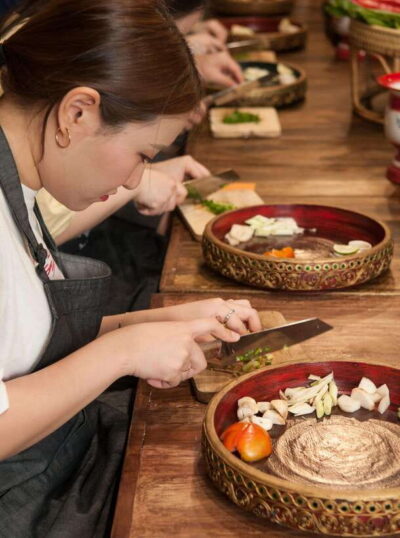
The class makes one thing crystal clear: in Thai food, the flavor base matters. You will learn about key Thai ingredients and then get your hands dirty making fresh coconut milk and curry paste from scratch.
This is the part many people remember because it feels different from most cooking classes. A lot of classes teach you assembly. This one teaches you foundation. That is why it works even if you are not a confident cook. You start with ingredients, learn how they come together, and then use that base in the dishes you cook.
From the way chef Jay’s instruction is described in the feedback, the teaching style is interactive and friendly, and the cooking process feels approachable. That is important because curry paste making can sound intimidating. In practice, it is a hands-on technique, and the “simple but not sloppy” guidance is what helps you succeed without needing fancy skills.
Also, curry paste is messy work. That is not a downside of the class, it is the nature of the task. If you hate getting your hands stained, plan for it. But if you like learning by doing, this is where you build real confidence.
Cooking four dishes in two hours: hands-on, hot, and ready to eat
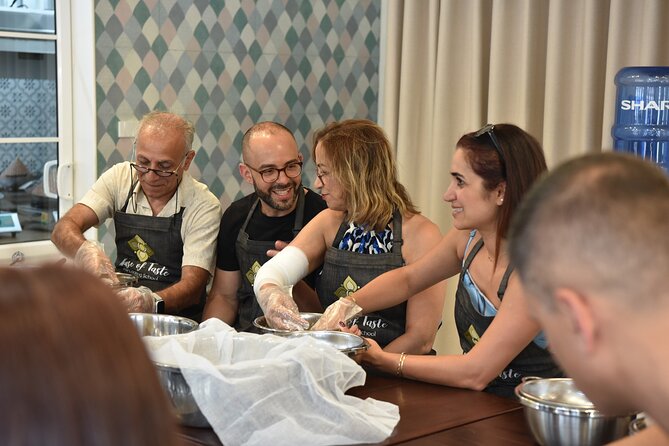
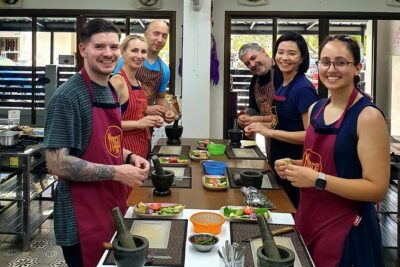
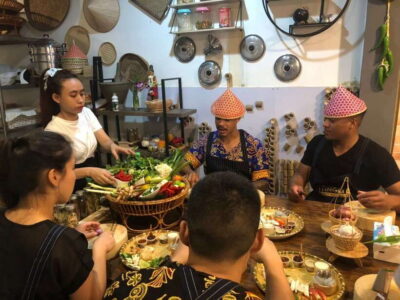
After the market and ingredients lesson, you settle into cooking time. The class runs about two hours of cooking where you prepare four authentic Thai dishes. Then you eat what you made while it is still hot and fresh.
That last detail is more than a convenience. Eating hot food matters because Thai dishes are often at their best when the flavors are fresh and the textures are right. When you taste your food immediately, it helps you connect technique to result. You learn what “working” tastes like, not what it tastes like after it cools off and sits.
The class is also described as interactive and fun, with a no-pressure vibe. One of the most useful takeaways from this setup is that it gives you fundamental Thai techniques, not just a few recipes to follow. You come away understanding how to approach the next dish on your own.
One example from the experience: mango sticky rice comes up as a favorite dish in the feedback. If your menu includes it, that sweet pairing is often the kind of dish that makes people instantly want to cook again at home. Even if you do not get the same menu pairing every time, the structure is consistent: ingredients first, paste and coconut milk in the middle, and four finished dishes on the plate.
Expect a full plate by the end. Reviews specifically point out that the portions feel like a lot, and that makes sense because you are tasting multiple dishes you cooked yourself.
Thai market visits sat in the same notebook


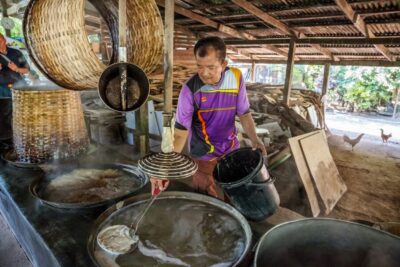

The recipes you take home: why this class keeps paying off
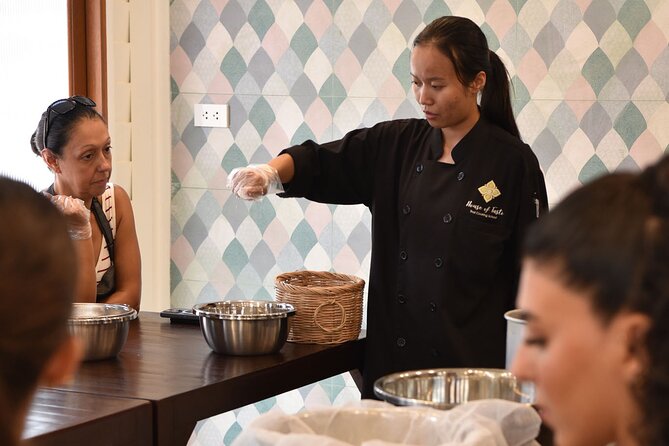
Cooking classes often give you a paper card. This one gives you all the recipes to take home. That matters because the real value is not just the meal you eat in class. It is your ability to repeat the results later.
Since you are making curry paste and coconut milk from scratch, you are learning the steps that most people skip at home. Those are the steps that usually turn a good attempt into a close match. With the recipes, you can follow your own notes rather than guessing which part created the flavor.
The class also helps you understand ingredient roles. If you know which herbs were chosen in the market and why they were included, you can swap less perfectly available ingredients with more confidence. You do not need every exact Thai item to cook, but you do need to know what the dish needs from the ingredient list.
You also get a practical “learn and do” loop. First you pick ingredients, then you make the base, then you cook and taste. That turns the recipes into something more usable because you already saw and handled the real components.
Price and value: what $45.64 buys you in Bangkok
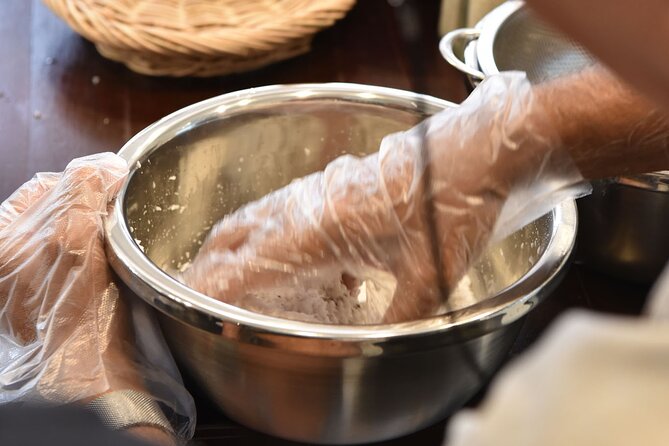
At $45.64 per person for about 3 hours 30 minutes, this class prices itself in the “small workshop” category. You are paying for three things at once: market time, instruction, and a meal you eat immediately.
Here is why it feels like value for many people:
- You are not just watching, you are participating in curry paste from scratch and other steps tied to the base flavors of Thai cooking.
- The class includes ingredients and the cooking session over about two hours, so you are not trying to recreate the process on your own without guidance.
- You leave with all recipes, which increases the long-term usefulness compared with classes where you get only a partial handout.
Also, the class size is capped at 18 travelers, which can help you get more attention and keep the experience from turning into a lecture. Reviews rate it 5 out of 5 with strong recommendation, which is usually a sign that the core promise is delivered.
A possible tradeoff is that this is not designed as a broad Bangkok sightseeing tour. You are buying food learning and food culture in one tight block near Silom. If you want temples, river views, or major photo stops, you should treat this as a food-focused day, not a catch-all Bangkok day.
Who should book this Thai cooking class, and who should skip it
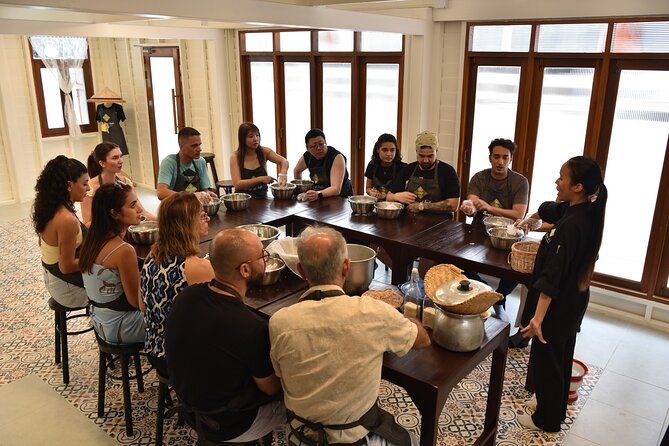
This is a great fit if you:
- Want a hands-on introduction to Thai cooking, not just a dining experience
- Enjoy markets and want to know what ingredients actually matter
- Like learning from a lively instructor style, including the energy associated with chef Jay
- Prefer activities that are friendly for less-experienced cooks, because the class is described as not hard and easy to follow
You might think twice if you:
- Hate messy cooking tasks, since curry paste making is hands-on
- Get overwhelmed by a lot of food in one sitting, because the dishes add up and the meal is significant
- Want a lighter touch, slow pacing, or a major sightseeing route, because the focus stays centered on the school, market, and cooking station
Should you book House of Taste Thai Cooking Class?
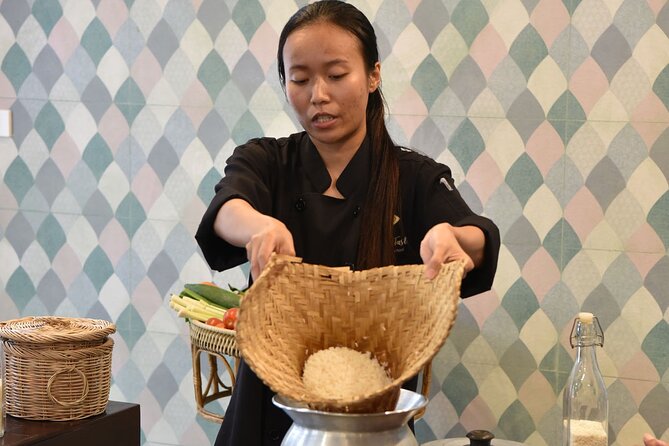
If you want one solid, repeatable Thai-food skill, I think this is worth booking. The combination of a guided Suan Phlu market plus making curry paste and fresh coconut milk from scratch gives you more than a cookbook outcome. You are building understanding at the ingredient level, then locking it in by cooking and eating what you made.
Choose it especially if you are staying around Silom or Sathorn and want a 3.5 hour activity that feels like real culture, not a rushed performance. Book ahead if you can, since it is commonly reserved about two weeks in advance. And if you want a fun group workshop vibe, the small max group size is a real plus.
FAQ
Where is the meeting point?
You start at House of Taste Thai Cooking School, Suan Phlu, Sathon, at 33 Thanon Suan Phlu, Khwaeng Thung Maha Mek, Khet Sathon, Krung Thep Maha Nakhon 10120, Thailand.
How long does the cooking class and market tour take?
The experience lasts about 3 hours 30 minutes.
What do I do during the tour?
You join a guided market tour to select fresh ingredients, learn about Thai ingredients like vegetables, rice, herbs, and spices, make fresh coconut milk and curry paste from scratch, cook four authentic Thai dishes, and eat what you cook while it is still hot.
Is the market tour included?
Yes. A market tour is included in every class, whether you join the morning, afternoon, or evening session.
How many people are in the group?
The experience has a maximum of 18 travelers.
Which dishes do we cook?
The class is described as cooking four authentic Thai dishes, and mango sticky rice is mentioned as a favorite dish in the experience feedback. The exact menu can depend on the class.
What is the cancellation policy?
This experience is non-refundable and cannot be changed for any reason. If you cancel or ask for an amendment, you do not get a refund.
Thai kitchens you can book into
Guided Thai outings, continued
What else made it into the Thailand notebook
What else made it into the Bangkok notebook
- Mahanakhon SkyWalk Entry Ticket
★ 4.3 · 20 reviews - Bangkok: Nimitr Rooftop by 137 Pillars
★ 4.8 · 20 reviews - Bangkok: Cook authentic Thai food with Smart Cook
★ 5.0 · 20 reviews - Bangkok: Travstore Original Bangkok Discovery Tour
★ 4.5 · 20 reviews - Bangkok: Chao Phraya Princess Dinner Cruise & Hotel Transfer
★ 4.2 · 20 reviews - 1 Hr Private Bangkok Canal Boat Tour: Traditional Flat Boat
★ 4.5 · 20 reviews
Cooking Classes, compared.
 ★ 5.0Half-Day Thai Cooking Class at Organic Farm in Chiang MaiFrom $2919,087 reviews
 ★ 4.9Cooking Class, Market & Thai Herbs Garden TourFrom $314,824 reviews
 ★ 4.9Authentic Cooking Class with Market & Farm VisitFrom $344,546 reviews
 ★ 5.0Thai and Akha Cooking Class in Chiang MaiFrom $424,358 reviews
 ★ 5.0Phuket Thai Cooking Class with Market Tour OptionFrom $652,665 reviews
 ★ 4.9Hands-on Thai Cooking Class and Market TourFrom $451,614 reviews
 ★ 4.9Cooking Class with Market and PickupFrom $251,365 reviews
 ★ 4.9Tingly Thai Cooking School Half-Day Cooking ClassFrom $411,191 reviews
Browse the lists this tour appears in