
REVIEW · CITY TOURS
Guided Chiang Mai City Night Tour by EV Tram
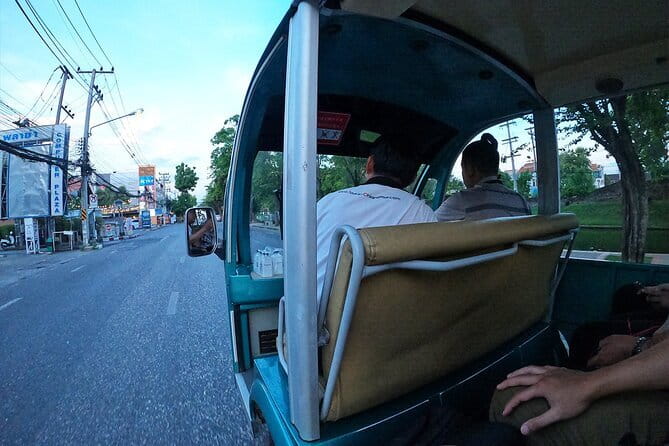
Chiang Mai looks softer after dark. This EV tram night tour is an easy, low-effort way to get your bearings while you visit major Lanna-style temple sights and key gates, then finish in the market lanes. I especially like the quiet EV tram pace and the fact that the guide keeps everything grounded in how people actually live and believe today. I also like that admissions are handled at the stops, so you are not constantly paying again or hunting for ticket booths. A possible drawback: it is a smart-casual evening tour with some short walks, so wear shoes you can move in comfortably.
The route is built for orientation, not a sprint to the next famous landmark. You will spend time at neighborhood temples and classic city gates, then transition into dinner areas where local snacks and sights feel naturally part of the night. With a maximum of 12 travelers, it feels like a real group outing, not a cattle-line tour.
Start is 6:00 pm at Three Kings Monument, and you end back at the same meeting point. If you are trying to plan your first evening in Chiang Mai, this timing works because it sets you up for where to go later without wasting your energy on daytime sightseeing.
In This Review
- Key things that make this EV tram night tour work
- Price and value, $27.43 for a guided evening with tram + tickets
- Where you start, how the route flows, and why the evening order matters
- Three Kings Monument and the first context hit
- Wat Chiang Man, the oldest Lanna-style chedi feel
- Wat Lok Molee, wooden charm and terracotta sculptures
- Chang Puek Gate and the street-food dinner transition
- Wat Pa Pao and Wat Nong Kham, Tai Yai and Burmese-Shan styles
- Warorot Market and the local daily-life feeling
- Tha Phae Gate, Chiang Mai’s public activity hub
- Chiang Mai Gate Night Market, dinner time with included admission
- Wat Chedi Luang, the biggest stupa and the city pillar connection
- Wat Phra Singh, northern style chapel beauty
- The guide experience: what you should expect from the interpretation
- What to bring and how to plan your evening
- Who should book this EV tram night tour
- Should you book this tour or skip it?
- FAQ
- What time does the Chiang Mai City Night Tour by EV Tram start?
- Where is the meeting point, and where do we end?
- What is included in the ticket price?
- Is pickup and drop-off available?
- How many people are in the group, and what is the dress code?
- Can I get a full refund if I cancel?
Key things that make this EV tram night tour work
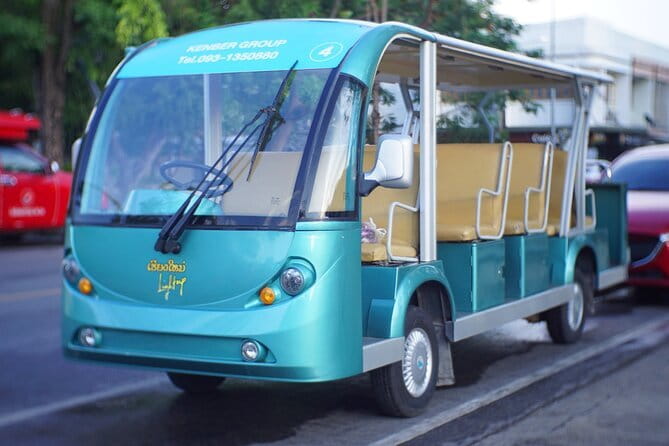
- EV tram comfort at night, so the city feels close without the noise and exhaust
- Free temple admissions for multiple major stops, plus included tickets for the later segments
- Small group size (up to 12), which makes questions and photo pauses more doable
- Market-focused dinner energy, with two different market stops and built-in snacking
- Orientation through gates and temples, so you understand the city layout, not just the buildings
Thai city outings also got written up
- Chiang Mai: 3 Hour Old City and Temples Guided Walking Tour★ 4.6 · 1,568 reviews
- Chiang Mai: Historic Temples and City Guided Walking Tour★ 4.7 · 650 reviews
- Chiang Rai Day Trip from Chiang Mai City with Golden Triangle★ 4.5 · 531 reviews
- Chiang Mai: Historic Old City Bike Tour – Morning or Night★ 4.7 · 263 reviews
Price and value, $27.43 for a guided evening with tram + tickets
At $27.43 per person for roughly 2 hours, this tour sits in the affordable range for a guided night experience in Chiang Mai, especially because the core costs are already covered. You get the EV tram during the trip, a professional English-speaking guide, bottled water, and you are not left to manage a bunch of separate entries.
What really boosts value is the mix of included items:
- All admissions for the places listed as free are covered, and
- Admission is included for the Chiang Mai Gate Night Market segment and Wat Chedi Luang segment.
Then there is the practical side, like snack and drinks during the foodie parts. If your first night plan is simply dinner plus a bit of sightseeing, this package is often the smarter move because it bundles transport, timing, and interpretation into one smooth block.
One thing to consider before you book: it starts at 6:00 pm. If you are arriving late or planning a late-night party itinerary, you may find it hard to fit around dinner plans. If you want an early evening reset and a good orientation, the start time is a plus.
Where you start, how the route flows, and why the evening order matters
You meet at Three Kings Monument on Prapokklao Road (Si Phum area), and the tour ends back at the same spot. That matters more than it sounds. A closed-loop route helps you avoid the common problem of night tours that drop you far from anywhere helpful.
The structure is also built for a natural Chiang Mai evening:
- A quick history anchor at the city’s monumental center
- A sequence of temples that explain Lanna and local Buddhist traditions
- A pivot to gates, old city walls, and neighborhood atmosphere
- Market time for dinner-style street food, where you can actually eat and ask questions
Walking is present, but it is short. Even the itinerary notes brief walking between stops, like the movement around Wat Inthakin Sadeu Muang near the Three Kings Monument area. You are not doing an all-night trek. You are doing a guided evening stroll with tram breaks.
Three Kings Monument and the first context hit
Your tour begins at Three Kings Monument, and it is not just a photo stop. You get a quick explanation of Chiang Mai’s origins right in the area where the city pillar called Inthakin is said to have been erected in 1296 by King Mangrai.
For me, this is the smart way to start. If you arrive in Chiang Mai without context, temples can feel like a list of pretty buildings. But once you understand the city pillar idea and the role of King Mangrai, the rest of your stops make more sense. You start seeing how religion, power, and city planning connect.
From here, you hop on the EV tram to kick off the main sightseeing rhythm. This is where the tour’s responsible, low-noise approach becomes obvious. The tram keeps you moving while the evening air cools down, so it is a comfortable pace for a first night.
Wat Chiang Man, the oldest Lanna-style chedi feel
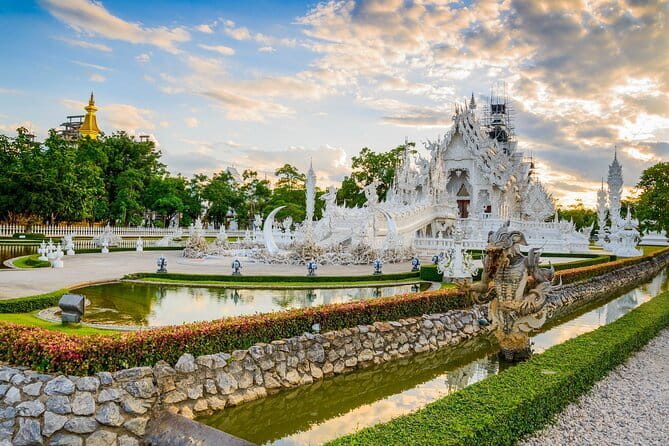
The next temple stop is Wat Chiang Man. This place is described as the oldest temple in a Lanna-style chedi, supported by rows of elephant-shaped buttresses.
Even if you are not a temple expert, elephant-shaped buttresses are the kind of detail you can spot quickly. At night, you often get better contrast for architectural textures and silhouettes, and this stop is essentially an architecture lesson in a compact space.
It is also a good tempo setter. You get a real temple highlight without a long walk, then you are on to the next stop while the group still feels fresh.
Practical note: because it is a temple, keep your movements calm and respectful. Smart-casual dress helps, but your behavior does the rest.
Thai evening bookings also got written up

Wat Lok Molee, wooden charm and terracotta sculptures
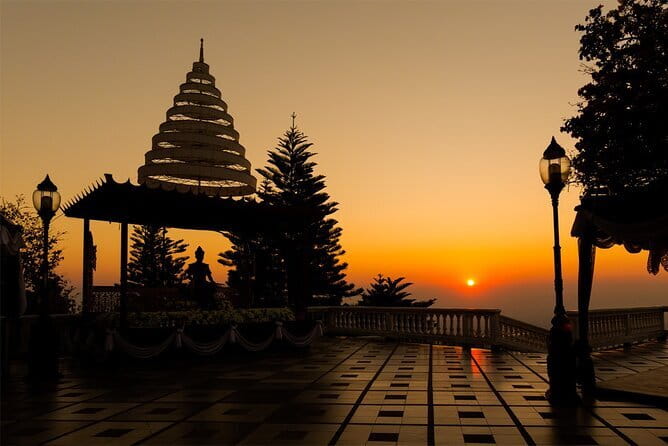
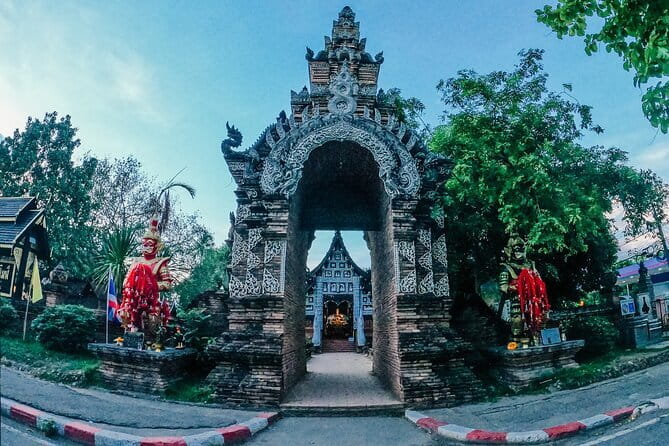
Wat Lok Molee is next, and this one has a distinctive visual identity. It is described as a wooden complex dotted with terracotta sculptures, and it is considered one of the most attractive wát outside the city walls.
If you like architecture that feels handmade and lived-in, this stop can be a satisfying change from larger, more monumental sites. Wooden complexes and terracotta details tend to look better as evening light changes. The tour gives you time to take that in, not just snap one quick shot and run.
The guide also frames its background, including the idea that it was thought to have been founded in the 14th century for monks from Burma. That detail matters because it shows Chiang Mai Buddhism has long been connected to regional communities, not isolated.
Chang Puek Gate and the street-food dinner transition
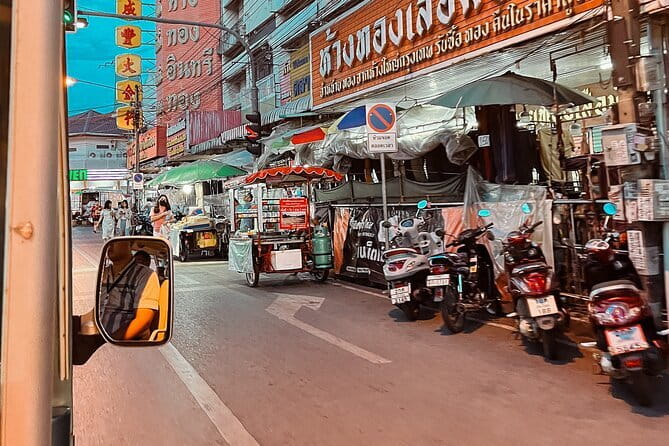
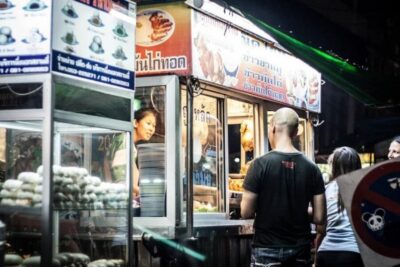
After more temple time, you shift to the city’s shape. Chang Puek Gate is the northern gate of the old city, with ruins of the city wall nearby. Then the tour turns into night market mode, with street food and dinner options.
This is a key moment in the tour because it changes the energy. Up to this point, you are in interpretation mode. At the gate, you get into eating mode. Even if you do not love street markets, this stop can help you understand what locals mean when they say dinner happens outside.
If you have dietary needs, this is the part where you will want to pause and look closely at what is being sold. The tour mentions street food and dinner places around here, but it does not list specific vendors, so you will have to make your own choices on the ground.
Wat Pa Pao and Wat Nong Kham, Tai Yai and Burmese-Shan styles
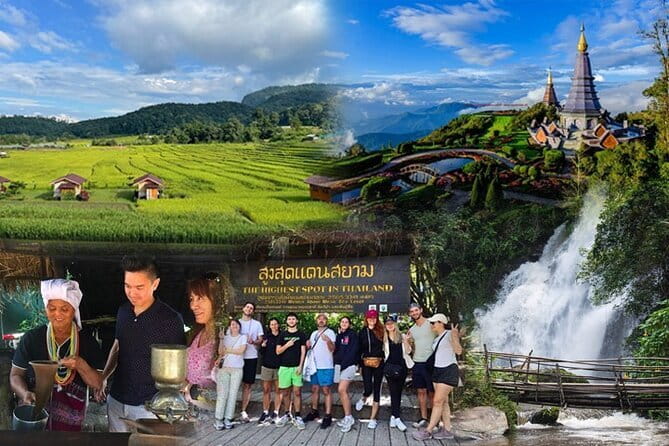
The temple sequence continues with:
- Wat Pa Pao, described as the first temple of the Ngiaw or Tai Yai in Chiang Mai
- Wat Nong Kham, noted for Burmese-Shan style Buddhist temple influences
These two stops are small but meaningful because they broaden the story beyond one single style. If you only visit the most famous temples, Chiang Mai can feel like one uniform tradition. Here, you start seeing how different cultural groups and regional styles contributed to the city’s religious landscape.
You also get a nice rhythm. The tour does not pile on too many long stops. Instead, it keeps each temple visit bite-sized, then moves you along.
One practical consideration: at night, temple lighting can be bright in spots and dim in others. If you plan to take photos, keep your phone camera ready for sudden changes in brightness.
Warorot Market and the local daily-life feeling
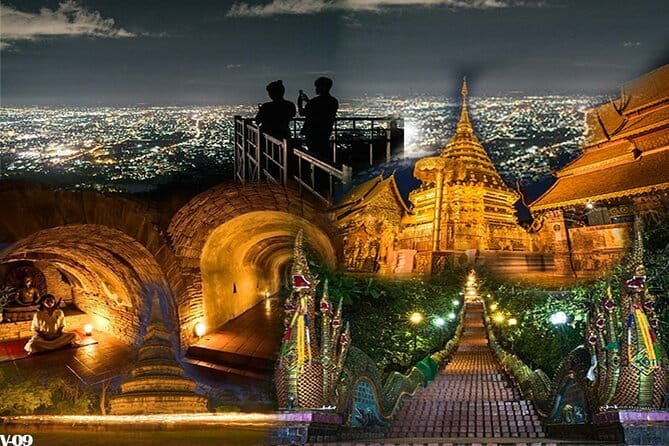
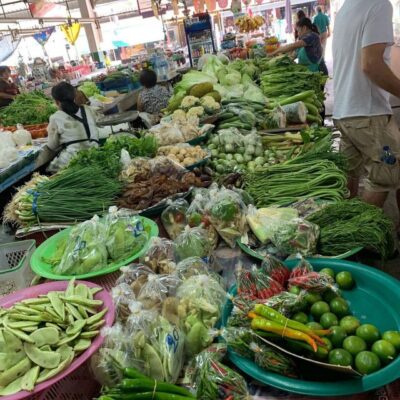
Next up is Warorot Market, described as the biggest local fresh market in Chiang Mai, and a place where you can explore fresh products sold to local people.
This is one of the most useful stops on the tour, because it is not staged for tourists only. Markets like this can help you understand what day-to-day life looks like outside temple walls. It also sets you up to taste Chiang Mai more naturally later.
The tour does not frame Warorot Market as a “must buy souvenirs” moment. Instead, it is an exploration stop. Even if you buy nothing, you learn what locals are shopping for and how the market environment works at night.
Tha Phae Gate, Chiang Mai’s public activity hub
Then you reach Tha Phae Gate, described as the main center of Chiang Mai’s public city activities and festivals.
This kind of stop is a bridge between old city layout and modern street energy. You are not just looking at a gate. You are learning where the city gathers. Once you know the main public center, it helps you plan other evenings because you can recognize where festival crowds and event energy will likely concentrate.
If you want a quick way to understand Chiang Mai’s “where should I go?” logic, gates are a great training tool. They are physical reference points that map to real social movement.
Chiang Mai Gate Night Market, dinner time with included admission
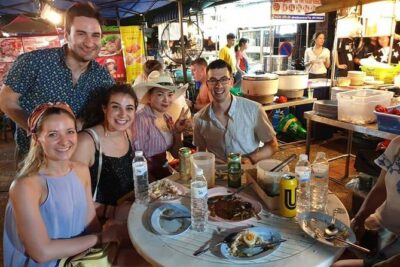
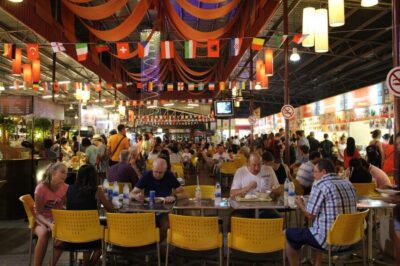
The tour’s food-heavy segment brings you to Chiang Mai Gate Night Market. The description focuses on street food and a local-foodie experience, and the time on this stop is about 25 minutes, with admission included.
This is probably the most practical segment for most people. If you have ever stood in a night market and felt overwhelmed, a guided stop helps you:
- prioritize what to try,
- understand what kinds of snacks are typical,
- and time your eating so you are not searching in the middle of peak chaos.
Also, since the tour includes some snack and drinks during the foodie portion and brings you into this area as a group, you can relax and focus on choosing food you actually want.
A good way to use this segment: if you have multiple must-try items in mind, decide your order early so you do not waste time backtracking.
Wat Chedi Luang, the biggest stupa and the city pillar connection
After the market energy, you head to Wat Chedi Luang Varavihara. This is described as the temple of the biggest stupa, and it also housed the city pillar together with the Tripiṭaka, the Buddhist scriptures.
This is one of those stops where context pays off. A stupa is not just a big structure, it is tied into the city’s symbolic center, including the city pillar idea that you started hearing about earlier at Three Kings Monument. It creates a thread through the tour.
Because admission is included for this stop and the time is about 10 minutes, you will not get stuck in long lines. You should, however, slow down enough to notice the architectural details the description calls out as beautiful from the past.
If you are the type who usually skips temples because you think you will not understand them, this stop is designed for you. The guide’s framing helps you see why it matters.
Wat Phra Singh, northern style chapel beauty
The final temple stop listed is Wat Phra Singh, described as having the most beautiful architecture in northern style reflected from the chapel.
This is a good closing choice because it leans into visual payoff. Northern-style chapel details can look especially striking at night, where shadows and lighting make the forms pop. It also gives the tour a graceful end point before you circle back toward the meeting spot.
The guide experience: what you should expect from the interpretation
One of the best parts of this tour is how the guide explains each place in a way that connects history to daily life. The tour is not just “look at that.” It is more like, this is why the temple exists, this is what the cultural ideas mean, and this is how it shows up in city routines.
That also explains why the tour is built for orientation. You are learning the vocabulary of Chiang Mai, like what city gates represent, what temple styles can indicate, and why certain sites are linked to major historical figures.
The group pace supports this. With a maximum of 12 travelers, you can keep the flow without feeling rushed. You are also more likely to get your questions answered directly.
What to bring and how to plan your evening
This is an evening tour, smart-casual, with tram rides plus some temple-area walking. To keep it comfortable:
- wear closed-toe shoes you can handle on uneven temple grounds
- bring a light layer, since evenings can feel cooler than you expect
- keep some cash in your pocket anyway, even though many admissions are included, because markets are markets
For dinner planning, here is the simple strategy. Decide whether you want a full dinner at the Chiang Mai Gate Night Market segment or just a few snacks. The tour is built so you can eat while you learn, not so you have to wait until after.
If you are tempted to overload your schedule that night, resist it. This tour is best when you let it be the main event and use the rest of your evening for wandering rather than squeezing in another activity.
Who should book this EV tram night tour
I would book it if:
- you are in Chiang Mai for the first time and want orientation fast
- you like temples but also want context about everyday culture, not just architectural photos
- you prefer a small group evening with included transport and admissions
- you want a simple dinner plan that is not random wandering
I would think twice if:
- you hate night markets and street-food choices entirely
- you are looking for a long, deep, all-day history immersion (this is designed for a 2-hour evening flow)
Should you book this tour or skip it?
If you want an efficient first-night Chiang Mai experience that mixes temple context with real market energy, this EV tram tour is a strong choice. The combination of EV tram comfort, admissions handled for key stops, and a guide who explains what you are seeing makes it feel more useful than many basic sightseeing options.
Book it if you value getting your bearings quickly, learning why the city is laid out the way it is, and then eating somewhere that makes sense. Skip it only if your schedule is too tight for a 6:00 pm start, or if you would rather do temples and markets on your own without a structured route.
Either way, if you are deciding between a random night stroll and a guided evening with a built-in dinner plan, this tour is the safer bet for feeling oriented and fed, without turning the evening into a marathon.
FAQ
What time does the Chiang Mai City Night Tour by EV Tram start?
The tour starts at 6:00 pm and is about 2 hours long (approx.).
Where is the meeting point, and where do we end?
You meet at Three Kings Monument on Prapokklao Road, Si Phum area. The tour ends back at the same meeting point.
What is included in the ticket price?
The tour includes the EV tram, a professional English-speaking guide, the admission fees listed for the trip, some snack and drinks during the foodie tour, bottled water, and travel accident insurance.
Is pickup and drop-off available?
Pickup and drop-off are not included, but they are optional. The cost is THB 500 for a location within 5 km from the city center (THB 500 per way per group).
How many people are in the group, and what is the dress code?
The group has a maximum of 12 travelers. The dress code is smart casual.
Can I get a full refund if I cancel?
Yes. You can cancel up to 24 hours in advance for a full refund. If you cancel less than 24 hours before the start time, the amount you paid will not be refunded.
Thai city outings, continued
Guided Thai outings, continued
What else made it into the Thailand notebook
What else made it into the Chiang Mai notebook
- Walk With Monks Collecting Alms(meeting point maybe change)
★ 4.9 · 8 reviews - Doi Suthep and Hmong Hilltribe Half Day Tour in Chiang Mai
★ 3.5 · 8 reviews - Aroidee’s Farm-Fresh Thai Cooking Experience
★ 5.0 · 8 reviews - 2- Days in Doi Inthanon National Park
★ 4.5 · 8 reviews - Khantoke Dinner Experience & Cultural Dance Show with Transfers
★ 4.0 · 8 reviews - Sticky Waterfalls Private Half Day Fun Escapades
★ 4.5 · 8 reviews
City Tours, compared.
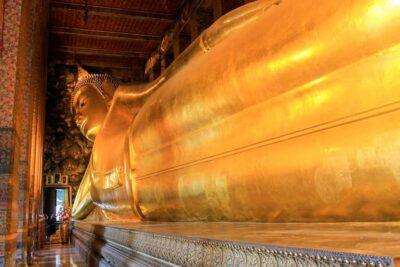 ★ 4.5City Highlights Temple and Market Walking TourFrom $423,990 reviews
 ★ 4.5Full Day City Tour with Night MarketFrom $312,888 reviews
 ★ 4.7Guided Tour of Phuket City with Hotel TransfersFrom $382,527 reviews
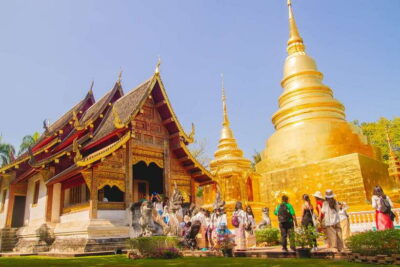 ★ 4.63 Hour Old City and Temples Guided Walking TourFrom $161,568 reviews
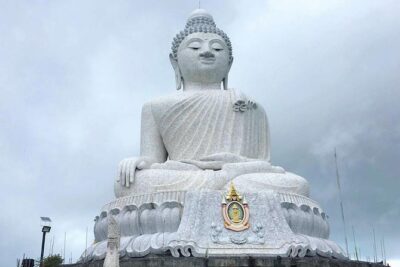
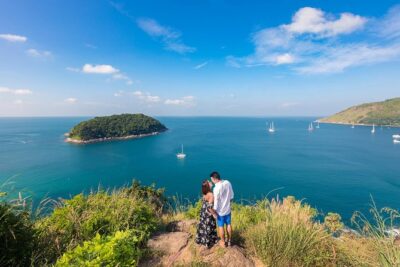 ★ 4.5Phuket City Tour with Wat Chalong, Big Buddha & Famous ViewpointsFrom $271,285 reviews
 ★ 4.5Travstore Original Phuket Discovery Tour – Shared Half Day City TourFrom $211,103 reviews
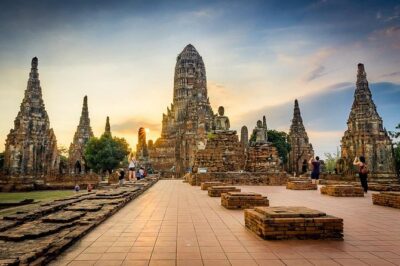 ★ 5.0Historical City of Ayutthaya – Unesco Full Day Tour From BangkokFrom $41847 reviews
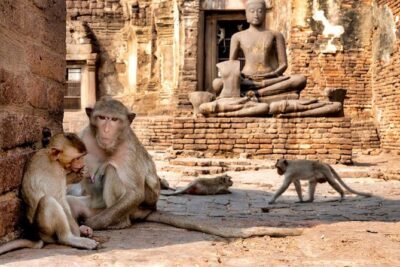 ★ 5.0Lopburi Monkey Temple & Ayutthaya Old City Tour From BangkokFrom $61719 reviews
Browse the lists this tour appears in