
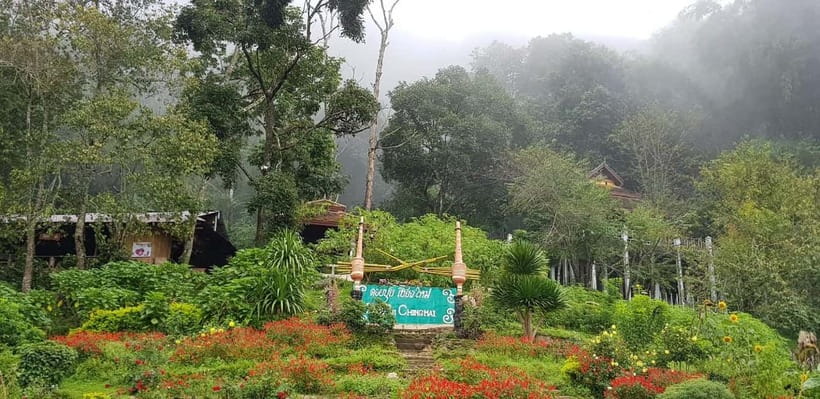
REVIEW · DOI SUTHEP AND CHIANG MAI TEMPLES
Chiang Mai: Doi Suthep Temple & Hmong Village Tour
Gold and dragons on a mountain day. You get a focused visit to Wat Phra That Doi Suthep, where the golden pagoda sits above the famous Naga-lined climb, then you tack on one of the best city panoramas within reach of Chiang Mai.
I especially love the viewpoint payoff, with Chiang Mai stretching out from a 1,056-meter (3,520-foot) lookout. You’ll also shift gears at a Hmong hill tribe village, where clothing, daily life, and handicrafts are part of the experience, not just a photo stop.
One caution: the Hmong village visit can feel like it moves with a shopping pace, so if you want unhurried browsing, plan to speak up early and keep an eye on time.
In This Review
- Key highlights worth your attention
- Pickup, van ride, and why the timing works
- Wat Phra That Doi Suthep: the golden pagoda and the Naga staircase
- Cable car versus the 306-step climb
- What you’re actually seeing at the top
- The Hmong village visit: culture, clothing, and craft shopping
- The market pace issue, and how to handle it
- Value check: what $22 gets you, and what it covers
- Who this tour fits best, and who might want another option
- Small but important practical tips before you go
- Guides matter: what to look for during the temple walkthrough
- Final call: should you book this Chiang Mai tour?
- FAQ
- What is the duration of the Chiang Mai Doi Suthep and Hmong village tour?
- How does hotel pickup work in Chiang Mai?
- Does the tour include the cable car to Wat Phra That Doi Suthep?
- Is there an extra fee for the Hmong village visit?
- What is included in the price?
- What should I bring and wear?
- Is the tour wheelchair accessible?
Key highlights worth your attention
- Wat Phra That Doi Suthep in Lanna style: A golden pagoda with engraved gold plates and classic temple details
- Naga staircase drama: 306 steps lined with the mythical serpent, the Naga, snaking down the stairs
- Cable car included: Easier access up, without losing the sense of arrival
- Big Chiang Mai views: A 1,056-meter viewpoint that makes the trip feel worth it fast
- Hmong village culture stop: Traditional clothing and a chance to learn about everyday life, with optional purchases
Doi Suthep and old city wats also got written up
- Chiang Mai: Doi Suthep and Wat Umong Enchanting Evening Tour★ 4.6 · 1,811 reviews
- Chiang Mai: Doi Suthep, Wat Umong, and Pha Lat Sunrise Tour★ 4.7 · 1,425 reviews
- Chiang Mai: Wat Pha Lat & Wat Phra That Doi Suthep Tour★ 4.8 · 1,207 reviews
- Wat Phra That Doi Suthep spiritual Sunrise Tour with an Ex-monk★ 5.0 · 798 reviews
Pickup, van ride, and why the timing works
This is a true half-day plan, with about four hours from start to finish. You’ll be picked up in the 8:00 to 8:30 am window around Night Bazaar and the Old Town, or later, around 8:30 to 9:00 am in Santitham and Nimman Haemin.
Then it’s straight into a scenic drive through the rolling hills around Chiang Mai. That early start matters because you’re getting to the temple area before the day gets hot and the roads get busier.
Wat Phra That Doi Suthep: the golden pagoda and the Naga staircase
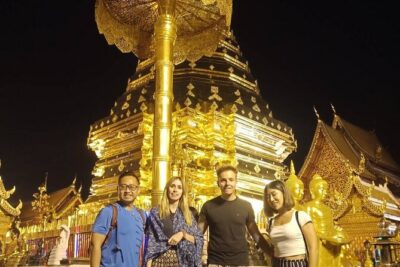
Your temple visit is guided, and it centers on Wat Phra That Doi Suthep, one of Chiang Mai’s most important sacred sites. The highlight is the golden pagoda, covered with engraved gold plates, and framed by four ornamental umbrellas.
The approach is half the story. From the bottom, you can either take the cable car (included), or climb the famous 306-step staircase, which is lined with the mythical dragon-headed serpent, the Naga.
If you choose the stairs, you’ll feel the temple’s “arrival moment” in a physical way. If you choose the cable car, you still get that sense of ascent, just with less fatigue so you can focus on the temple details and the views.
Cable car versus the 306-step climb
This tour gives you both options, and you’ll get to decide based on your comfort and how you like to travel. The cable car is included, so there’s no extra cost pressure guiding your choice.
If you’re short on time or you’re dealing with heat, I think cable car is the smarter move. If you like walking, and your legs are fine with a climb, the stairs are a memorable way to connect with the temple mythology.
Either way, wear shoes you trust on stone and uneven surfaces. The day is simple, but the footing is still a real factor.
What you’re actually seeing at the top
Once you reach the upper area, focus on two things: the pagoda’s goldwork and the way the temple design channels the Lanna style. The engraved gold plates catch light in different ways as you shift your angle.
Then there’s the view, and this is where the tour can win you over even if temples aren’t usually your top interest. From the mountain top viewpoint at 1,056 meters, you get a big panoramic look across Chiang Mai, with the city spreading out below the temple zone.
That view is a good reminder of why this place is here. The temple is not hiding in the hills, it’s meant to be seen, from far away and from within the city’s reach.




The Hmong village visit: culture, clothing, and craft shopping
After the temple, the tour heads to a Hmong hill tribe village for a guided visit. The stop is short, so you’ll want to approach it like a quick lesson, not a full cultural immersion.
What usually makes this part worthwhile is the visible stuff: residents’ colorful clothing and everyday materials that reflect how their communities live. You’ll have time to ask questions through the guide and to browse.
There’s also an opportunity to purchase textiles, ornaments, and handicrafts. The optional museum ticket at the village is 20 Baht, but it’s not required.
My practical advice: go in with two budgets in mind. One for small souvenirs like scarves or hand-made accessories, and one for the reality that the longer you linger, the more quickly your time gets used up.
The market pace issue, and how to handle it
The main trade-off here is pacing. The Hmong village stop is only about 40 minutes, and that’s enough time to look and learn, but not enough to do slow shopping like you’re strolling a weekend market back in town.
I’ve also seen how the shopping side can start to feel like the priority if you’re not careful. If you want the cultural part to lead, choose one question you really care about, then set a clear shopping time for yourself.
A good tactic is to shop after you’ve asked your key questions, not before. That keeps the visit from turning into a rushed loop through stalls.
Value check: what $22 gets you, and what it covers
At around $22 per person for a roughly four-hour outing, this is a solid value if you care about both major stops: Doi Suthep and a Hmong village visit.
Here’s what you get that matters most:
- Hotel pickup and drop-off within downtown areas
- Licensed English tour guide
- Wat Phra That Doi Suthep ticket and cable car included
- Travel accident insurance
What you’ll pay separately:
- personal expenses
- the optional 20 Baht museum ticket at the village
The big value driver is the cable car and temple ticket being included. If you had to buy those separately or arrange a private day trip, the cost usually jumps fast. This tour keeps the structure tight and the logistics handled.
Who this tour fits best, and who might want another option
This works best for travelers who want a simple, half-day hit of two of Chiang Mai’s most iconic experiences. You’ll get the temple’s sacred architecture and the skyline view, then you’ll get a quick window into Hmong community life.
It’s also a good fit if you’re staying in the Old Town, Night Bazaar, Nimman Haemin, or Santitham and you prefer a door-to-door style start. The pickup windows are specific, and the whole day runs on a schedule.
It may not be ideal if you want long, unhurried time at the village or if shopping is your least favorite part of cultural travel. Since the village stop is brief, you’ll feel the clock.
Small but important practical tips before you go
A few things can make your day smoother:
- Bring comfortable shoes for stairs and temple walking
- Have water and sunscreen, because the mountain sun can hit fast
- Bring a camera, since the temple viewpoint is built for photos
Also pay attention to the clothing rules. Short skirts and sleeveless shirts aren’t allowed, so plan for covered shoulders or a light layer you can wear respectfully.
The tour also has limits on carry-ons. Leave pets at home and avoid luggage or large bags.
If you’re traveling with kids, note that unaccompanied minors aren’t allowed. If you’re traveling with mobility needs, the tour is listed as wheelchair accessible, but non-folding wheelchairs are not allowed, so confirm your setup before you go.
Guides matter: what to look for during the temple walkthrough
A big part of why this day trip lands well is the quality of the temple explanation. I’ve heard English guides on this route, like Taya, can make the site easier to understand, including why the temple looks the way it does and what visitors should focus on.
When your guide is strong, you’ll spend less time just collecting photos and more time noticing details. That’s the difference between seeing Doi Suthep and actually getting something out of it.
If you care about context, don’t be shy about asking your guide where to look first once you arrive. On a short tour, good questions are your best leverage.
Final call: should you book this Chiang Mai tour?
Book it if you want:
- Wat Phra That Doi Suthep plus the city panorama without organizing transport yourself
- a guided stop that mixes sacred temple time with a quick look at Hmong village life
- included cable car access, which makes the day easier on your feet
Consider skipping or adjusting your plan if:
- you want more time for independent shopping or deep conversation at the village
- you dislike when short cultural stops feel time-pressured
- you’re very sensitive to a schedule, since this is a tight, four-hour run
If your main goal is the temple and the viewpoint, this is a practical, good-value way to get it done. If your main goal is the village experience at a slow pace, you’ll likely feel the time limit, so go in knowing what you’re trading for convenience.
FAQ
What is the duration of the Chiang Mai Doi Suthep and Hmong village tour?
The tour lasts about 4 hours.
How does hotel pickup work in Chiang Mai?
Pickup is available from downtown areas. You can be collected between 8:00 and 8:30 am around Night Bazaar and Old Town, and between 8:30 and 9:00 am around Santitham and Nimman Haemin.
Does the tour include the cable car to Wat Phra That Doi Suthep?
Yes. The Wat Phra That Doi Suthep ticket and cable car are included.
Is there an extra fee for the Hmong village visit?
There may be an optional museum ticket at the Hmong hill tribe village for 20 Baht. It is not required.
What is included in the price?
Inclusions are hotel pickup and drop-off within downtown, Wat Phra That Doi Suthep ticket and cable car, a licensed English tour guide, and travel accident insurance.
What should I bring and wear?
Bring comfortable shoes, a camera, sunscreen, and water. Short skirts and sleeveless shirts are not allowed.
Is the tour wheelchair accessible?
The tour is listed as wheelchair accessible. Non-folding wheelchairs are not allowed, and non-folding strollers are also not allowed.
Guided Thai outings, continued
What else made it into the Thailand notebook
Chiang Mai wats, dress code included
What else made it into the Chiang Mai notebook
- Walk With Monks Collecting Alms(meeting point maybe change)
★ 4.9 · 8 reviews - Doi Suthep and Hmong Hilltribe Half Day Tour in Chiang Mai
★ 3.5 · 8 reviews - Aroidee’s Farm-Fresh Thai Cooking Experience
★ 5.0 · 8 reviews - 2- Days in Doi Inthanon National Park
★ 4.5 · 8 reviews - Khantoke Dinner Experience & Cultural Dance Show with Transfers
★ 4.0 · 8 reviews - Sticky Waterfalls Private Half Day Fun Escapades
★ 4.5 · 8 reviews
Doi Suthep and Chiang Mai Temples, compared.
 ★ 4.6Doi Suthep and Wat Umong Enchanting Evening TourFrom $271,811 reviews
 ★ 4.7Doi Suthep, Wat Umong, and Pha Lat Sunrise TourFrom $321,425 reviews
 ★ 4.8Wat Pha Lat & Wat Phra That Doi Suthep TourFrom $241,207 reviews
 ★ 5.0Wat Phra That Doi Suthep spiritual Sunrise Tour with an Ex-monkFrom $64798 reviews
 ★ 4.6Chiang Mai – Doi Suthep Temple & Wat Pha Lat HikeFrom $25740 reviews
 ★ 4.74-Hour Doi Suthep & Hmong Hill Tribe Village from Chiang MaiFrom $36696 reviews
 ★ 4.9Spiritual Sunrise Wat Doi Suthep, Pha Lat, Alms & MeditationFrom $59674 reviews
★ 5.0Chiang Mai – Doi Suthep Temple & Wat Pha Lat HikeFrom $26657 reviews
Browse the lists this tour appears in