
REVIEW · COOKING CLASSES
Bangkok: Cooking Class + Tuk Tuk Ride + Market Tour
Prannok Market first, then your own Bangkok menu. This half-day mix of a short tuk tuk ride and hands-on cooking makes it easy to understand what Thai flavor building is really about, not just recipes on paper. I especially liked how clean and newly renovated the kitchen setup feels and how step-by-step the instruction is, even when you are a beginner. One thing to consider: you will be working on a schedule, so if you want lots of free time wandering the market on your own, this format may feel a little structured.
I also love that you shop for ingredients where they are actually used, then you cook four classics at your station. You will visit fresh stalls, spot herbs and produce, and even learn cultural food moments like releasing live fish for good karma. The possible drawback is simple, come ready, because they ask you to show up with an empty stomach and you will go from tasting to cooking quickly.
In This Review
- Key highlights to look for
- A half-day in Bangkok where ingredients make sense
- Meeting at Arun Thai Cooking School and starting with a shared tuk tuk
- Prannok Market shopping: where the flavors start
- The kitchen setup: spacious stations and clear teaching
- Your four-dish menu: what you cook and why it works
- Tom Yum Prawns
- Pad Thai Prawns
- Massaman Curry Chicken
- Mango Sticky Rice
- Meet your instructor: names you might get and how it feels
- Vegetarian options and allergies: what you should handle before you go
- What I’d do to get the most out of the market and kitchen
- Bring the right gear for Bangkok heat
- Keep an eye on order and technique
- Ask why something is added
- Be ready for tasting, then cooking
- Price and logistics: does $42 feel like good value?
- Who this cooking class is best for
- Should you book Arun Thai Cooking Class in Bangkok?
- FAQ
- How long is the Bangkok cooking class?
- What dishes will I cook?
- Does the price include the market tour and tuk tuk ride?
- Where do I meet for the activity?
- Are vegetarian options available?
- What language will the instructor teach in?
- Do they offer hotel pickup and drop-off?
Key highlights to look for
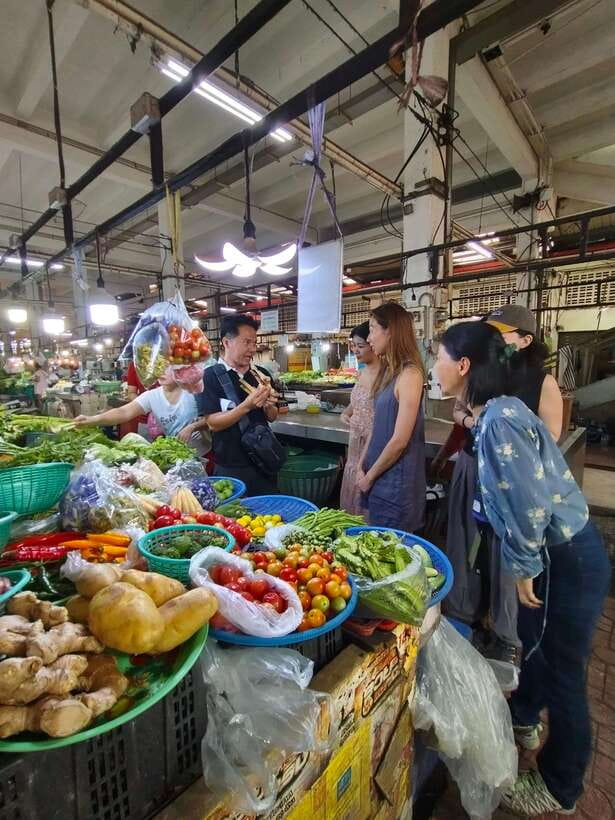
- Prannok Market with fresh ingredient shopping, including herbs, spices, fruits, prawns, and curry pastes
- Tuk tuk ride to start the day, usually only about 5 minutes before you hit the market
- Coconut cream making at the market, plus tastings of Thai dessert and other snacks
- Hands-on cooking at a spacious station with room for each dish you make
- Four dishes in 3.5 hours, Tom Yum Prawns, Pad Thai Prawns, Massaman Curry Chicken, and Mango Sticky Rice
- Dietary needs supported, with vegetarian options and allergy info handled in advance
Thai kitchens got sat through and written up
- Bangkok: Hands-on Thai Cooking Class and Market Tour★ 4.9 · 1,614 reviews
- Bangkok: Tingly Thai Cooking School Half-Day Cooking Class★ 4.9 · 1,191 reviews
- Bangkok: Maliwan Thai Cooking Class with Market Tour★ 4.9 · 1,133 reviews
- Tingly Thai Cooking Class with Morning Market Tour★ 5.0 · 589 reviews
A half-day in Bangkok where ingredients make sense
If you have only a few hours in Bangkok, this is the kind of activity that helps everything click. You get a market tour first, then you cook the food you saw, which means flavors stop being a mystery. Instead of memorizing a recipe, you learn why each ingredient shows up where it does.
This is also a great way to see a normal part of Bangkok life close to the river area. The school is near Icon Siam and Wat Arun, and the day starts right from the Arun Thai Cooking School building. From there, you take a shared tuk tuk to the market, so the experience feels like Bangkok, not a classroom on wheels.
Meeting at Arun Thai Cooking School and starting with a shared tuk tuk
You meet at the Arun Thai Cooking School, on the 2nd floor of the building. The activity ends back at the same meeting point, so you do not need to worry about finding your way across the neighborhood afterward.
The day begins with a shared local tuk tuk ride, short and practical. It is about 5 minutes to reach the market, which is just enough time to feel the ride without losing the morning to traffic. If you like your logistics simple, you will appreciate that the tour is built around a tight timeline.
Tip: wear comfortable clothes you can cook in. A sun hat and sunscreen are also smart, because the market part of the day is outdoors or semi-outdoors in the Bangkok heat.
Prannok Market shopping: where the flavors start
The market tour is the heart of the experience. You head to Prannok Market and walk through stalls that feel very local, including older, established booths. This is where you shop for what your kitchen station needs, not random souvenirs.
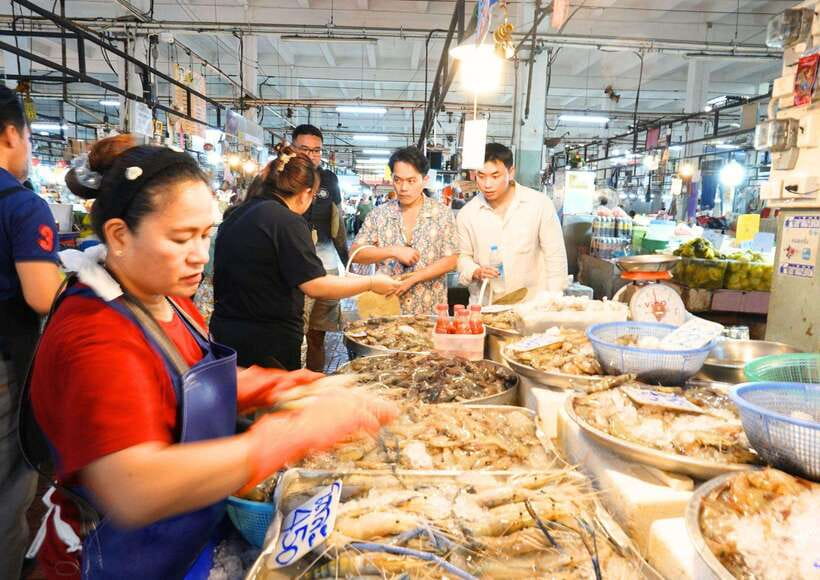
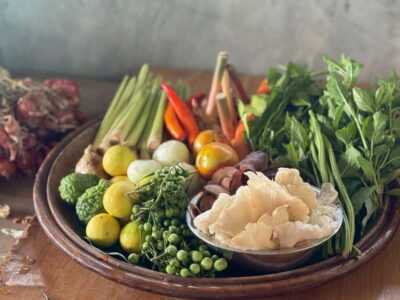
What makes this market stop more than a quick look is the range of what you see. You are guided through fresh ingredients and Thai staples like herbs and vegetables, plus items you likely only recognize once you see them in Thai cooking. You will also spot things like prawns, curry pastes, and spices used in the dishes you will cook later.
There are also hands-on food moments in the market. You might taste a famous Thai dessert, and you will learn about fresh coconut cream making, including how coconut milk or cream turns into the creamy base used in dishes. This matters because coconut flavor is not one-note in Thai cooking, it is balanced with salt, sweetness, and heat.
One more cultural detail I like: you get explanation around Thai food traditions, such as releasing live fish for good karma. It is not just a fun fact. It helps you understand how food and belief can mix in everyday life, especially in markets where people come for meals and rituals at the same time.
The kitchen setup: spacious stations and clear teaching
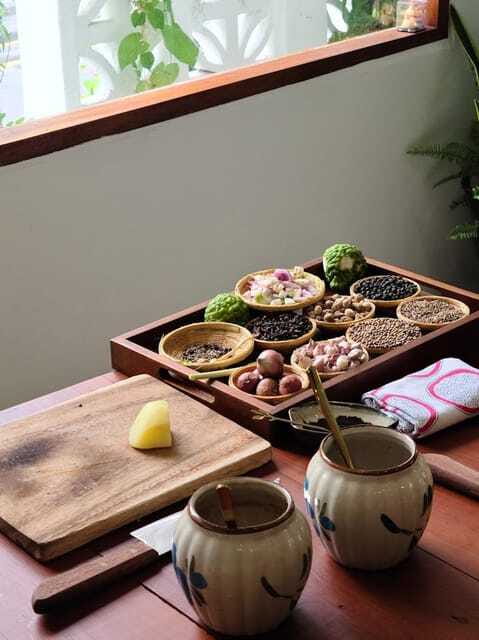
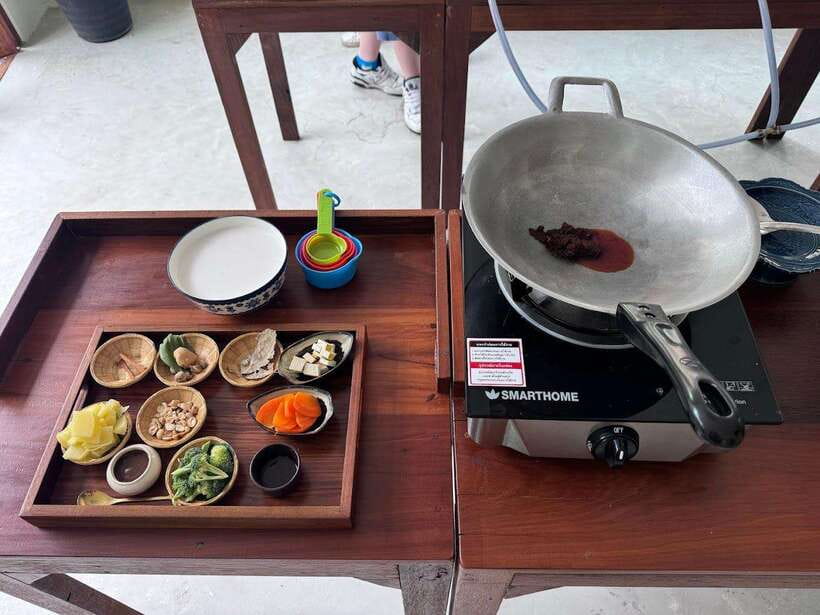
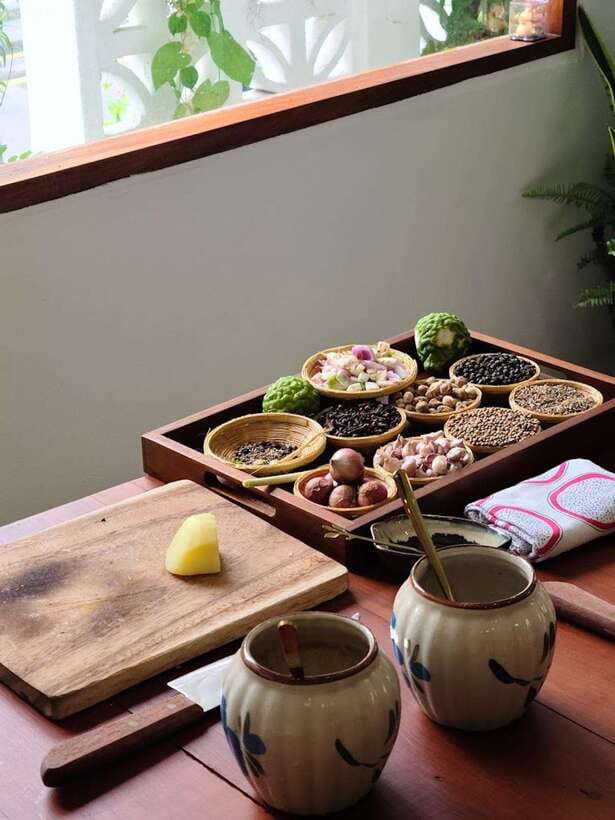
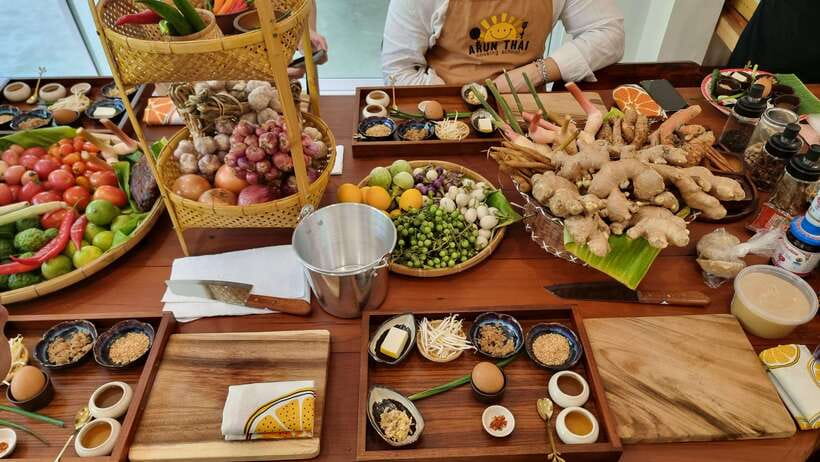
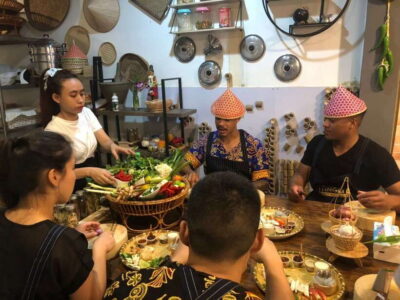
After the market, you cook at Arun Thai Cooking in a spacious kitchen. The school feels newly renovated, which shows in how clean and organized the space is. A couple of instructors are praised for preparation and clarity, and you can feel that structure once you reach the cooking rooms.
One review described two rooms, one for food prep and one for cooking. That division helps if you like having a moment to get your ingredients in order before heat hits the pan. It also reduces chaos, which makes it easier for beginners to keep up.
The instruction style is a big part of why people rate this class so high. Your host explains ingredients and processes so you know what you are doing at each step. I like that the teaching is not just about following steps, it is about understanding technique, like when to add something and why.
Thai market visits sat in the same notebook



Your four-dish menu: what you cook and why it works
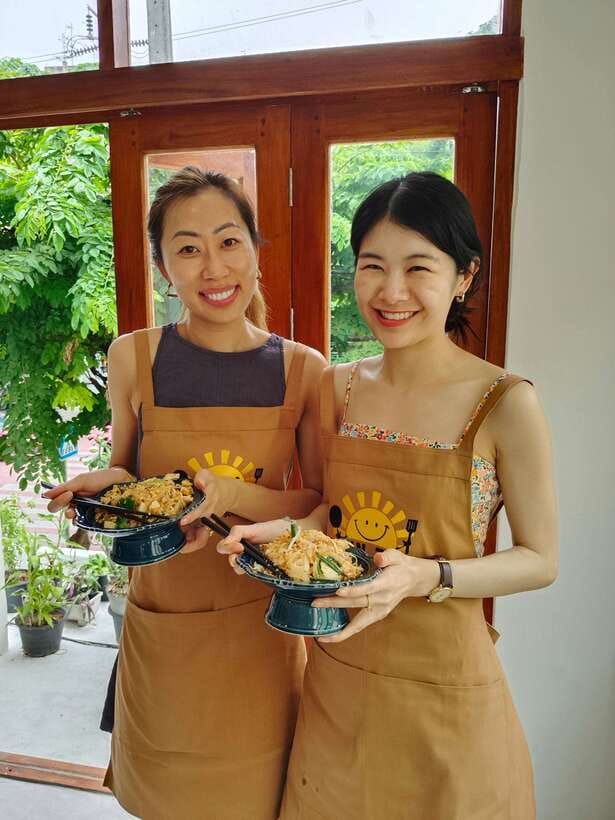
You will cook four iconic Thai dishes during the class. The menu is a smart mix: soup, stir-fry, curry, and dessert. That variety teaches Thai cooking logic across different flavor styles, not just one cooking method.
Here is what you can expect to make:
Tom Yum Prawns
This dish teaches you how Thai sour and savory flavors work together. Since you are cooking prawns, you also practice timing and heat control so seafood stays tender rather than rubbery.
Pad Thai Prawns
Pad Thai is the bridge dish for many people, because it looks familiar from outside Thailand but tastes different once you see the ingredient choices. You will get guided steps on how the sauce, noodles, and toppings come together.
Massaman Curry Chicken
Massaman curry gives you a different side of Thai flavor. Instead of focusing only on chili heat, it leans into aromatic, deeper flavors. Since the class starts with ingredients you shop at the market, you are not guessing where curry depth comes from.
Mango Sticky Rice
This dessert is sweet, comforting, and great for learning about coconut-based creaminess paired with sticky rice. You will learn the build of texture and sweetness that makes this dish feel like it belongs in Thailand, not just as a concept.
Across all four dishes, the goal is confidence. The class is built so you can walk out feeling like you could cook these again at home, not just produce a plate for the moment.
Meet your instructor: names you might get and how it feels
Most of the praise points to the instructors making the day smooth and friendly. The host named June (also seen as Juney) comes up again and again in the feedback. People highlight how she explains ingredients and steps, and how she adds history and stories behind the dishes while you work.
Another instructor name you may encounter is Lalit. When he teaches, the comments focus on good preparation and clear instruction, which matters when you are sharing a kitchen station with other people.
Also note the language setup: instructors can be English and Chinese. If you are in the mood to practice Thai cooking terms in another language, you might find the school offers enough support to keep you comfortable. One additional note from the school info: they also offer Chinese classes six days a week, with partial translation on other days. If that interests you, it is worth asking while you are there.
Vegetarian options and allergies: what you should handle before you go
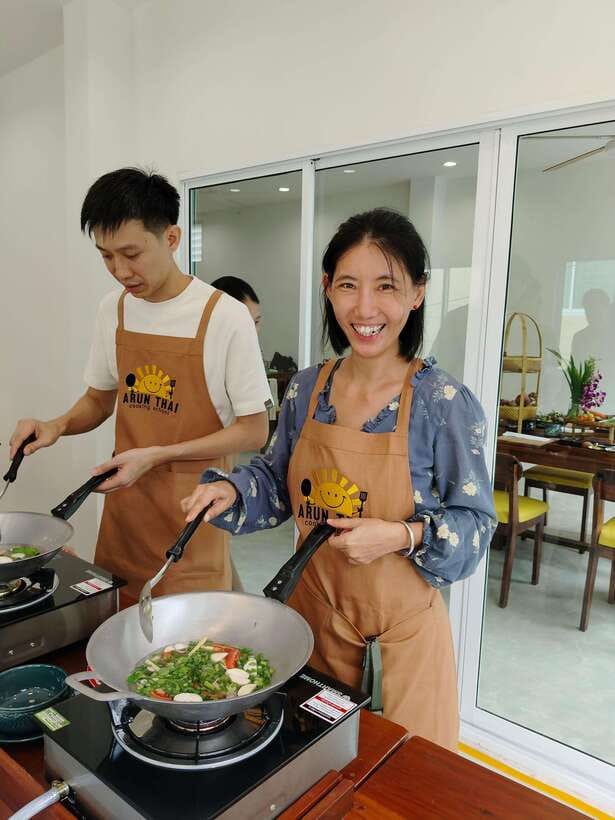
The class is designed for all skill levels, including beginners. That is good news because Thai cooking is often assumed to be complicated, when really it is about knowing the order and the role of each ingredient.
Dietary needs are accommodated, including vegetarian options. The most important practical step is handling allergies in advance, because the class requires you to provide allergy information ahead of time. If you have allergies, do not wait until arrival and hope it can be managed on the fly.
If you are vegetarian, ask how they adapt the ingredient choices for the specific dishes. The experience clearly supports adjustments, but your best outcome comes from sharing your dietary needs early.
What I’d do to get the most out of the market and kitchen
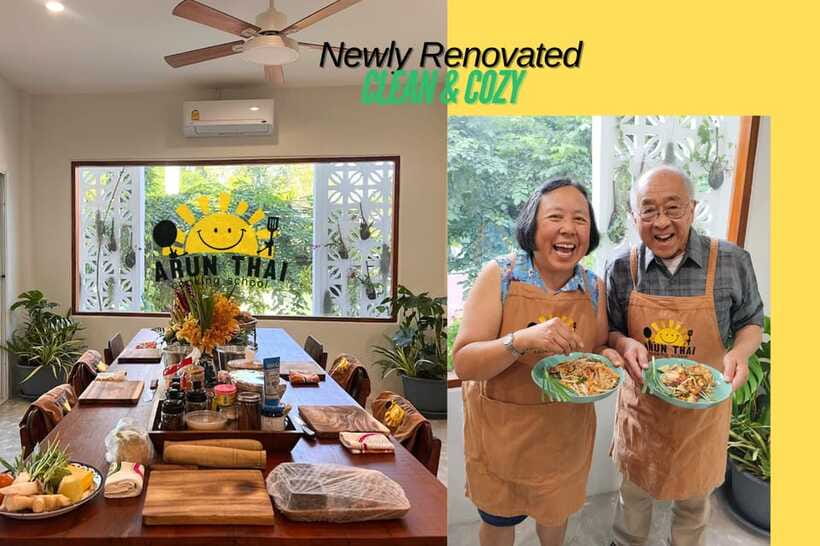
If you want this class to pay off when you cook later, you should treat it like a learning sprint, not just a meal. Come with a mindset to notice details.
Bring the right gear for Bangkok heat
The school recommends a sun hat and sunscreen, and I agree. You will be walking and cooking, and a comfortable outfit helps you focus on learning instead of sweating through it.
Keep an eye on order and technique
The instruction style is praised for making the steps easy to remember. Still, your memory will be better if you focus on the logic, like which ingredients go in first and what you are trying to achieve by the time you turn off the heat.
Ask why something is added
A lot of the comments highlight that the guides explain ingredients and cultural practices. If your instructor shares dish stories and Thai food context, ask questions. Those small explanations are what help you recreate flavors at home.
Be ready for tasting, then cooking
You really are told to come with an empty stomach. That tells you the day moves fast and uses tasting as part of the learning. If you show up too full, you might not get as much enjoyment from the market food moments.
Price and logistics: does $42 feel like good value?
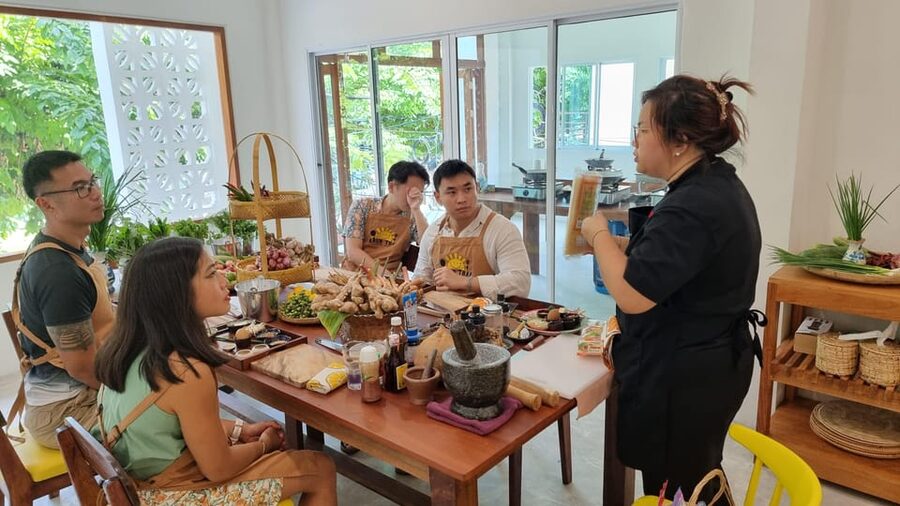
At $42 per person for about 3.5 hours, this is strong value for Bangkok. You get more than a cooking class. The price includes the shared tuk tuk ride, the Prannok Market tour, ingredients for four dishes, and refreshments.
Here is why that matters. Market shopping is not usually included in many cooking classes, and market time is where you learn the ingredient language of Thai cooking. Adding the tuk tuk ride also makes the whole day feel like a real outing, not just transportation to a kitchen.
There are a couple of practical tradeoffs. Hotel pickup and drop-off are not included, so you will need to get yourself to the school meeting point on the 2nd floor. Also, because the day is only 3.5 hours, you will not get hours to wander the market freely.
Still, for $42, you are paying for guided shopping plus instruction plus a full meal you help cook. That is why this format works.
Who this cooking class is best for
This experience is a great fit for people who want Thai food without a steep learning curve. If you are a beginner, the class is built to make technique manageable and steps easy to repeat later.
It is also a good choice for food-first travelers who like seeing ingredients before cooking. The market tour is more than a background; it is part of why you will remember the dishes.
If you are traveling with someone who likes history and culture, you will probably appreciate the dish stories and cultural explanations. In the feedback, instructors are credited with adding Thai culinary context as they teach.
One more note if you care about photos. There is a mention that the school might not take pictures of you while you cook, or at least it was not consistent for one participant. If you want photos, plan to take your own during prep and plating.
Should you book Arun Thai Cooking Class in Bangkok?
Book it if you want a short, high-value day that connects Bangkok market life to real cooking skills. The market stop, the ingredient focus, and the clear teaching style are the main reasons this class lands so well, especially if you want confidence for cooking later.
I would skip or rethink it if you hate structured timelines. This day flows from market to kitchen quickly, and it is intentionally paced for four dishes. Also, if you need hotel pickup, you will want to plan your own transport to the Arun Thai Cooking School meeting point.
If you do book, come hungry, wear sunscreen-ready clothes, and tell your instructor about any allergies right away. You will get the most out of it when you treat the market shopping as part of the lesson, not just shopping time.
FAQ
How long is the Bangkok cooking class?
The experience runs for about 3.5 hours. Starting times depend on availability.
What dishes will I cook?
You will cook four dishes: Tom Yum Prawns, Pad Thai Prawns, Massaman Curry Chicken, and Mango Sticky Rice.
Does the price include the market tour and tuk tuk ride?
Yes. The price includes the tuk tuk ride to the market, the Prannok Market tour, the cooking class for four dishes, all ingredients, and refreshments.
Where do I meet for the activity?
Meet on the 2nd floor of the Arun Thai Cooking School building. The activity ends back at the meeting point.
Are vegetarian options available?
Yes. The class can accommodate vegetarian options and dietary needs, but you should provide allergy information in advance.
What language will the instructor teach in?
The instructors can teach in English and Chinese.
Do they offer hotel pickup and drop-off?
No. Hotel pickup and drop-off are not included, so you will need to make your own way to the meeting point.
Thai kitchens you can book into
Guided Thai outings, continued
What else made it into the Thailand notebook
What else made it into the Bangkok notebook
- Mahanakhon SkyWalk Entry Ticket
★ 4.3 · 20 reviews - Bangkok: Nimitr Rooftop by 137 Pillars
★ 4.8 · 20 reviews - Bangkok: Cook authentic Thai food with Smart Cook
★ 5.0 · 20 reviews - Bangkok: Travstore Original Bangkok Discovery Tour
★ 4.5 · 20 reviews - Bangkok: Chao Phraya Princess Dinner Cruise & Hotel Transfer
★ 4.2 · 20 reviews - 1 Hr Private Bangkok Canal Boat Tour: Traditional Flat Boat
★ 4.5 · 20 reviews
Cooking Classes, compared.
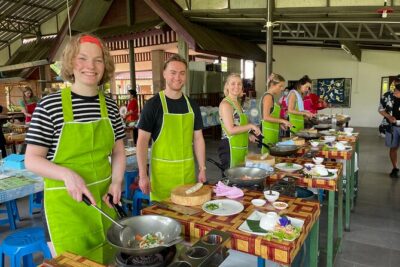 ★ 5.0Half-Day Thai Cooking Class at Organic Farm in Chiang MaiFrom $2919,087 reviews
 ★ 4.9Cooking Class, Market & Thai Herbs Garden TourFrom $314,824 reviews
 ★ 4.9Authentic Cooking Class with Market & Farm VisitFrom $344,546 reviews
 ★ 5.0Thai and Akha Cooking Class in Chiang MaiFrom $424,358 reviews
 ★ 5.0Phuket Thai Cooking Class with Market Tour OptionFrom $652,665 reviews
 ★ 4.9Hands-on Thai Cooking Class and Market TourFrom $451,614 reviews
 ★ 4.9Cooking Class with Market and PickupFrom $251,365 reviews
 ★ 4.9Tingly Thai Cooking School Half-Day Cooking ClassFrom $411,191 reviews
Browse the lists this tour appears in