
REVIEW · COOKING CLASSES
Bangkok Cooking Class : Traditional Thai dishes&Market Trip
A market ride sharpens your Thai cooking instincts. This Bangkok class starts at a local market, then moves to a small kitchen where tuk-tuk shopping and hands-on cooking go together.
I like that the group stays small and the whole day has a steady rhythm, market first, then cooking, then eating what you make.
I love that you cook four dishes and one drink from scratch, not just learn theory. I also like the take-home support, especially the recipe book, which helps you recreate the flavors later.
The main catch is simple logistics, the meeting point is tucked into Thonburi alleys, so arrive 10 to 15 minutes early and plan your route before you go.
In This Review
- Key highlights that matter (not just the headline)
- Why this cooking class starts at a Bangkok market, not in a kitchen
- Getting to the meeting point in Thonburi 7 without stress
- Market trip: how you shop like you belong for 60 to 90 minutes
- The ride, the pace, and why tuk-tuk time isn’t just sightseeing
- In the kitchen at Sala Thai BKK: tools, apron, and “make it yours” spice control
- What you actually cook: 4 dishes and 1 drink, with real Thai flavor lessons
- Eating what you made: portions, timing, and the point of the meal
- The people behind the class: English instruction with Pat, plus helpers in some sessions
- Price and value: what $38 buys in real cooking time
- Practical tips so you get the most out of your 3-hour class
- Who should book this, and who might skip it
- Should you book Bangkok Cooking Class Traditional Thai dishes and Market Trip at Sala Thai BKK?
- FAQ
- How long is the Bangkok Cooking Class Traditional Thai dishes and Market Trip?
- What does the price include?
- Is instruction provided in English?
- How many people are in the class?
- Are vegetarian, vegan, Halal, or Kosher options available?
- Where is the meeting point?
- What should I bring, and what is not allowed?
Key highlights that matter (not just the headline)
- Market shopping with Thai phrases so you can actually order and ask for ingredients, not just browse
- Hands-on cooking for 4 Thai dishes plus 1 drink with step-by-step guidance in English
- Small group size of 8 participants max, which makes it easier to ask questions and get help
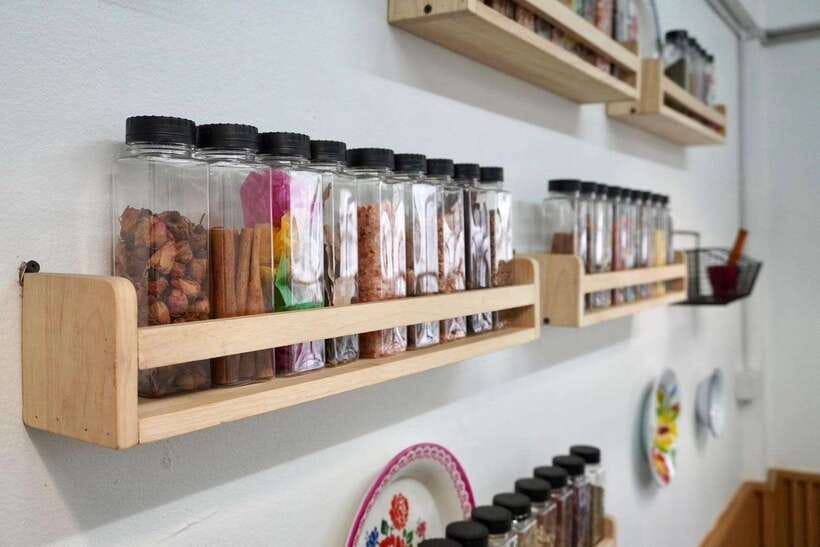
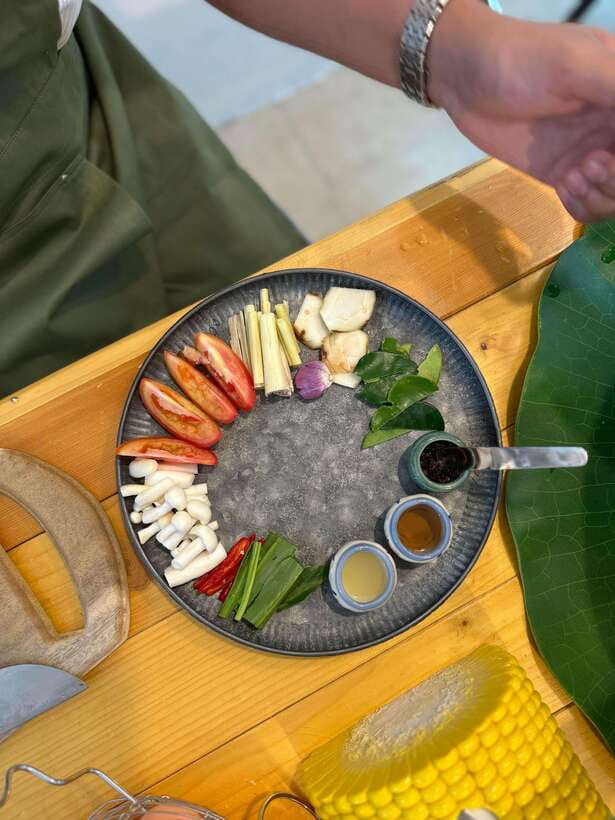
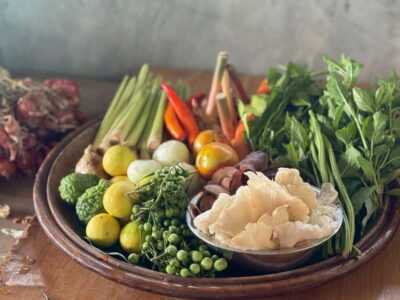
- Real Thai aromatics and flavor boosters like kaffir lime leaves, lemongrass, pandan, and even blue pea flower
- A take-home recipe book so your next Thai meal is not guesswork
Thai kitchens got sat through and written up
- Bangkok: Hands-on Thai Cooking Class and Market Tour★ 4.9 · 1,614 reviews
- Bangkok: Tingly Thai Cooking School Half-Day Cooking Class★ 4.9 · 1,191 reviews
- Bangkok: Maliwan Thai Cooking Class with Market Tour★ 4.9 · 1,133 reviews
- Hands on Thai Cooking Class and Market Tour★ 5.0 · 660 reviews
Why this cooking class starts at a Bangkok market, not in a kitchen
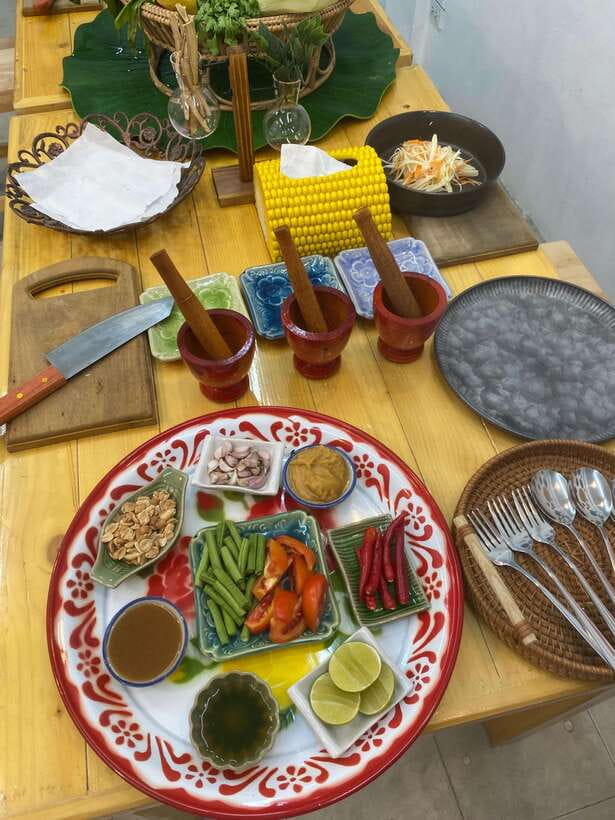
Bangkok can feel like sensory overload. What I liked here is the order of operations: you build the meal by starting with ingredients first. You learn what to look for, what matters for flavor, and how Thai cooks think about balance.
A market stop also changes the tone of the class. Instead of staring at a menu, you’re practicing real choices: what’s fresh, what goes together, and how to communicate with vendors. It’s a practical way to understand Thai cuisine, not just follow instructions.
And you get a bit of Bangkok flavor outside the kitchen too. The ride to the market is part of the experience, whether it’s a truck taxi or a tuk-tuk, and it helps you get from Central areas to a more local feel.
Getting to the meeting point in Thonburi 7 without stress
This is the part that can trip you up if you wing it. The meeting point is in Thonburi, inside Thonburi 5 Alley, then you turn into Thonburi 7 Alley. Thonburi 7 is narrow and one way, so if you’re driving, follow the directions exactly.
If you’re walking from BTS Krung Thonburi exit 2, or if you’re coming from the pier, you can access the same alley area. Look for a white building in the middle with a dark brown door.
My practical advice: arrive early, 10 to 15 minutes, because Bangkok traffic and alley turns can slow things down. Also, bring cash just in case you need it for small purchases.
Market trip: how you shop like you belong for 60 to 90 minutes
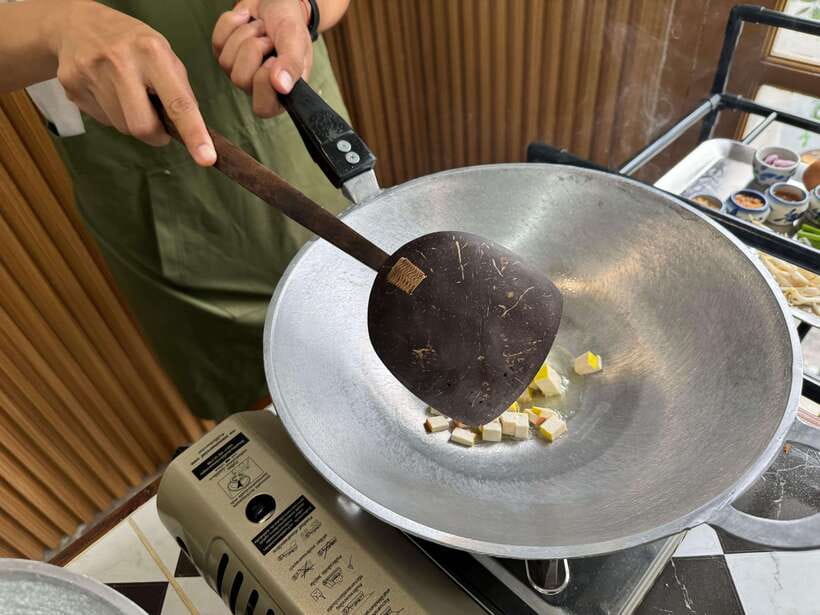
Once you arrive, your instructor leads you through stalls and shows you what to buy for the dishes. The big win is that you’re not just getting ingredients handed to you. You’re learning how to interact with vendors using basic Thai phrases, and that makes the market feel like part of the class, not a detour.
From what I’ve seen in the class descriptions and details people highlighted, this is where you learn the small mechanics that matter in Thai cooking:
- how to choose the right herbs and produce
- how you translate an ingredient idea into something a vendor understands
- how to ask for what you need for your specific menu
You’ll also get a sense of Thai shopping culture, which helps later when you try to remake dishes at home. Thai recipes are not only about ingredients, they’re about sourcing them.
One more plus: you can often request ingredient swaps. For example, one person shared that they asked to cook with prawns and got help finding them in the market.
The ride, the pace, and why tuk-tuk time isn’t just sightseeing
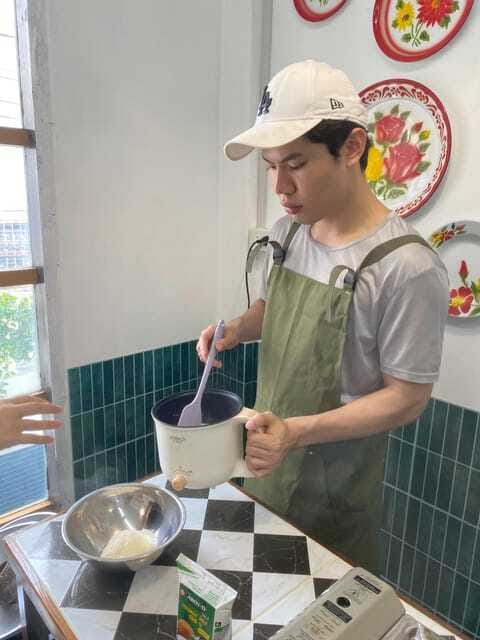
The tuk-tuk or truck taxi ride does more than look fun on a photo. It moves you into a different rhythm of the city. You’ll feel the change in surroundings as you head toward the local market area, then you return to the venue to cook.
That shift matters because the class is designed to keep energy moving. By the time you reach the kitchen, you’re already in food mode. You’ve seen ingredients up close, and it makes the cooking steps easier to connect to real life.
Another smart point: the market stop sets up your expectations. You’re not wondering where ingredients come from later, because you literally saw how they’re bought.
Thai market visits sat in the same notebook


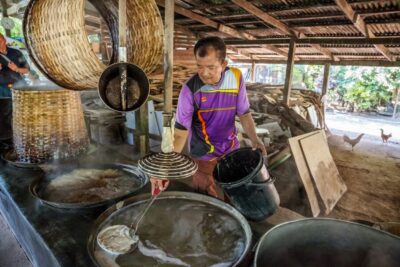

In the kitchen at Sala Thai BKK: tools, apron, and “make it yours” spice control
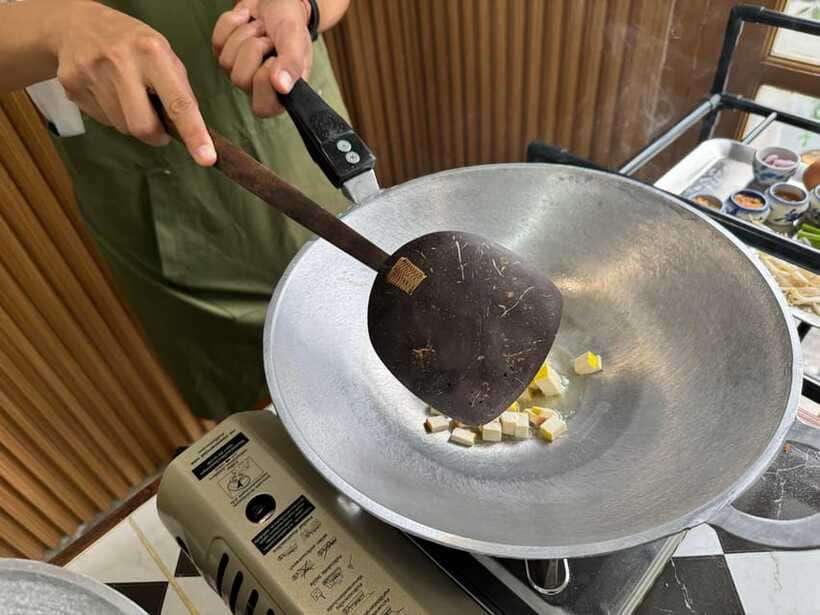
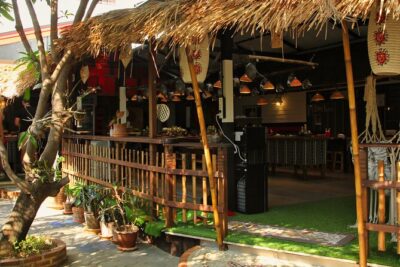
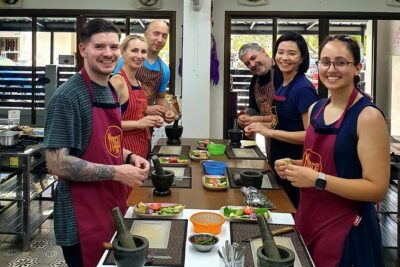
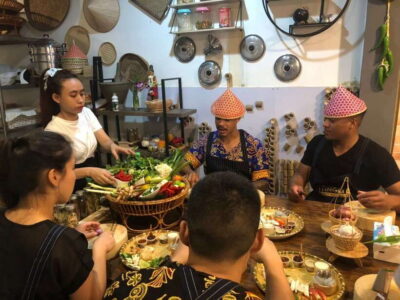
Back at the venue, the setup is designed for a small group. Your class is limited to 8 participants, so you get individual attention instead of yelling over a crowded studio.
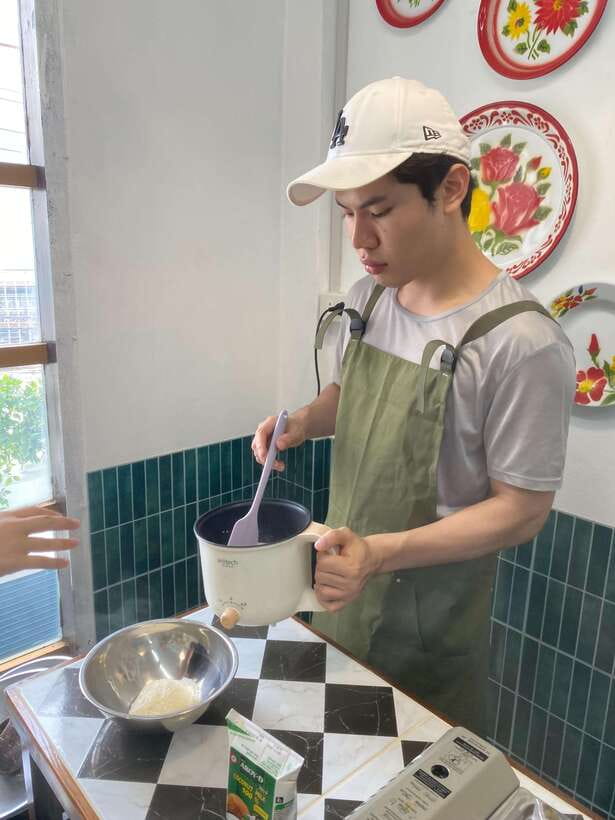
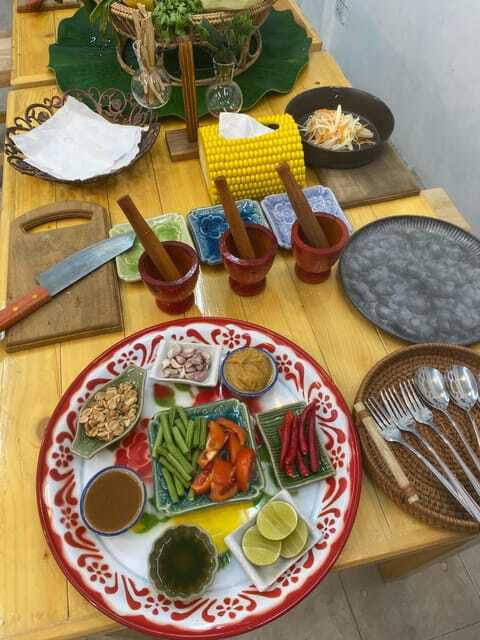
You’ll be provided with kitchen equipment and an apron for use during class. You also get free drinks as part of the experience, and the dining happens at the venue after each cooking step.
What I like most is the way the instruction supports personal preferences. People mention that recipes can be adapted to spice level, and dietary needs can be accommodated if you tell the team in advance. If you’re vegetarian, vegan, Halal, or Kosher, this is built into the class options.
Also, for ingredient accuracy, Thai aromatics are a big deal. One detailed review mentioned using kaffir lime leaves, pandan, lemongrass, and even natural blue pea flower to color sticky rice. That kind of detail is why a class like this is more than a meal, it’s training.
What you actually cook: 4 dishes and 1 drink, with real Thai flavor lessons
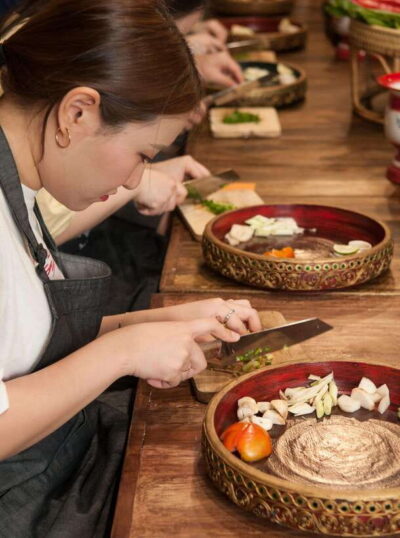
You’ll cook 4 Thai dishes and 1 drink. The exact menu can vary by class and session, but you should expect classic dishes and core techniques.
Based on the dish examples people called out, common picks include:
- Pad Thai
- Massaman curry
- Green curry
- Mango sticky rice
- Thai-style soup (people mentioned chicken soup)
- Thai tea as the drink
Here’s how that helps you as a home cook. Each dish teaches a different flavor system:
- Pad Thai focuses on balancing sweet, salty, tangy, and a noodle sauce base
- Curry work teaches how spice and aromatics build depth, not just heat
- Sticky rice teaches texture and the role of aroma, including natural coloring ideas like blue pea flower
- Thai tea helps you understand Thai sweetness and tea strength
You also get a practical recipe angle, not just a written card. People highlighted that the instructor explains where dishes originated from and how to adapt recipes using ingredients you can find at home. That matters because kaffir lime leaves and pandan can be tricky to source in some countries.
Pro tip I’d use: when you’re cooking, take notes on the scent changes. Thai cooking often comes down to when the aromatics bloom. If you focus on those timing cues while you cook, your home remake will taste closer.
Eating what you made: portions, timing, and the point of the meal
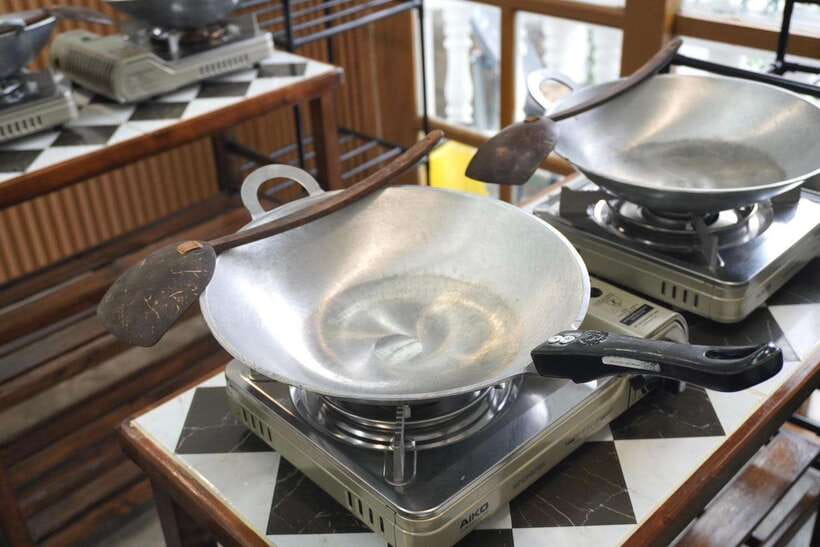
The class is hands-on, and that means you eat what you cook. People noted portion sizes that felt just right, and at least one review mentioned you can take food to go if you’re full.
This is also when the instruction gets real. You taste your own dish immediately after cooking, so you can connect what you did with what it produced. If a curry feels too sharp or a sauce feels off, your notes and your memory will guide your tweaks later at home.
It’s not a long banquet. It’s structured cooking, taste, then move on to the next dish. That keeps things from dragging, especially in a 3-hour scheduled session.
One more detail: the kitchen area is described as clean and cozy by people who’ve done it. That’s not glamorous, but it’s important for cooking classes, because comfort makes it easier to learn.
The people behind the class: English instruction with Pat, plus helpers in some sessions
The instruction is in English, and the vibe tends to be friendly and lively. Many people mention the instructor named Pat specifically, often praising her clarity, patience, and humor.
In some sessions, you may see assistants or co-hosts named GG and Phat mentioned in people’s notes. It’s a small operation, and that often translates into more attention during prep and cooking.
If you’re nervous about Thai cooking, that matters. You’ll get step-by-step guidance, and because the group is small, you’re more likely to get an answer instead of waiting for the instructor to finish with someone else.
Price and value: what $38 buys in real cooking time
At $38 per person, the value is not just the cooking lesson. You’re paying for the full chain:
- the market trip
- ingredient selection and cooking instruction
- kitchen equipment and an apron
- free drinks
- dining at the venue
- a recipe book to take home
That packaging matters. Many do-it-yourself cooking classes have you bring your own ingredients, or they skip the market step. Here, the cost includes the ingredient work up front, which makes the class easier to replicate later.
Also, the small group size helps you get more use out of the time. Even if you’re a beginner, you can ask questions and correct technique during the process.
Is it overpriced? Not based on what’s included. But it is a commitment: you should go with an appetite and some curiosity. This works best when you’re ready to cook and taste, not when you want only light sampling.
Practical tips so you get the most out of your 3-hour class
Bring the basics. The class recommends:
- comfortable shoes
- sun hat
- camera
- water
- comfortable clothes
- insect repellent
- cash
Also, wear shoes that work for standing and walking through the market area. High heels are not allowed.
If you have dietary needs, tell the team in advance. Vegetarian, vegan, Halal, and Kosher options are available, but you need to communicate your restrictions early.
And if you have food allergies, take it seriously. The information flags that the class is not suitable for people with food allergies, so don’t assume it can safely swap everything.
Finally, plan your schedule around arrival. If you show up late, you risk compressing the market portion, and that’s the part that makes the cooking make sense.
Who should book this, and who might skip it
This class is a great fit if you:
- want a hands-on Bangkok experience that goes beyond restaurant eating
- like the idea of learning a few core dishes deeply
- enjoy learning practical Thai food shopping skills using basic phrases
- want a small-group cooking lesson in English with a take-home recipe book
It may be less suitable if you’re:
- traveling with young kids, the class is not suitable for children under 10
- someone who needs wheelchair access, it lists wheelchair users as not suitable
- over 60, the class also lists people over 60 as not suitable
- visually impaired or dealing with altitude sickness (also listed as not suitable)
- managing food allergies (explicitly listed as not suitable)
If you’re in the right health and mobility range, I think this is one of the better ways to spend a half-day in Bangkok, because you leave with both skills and recipes, not just a memory.
Should you book Bangkok Cooking Class Traditional Thai dishes and Market Trip at Sala Thai BKK?
If you like real instruction, small groups, and the idea of shopping for ingredients with basic Thai phrases, book it. The mix of market trip, tuk-tuk ride, cooking 4 dishes plus a drink, and a recipe book is a full arc, and it gives you something you can redo at home.
If you want a cooking class that is purely relaxed and seated with minimal walking, or if you have food allergies, skip this one and choose a different style that fits your constraints.
My final take: for $38, the value is strongest when you go hungry, ask questions, and treat the market like part of the lesson. That’s where the magic starts, and it carries into every bite.
FAQ
How long is the Bangkok Cooking Class Traditional Thai dishes and Market Trip?
The duration is listed as 3 hours. Starting times depend on availability.
What does the price include?
The experience includes a trip to the local market, a cooking lesson for 4 courses and 1 drink, free drinks in class, ingredients, kitchen equipment, and an apron for using in class. You also dine at the venue and receive a recipe book.
Is instruction provided in English?
Yes. The instructor speaks English.
How many people are in the class?
The group is small, limited to 8 participants.
Are vegetarian, vegan, Halal, or Kosher options available?
Yes. Vegetarian, vegan, Halal, and Kosher options are available. You should inform the provider in advance about your dietary restrictions.
Where is the meeting point?
If walking from BTS Krung Thonburi exit 2, or coming by car, enter Thonburi 5 Alley first, then turn into Thonburi 7 Alley. Thonburi 7 is narrow and one way. The venue is a white building in the middle with a dark brown door.
What should I bring, and what is not allowed?
Bring comfortable shoes, a sun hat, a camera, water, comfortable clothes, insect repellent, and cash. High-heeled shoes are not allowed, and pets, baby strollers, and smoking are also not allowed (including smoking indoors).
Thai market mornings, continued
Thai kitchens you can book into
What else made it into the Thailand notebook
What else made it into the Bangkok notebook
- Bangkok hotel to Pattaya hotel transportation
★ 4.5 · 20 reviews - Private Longtail Boat Bangkok Canal Tour
★ 4.5 · 20 reviews - Nakhon Nayok adventure full day trip with lunch
★ 5.0 · 20 reviews - Mystical Waterfall and River Kwai Tour (Private & All-Inclusive)
★ 5.0 · 20 reviews - From Bangkok: Full Day Customizable Private Tour to Pattaya City
★ 5.0 · 20 reviews - Bangkok by Night Tuk Tuk Tour: Markets, Temples & Food
★ 4.5 · 20 reviews
Cooking Classes, compared.
 ★ 5.0Half-Day Thai Cooking Class at Organic Farm in Chiang MaiFrom $2919,087 reviews
 ★ 4.9Cooking Class, Market & Thai Herbs Garden TourFrom $314,824 reviews
 ★ 4.9Authentic Cooking Class with Market & Farm VisitFrom $344,546 reviews
 ★ 5.0Thai and Akha Cooking Class in Chiang MaiFrom $424,358 reviews
 ★ 5.0Phuket Thai Cooking Class with Market Tour OptionFrom $652,665 reviews
 ★ 4.9Hands-on Thai Cooking Class and Market TourFrom $451,614 reviews
 ★ 4.9Cooking Class with Market and PickupFrom $251,365 reviews
 ★ 4.9Tingly Thai Cooking School Half-Day Cooking ClassFrom $411,191 reviews
Browse the lists this tour appears in