
REVIEW · CHIANG RAI WHITE AND BLUE TEMPLE TOURS
Explore the Chiang Rai and the Golden Triangle
First time in Chiang Rai, then go bigger in one day. You get three famous temples plus a real cultural stop with the Long Neck Karen village, and the day ends at the Golden Triangle. The main thing to plan for is the temple dress code, because you will want long pants and covered shoulders (and you may be asked to change).
This is a tight, full-day loop starting with hotel pickup between 8:00 to 8:30 AM and returning around 6:30 to 7:00 PM. The price is $41 per person, and what makes it feel like good value is that lunch and transport are handled, while the entry fees for specific stops are separate and optional. If you are sensitive to walking at temple sites, or you have health limits, read the details below before booking.
In This Review
- Key things I’d mark on your map
- A full Northern Thailand day, without the heavy planning
- The White Temple, Wat Rong Khun: a modern masterpiece for your camera
- Wat Rong Suea Ten (Blue Temple): color therapy, but in a quieter way
- Baan Dam (Black House Museum): why it feels different from most temples
- Long Neck Karen village: cultural learning with a guide who explains
- Lunch and the tea plantation break: where you catch your breath
- Golden Triangle: standing where three countries meet
- The Opium House Museum: context after the view
- Price and value: what $41 covers, and what costs extra
- Pickup timing and the reality of a long day
- What to bring for temple rules: easy wins
- Who should book, and who should skip this one-day circuit
- Should you book the Chiang Rai and Golden Triangle day tour?
- FAQ
- How long is the Chiang Rai and Golden Triangle tour?
- What does the $41 per person price include?
- What entrance fees should I budget for?
- What should I wear for temple visits?
- Is hotel pickup included, and where does it work?
- Who is this tour not suitable for?
Key things I’d mark on your map
- White Temple (Wat Rong Khun) for modern Thai art, mirrored details, and standout photos
- Blue Temple (Wat Rong Suea Ten) for a calmer mood and striking blue-and-gold design
- Black House Museum (Baan Dam) with over 40 buildings and provocative art made from Thai architectural shapes
- Long Neck Karen village with an English-speaking guide who explains daily life and history
- Choui Fong Tea Plantation for a hilltop tea break where you can slow down and buy tea
- Golden Triangle + Opium House Museum for border context and the opium trade story
Wat Rong Khun runs also got a going over
- Chiang Rai: Guided Highlights Guided Tour with Buffet Lunch★ 4.9 · 1,532 reviews
- Chiang Rai: Iconic Temples & 7 Major Sites—River View Buffet★ 4.9 · 692 reviews
- Chiang Rai: White, Blue, Red Temples, Long Neck Tour★ 4.8 · 652 reviews
- Sightseeing Join Tour Chiang Rai / PICK UP ONLY IN CHIANG RAI★ 4.5 · 398 reviews
A full Northern Thailand day, without the heavy planning
Chiang Rai is one of those places that rewards a full-day plan. In a single day, you can cover the temple circuit, a community interaction, a tea break, and the Golden Triangle area. The route is built for variety, not just famous-photo stops, so the day feels like a story arc instead of a checklist.
Timing is also practical. Pickup happens between 8:00 and 8:30 AM from Chiang Rai city hotels, and the day typically runs until 6:30 to 7:00 PM. That long window matters because these sights are spread out, and traffic can change how smoothly you move.
One more small but helpful note: the tour vehicle pickup is included only for hotels about 3 kilometers from the city center. If your hotel is farther out, you should confirm pickup options before you book, because that one detail can make or break the convenience.
The White Temple, Wat Rong Khun: a modern masterpiece for your camera
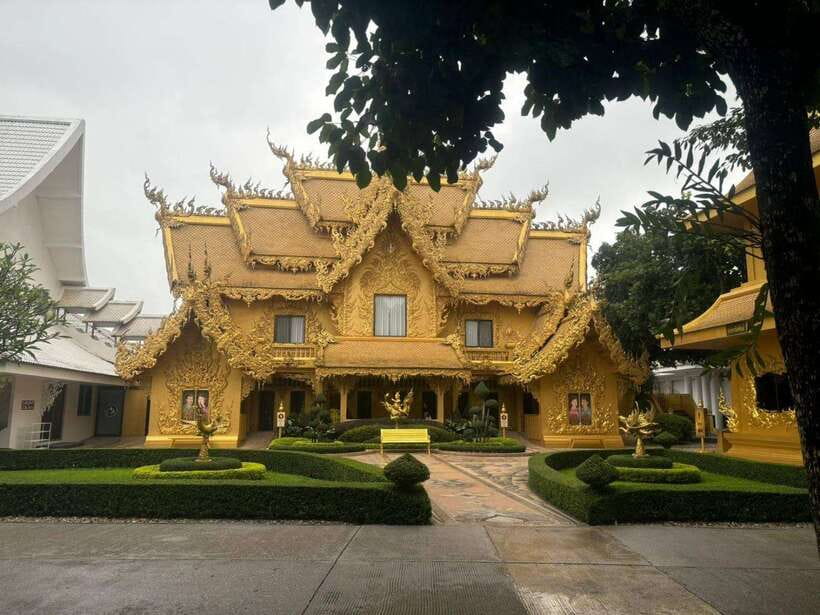
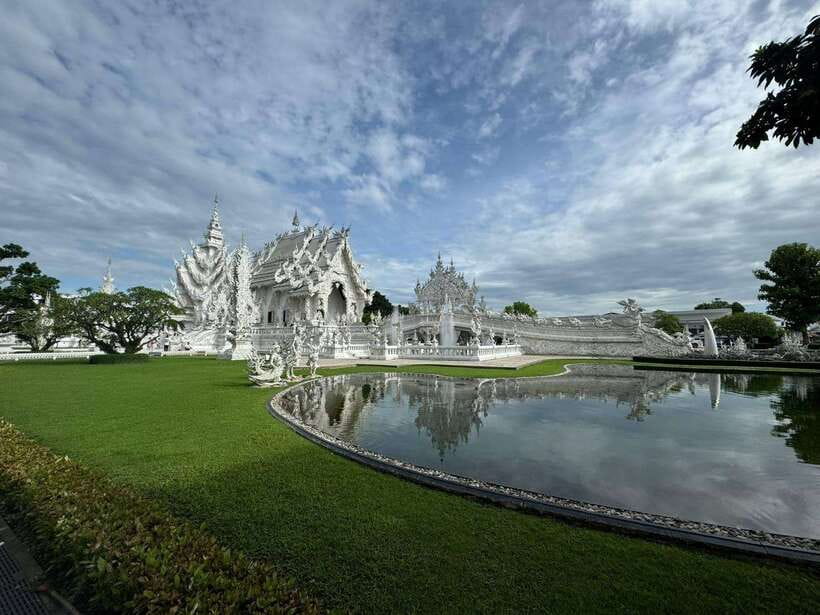
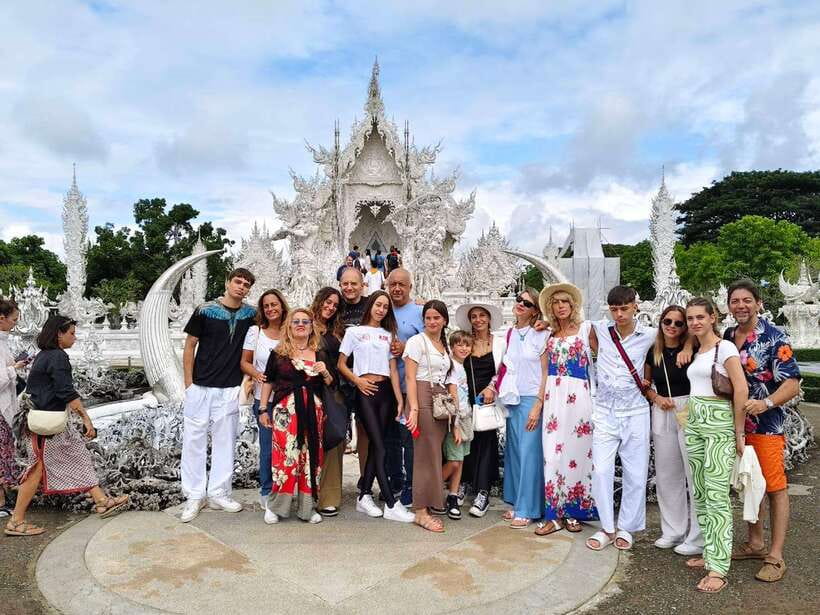
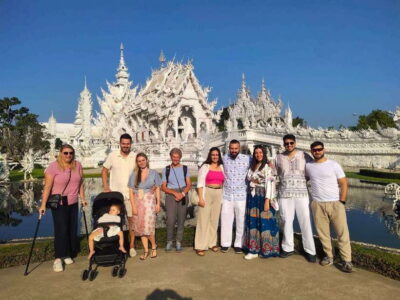
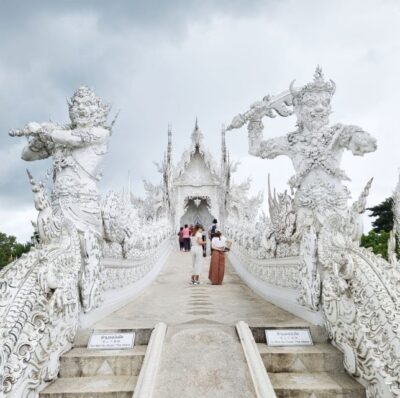
Wat Rong Khun is the kind of stop that makes people forget to check their phones. The White Temple is famous for its shimmering white facade and surreal artwork, and it is designed to be looked at up close, not just from afar.
What I like here is that it is not trying to be old-school. It is contemporary religious art, with a dreamlike feel that still respects what the temple is meant to be. If you bring a camera, you will want to spend real time here. The details reward slow walking.
Dress matters. Even if you are here for photos, you still need to cover up. The tour advises long pants and some shoulder coverage for temple visits, and it notes that you may need to change clothes for access. Comfortable shoes help too, because temple grounds can involve uneven surfaces.
Practical tip: bring a smartphone power bank. You might take more pictures than you think, especially if you are photographing the white structures from multiple angles.
Wat Rong Suea Ten (Blue Temple): color therapy, but in a quieter way
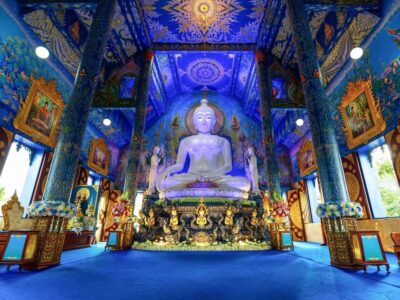
Next comes Wat Rong Suea Ten, often called the Blue Temple. This place swings the mood from dazzling white to deep blues and gold accents. It can feel like stepping into a mythical painting, but with a more peaceful rhythm.
The construction and design are the main attraction. It is a temple that looks dramatic from the outside, but it also rewards standing still long enough to take in the details. If you like architecture, you will likely enjoy the way the student of the White Temple’s mastermind created a related style, so the two temples feel connected as a pair.
This stop also functions as a mental reset. After the White Temple’s wow-factor, the Blue Temple gives your eyes a break while still delivering strong visuals.
Again, keep the temple dress code in mind. If your outfit is borderline, plan for shoulder coverage and long pants.
Baan Dam (Black House Museum): why it feels different from most temples
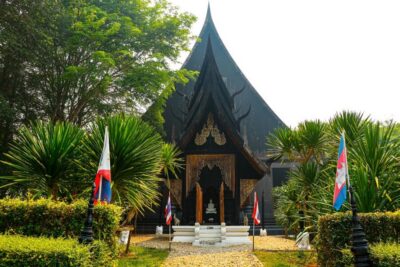
Then you shift to Baan Dam, the Black House Museum. This is not the kind of place you visit to be quiet and reverent the whole time. It is an artistic complex where traditional Thai architecture meets edgy, thought-provoking design.
The big hook is scale. You can explore over 40 buildings, and each one is packed with symbolism. That means your experience here can vary a lot depending on how you choose to wander. If you like reading details and looking closely, you can spend longer here. If you prefer moving faster, you still get plenty of variety.
The balancing idea: this is still part of a cultural day, but the tone is more creative and provocative. If you love art that challenges you, you will probably appreciate it. If you prefer strictly classic temple sights, this might feel like a detour. Either way, it adds personality to the day.
Dress code still applies because you are in a temple setting. Long pants and covered shoulders are the safest bet.
Golden Triangle days also got written up

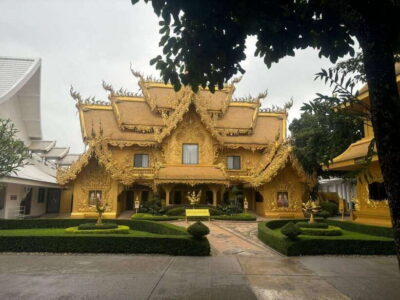
Long Neck Karen village: cultural learning with a guide who explains
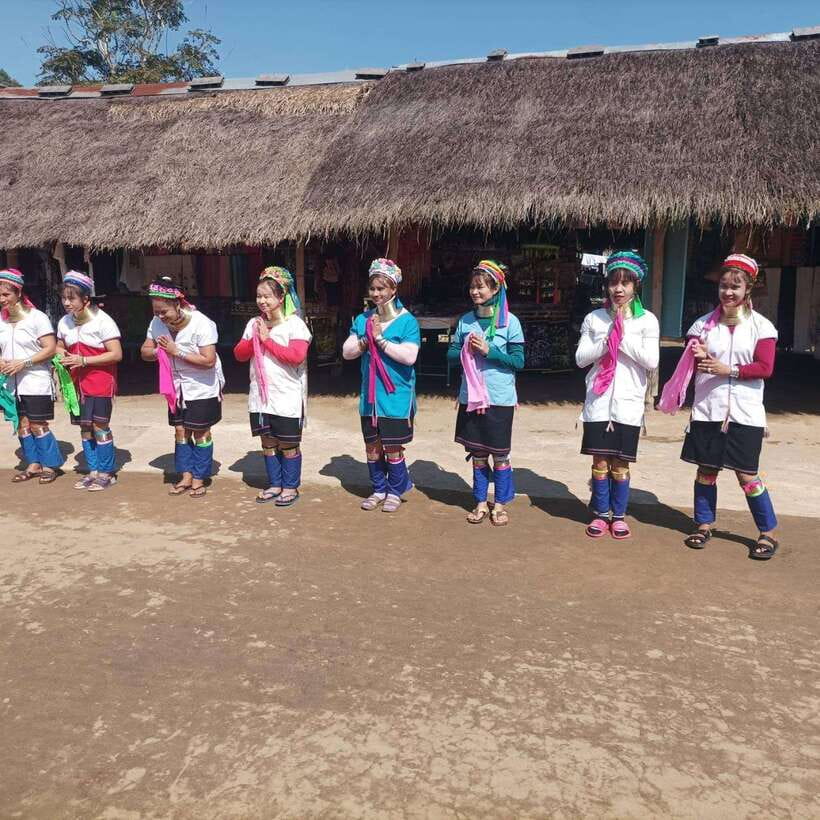
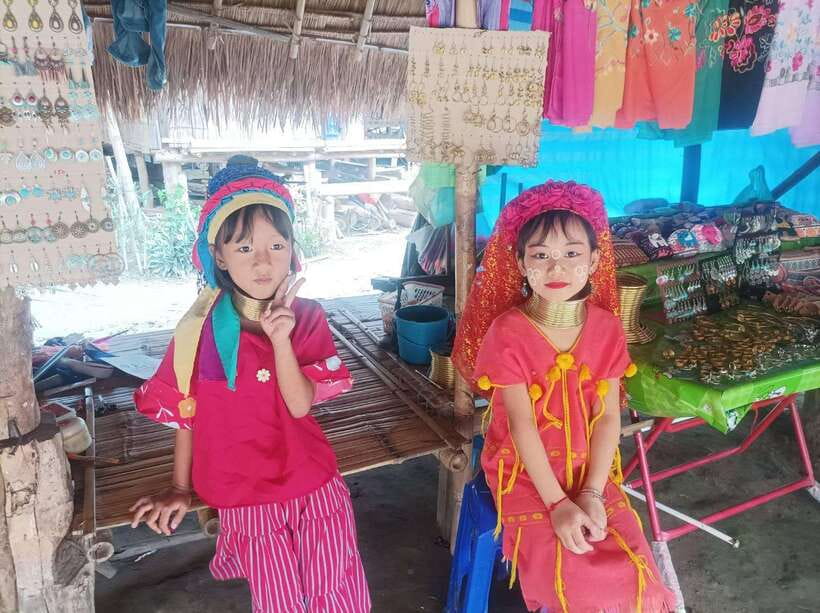
One of the most meaningful parts of the day is the Long Neck Karen tribe village visit. This is a cultural stop where you learn about a unique way of life, guided by an English-speaking person who is specifically good at answering questions.
In one example from an earlier group, the guide Gap was singled out for following people step by step and explaining clearly, even when English was not perfect. That is exactly what you want on a cultural interaction, because it reduces confusion and keeps the conversation respectful.
How to make this stop work for you:
- Ask questions about everyday life, not just photos.
- Listen more than you talk.
- Keep your tone curious and considerate, since this is not a performance for visitors.
Also plan for the fact that village visits often involve a bit of walking and time outdoors. Bring sunscreen and water if you tend to get thirsty. The tour notes to pack sunscreen and biodegradable sunscreen, plus biodegradable insect repellent.
Cost note: the Long Neck entry fee is listed separately, so you can budget for it if you plan to go inside. The tour also states entrance fees are optional, and you can wait outside if you prefer.
Lunch and the tea plantation break: where you catch your breath
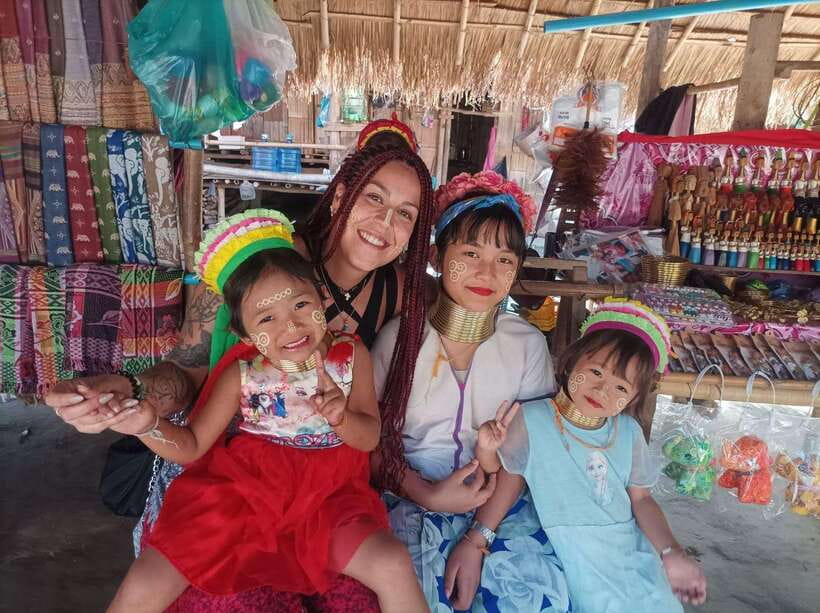
Between temples, you get lunch, included in the tour. It is a Thai buffet-style lunch, with local dishes you can mix and match. I like this setup because it keeps the day moving but still gives you food variety. You do not want to be stuck with one dish after hours of sightseeing.
If you are picky, watch how you build your plate. Thai buffet lunches usually give you both familiar and bolder options, so you can start with something mild and adjust.
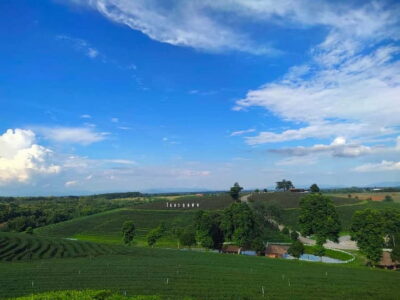
After lunch comes the Choui Fong Tea Plantation. This stop is basically your decompression time. You get to be up in the hills, enjoy the view, and sip freshly brewed local tea. You can also browse the tea shop for something to take home.
Why this matters: the tea plantation acts like a reset button for your brain. Temples are visually intense. A calm, green tea break helps you digest what you just saw and keeps the day from feeling like one long photo sprint.
Golden Triangle: standing where three countries meet
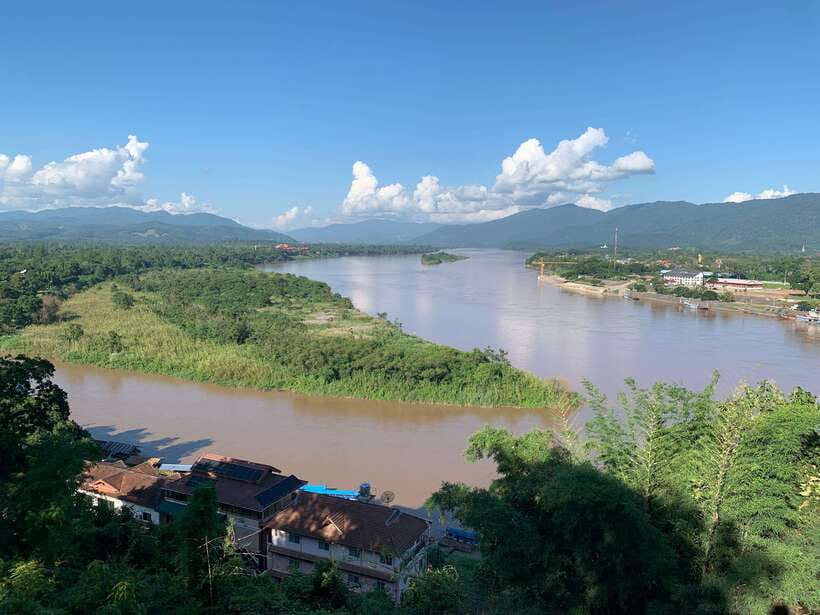
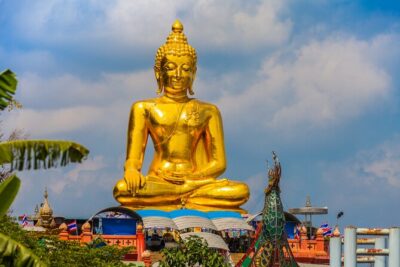
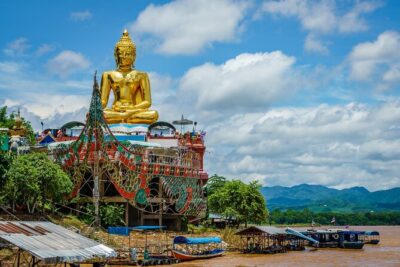
Now for the big geography moment. The Golden Triangle is where Thailand, Laos, and Myanmar meet, with the Mekong River as the backdrop. This stop is legendary, not because it is complicated, but because it is so clear. You are at a real border intersection, and the view connects the dots between cultures and history.
Even if you do not do any deep reading, the spot gives you immediate context for why this area mattered so much. You understand it just by looking.
If you are hoping for maximum photo time, plan to stay patient. Weather can change fast in northern Thailand. Bring sunscreen, and consider your shade strategy.
The Opium House Museum: context after the view
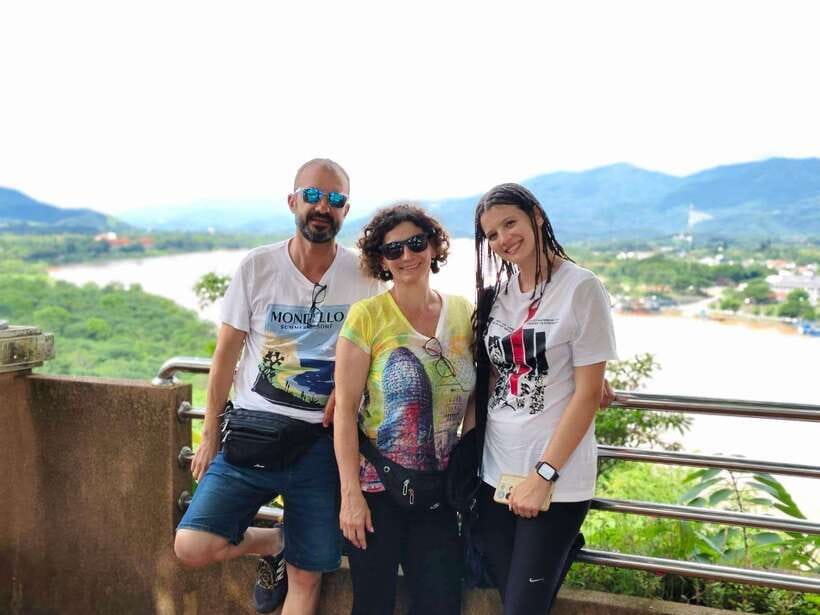
To finish, you visit the Opium House Museum. This is where the day shifts from scenic to historical. The museum focuses on the gripping history of the Golden Triangle’s past and the role opium trade played in shaping the region, plus the efforts to transform it.
This is an important pairing with the border viewpoint. If you only stand and look, the place can feel like a postcard. The museum adds the human story behind why it became such a hotspot.
It is an eye-opening way to close the day. You tend to leave this stop thinking more clearly about the region as something real, not just faraway scenery.
Price and value: what $41 covers, and what costs extra
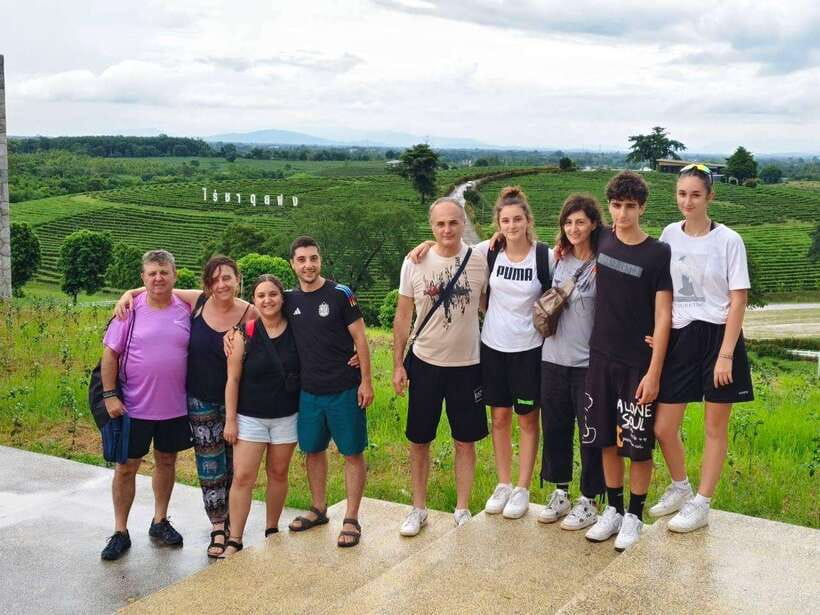
The base price is $41 per person for a one-day tour. What you get for that money is the practical stuff: round-trip transport by car or minivan with gasoline included, an English-speaking guide, hotel pickup within the allowed area, and lunch.
Then there are the entrance fees for specific stops:
- White Temple entry fee: 100 baht
- Black House entry fee: 80 baht
- Long Neck Karen entry fee: 300 baht
- Opium House Museum entry fee: 50 baht
Total listed entry fees add up to 530 baht if you pay for everything. The tour also states entrance fees are optional, and you can wait outside if you prefer. So your actual spend depends on how many interiors you plan to enter.
In my view, the value comes from the combination: transport across multiple distant stops plus English guidance plus lunch. If you tried to piece this together independently, you would likely spend similar money once you factor in transport time and paying for separate guides or multiple tickets.
Pickup timing and the reality of a long day
Pickup is between 8:00 to 8:30 AM, and the tour returns between 6:30 and 7:00 PM. That is a lot of time in one day, but it is also what makes the itinerary possible.
The vehicle and guide structure is built for comfort, not just speed. The car or minivan handles transfers, and the guide also drives some time. That detail matters more than it sounds, because it typically means less fatigue for the guide and smoother transitions.
What to watch for: you will likely spend time outdoors and at temple sites. Bring a hat, sunscreen, and closed-toe shoes. The tour explicitly asks for comfortable shoes and a sun hat, and it also suggests charged phone time. You may be taking photos more than you expect.
What to bring for temple rules: easy wins
This is where you can avoid stress. The tour lists what to bring and what is not allowed, and temple days are the reason.
Bring:
- Comfortable shoes (closed-toe is listed)
- Sun hat and sunscreen, including biodegradable sunscreen
- Camera and smartphone (and a power bank)
- Cash (and credit card)
- Passport or an ID card, with copy accepted
- Personal medication and basic travel essentials
- Biodegradable insect repellent
Also helpful:
- A light layer for shade
- A bag you can keep small, since large items are restricted
Not allowed includes shorts, short skirts, sleeveless shirts, and tight clothing. There is also a rule against luggage or large bags. If you show up in something too casual, plan for changing clothes for temple visits.
Who should book, and who should skip this one-day circuit
This tour is best for people who want a full Chiang Rai highlight day. You should consider it if you enjoy:
- Famous temple architecture and photo stops
- Art and symbolism (especially at Baan Dam)
- Cultural learning where a guide explains what you are seeing
- A Golden Triangle day that ends with historical context
It is not ideal for everyone. The tour is not suitable for children under 10. It is also not suitable if you have back problems, heart problems, motion sickness, wheelchair needs, or you are dealing with a cold. It also lists limits for older ages and body weight, including people over 140 kg, and it notes people over certain ages are not suitable.
If you have altitude sickness concerns, it is listed as not suitable. That does not mean you will get sick, but it tells you the operator is being cautious with medical risk.
Should you book the Chiang Rai and Golden Triangle day tour?
I would book this tour if you want a one-day package that covers temples, culture, tea, borders, and history without you coordinating multiple transports. The $41 base price feels reasonable because transport, lunch, and an English guide are included, and the entrance fees are clearly separated so you can choose how many interiors you want.
I would think twice if you are traveling with mobility limits or you know you will struggle with long temple visits outdoors. Also, if you do not want to deal with a strict dress code, you will likely feel rushed.
If you can handle temples and you want a structured day with an English guide who can clarify things, this is a strong way to experience Chiang Rai beyond just one or two famous sights.
FAQ
How long is the Chiang Rai and Golden Triangle tour?
The tour lasts 1 day. You should check availability to see starting times, and the day typically starts with hotel pickup between 8:00 to 8:30 AM and ends with return between 6:30 and 7:00 PM.
What does the $41 per person price include?
The price includes hotel pickup in Chiang Rai city (within about 3 kilometers of the city center), transport by car or minivan with gasoline, an English speaking guide, and a local lunch/food.
What entrance fees should I budget for?
Entrance fees are not included and are listed as optional. White Temple is 100 baht, Black House is 80 baht, Long Neck Karen entry is 300 baht, and Opium House Museum is 50 baht.
What should I wear for temple visits?
You should bring long pants and some shoulder coverage. The tour advises that you may need to change for temple visits, and it lists that shorts, short skirts, and sleeveless shirts are not allowed.
Is hotel pickup included, and where does it work?
Pickup is included for Chiang Rai city hotels, but it is only noted as available for hotels about 3 kilometers from the city center. Meet your guide at the hotel lobby.
Who is this tour not suitable for?
It is not suitable for children under 10, wheelchair users, and people with back problems, heart problems, motion sickness, cold, or altitude sickness concerns. It also lists not suitable for people over certain ages and over 140 kg.
What else made it into the Thailand notebook
Up at the Golden Triangle, continued
The White Temple and the Blue Temple, continued
What else made it into the Chiang Rai notebook
- Ancient City Tour from Chiang Rai with Golden Triangle and Royal Villa
★ 4.5 · 9 reviews - Chiang Rai: Excursion White, Blue,Red Temples & Lalitta Café
★ 4.0 · 9 reviews - Explore Chiang Rai: City and Temples Experience
★ 5.0 · 10 reviews - Chiang Rai: Top Temples & Signature Attractions ~Free Buffet
★ 4.7 · 10 reviews - Chiang Rai: City Highlights One-Day Tour with Thai Lunch
★ 4.8 · 10 reviews - Trekking with Lunch cooked by Bamboo in the Chiang Rai jungle
★ 5.0 · 12 reviews
Chiang Rai White and Blue Temple Tours, compared.
 ★ 4.6Chiang Rai White Temple and Blue Temple Day TourFrom $273,366 reviews
 ★ 4.9Guided Highlights Guided Tour with Buffet LunchFrom $371,532 reviews
 ★ 5.0Chiang Rai Temples: Private Tour from Chiang MaiFrom $1441,267 reviews
 ★ 4.5Chiang Rai’s Temples Exploration Day TripFrom $51871 reviews
 ★ 4.9Iconic Temples & 7 Major Sites—River View BuffetFrom $37692 reviews
 ★ 4.5Chiangmai to Chiangrai: 3 Temples, Hot Springs& Lalitta CafeFrom $41659 reviews
 ★ 4.8White, Blue, Red Temples, Long Neck TourFrom $57652 reviews
 ★ 4.5Chiang Rai White Temple, Blue Temple and more from Chiang MaiFrom $39605 reviews
Browse the lists this tour appears in