

REVIEW · CHIANG RAI WHITE AND BLUE TEMPLE TOURS
Chiang Rai Guide: Popular 7places 3Colors ,Golden Triangle
Chiang Rai hits hard in one day. This 7-places, 3-colors route lines up art temples, local culture, tea fields, and the Golden Triangle viewpoint with enough time to actually look, not just pose. It’s built for a full circuit without feeling like you’re being dragged from one selfie spot to the next.
I especially like two things: the English-speaking guides (people mention guide names like Mew and M, plus guides Fido and Em) who explain what you’re seeing, and the buffet Thai lunch that keeps you fueled during a long day. The big consideration is simple, the entry tickets for the main sites are not included, so you’ll want ready cash and a realistic budget for add-ons.
If you want a calm pace, plan for a long travel day. It’s timed to fit multiple stops, and even when a visit is short, the route still includes real driving time, including the longer stretch out to the Golden Triangle area.
In This Review
- Key Things to Know Before You Go
- The Value of a One-Day Chiang Rai Circuit (Without the Chaos)
- White Temple (Wat Rong Khun): Why the “Prep First, Look Longer” Plan Matters
- Blue Temple (Wat Rong Suea Ten): A Quick Art Stop That Shifts the Mood
- Black House (Baan Dam Museum): A Private Collection With a Museum Feel
- Long Neck Tribe Village: A Brief Cultural Visit With Big Reality Behind It
- Tea Plantation Stop: A Calm Break You Can Actually Taste
- Golden Triangle Viewpoint: Almost Three Countries at Once
- Opium Museum: Turning a View Into Understanding
- Getting Back to Chiang Rai: When the Day Ends at Dinner Time
- Price and Value: What $43 Covers, and What to Budget for Tickets
- Logistics, Comfort, and Real-World Pacing
- Who This Tour Suits Best
- Should You Book This Chiang Rai Lanna Tours Tour?
Key Things to Know Before You Go

- White Temple time that feels respectful, with guidance first and a longer viewing window afterward
- Golden Triangle from the viewpoint, where you can see Thailand, Laos, and Myanmar meeting near Ruak and Mae Khong rivers
- Air-conditioned transport with water, using a 9-seat minibus or a car for smaller groups
- Long-neck Karen village visit, a brief but direct look at a community under pressure
- Tea plantation stop with explanation and tasting, not just a quick photo break
- You can skip some entries, and wait nearby if you prefer not to go inside
Wat Rong Khun runs also got a going over
- Chiang Rai: Guided Highlights Guided Tour with Buffet Lunch★ 4.9 · 1,532 reviews
- Chiang Rai: Iconic Temples & 7 Major Sites—River View Buffet★ 4.9 · 692 reviews
- Chiang Rai: White, Blue, Red Temples, Long Neck Tour★ 4.8 · 652 reviews
- Sightseeing Join Tour Chiang Rai / PICK UP ONLY IN CHIANG RAI★ 4.5 · 398 reviews
The Value of a One-Day Chiang Rai Circuit (Without the Chaos)
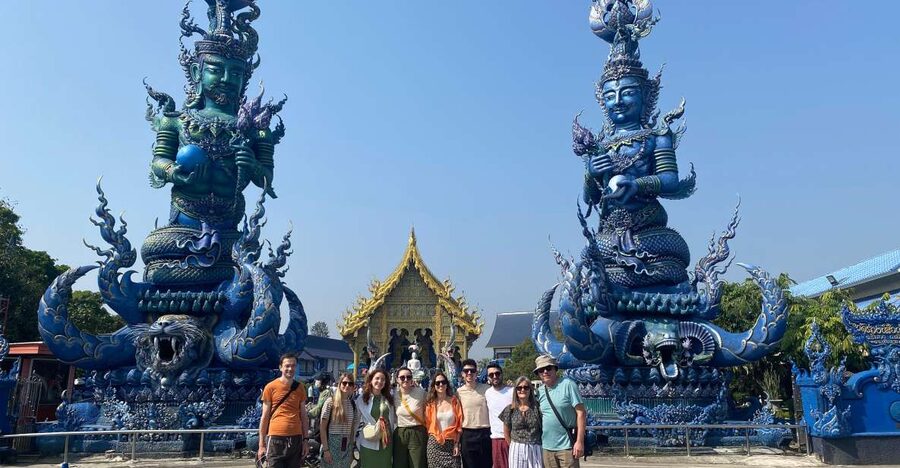
For Chiang Rai, a good day trip is about momentum. You want to see the big “why people come here” stops, then return to town while it’s still dinner time. This tour follows that logic. The schedule runs until roughly 6:30 to 7:00 pm, and it includes the key Northern Thailand highlights in a single loop.
At $43 per person, the headline price is strong because a lot is covered: hotel pickup and drop-off, air-conditioned vehicle, a driver, an English-speaking guide, drinking water all day, travel insurance, and a buffet Thai lunch. The part that changes the math is that the major temple and museum tickets are extra, so your true cost depends on which entries you choose.
Also, the guides seem to set the tone. Multiple reviews highlight the same pattern: clear explanations, time management, and guides who help the group stay comfortable (including taking photos when asked). You’ll feel it most at the places where you can easily get lost in the details, like Wat Rong Khun and the private art collections.
White Temple (Wat Rong Khun): Why the “Prep First, Look Longer” Plan Matters
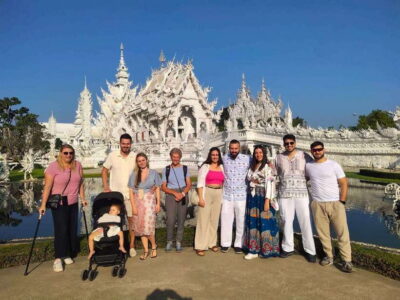
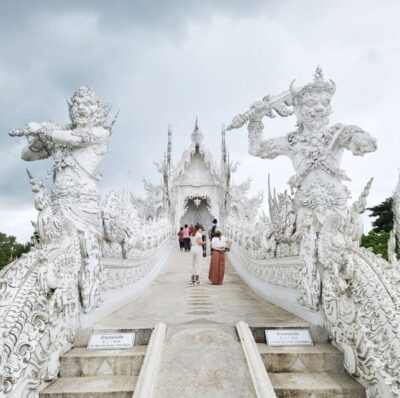
Wat Rong Khun is one of Thailand’s most famous contemporary temples, and this tour treats it like a main event. You pay 100฿ for entry, and you get about an hour or more after the guide shares the story and symbolism.
That timing choice is smart. The White Temple is visually busy. If you walk in cold, you mostly see shapes and shine. With a guide briefing you first, you start noticing details tied to the artist’s message, and the longer viewing time actually pays off. This is also where dress code matters: you’ll want shoulders covered and legs covered to below the knee.
What to watch for when you’re inside:
- How the design blends tradition with modern symbolism
- The way the temple’s visual style guides your eye through the space
- The overall “story” feel, not just one neat photo spot
One practical note: the tour expects you to dress appropriately. If you arrive in shorts and a thin strap top, you may have to improvise at the last minute.
Blue Temple (Wat Rong Suea Ten): A Quick Art Stop That Shifts the Mood
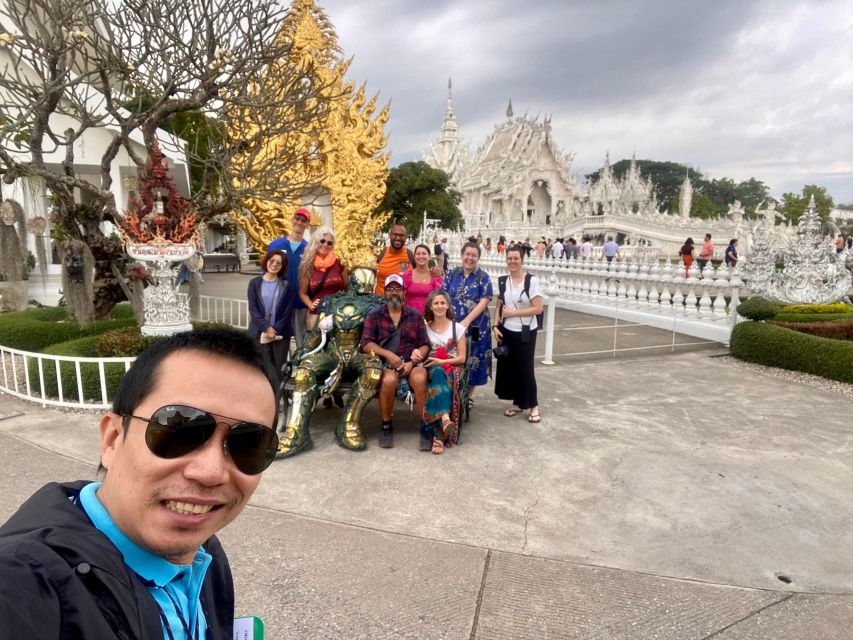
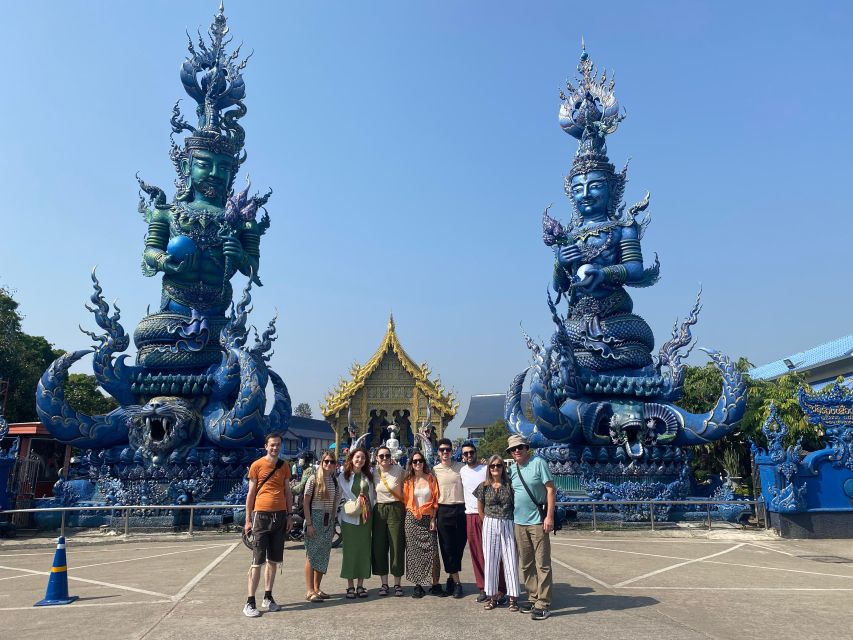
The Blue Temple is the lighter, faster hit in the middle of the day. There’s no ticket listed, and the visit is about 25 to 30 minutes. That short window can be perfect if you want a mental reset between the bigger, ticketed stops.
Why it works on this route:
- It breaks up the heavier “temple experience” with something more art-focused
- You get a taste of another style from the same broader Chiang Rai art scene
- The short timing keeps the day from dragging
There is one drawback to a fast stop: you won’t get a slow wander unless you’re lucky with the group pace. If you’re the type who likes reading every plaque and circling for the perfect angle, plan to focus on your favorite sections and accept that this one is a short stop by design.
Black House (Baan Dam Museum): A Private Collection With a Museum Feel
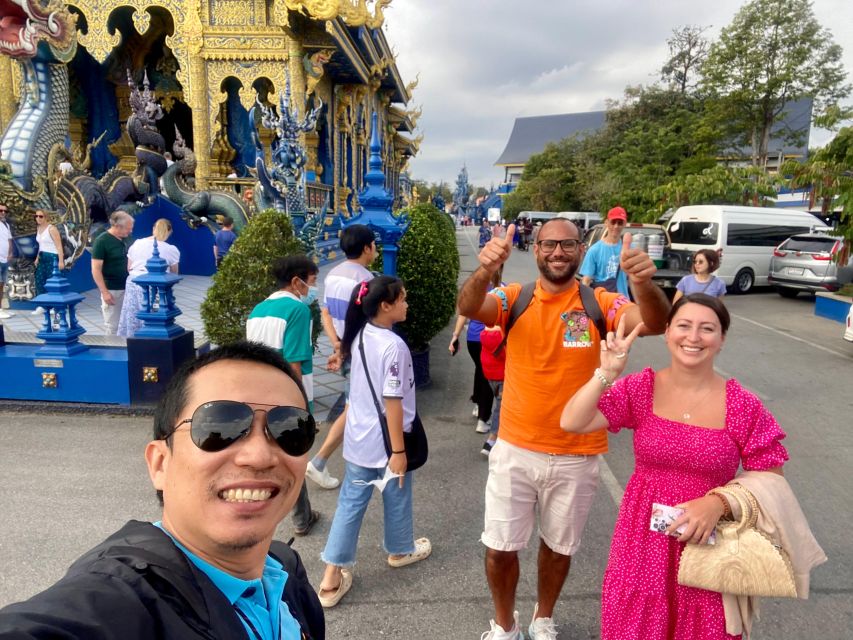
The Black House is ticketed at 80฿. Expect about 50 minutes to 1 hour. It’s described as the private house of another Thai national artist in Chiang Rai, and the tone is different from Wat Rong Khun. Think more like a museum you’re walking through, with collections that reward a slower look.
In practice, this is a great stop if you like:
- Art rooms with strong contrast and character
- Seeing how one region can support very different styles in the same day
- A change of pace from the temple format
The one potential issue is that the Black House is a collection experience, not a “one big building viewpoint” moment. If your favorite thing is climbing to dramatic views or moving through a grand main hall, you may find yourself paying attention to objects more than architecture. Still, multiple people said it exceeded expectations, which is a good sign you’ll likely enjoy it if you’re open to the museum vibe.
Golden Triangle days also got written up

Long Neck Tribe Village: A Brief Cultural Visit With Big Reality Behind It
This is the stop that needs the most sensitivity and the least expectation setting. The Long Neck tribe village is a Burmese refugee community, and it’s ticketed at 300฿ with a 40 to 50 minute visit window.
A few things to keep in mind:
- The community is described as one that is nearly disappearing, so this is not a “theme village” in the cheerful sense.
- You’re there to learn and observe traditional lifestyle, not to treat it like a performance.
- Your time is limited, so listen carefully to what the guide explains.
Because the visit is short, you’ll get a snapshot rather than a full story. That’s normal for a day tour. The best way to get value from the time you have is to ask respectful questions and take cues from the guide’s explanation before you start taking photos.
If you’re considering whether this stop is your thing, be honest about your comfort level with cultural and refugee-related contexts. If you prefer purely architectural sights, you might feel this section more emotionally heavy than the temples.
Tea Plantation Stop: A Calm Break You Can Actually Taste
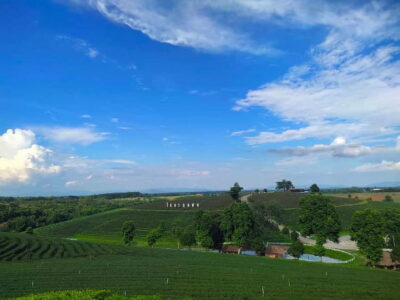
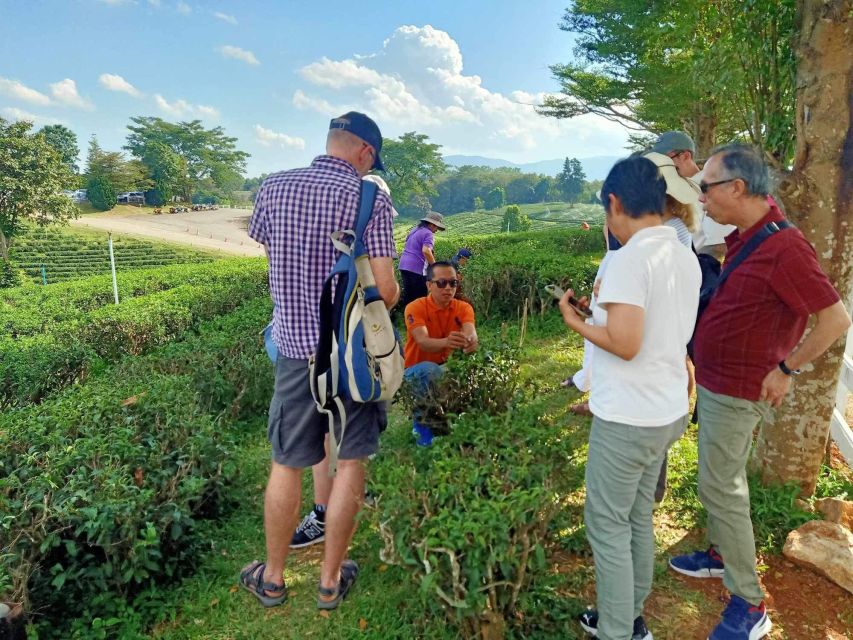
Then you get a breather at the tea plantation. It’s timed at 20 to 30 minutes after the guide explains tea, with time to enjoy the scenery and taste.
This stop is valuable for two reasons:
- Chiang Rai is a major tea producing area, so it gives context to what you’re driving through
- The tasting turns the stop from “scenery plus photos” into something you can take home as a memory
What you’re likely to experience here is simple and effective: a green, open pause in the day, followed by a short tea lesson. It’s not meant to be a deep training session, but it should be enough to understand the basics and pick what you like.
One review mentioned tea felt like something and nothing for them, and that the drive to the Golden Triangle was long. That’s fair. If tea isn’t your priority, consider the plantation stop as a short recovery moment. The goal is not to replace the Golden Triangle, it’s to keep the day sustainable.
Golden Triangle Viewpoint: Almost Three Countries at Once
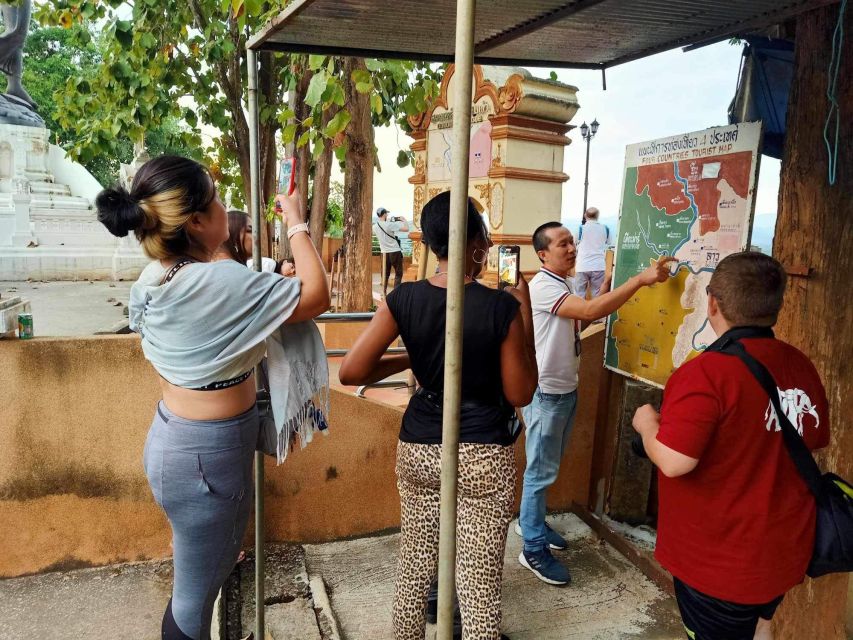
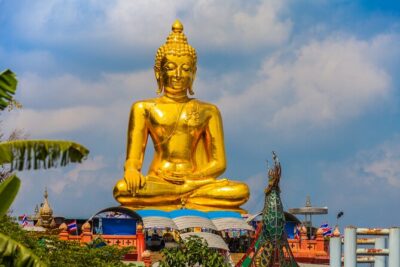
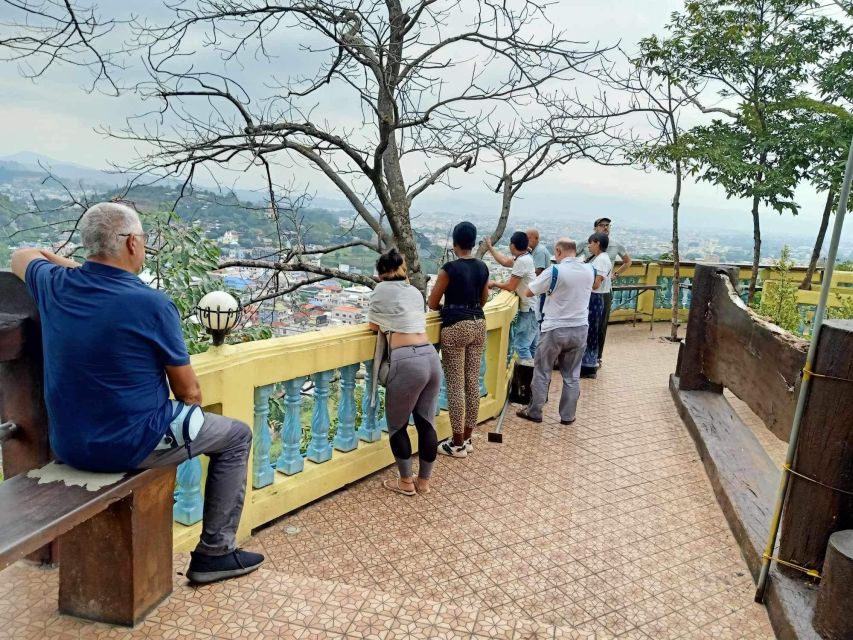
This is the big “wow” stretch. The Golden Triangle area is where Thailand, Laos, and Myanmar meet. You’ll be taken to a viewpoint where you can see how the countries are separated by two rivers: the Ruak river and the Mae Khong river.
Expect about 1 hour or more at this stop, and it’s framed with the area’s connection to opium trade and production. Even if you only know the basics, the viewpoint setting makes the story easier to grasp, because geography does half the teaching.
A useful way to enjoy this part:
- Look for the river separation first, then match it to what you’re hearing
- Slow down for 5 minutes before your camera work
- Ask questions about how border life and trade shaped the region
Also, this is one stop where optional extras sometimes appear. One review mentioned a possible boat trip to Laos for 300฿, depending on how things are arranged on the day. If that interests you, check with your guide on-site and confirm the cost and timing before you commit.
Opium Museum: Turning a View Into Understanding
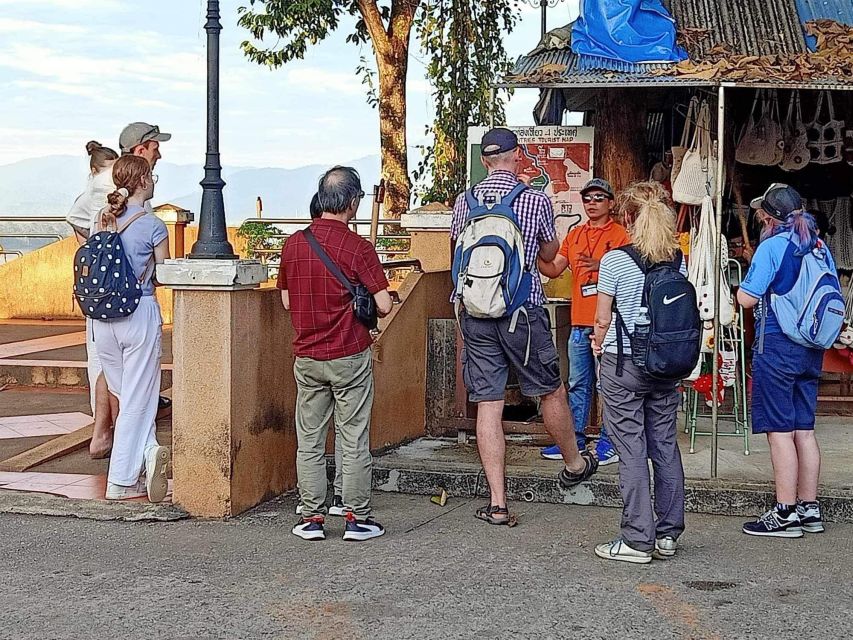
After the viewpoint, the tour continues to the Opium Museum. Entry is 50฿, and you’ll spend about 1 hour here.
This is the part that turns vague “Golden Triangle opium trade” talk into something you can point to. You’ll learn about opium history and background connected to the region, and you’ll see used equipment and related context. That matters because the viewpoint is dramatic, but it’s also abstract. The museum gives you the details that make the whole story click.
If you’re short on time or don’t love museums, do not fully dismiss this stop. People in your position often end up glad they went, because it gives you a clear framework for what you just saw from the viewpoint.
Getting Back to Chiang Rai: When the Day Ends at Dinner Time
After the museum, you’ll have about 1 hour back to Chiang Rai town. The tour finishes around 6:30 to 7:00 pm, and you can be dropped at your hotel or another place in town.
This return timing is practical. Many day tours leave you exhausted and still far from dinner. Here, you should be able to eat, shower, and recover without sacrificing your entire evening.
Price and Value: What $43 Covers, and What to Budget for Tickets
Here’s the clean way to think about value. The base price is $43 per person, and it includes:
- Hotel pickup and drop-off
- Air-conditioned transport in a 9-seat minibus, or a car if the group is under 4
- English-speaking guide
- Buffet lunch of Thai food
- Drinking water free all day
- Travel insurance
Then plan for ticket add-ons:
- White Temple: 100฿
- Black House: 80฿
- Long Neck tribe village: 300฿
- Opium Museum: 50฿
Total ticket cost for these main stops comes to 530฿, not counting any optional activities like the boat trip mentioned earlier.
Would I rather you find this out later? No. The key is to bring enough cash for those fees and decide ahead of time if you want every ticketed stop. One review even noted that you can choose not to enter some attractions and instead wait nearby in stores. That can help you manage time and personal comfort.
One small caution: the buffet lunch is listed as included, and many people liked the restaurant. Still, one person said lunch wasn’t included and felt expensive, which suggests there can be day-to-day differences or add-ons. My advice, confirm what the lunch covers when you join the tour, so you don’t get surprised.
Logistics, Comfort, and Real-World Pacing
This tour is built around “enough time” rather than “stamp and go.” Reviews repeatedly praise that timing feels organized and not rushed, with guides keeping everyone comfortable. You’ll also travel with drinking water included and enjoy air-conditioning in the vehicle, which is a big deal in Northern Thailand.
Vehicles can vary by group size:
- A comfortable 9-seat minibus for typical groups
- A car when participants are fewer than 4
That matters because small-group comfort usually means less jostling and easier conversation with your guide.
The downside is that it’s still a full day. If you’re someone who needs constant rest breaks or you get tired with long drives, you may feel the schedule more than others. It helps if you like variety, you want temples, culture, tea, and a border story in one loop.
Who This Tour Suits Best
This experience fits best if you:
- Want the major Chiang Rai highlights in a single day
- Like guided context, especially for the White Temple and Opium Museum
- Prefer air-conditioned comfort and a clear route rather than DIY juggling
- Enjoy art-driven temples plus a border-area history setting
You should think twice if you:
- Hate cultural visits tied to refugee communities
- Need long quiet time at each stop (this is a multi-stop schedule)
- Struggle with walking, because you’ll move between several sites in one day
It also has clear limits: not suitable for babies under 1 year, people over 95 years, people over 309 lbs (140 kg), or hearing-impaired people. For temples, plan on covering shoulders and legs below the knees.
Should You Book This Chiang Rai Lanna Tours Tour?
Yes, if your goal is a well-run, full-day introduction to Chiang Rai. For the money, you’re getting the driving plan, the guide brain, and a mix of art temples, regional culture, and the Golden Triangle story. The guide quality comes up again and again, including names like Mew, M, Fido, and Em, and the pacing usually feels organized.
I’d only skip it if you already know your must-see list and want a slower, more minimalist day. Otherwise, this is a smart “see a lot without feeling rushed” option, with a strong chance you’ll learn more than you expected at both the temples and the museum.
What else made it into the Thailand notebook
Up at the Golden Triangle, continued
The White Temple and the Blue Temple, continued
What else made it into the Chiang Rai notebook
- One Day Group Tour Experience in Chiangrai
★ 5.0 · 22 reviews - Chiang Mai to Chiang Rai: 3 Temples & Hot Springs & Pickup
★ 4.0 · 22 reviews - Chiang Rai: Discover 7 Must-See Spots & Lunch Included
★ 4.7 · 26 reviews - Private Choui Fong and Golden Triangle Explorer from Chiang Rai
★ 4.0 · 27 reviews - Chiang Rai: Guided Full-Day Highlights tour with Lunch
★ 5.0 · 30 reviews - Chiang Rai: Discover 7 Must-See Spots & Lunch Buffet
★ 5.0 · 47 reviews
Chiang Rai White and Blue Temple Tours, compared.
 ★ 4.6Chiang Rai White Temple and Blue Temple Day TourFrom $273,366 reviews
 ★ 4.9Guided Highlights Guided Tour with Buffet LunchFrom $371,532 reviews
 ★ 5.0Chiang Rai Temples: Private Tour from Chiang MaiFrom $1441,267 reviews
 ★ 4.5Chiang Rai’s Temples Exploration Day TripFrom $51871 reviews
 ★ 4.9Iconic Temples & 7 Major Sites—River View BuffetFrom $37692 reviews
 ★ 4.5Chiangmai to Chiangrai: 3 Temples, Hot Springs& Lalitta CafeFrom $41659 reviews
 ★ 4.8White, Blue, Red Temples, Long Neck TourFrom $57652 reviews
 ★ 4.5Chiang Rai White Temple, Blue Temple and more from Chiang MaiFrom $39605 reviews
Browse the lists this tour appears in