
REVIEW · FOOD
Cook Local Northern Thai Food in Traditional House
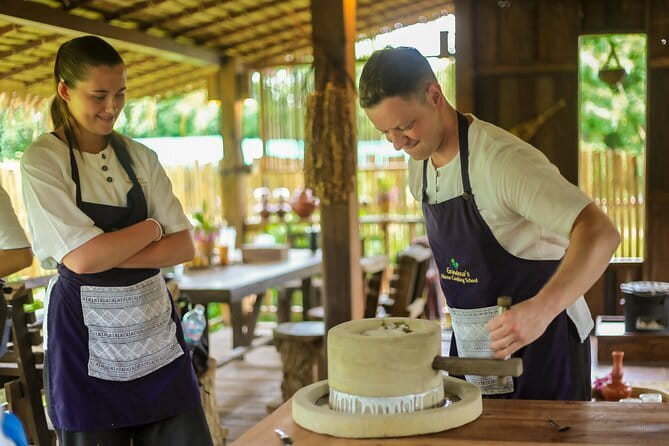
If you like real food stories, this class delivers. You’ll start with a market walk to pick ingredients for Lanna (Northern Thai) cooking, then move to an organic farm for herbs, vegetables, and eggs. Back at the school, you’ll learn hands-on traditional techniques like lighting a charcoal grill, milling flour on a millstone, and grating coconut for coconut milk.
Two things I really like: the day is built around making food from scratch, not just watching, and the group stays small (up to 6 people), so you get more time at your station. One thing to consider: this is a cooking school setup, not someone’s personal home kitchen, so it feels authentic in process and ingredients, but the space itself is more classroom than farmhouse.
You’ll be fed along the way too, with lunch that includes what you cooked plus dessert and refreshments. Price is $57.99 per person for about 7 hours, and transfers from your hotel are included, so it’s a solid value if you want a full-day Chiang Mai food experience without the hassle of planning stops on your own.
In This Review
- Key highlights worth marking on your map
- Price and logistics: what $57.99 really covers
- The 9:00 am start: welcome snacks and what you’ll do first
- Market shopping in Chiang Mai: how you learn the flavor logic
- Organic farm time: herbs, vegetables, and egg collection
- Traditional technique workshop: charcoal grill, millstone flour, coconut grater
- Cooking five dishes in a single day: what you’ll make
- Northern Thai Sausage: learning heat and fat balance
- Nam Prik Ong or Nam Prik Num: chili paste with attitude
- Northern Pork Belly Curry: why braising matters
- Curry Young Jackfruit: learning a different kind of “meaty”
- Thai coconut pancakes: the finish that feels like dessert and breakfast
- Lunch and dessert tasting: eating the proof, not just the lesson
- The recipe book you actually use at home
- Room for diets and for real beginners
- What to expect from the kitchen space (and what not to expect)
- Who should book this Chiang Mai Northern Thai cooking class
- Should you book Grandma’s Home Cooking School?
- FAQ
- What dishes will I learn to cook?
- How long is the cooking class in Chiang Mai?
- What time does the experience start?
- Is pickup from my hotel included?
- Are the cooking instructions in English?
- Is lunch included?
- Do I get dessert during the day?
- Are alcohol drinks included?
- How big is the group?
- Can the class accommodate dietary requirements?
- Are there any age limits for children?
- What is the cancellation window?
- Book it or not, in one decision
Key highlights worth marking on your map
- Market shopping for the exact seasonings you’ll use later at the stove
- Organic farm visit with hands-on picking of Thai herbs and vegetables, plus egg collection
- Traditional tools and methods like millstone flour and coconut grating
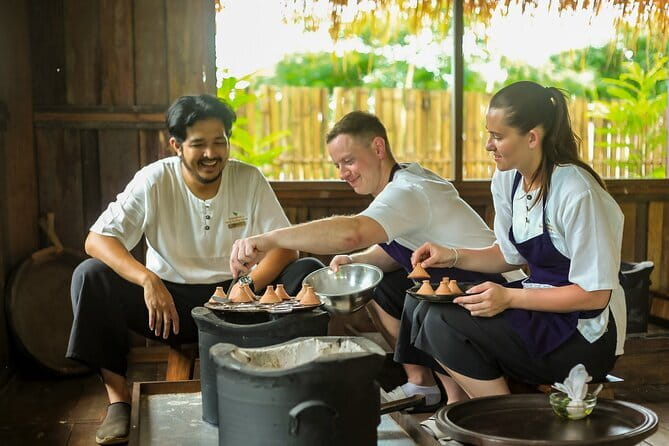
- Five specific Northern Thai dishes made by you, not just sampled
- Small group, English-speaking instruction, with enough attention to actually learn
- Lunch and dessert tastings plus an e-recipe book you can use later
Thai eating and drinking bookings got a going over
- Small-Group Chiang Mai Evening Street Food Tour★ 4.5 · 826 reviews
- Chiang Mai: Evening Local Street Food Market Tour★ 4.8 · 604 reviews
- Northern Flavours Chiang Mai Food Tour with 15+ Tastings★ 5.0 · 513 reviews
- The 10 Tastings of Chiang Mai With Locals: Private Street Food Tour★ 5.0 · 216 reviews
Price and logistics: what $57.99 really covers
Let’s talk value first. At $57.99 for a 7 hour class, you’re paying for a full experience: market time, farm time, guided cooking, lunch, dessert tasting, snacks, and round-trip transfers from your hotel. You’re also getting an e-recipe book to download, which matters if you want to cook these dishes again at home.
The small group size (maximum 6 travelers) is a big deal. In bigger classes, you can end up waiting. Here, you should expect more turn-by-turn help as you chop, grind, grill, and plate.
The only easy “watch-out” is alcohol. Alcohol drinks are not included, so if you plan to drink, budget separately.
The 9:00 am start: welcome snacks and what you’ll do first
Your day begins at 9:00 am, and the flow is designed to build from ingredients to technique to finished dishes. You’ll get welcome snacks and a refreshing drink when you arrive, then you’ll be sent out for the first main step: the market.
Because you start early, you get cooler temperatures and a calmer pace. Also, you’ll be less rushed when you get back to cook. The class is meant to be a full working day, so arriving rested helps.
You’ll cook with English-speaking instructors and you’ll learn as you go. It’s not a hands-off demo. You’ll be doing key steps like grilling and grating yourself.
Market shopping in Chiang Mai: how you learn the flavor logic
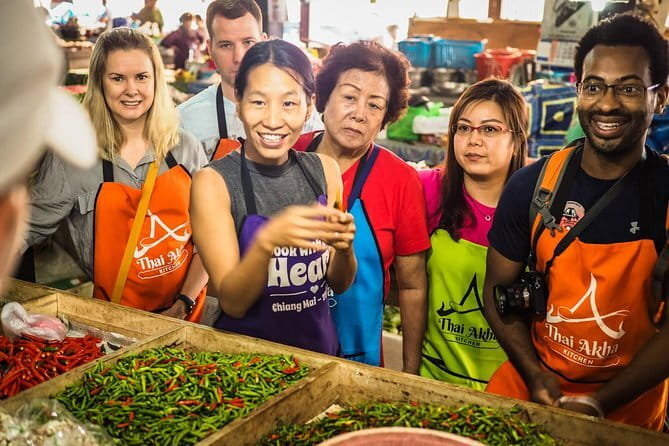
The market visit is where the day stops being just cooking and starts being food culture. In Northern Thai cooking, the “why” matters: you’re chasing balance across sour, salty, spicy, and fragrant herbs, and those choices begin at the market.
Here, instructors introduce different ingredients and seasonings you’ll use later in your dishes. Then you select ingredients that match what your team will cook. It’s a practical way to understand recipes, because you’ll remember the ingredient names from the moment you chose them.
What I like about this approach is that it trains your instincts. Later, when a recipe calls for a certain chili paste or aromatic herb, you’ll know what you’re looking for instead of treating the ingredient list like a mystery.
One consideration: markets can be active. If you’re the kind of person who prefers a quieter pace, you might want to pace yourself during the walking portions. The upside is you get a real sense of how ingredients move from stall to kitchen.
Organic farm time: herbs, vegetables, and egg collection
After the market, the day shifts from shopping to sourcing. The organic farm tour is a chance to learn what you’re eating beyond the final dish. You’ll tour the farm, then you’ll pick Thai herbs and vegetables for your cooking.
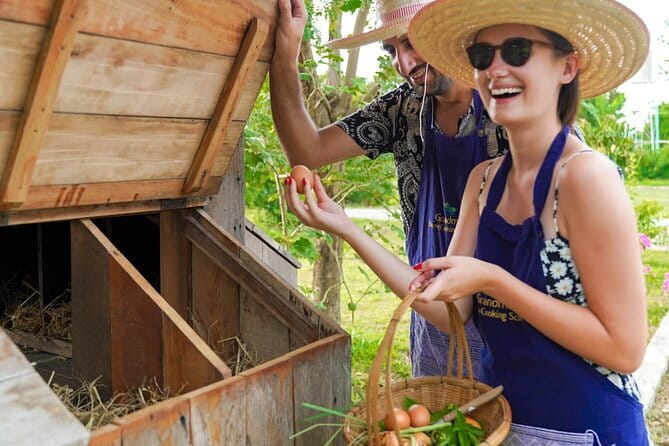
You’ll also visit the chicken coop to collect farm-fresh eggs. That part is more than cute. Eggs are a small ingredient with real cooking impact, and having them come from the day’s own supply makes the whole process feel tighter and more connected.
If you’re a gardener-at-heart or you just like knowing where food comes from, this stop is a highlight. Even if you’re not, it still gives you context for why certain herbs show up again and again in Northern Thai flavors.




Traditional technique workshop: charcoal grill, millstone flour, coconut grater
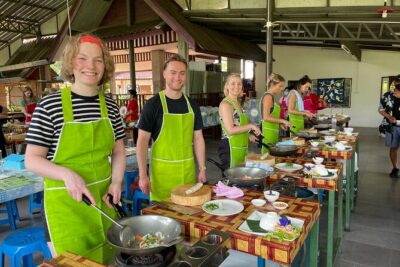
This class is built around traditional kitchen actions, not modern shortcuts. You’ll learn several specific techniques that explain why Northern Thai food tastes the way it does.
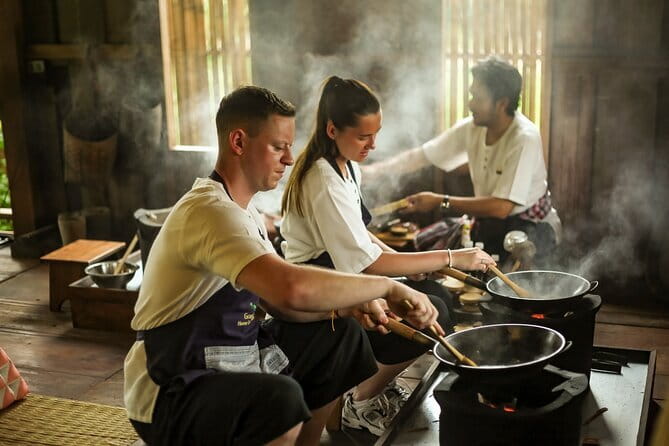
You’ll get instruction on lighting a charcoal grill. Once you’re actually working with coals, you feel the difference in heat control and timing. It’s the kind of skill that turns a recipe into a method.
You’ll also mill flour using a traditional millstone. That’s a rare experience in day trips around Chiang Mai. Even if you’ve cooked before, there’s something grounding about working with older tools and seeing how technique affects texture.
Another memorable step is learning to use a coconut grater to make coconut milk the traditional way. Coconut milk is everywhere in Thai cooking, but doing it manually teaches you what “fresh” actually means, and why coconut flavor can be rounder and more fragrant when it’s made the old way.
Cooking five dishes in a single day: what you’ll make
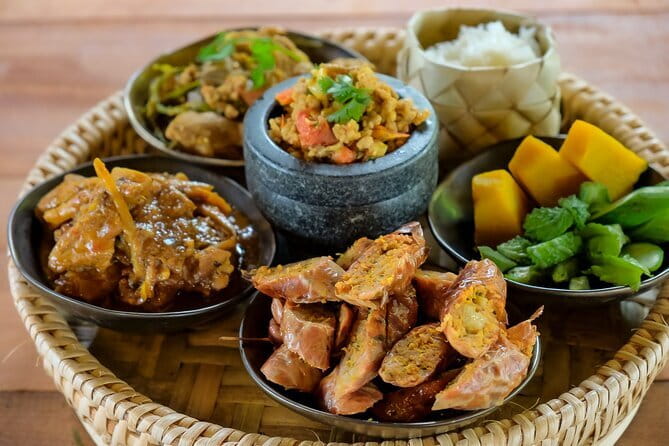
You’ll cook five traditional Northern Thai dishes, and the menu is clearly designed to give you variety in flavors and textures. The big win here is that you’re not just repeating the same base recipe five times. Each dish trains a different part of the craft.
Here’s what you can expect to cook:
- Northern Thai Sausage
- Nam Prik Ong or Nam Prik Num (you’ll make one of these chili-based options)
- Northern Pork Belly Curry
- Curry Young Jackfruit
- Thai coconut pancakes
The instructors teach you how these dishes come together, and you’ll use what you sourced at the market and farm. That connection is the secret sauce of the day, because ingredients and methods stop being separate lessons.
Northern Thai Sausage: learning heat and fat balance
Northern Thai sausage is the kind of dish that teaches both flavor and technique. Sausage depends on how heat meets fat and spice, and grilling or cooking it correctly matters.
You’ll work with the guidance of your instructors as you prepare the dish. The practical takeaway is that you’re learning how to manage heat so spices bloom instead of turning harsh.
If you like savory, smoky, and spice-forward food, this one is a strong anchor for the whole class.
Nam Prik Ong or Nam Prik Num: chili paste with attitude
Nam prik dishes are Northern Thai staples, and making one here gives you hands-on experience with chili paste style cooking. You’ll learn to handle the ingredients that build depth, then apply them in a dish that’s spicy, savory, and often a little sweet depending on the balance.
You’ll make Nam Prik Ong or Nam Prik Num, depending on what’s selected for your class. Either way, you’ll understand how chili paste becomes a sauce, not just a hot ingredient.
Northern Pork Belly Curry: why braising matters
Pork belly curry gives you a lesson in patience and texture. Pork belly is rich, so the curry needs enough aromatics and spice to balance the fat.
In the class, you’ll learn how the curry comes together, with an emphasis on getting the flavors right, not just following steps. This is the dish that tends to make people say they can taste the method, because curry success is about controlled cooking and seasoning balance.
Curry Young Jackfruit: learning a different kind of “meaty”
Young jackfruit curry is a smart inclusion because it shows Northern Thai cooking isn’t only about meat. Young jackfruit has a texture that can mimic chewiness, and it absorbs sauce flavor.
Cooking this dish teaches you how to treat an ingredient that behaves differently from pork or sausage. The curry style is still familiar, but your expectations should shift with the ingredient.
Thai coconut pancakes: the finish that feels like dessert and breakfast
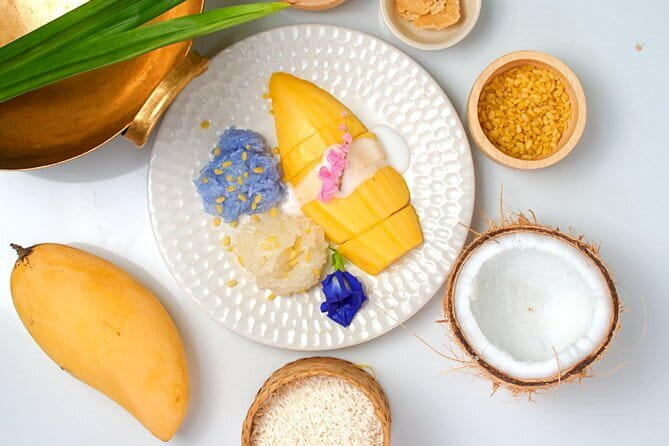
Your last major dish is Thai coconut pancakes, made using the traditional coconut work you learned earlier. This is not just a sweet ending. It’s also a technique test: coconut flavor has to come through, and texture has to set.
The instructors guide you through the steps so you can reproduce the pancake style at home later using the e-recipe book.
Lunch and dessert tasting: eating the proof, not just the lesson
At lunchtime, you’ll taste what you cooked. That’s important because cooking is easier when you have a target. You see what the dish should taste like, and you can compare your own efforts to the overall result.
Then the class includes a dessert and refreshments session. This gives you a full food day instead of ending at the savory dishes. It’s also a nice reset, especially when you’ve been grating coconut and working near heat.
The recipe book you actually use at home
You’ll receive an e-recipe book you can download. This matters because memory fades, especially for multi-step dishes. With the recipes, you can repeat the dishes without trying to reconstruct the process from scratch.
One practical note: since the class includes real technique steps like millstone flour and coconut grating, the recipe book helps you remember the handwork involved, not just the ingredient list.
Room for diets and for real beginners
The class states it can accommodate special dietary requirements. That’s a plus if you have restrictions, but you’ll still want to communicate your needs at booking so the instructors can plan what fits.
As for who it suits: this is a great match for couples, food lovers, and anyone who wants a structured learning day without building their own plan around a market and farm visits.
If you’re traveling with kids, children under 12 are welcome as visitors, which can work if your family enjoys food watching and light participation.
What to expect from the kitchen space (and what not to expect)
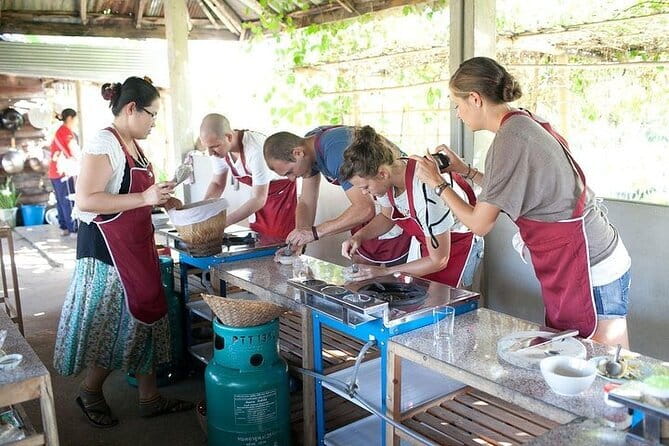
A quick reality check. This experience is not a personal, private family kitchen you might imagine from the name. It’s a cooking school teaching space, with a focus on clean safety and a fun, guided setup.
So if you’re expecting a rustic, truly homey environment, keep your expectations grounded. The authenticity is in the methods, ingredients, and what you learn to do with your hands.
Also, because you’ll work around coals and do physical prep like grating, come prepared to participate. You will likely get flour dust and coconut hands at some point. That’s part of the deal, so pack comfortable clothes.
Who should book this Chiang Mai Northern Thai cooking class
I’d book this if you:
- Want a hands-on Chiang Mai cooking class focused on Northern Thai, Lanna-style dishes
- Like learning traditional techniques, not just following a recipe card
- Prefer a small group with English-speaking instruction
- Want a full day that includes market shopping, an organic farm, and real tastings
I might skip it if:
- You only want quick sampling and hate hands-on prep
- You’re looking for a purely “local home kitchen” style experience rather than a teaching setup
- You plan to drink alcohol and don’t want to pay extra (alcohol is not included)
Should you book Grandma’s Home Cooking School?
If you want to leave Chiang Mai with skills, not just photos, this is a strong choice. It’s built around purposeful stops: market ingredients, farm freshness, and traditional cooking actions like charcoal grilling, millstone flour, and coconut grating. Then you eat the results for lunch, plus dessert tastings, and you take home an e-recipe book to keep the learning going.
Also, it’s widely recommended and rated 5 out of 5, with 100% recommendation based on the available ratings. For a class of up to 6 people, that kind of consistency is a good sign.
FAQ
What dishes will I learn to cook?
You will learn to cook five traditional Northern Thai dishes: Northern Thai Sausage, Nam Prik Ong or Nam Prik Num, Northern Pork Belly Curry, Curry Young Jackfruit, and Thai coconut pancakes.
How long is the cooking class in Chiang Mai?
The duration is about 7 hours.
What time does the experience start?
The start time is 9:00 am.
Is pickup from my hotel included?
Yes. Round-trip transfers to and from your hotel are included, and pickup is offered.
Are the cooking instructions in English?
Yes, the class includes hands-on instruction from English-speaking instructors.
Is lunch included?
Yes. Lunch is included, and you’ll taste your creations.
Do I get dessert during the day?
Yes. There is a dessert and refreshment session with tastings.
Are alcohol drinks included?
No. Alcohol drinks are not included.
How big is the group?
The maximum group size is 6 travelers.
Can the class accommodate dietary requirements?
The activity is able to accommodate special dietary requirements.
Are there any age limits for children?
Children under 12 are welcome as visitors.
What is the cancellation window?
Free cancellation is available up to 24 hours in advance for a full refund.
Book it or not, in one decision
Book it if you want a full-day Northern Thai cooking experience in Chiang Mai that mixes market sourcing, farm picking, and real traditional techniques, then rewards you with lunch, dessert tastings, and a recipe book you can use later. If you only want light tasting or you dislike hands-on prep, you may prefer a shorter food tour instead.
Thai eating and drinking, continued
What else made it into the Thailand notebook
What else made it into the Chiang Mai notebook
- Walk With Monks Collecting Alms(meeting point maybe change)
★ 4.9 · 8 reviews - Doi Suthep and Hmong Hilltribe Half Day Tour in Chiang Mai
★ 3.5 · 8 reviews - Aroidee’s Farm-Fresh Thai Cooking Experience
★ 5.0 · 8 reviews - 2- Days in Doi Inthanon National Park
★ 4.5 · 8 reviews - Khantoke Dinner Experience & Cultural Dance Show with Transfers
★ 4.0 · 8 reviews - Sticky Waterfalls Private Half Day Fun Escapades
★ 4.5 · 8 reviews
Food, compared.
 ★ 5.0Bangkok by Night: Temples, Markets and Food Tuk-Tuk TourFrom $793,752 reviews
 ★ 4.9Backstreets Food Tour with 15+ TastingsFrom $622,880 reviews
 ★ 5.0Southern Flavors Phuket Food Tour with 15+ TastingsFrom $591,933 reviews
★ 5.0Bangkok Backstreets Food Tour with 15+ TastingsFrom $591,926 reviews
 ★ 5.0Old Siam Bangkok Food Tour with 15+ TastingsFrom $59867 reviews
 ★ 4.9Bangkok Authentic Tasting Thai-Chinatown Walking Food TourFrom $43852 reviews
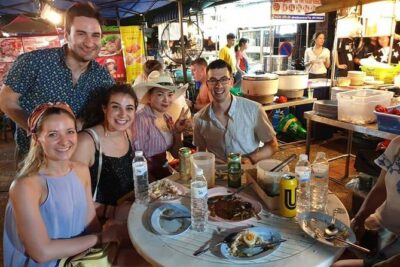 ★ 4.5Small-Group Chiang Mai Evening Street Food TourFrom $42826 reviews
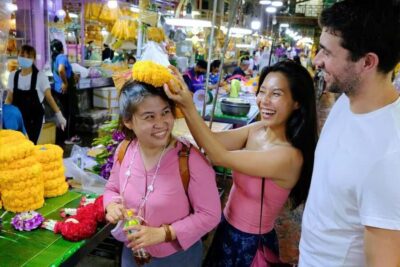 ★ 4.3Tuk Tuk Adventure Chinatown Michelin Food & TemplesFrom $18725 reviews
Browse the lists this tour appears in