
REVIEW · CHIANG RAI WHITE AND BLUE TEMPLE TOURS
Chiang Mai: Chiang Rai Temples and Long-Neck Karen Village
One day, big Chiang Rai energy. This is a fast, well-packed circuit of iconic temples plus culture at the Long-Neck Karen Village, with a relaxing start at Mae Kachan Hot Springs. I like that the route mixes picture-perfect art with real local life, not just temple photos.
What I especially like is the contrast between the three temple styles. You get the mirror sparkle of Wat Rong Khun, the intense blue-and-gold mood of Wat Rong Suea Ten, then the big-city view payoff from Wat Huay Pla Kang.
One consideration: the day is active, with stairs and viewpoints, and the Karen village part asks for extra care with etiquette and photography. If you’re sensitive to crowds, strict timing, or expect totally wild hot spring nature, plan mentally for a more structured, guided experience.
In This Review
- Key points before you go
- Temples, views, and Karen culture in one tight day
- Mae Kachan Hot Springs: start slow, soak your feet
- Wat Rong Khun White Temple: mirrors, symbols, and inside detail
- Wat Rong Suea Ten Blue Temple: deep tones with gold accents
- Wat Huay Pla Kang: 25-story Guan Yin and nine-tier pagoda views
- Long-Neck Karen Village: brass rings, daily life, and respectful photos
- Price and logistics: value of a one-day temple circuit
- What to pack and how to dress for temples
- Who should book, and who should skip
- Should you book this Chiang Rai day tour?
- FAQ
- How long is the Chiang Mai: Chiang Rai Temples and Long-Neck Karen Village tour?
- Where does the tour take place?
- What is included in the price?
- What is the price per person?
- What should I bring?
- Is there a dress code?
- Are pets or smoking allowed?
- Is the tour suitable for wheelchair users or people with back problems?
- What about cancellation and payment flexibility?
- How big is the group?
Key points before you go
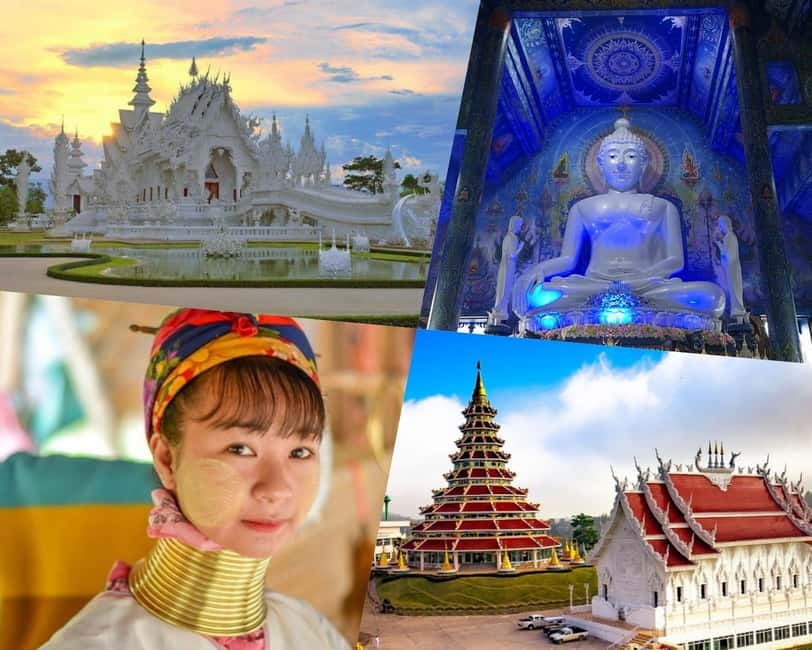
White Temple photo time at Wat Rong Khun, with mirror sparkle and inside murals that go beyond decoration
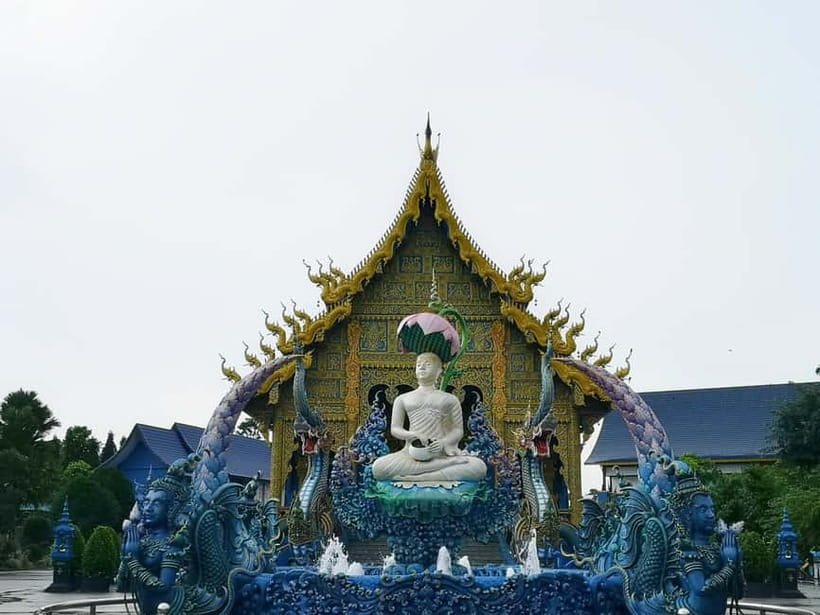
Blue Temple calm at Wat Rong Suea Ten, deep blue tones with golden accents and a striking Buddha statue
Panoramic views from Wat Huay Pla Kang, including the Guan Yin that reaches 25 stories tall and an elevator ride
Long-Neck Karen Village cultural stop, focused on traditions, daily life, and handmade souvenirs, with a clear request to ask before photographing
Small-group pacing, limited to 12 people, usually giving you a smoother flow between stops
Practical start at Mae Kachan Hot Springs, where you can soak your feet and even boil eggs in the bubbling springs
Wat Rong Khun runs also got a going over
- Chiang Mai: Chiang Rai Temples, Karen Tribe and Hot Springs★ 4.7 · 5,401 reviews
- Chiang Rai Temples: Private Tour from Chiang Mai★ 5.0 · 1,267 reviews
- From Chiang Mai: Chiang Rai’s Temples Exploration Day Trip★ 4.5 · 871 reviews
- Chiangmai to Chiangrai: 3 Temples, Hot Springs& Lalitta Cafe★ 4.5 · 659 reviews
Temples, views, and Karen culture in one tight day
Chiang Rai is famous for temple art, and this tour turns that fame into a single, efficient day. You start with warm mineral waters, then move through three major temple experiences in a row, ending with a cultural visit to the Long-Neck Karen Village.
I like that the itinerary is built around variety. Wat Rong Khun feels like a modern art dream wrapped in Buddhist symbolism. Wat Rong Suea Ten shifts the mood to rich blues and gold details. Wat Huay Pla Kang adds scale and a view reward. Then the Karen village gives you a human-size ending, centered on community life and craft.
Here’s the main trade-off: it is not a slow, wandering day. You’ll be moving between sites on an air-conditioned van, and you’ll need comfortable stamina for temple steps and viewpoint climbs.
Mae Kachan Hot Springs: start slow, soak your feet
The morning begins at Mae Kachan Hot Springs, a calm stop meant to loosen your legs before temple steps. You can dip your feet in the warm mineral pools, and the water is part of what makes this day feel less like a temple relay race.
A fun extra here is the egg-boiling tradition. You get to try the quirky routine of boiling eggs in the bubbling springs, which turns a simple break into a memory you can laugh about later. If you like small, local rituals, this is the kind of stop that works.
One reality check: if you’re picturing totally untouched, remote hot springs in the middle of the jungle, you might feel a letdown. The setting can feel more like a managed stop than a wild nature scene. Still, the warm soak and the egg moment are worth it for the energy reset.
Practical tips: wear shoes you can take on and off easily, and bring the sunscreen and hat you packed for the day. Even when you’re just sitting, Chiang Rai sun shows up fast.
Wat Rong Khun White Temple: mirrors, symbols, and inside detail
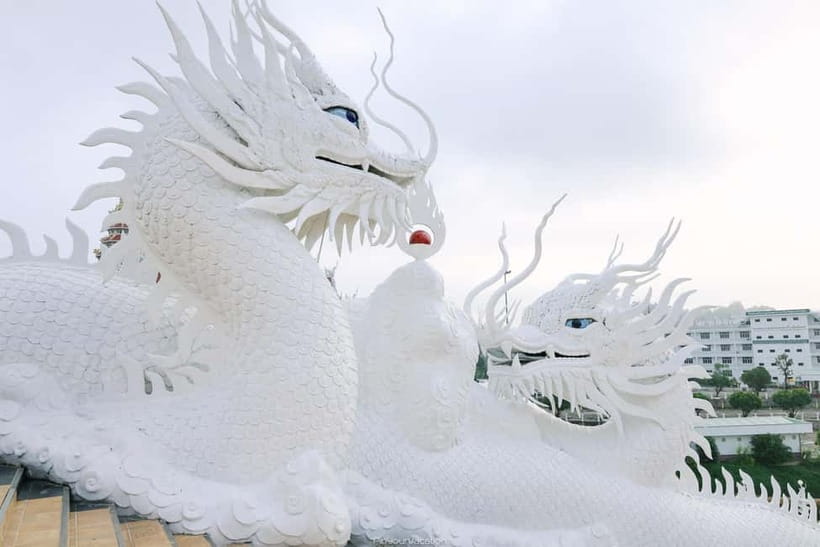
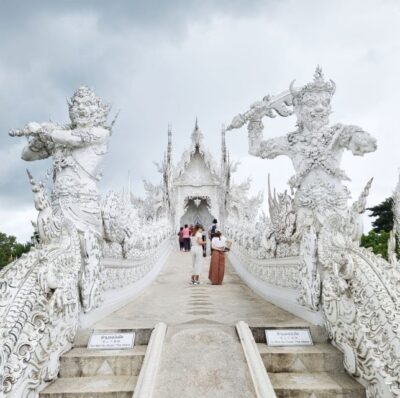
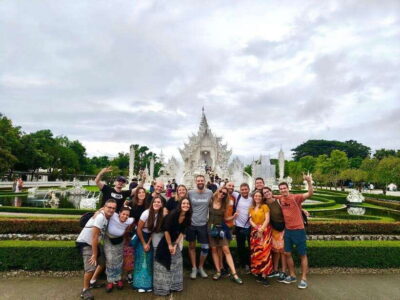
After the soak, you head to Wat Rong Khun, the White Temple. This is the kind of place people recognize even if they couldn’t name it, thanks to its clean white facade and the glittering effect from mirror-like details.
What makes Wat Rong Khun work is that it’s not just pretty from the outside. Inside, you’ll find murals and sculptures that aim for bigger themes, including life, death, and rebirth. If you enjoy temples where art has something to say, you’ll get more from this stop than you would from a quick photo-and-go.
Photo lovers usually have a field day here because sunlight makes the mirror details pop. If you want your best shots, keep an eye on how the light hits different angles. Also remember that you’ll be walking around and taking breaks in between, so don’t treat it as a 30-second stop.
The one practical thing to know is the dress code expectation. You’ll be in sacred temple spaces, so plan clothing that covers your shoulders and knees. Comfortable shoes matter too, because you’ll likely do more walking than you expect.
Wat Rong Suea Ten Blue Temple: deep tones with gold accents
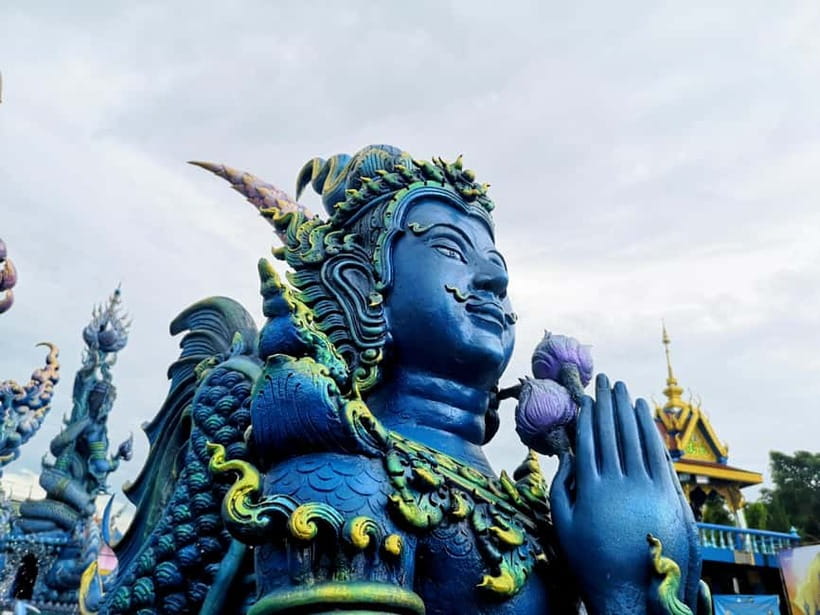
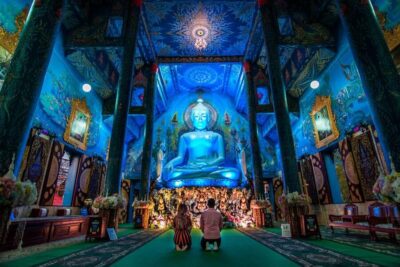
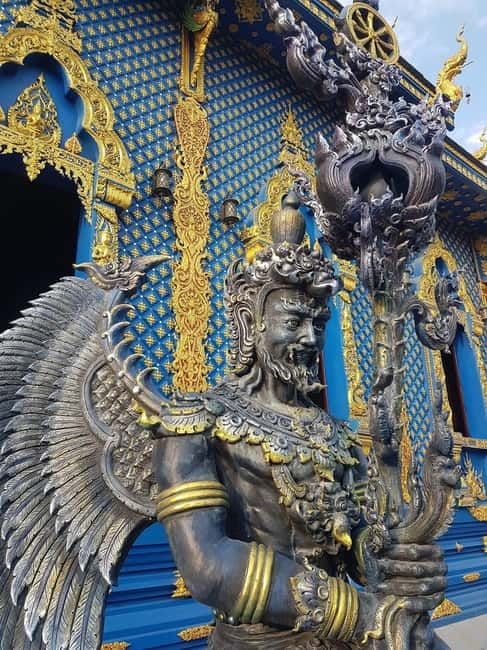
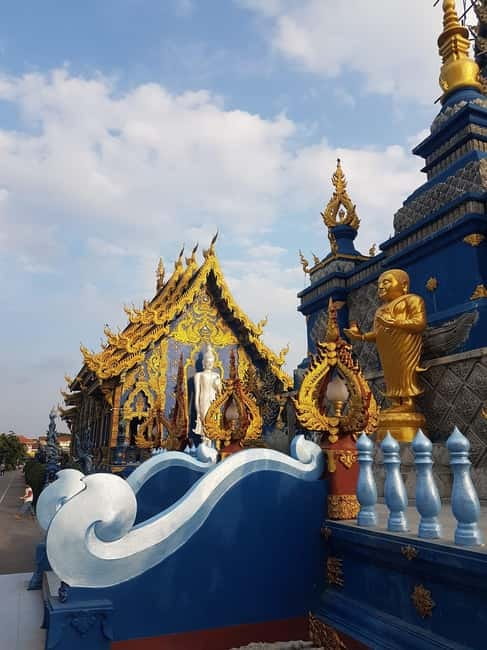
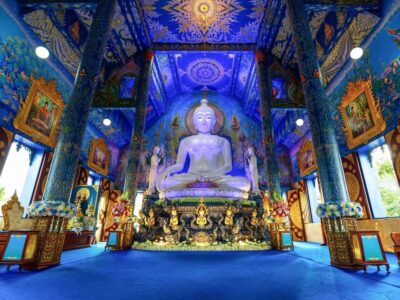
Next comes Wat Rong Suea Ten, often called the Blue Temple. This place shifts the mood hard, from the bright white sparkle to deep blue tones with golden accents. The effect feels like you stepped into a color study rather than a standard temple.
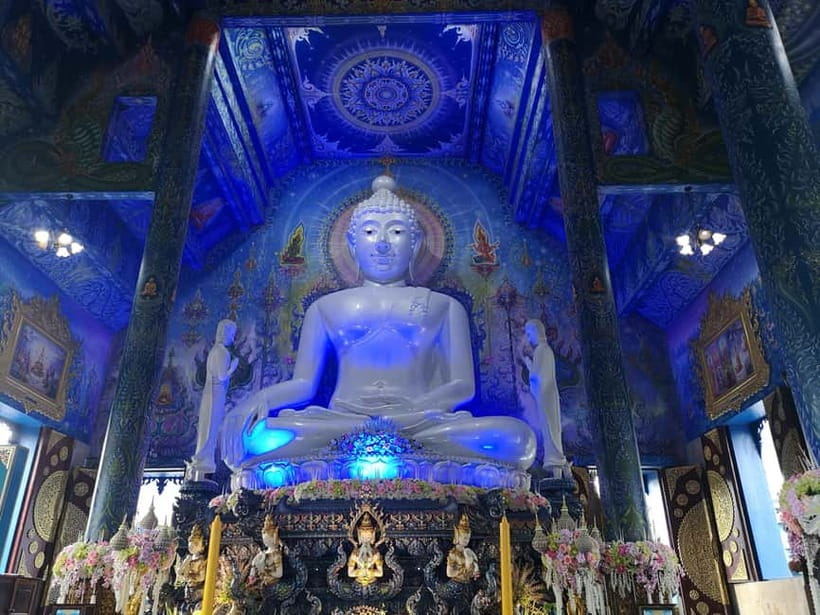
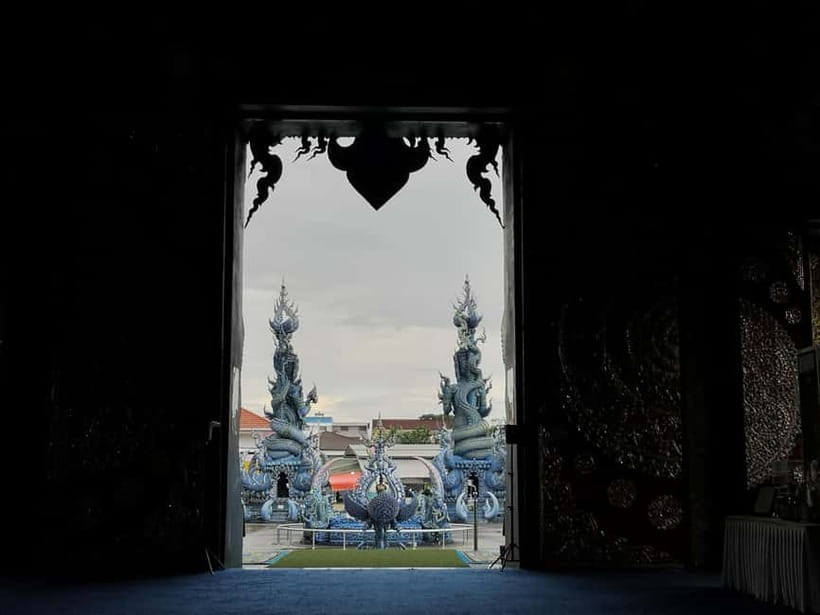
Inside, the atmosphere is about calm and detail. You’ll wander through serene halls, and you’ll also get time to appreciate the exquisite Buddha statue. For anyone who likes architecture and interior design, this stop tends to deliver a smoother, quieter experience than the most famous temple icon on the circuit.
Photography here is also strong, especially if you enjoy contrast shots. Blue surfaces plus gold details can make even basic photos look well composed.
The watch-out is pacing. This day has multiple major stops, and if your group runs tight on time, you’ll need to be ready to move efficiently. I recommend choosing one or two moments you really want to linger on, then let the rest be quick wins.
Thai village visits got read for the small print

Wat Huay Pla Kang: 25-story Guan Yin and nine-tier pagoda views
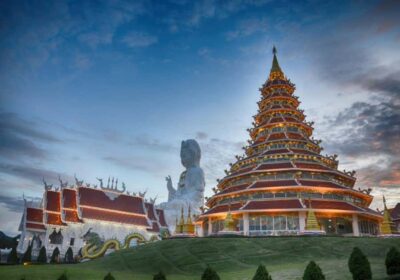
Wat Huay Pla Kang is where the day gets big. The highlight is the colossal Guan Yin statue, reportedly 25 stories tall. You’ll take an elevator to reach the top for panoramic views, so you get the height without needing to climb every step.
From that upper viewpoint, the temple becomes a vantage point. You’re not just looking at a statue anymore, you’re seeing Chiang Rai’s surrounding scenery from above. The gardens and the nine-tiered pagoda structure also add a more elegant, layered feel, which helps when you want a calmer end to a busy temple day.
This is also one of the stops where comfort matters most. If you have back issues, you should consider whether you can handle steps around temple areas. This tour is not suited for wheelchair users, and it also has a weight limit of 220 lbs (100 kg), so factor that into your decision.
If you’re prone to getting overheated, bring your hat and take short rests. The views are worth it, but you’ll feel the sun when you’re moving between viewpoints.
Long-Neck Karen Village: brass rings, daily life, and respectful photos
Your final cultural stop is the Long-Neck Karen Village. The focus here is on meeting members of the Karen tribe and learning about their traditions, daily life, and craftsmanship. The brass neck rings are what the village is known for, and the visit aims to explain what the practice represents within their cultural context.
This is also where etiquette matters. You should respect their traditions and avoid intrusive photography. The guidance is clear: ask permission before taking photos of individuals. It’s a small step that makes a big difference in how the visit feels, for you and for them.
Shopping here is not just souvenir time. Buying handmade items supports the community and helps keep skills and work visible. If you like practical crafts, you’ll often find pieces that feel more connected to daily life than typical mass-market items.
One more note: the village experience can vary a bit in what you learn while you’re there. Some days may include additional cultural education elements like processing coffee, while others may focus more directly on general life and craft. Don’t assume one specific lesson will happen, but expect a human-scale cultural introduction.
Price and logistics: value of a one-day temple circuit
The price is $61 per person for a one-day itinerary. For a full day that includes air-conditioned transportation, an English-speaking guide, admission fees, lunch, bottled water, and insurance, that price can feel reasonable, especially if you would otherwise pay separately for entry tickets and private transport.
The value mainly comes from the density of stops. In a single day, you cover multiple major Chiang Rai temple experiences, plus Mae Kachan Hot Springs and the Long-Neck Karen Village. If you’re short on time and want a clear plan, this kind of guided route can save you a lot of decision fatigue.
Group size is another value driver. It’s a small group, limited to 12 participants. That tends to make transfers smoother and helps you get more attention than you’d get on bigger tours.
Now for a balanced reality check. Even in a small group, conversation level depends on the guide and the day’s rhythm. One risk with busy, time-sensitive days is that the guide may get strict if people are late. If you’re the type who hates rushed moments, build in a buffer for pickup and be punctual so the day stays calm for everyone.
Lunch is included, but it’s still a local stop, not a restaurant with high-end service promises. If you’re picky about food quality, keep expectations flexible.
What to pack and how to dress for temples
This is a temple-heavy day, so packing and clothing choice affect your comfort more than you might think. Bring comfortable shoes, since you’ll likely walk and climb stairs at temple sites. Add a hat and sunscreen for daytime sun, plus a camera if you want to capture the mirror details at Wat Rong Khun and the blue tones at Wat Rong Suea Ten.
Also bring water. Bottled water is included, but having more if you run hot can make you feel less stressed.
Dress code is modest: cover shoulders and knees. That applies to sacred temple visits, so plan ahead rather than buying a cover-up at the last minute.
Who should book, and who should skip
This tour is ideal if you want a structured, high-impact day without planning each stop yourself. It’s especially good for first-timers to Chiang Rai temples who want a mix of iconic art, major viewing points, and a cultural community visit.
It may be a poor fit if mobility is a concern. It is not suitable for wheelchair users, people with back problems, and pregnant women. There’s also a weight limit of 220 lbs (100 kg). If any of those apply, it’s smarter to look for a different style of tour with less walking and fewer viewpoint steps.
Also consider your personal style. If you want long unhurried time in one place, you may find the schedule brisk. If you’re fine moving efficiently from highlight to highlight, you’ll likely enjoy the momentum.
Should you book this Chiang Rai day tour?
Book it if you want to hit the big Chiang Rai temple names in one day, like Wat Rong Khun, Wat Rong Suea Ten, and Wat Huay Pla Kang, and still end with a cultural stop at the Long-Neck Karen Village. The included logistics, small group size, and built-in lunch make it a practical choice for limited time.
Skip it or adjust expectations if you need a very slow pace, struggle with stairs, or have mobility limitations. Also go in knowing Mae Kachan Hot Springs might feel more like a managed stop than a remote nature scene.
If your priority is a full, organized day that mixes art, views, and culture without you driving or ticket-planning, this is a strong match.
FAQ
How long is the Chiang Mai: Chiang Rai Temples and Long-Neck Karen Village tour?
The duration is 1 day.
Where does the tour take place?
It takes place in Chiang Rai (province), Thailand.
What is included in the price?
Transportation by air-conditioned van, an English-speaking guide, admission fees to all attractions, lunch, bottled water, and insurance are included.
What is the price per person?
The price is listed as $61 per person.
What should I bring?
You should bring comfortable shoes, a hat, a camera, sunscreen, and water.
Is there a dress code?
Yes. Since the tour includes sacred temples, you need modest attire that covers your shoulders and knees.
Are pets or smoking allowed?
Pets are not allowed, and smoking is not allowed.
Is the tour suitable for wheelchair users or people with back problems?
No. It is not suitable for wheelchair users or people with back problems.
What about cancellation and payment flexibility?
You can cancel up to 24 hours in advance for a full refund. You can also reserve now and pay later.
How big is the group?
The group is small, limited to 12 participants.
What else made it into the Thailand notebook
Village visits, and who the money reaches
The White Temple and the Blue Temple, continued
What else made it into the Chiang Mai notebook
- Walk With Monks Collecting Alms(meeting point maybe change)
★ 4.9 · 8 reviews - Doi Suthep and Hmong Hilltribe Half Day Tour in Chiang Mai
★ 3.5 · 8 reviews - Aroidee’s Farm-Fresh Thai Cooking Experience
★ 5.0 · 8 reviews - 2- Days in Doi Inthanon National Park
★ 4.5 · 8 reviews - Khantoke Dinner Experience & Cultural Dance Show with Transfers
★ 4.0 · 8 reviews - Sticky Waterfalls Private Half Day Fun Escapades
★ 4.5 · 8 reviews
Chiang Rai White and Blue Temple Tours, compared.
 ★ 4.6Chiang Rai White Temple and Blue Temple Day TourFrom $273,366 reviews
 ★ 4.9Guided Highlights Guided Tour with Buffet LunchFrom $371,532 reviews
 ★ 5.0Chiang Rai Temples: Private Tour from Chiang MaiFrom $1441,267 reviews
 ★ 4.5Chiang Rai’s Temples Exploration Day TripFrom $51871 reviews
 ★ 4.9Iconic Temples & 7 Major Sites—River View BuffetFrom $37692 reviews
 ★ 4.5Chiangmai to Chiangrai: 3 Temples, Hot Springs& Lalitta CafeFrom $41659 reviews
 ★ 4.8White, Blue, Red Temples, Long Neck TourFrom $57652 reviews
 ★ 4.5Chiang Rai White Temple, Blue Temple and more from Chiang MaiFrom $39605 reviews
Browse the lists this tour appears in