
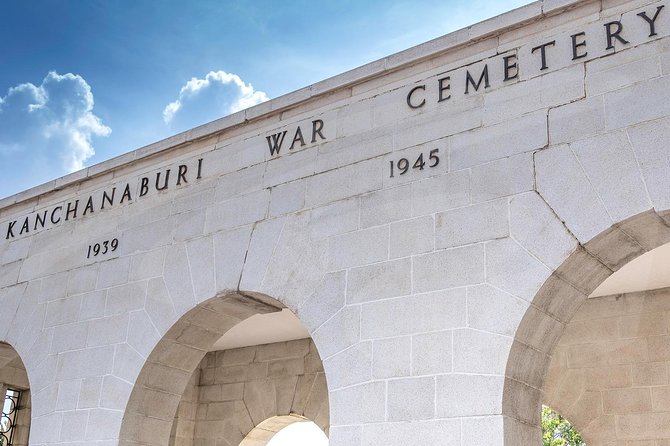
REVIEW · KANCHANABURI AND THE DEATH RAILWAY
Bridge on the River Kwai and Thailand-Burma Railway Tour
Death Railway is heavy history, but you can see it. I love how this trip pairs solemn WWII stops with the actual sights along the River Kwai. I also love that you get both a long-tail boat ride and a train ride, so the story is not just read, it is lived.
This day out from Bangkok moves in a tight, well-paced loop. Your guide can make a big difference, and I like seeing names like Betty, Luck, Tiny, Peter, Jenny, and Suki mentioned for clear explanations and smart timing at photo spots.
One thing to consider: the JEATH War Museum is a short stop. If you want deep, hands-on detail, you may find it brief compared with the cemetery’s quiet, grounded impact.
In This Review
- Key highlights to look for
- A full day from Bangkok, where WWII stops are tied to real places
- Morning pickup and why the 6:30 am start is part of the value
- Kanchanaburi War Cemetery: the emotional center of the day
- JEATH War Museum: a quick stop that can still hit hard
- The long-tail speedboat ride, plus views of the bridge
- Bridge over the River Kwai: your time to look, walk, and frame photos
- Riding the Death Railway train: the part that makes the story physical
- Lunch and timing: how to stay comfortable on a 9 to 10 hour schedule
- Price and value: what about $108 really covers
- Who this tour is best for
- Should you book the Bridge on the River Kwai and Death Railway tour?
- FAQ
- What time does the tour start?
- How long is the tour?
- Do I get hotel pickup and drop-off in Bangkok?
- What transportation is included during the day?
- Is lunch included?
- Are admission fees included?
- Are beverages included?
- Is there a train seat upgrade available?
- How big is the group?
- What is the cancellation policy?
Key highlights to look for
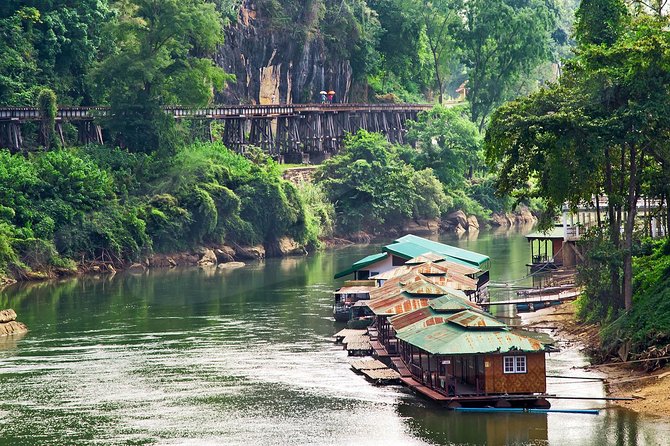
- Cemetery first, questions later: a 30-minute visit to the main POW burial ground sets the tone before the sights.
- JEATH Museum is short: you get history through photos and displays, then you move on quickly.
- Long-tail speedboat views: you cruise near the bridge area under the familiar steel span.
- Bridge time for walking and photos: you have your own time at the bridge before the train part.
- Death Railway train ride: a scenic ride through the region that helps you picture what forced laborers endured.
Kanchanaburi and Death Railway visits were reviewed the same way
- From Bangkok: Erawan Park & Kanchanaburi Small-Group Tour★ 4.5 · 1,582 reviews
- From Bangkok: Historical Day Tour to River Kwai★ 4.6 · 868 reviews
- Bridge on the River Kwai and Thailand-Burma Railway Tour★ 4.5 · 658 reviews
- Erawan Waterfalls and Bridge Over River Kwai Tour from Bangkok★ 4.5 · 372 reviews
A full day from Bangkok, where WWII stops are tied to real places
This is not a quick photo stop. You’re heading about 80 miles (130 kilometers) west of Bangkok, and you should plan for a long day that starts early. From the moment you arrive in Kanchanaburi, the tone shifts toward remembrance, and that matters because the sights you see later are connected to a real wartime project: the Thailand-Burma Railway, often called the Death Railway.
What makes this tour work is the sequence. You start with the Kanchanaburi War Cemetery, then you visit the JEATH War Museum, and only after that do you go to the river and the bridge. It keeps the boat thrill and the train ride from feeling like pure entertainment, even though the transport parts are genuinely fun.
It also helps that the ride to and through the countryside is part of the day. On the coach, you’ll pass areas known for sugarcane, rice paddies, and pineapple plantations. Those everyday scenes are a reminder that this region is more than war history. You’re seeing modern Thailand, not just a memorial theme park.
Morning pickup and why the 6:30 am start is part of the value
The tour starts at 6:30 am, with pickup from selected Bangkok hotels. That early start is not random. Getting moving before traffic helps you reach Kanchanaburi while you still have enough daylight for river time and bridge time, which is where the best views come from.
You’ll travel by air-conditioned coach, then shift into other modes of transport as the day goes on. That mix is part of what you’re paying for: it is not just bus-to-museum. You’ll also do a boat cruise and a train ride, and those are time-sensitive. Showing up early makes it more likely you’ll stay on schedule without feeling rushed between stops.
Practical tip: on a long day like this, bring a light layer for the morning cool and keep a small day bag with water and sunscreen. The tour includes lunch and admission fees, but you should assume you’ll want to buy beverages separately.
Kanchanaburi War Cemetery: the emotional center of the day
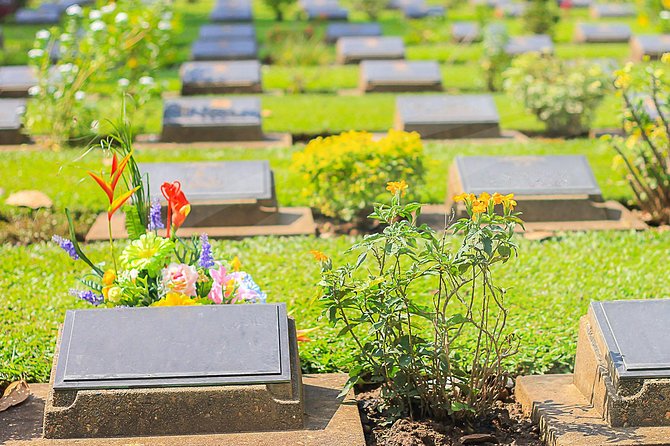
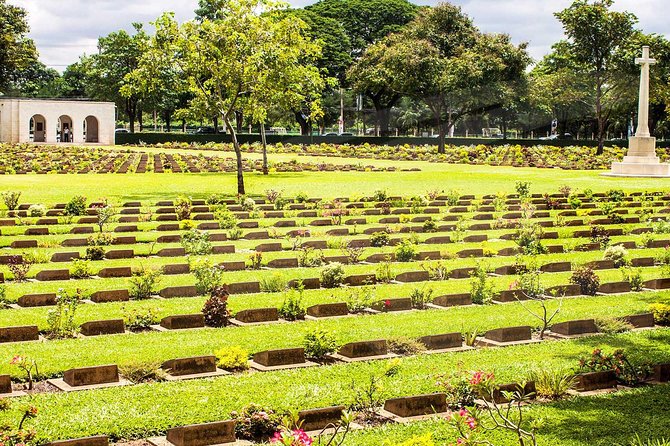
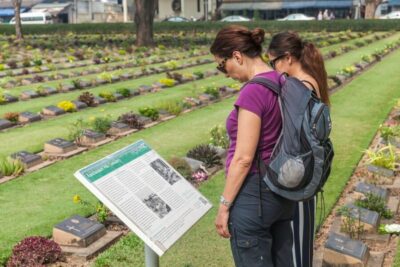
Your first major stop is the Kanchanaburi War Cemetery. This is the main prisoner of war cemetery for victims of Japanese imprisonment connected to the Burma Railway during World War II. The time on site is about 30 minutes, and that’s actually a good length. It gives you room to walk, read, and reflect without turning it into a timed sprint.
I like that this stop anchors the entire tour. Before the speedboat thrill and the train ride, you’re forced to slow down and focus on names and loss. It also changes how you understand everything that comes next. Later, when you see the bridge and the tracks in motion, your brain ties it back to the graves.
If you visit with family or friends, this is the place where conversations naturally start. I recommend you give yourself permission to be quiet here. You do not need to fill every moment with questions. This stop is the point.
JEATH War Museum: a quick stop that can still hit hard
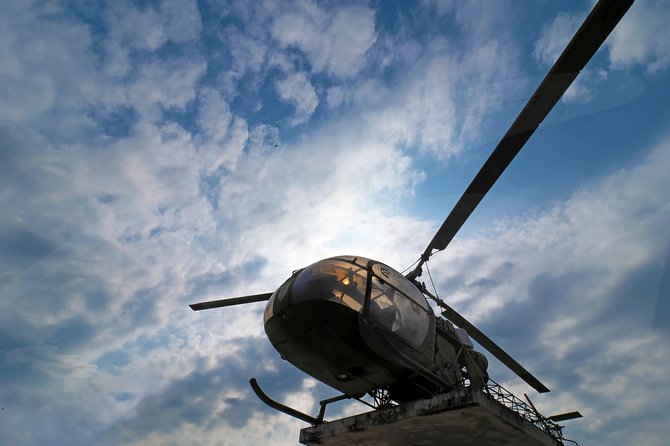
Next comes the JEATH War Museum, with about 20 minutes scheduled. JEATH is known for showing the construction of the Death Railway and how it was built by prisoners of war in World War II, using historical photographs and displays.
Because the visit is short, you should treat it like context, not a deep course. You’ll get the big picture: why the railway mattered, how it was forced into being, and what the construction meant for those who survived long enough to be remembered.
One consideration: some visitors have felt the museum is more basic than they expected. If you are the type who wants layered storytelling, you might wish you had more time. Still, for most people, the museum is a helpful bridge between the cemetery and the river and rail sites outside.
If you’re interested in learning more, this is a good moment to ask your guide a specific question, like how the railway affected supply lines or what the bridge was meant to connect. You’ll get a clearer sense for what you’re about to see next.
Thai rail bookings sat in the same notebook

The long-tail speedboat ride, plus views of the bridge
After the museum, you head to the River Kwai for a long-tail boat cruise under the River Kwai Bridge area. This portion is about 20 minutes, and it has a classic, almost movie-like energy.
The long-tail style is part of the fun. You can feel the motion and the openness of the river. It is also one of the most scenic moments of the day because you are getting closer to the visual core of the bridge story.
And importantly, this is not a detour. It is the tour’s way of letting you see the bridge from the water, which is different from roadside views. The angle makes it easier to imagine how people traveled and how a single crossing could change movement in the region.
Practical tip: wear comfortable shoes and be ready for dust or humidity. If you get on the train later, you might appreciate having a small scarf or mask handy. Some guides hand out small things like dust masks, but do not rely on that. Bring what you can.
Bridge over the River Kwai: your time to look, walk, and frame photos
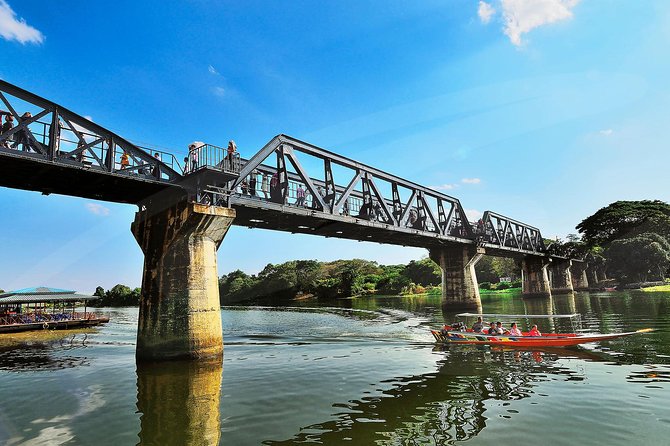
Then you reach the River Khwae Bridge area, where you have about 20 minutes to explore on your own. This is short, so you should use it intentionally.
Here’s what to do with your time:
- Walk around with a focus on sight lines, not just selfies.
- Find the angle where the bridge meets the river water.
- Take a few photos, then pause and take it in without the camera.
This stop is often what people remember most because it combines a familiar postcard image with a real, heavy backstory. The contrast is the point. It can feel strange at first, but that is also why the earlier cemetery visit matters. You’re not just looking at a famous bridge. You’re standing near a structure tied to forced labor and wartime strategy.
From the tour timing, you’ll generally get a window to see the bridge before the train segment. That makes it easier to enjoy the bridge without feeling like you’re sprinting.
Riding the Death Railway train: the part that makes the story physical
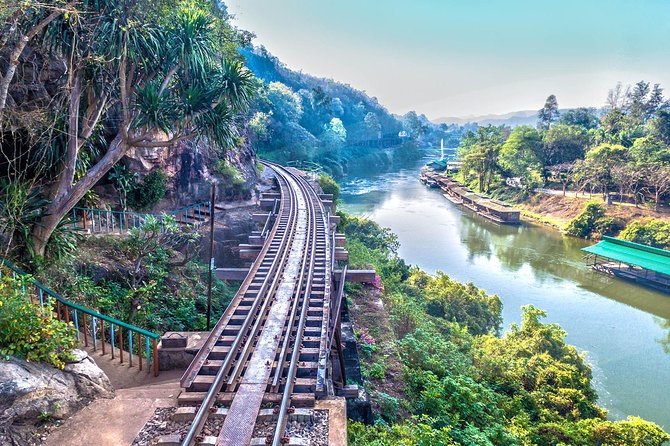
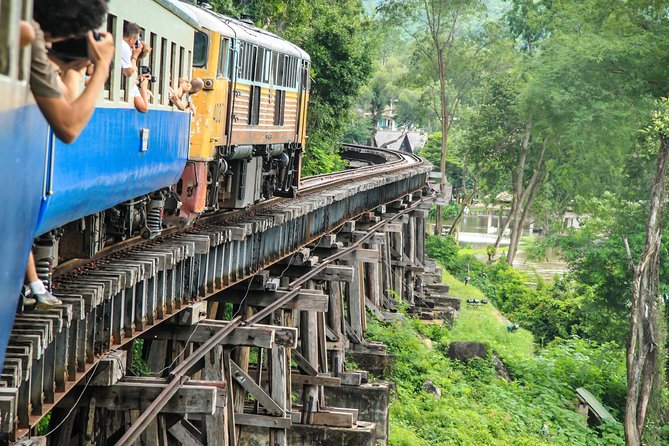
The main rail portion is what turns history into motion. The tour includes a train ride along the Death Railway, plus time at the Death Railway Museum and Research Centre (about 1.5 hours total for this section).
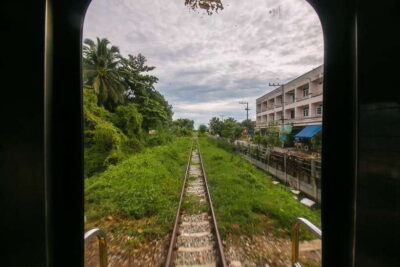
The tour description suggests you’ll experience a train ride through the jungle region, which helps you picture the difficulty of building tracks in real conditions. One of the reasons this portion lands well is that you can watch the route and feel how much work it must have taken to carve a line through hard terrain and rock.
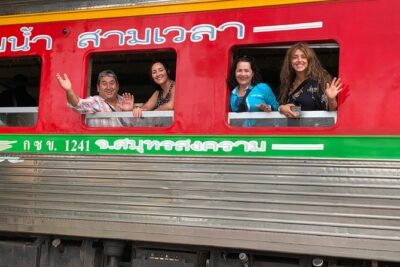
There’s also a practical layer: the train experience is where your comfort choices matter. There are optional upgrades on the train (about 200 baht and 300 baht options), mostly focused on guaranteed seating versus first-in-first-out. The higher option includes additional items like tea or coffee, drinking water, cold towel, and a certificate.
People who value comfort usually choose the upgrade for the guaranteed seat. It is not required, but for a long day, it can be worth it if you do not want to gamble with seating.
Also, the train can feel dusty in spots. If you’re the kind of person who hates dry eyes and irritated throats, bring something small to protect yourself. Some guides may help with dust-related items, but it’s smart to be ready.
Lunch and timing: how to stay comfortable on a 9 to 10 hour schedule
This is a 9 to 10 hour outing. That’s long enough that how you handle basics like hydration and sun really matters.
Lunch is included, and it’s often praised. In practice, you’ll probably be hungry by the time you sit down, especially after the early start. If you have dietary needs, this is the kind of tour where you might want to mention them in advance. Some guides have handled alternatives due to dietary issues, but you should still plan to communicate clearly when booking or confirming.
Beverages are not included. Keep that in mind so you do not get surprised mid-day. Also, remember that the tour includes restrooms during the day, which helps when you are moving between multiple stops.
Value note: because the tour includes admission fees plus transport plus lunch, you are less likely to rack up random costs once you arrive. The biggest extra variable is what you choose for the train upgrade and what you buy for drinks.
Price and value: what about $108 really covers
At $108.17 per person, this tour sits in the mid-range for full-day day trips from Bangkok. The value comes from the bundle:
- hotel pickup and drop-off (selected hotels only)
- air-conditioned coach
- a local guide
- long-tail boat ride
- train ride along the Death Railway
- lunch
- admission fees
- mobile ticket
When you compare that to piecing together separate tickets and transport, the price makes more sense. You are paying for convenience and for access to the rail and river components that are harder to coordinate on your own with a tight schedule.
If your goal is only to see the bridge as a photo, you’d probably spend less elsewhere. But if you want the full arc, from cemetery to museum to water to tracks, then you’re buying a structured day that keeps the story coherent.
Who this tour is best for
This is a great fit if you:
- want a single day that hits major WWII sites in the Kanchanaburi area
- like guided context so you can understand what you’re seeing
- enjoy train or boat rides and want them tied to real meaning, not just sightseeing
You might want to rethink it if you:
- hate long travel days and early starts
- expect the JEATH Museum to be a deep museum experience
- need a very flexible schedule, because the timing is designed to cover multiple stops in one day
Should you book the Bridge on the River Kwai and Death Railway tour?
Yes, if you want the full package and you’re okay with an early start and long hours. The best part of this day is the way it builds emotion step-by-step: cemetery first, museum next, then river and bridge views, and finally the train ride that makes the whole project feel real.
Book it if you care about value that includes transport and admissions, not just a single attraction. And if you have a guide who is strong, names like Betty, Luck, Tiny, Peter, Jenny, and Suki show up for a reason, because the day runs smoother when someone keeps timing tight and explanations clear.
Skip it only if you want extra-long time inside museums or you prefer a lighter, purely scenic approach. This day is meant to be memorable and reflective.
FAQ
What time does the tour start?
It starts at 6:30 am.
How long is the tour?
The duration is about 9 to 10 hours.
Do I get hotel pickup and drop-off in Bangkok?
Yes, pickup and drop-off are offered at selected Bangkok hotels.
What transportation is included during the day?
You’ll use an air-conditioned coach, then a long-tail boat ride, and you’ll also take a train ride along the Death Railway.
Is lunch included?
Yes, lunch is included.
Are admission fees included?
Yes, admission fees are included.
Are beverages included?
No, beverages are not included.
Is there a train seat upgrade available?
Yes, there are optional train upgrades. The approximate options are 200 baht for guaranteed seating plus a cold towel and drinking water, or 300 baht for guaranteed seating plus tea or coffee, drinking water, a cold towel, and a certificate.
How big is the group?
The tour has a maximum of 99 travelers.
What is the cancellation policy?
You can cancel for a full refund up to 24 hours before the experience’s start time. If you cancel less than 24 hours before, the amount paid is not refunded.
Guided Thai outings, continued
What else made it into the Thailand notebook
The Death Railway and the war cemeteries, continued
What else made it into the Bangkok notebook
- Mahanakhon SkyWalk Entry Ticket
★ 4.3 · 20 reviews - Bangkok: Nimitr Rooftop by 137 Pillars
★ 4.8 · 20 reviews - Bangkok: Cook authentic Thai food with Smart Cook
★ 5.0 · 20 reviews - Bangkok: Travstore Original Bangkok Discovery Tour
★ 4.5 · 20 reviews - Bangkok: Chao Phraya Princess Dinner Cruise & Hotel Transfer
★ 4.2 · 20 reviews - 1 Hr Private Bangkok Canal Boat Tour: Traditional Flat Boat
★ 4.5 · 20 reviews
Kanchanaburi and the Death Railway, compared.
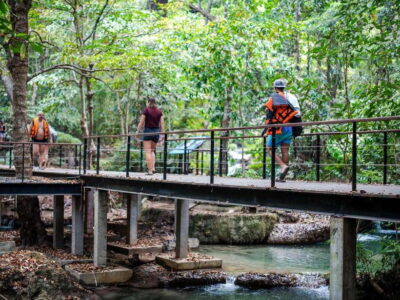 ★ 4.5Erawan Park & Kanchanaburi Small-Group TourFrom $591,582 reviews
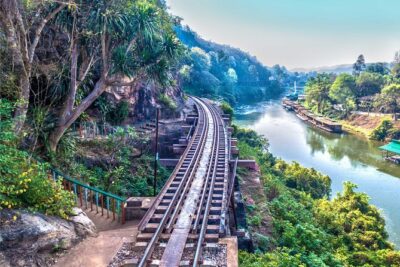
 ★ 4.6Historical Day Tour to River KwaiFrom $51868 reviews
 ★ 4.5Erawan Waterfalls and Bridge Over River Kwai Tour from BangkokFrom $56372 reviews
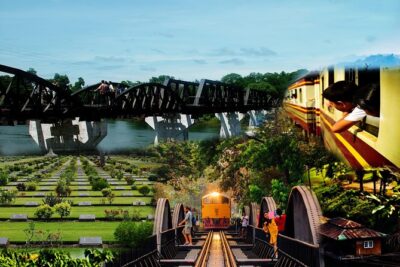 ★ 4.5Bridge on the River Kwai and Thailand-Burma Railway Guided TourFrom $94353 reviews
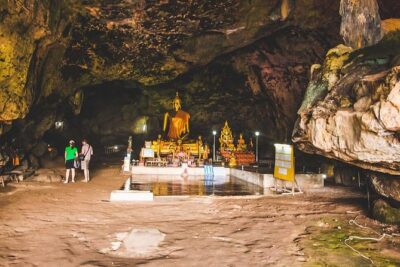 ★ 5.0Erawan Waterfall and Elephant Care: Private Tour to KanchanaburFrom $227339 reviews
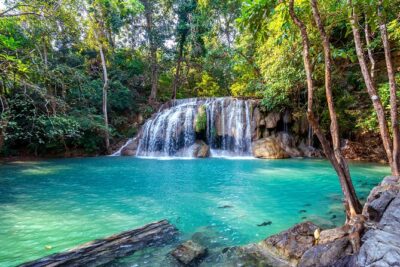 ★ 5.0Kanchanaburi Full Day Tour: River Kwai and Erawan FallsFrom $87327 reviews
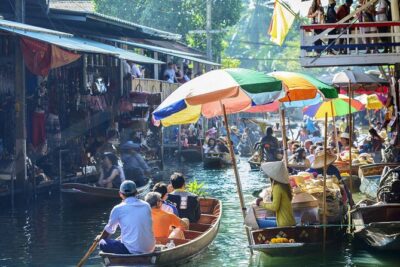 ★ 4.0Floating Markets and Bridge on River Kwai Tour from BangkokFrom $85253 reviews
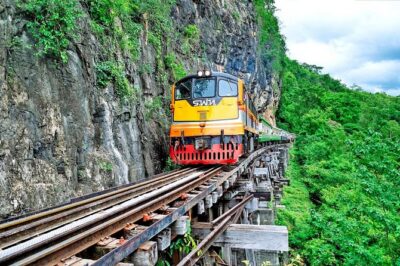 ★ 4.5River Kwai Day Tour from Bangkok – History, Scenery & CultureFrom $97206 reviews
Browse the lists this tour appears in