
REVIEW · KANCHANABURI AND THE DEATH RAILWAY
Erawan Waterfall and Elephant Care: Private Tour to Kanchanabur
A day trip that mixes waterfalls and elephants sounds simple, until you see how packed it is. I really like the hands-on elephant sanctuary time, and I love that Erawan Waterfall gives you real swimming, not just photos. The big tradeoff is the long day, plus some real walking and stairs, so plan for moderate fitness and a ready body.
I also like the comfort factor. You get hotel pickup and drop-off, an air-conditioned private vehicle, bottled water, lunch, and entrance fees handled for you. Still, you should know this is a full-day circuit, so if you want a slow pace or lots of solo downtime, this format may feel rushed.
Guide quality seems to matter a lot, and the best experiences I see highlight people like Peter, Yokie, and Ann for clear English, history stories, and genuine care. If your guide is less talkative or less organized on timing, the day can feel more like transportation between stops than a guided journey.
In This Review
- Key highlights worth your attention
- Bangkok to Kanchanaburi: the long drive, with a clear purpose
- Erawan Waterfall: swimming through all 7 levels
- Death Railway and the Tham Kra Sae Buddha cave: short stops, heavy context
- Kanchanaburi elephant sanctuary: feeding, bathing, and real care
- Bridge over the River Kwai: a landmark you can walk
- Price and value: what $227.66 buys you (and what it doesn’t)
- Logistics that actually matter: timing, fitness, and guide differences
- What to pack and how to enjoy Erawan and the elephants
- Who should book this private tour
- Should you book Erawan Waterfall and Elephant Care to Kanchanaburi?
- FAQ
- What time does the tour start?
- How long is the day trip?
- Is pickup and drop-off included?
- What’s included in the price?
- Can I swim at Erawan Waterfall?
- What are the main stops during the day?
- What happens if the weather is bad?
Key highlights worth your attention
- All 7 levels at Erawan Waterfall, with time to swim in the pools
- Elephant care focused on feeding, bathing, and daily routines, not riding
- Death Railway walk plus quick WWII context, paired with the Tham Kra Sae Buddha cave
- Bridge over the River Kwai for a strong WWII-era finale
- Pickup, air-conditioned private vehicle, and included lunch and entrance fees, so you can just show up
- Bring water shoes, because you will likely want to get wet at more than one stop
Kanchanaburi and Death Railway visits were reviewed the same way
- From Bangkok: Erawan Park & Kanchanaburi Small-Group Tour★ 4.5 · 1,582 reviews
- From Bangkok: Historical Day Tour to River Kwai★ 4.6 · 868 reviews
- Bridge on the River Kwai and Thailand-Burma Railway Tour★ 4.5 · 658 reviews
- Erawan Waterfalls and Bridge Over River Kwai Tour from Bangkok★ 4.5 · 372 reviews
Bangkok to Kanchanaburi: the long drive, with a clear purpose
Your day starts early, around 6:30 am, with pickup from your Bangkok hotel. Then you’re off on the long road toward Kanchanaburi. Yes, it’s a haul. But the tour uses that time well by making the stops worth the effort, instead of doing the usual quick photo stops that waste your energy.
The format is built for a full 12-hour day (approx.). That means you won’t have the luxury of lingering. You’ll get guided time where it counts, then move on. For me, the win here is having a private vehicle with AC and bottled water included, instead of being stuck on a shared bus with strangers while your whole day gets squeezed.
One practical note: because it’s private, you can often move the day along in a way that suits your group. The tour is described as customizable to your interests, so if you’re more history-forward or more nature-forward, you should be able to steer the balance a bit.
Erawan Waterfall: swimming through all 7 levels
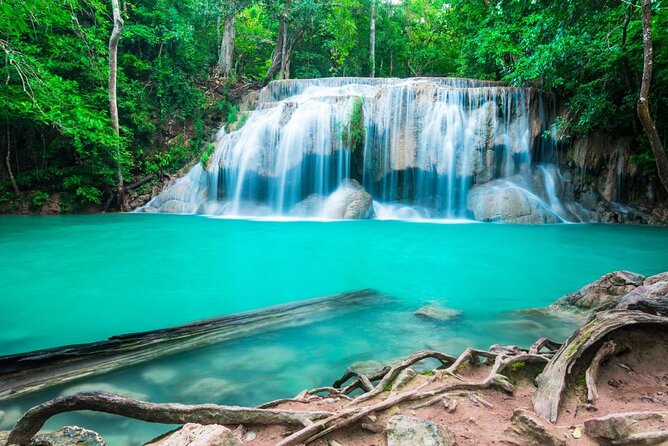
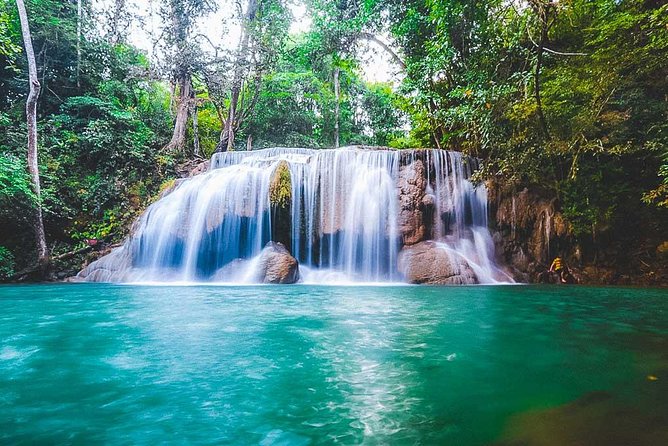
Erawan Waterfall is the nature anchor of the day. You get about 3 hours here, and it’s structured for both hiking and swimming. The pools are described as emerald green, and you’re given time to cool off and walk the levels.
What I like about this stop is that it’s not just a lookout. The route is designed around getting from level to level, with opportunities to stop, swim, and take a breather. If your priority is the top view, you’ll want to pace yourself early, because from level 3 upward, the walking gets more step-heavy. Bring that mindset in, and it feels fun instead of exhausting.
If you do plan to swim, pack smart. One useful tip I’d follow: bring water shoes or something with grip. Erawan has wet stone paths, and you’ll thank yourself halfway through the levels. Also consider a swimsuit and something dry to change into, because you’re very likely to get soaked more than once during the day.
A small but memorable detail: there can be small fish in the water that nibble at your feet if you stand still. It doesn’t hurt, but it’s a little weird the first time it happens, so don’t be shocked if you get distracted by the tickly sensation.
The other big reason Erawan works: it’s a way to see Thailand’s nature at a scale that feels real. You’re not just looking at water, you’re moving through it.
Death Railway and the Tham Kra Sae Buddha cave: short stops, heavy context
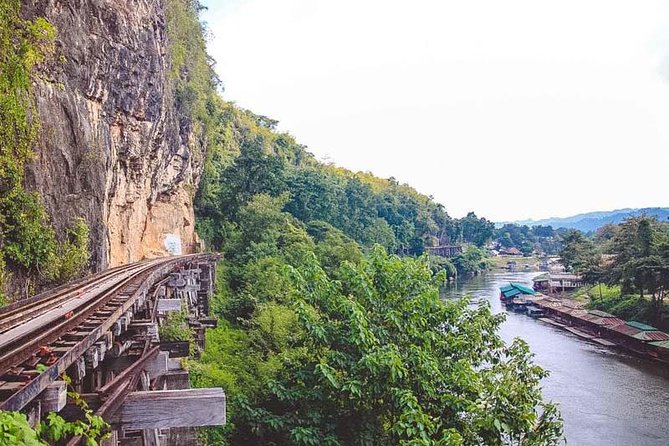
After the waterfall, the day turns darker and more historical. You’ll walk along the Thai-Burma Death Railway area while learning about what the railway construction meant and what went wrong.
You get about 30 minutes at the Death Railway Museum and Research Centre. Even with the short time, it can be valuable because it gives you context before you start seeing the more symbolic pieces of the story. The railway section matters because it connects the landscape to the human suffering tied to the site.
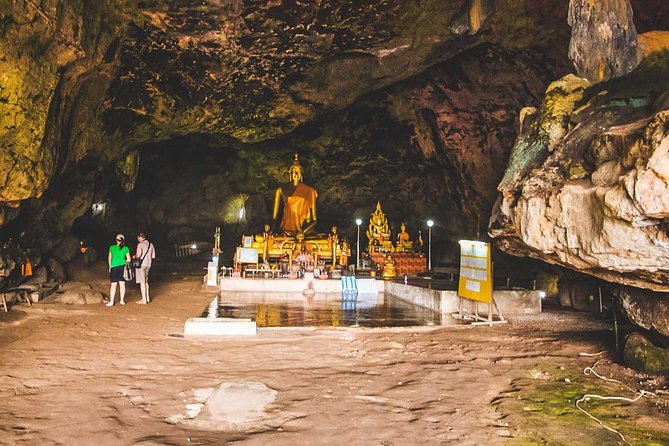
Then you head to the Tham Kra Sae Bridge and the cave associated with it. This is where you’ll see a Buddha image inside a cave setting that was formerly a camp for POWs during the railway’s construction. The stop is quick, around 15 minutes, but it hits emotionally because it’s a very physical reminder that the area changed over time.
I like that this portion of the tour doesn’t try to overwhelm you with a lecture. It’s short, focused, and paired with places you can look at. If you’re the type who needs to make sense of sites in your own head, this is a good structure.
The potential downside is timing. Since the tour is built to fit everything into a 12-hour day, you may wish you had more minutes to linger at each WWII point. If that’s you, consider treating this as an introduction, then adding extra time on a separate day.
Kanchanaburi elephant sanctuary: feeding, bathing, and real care
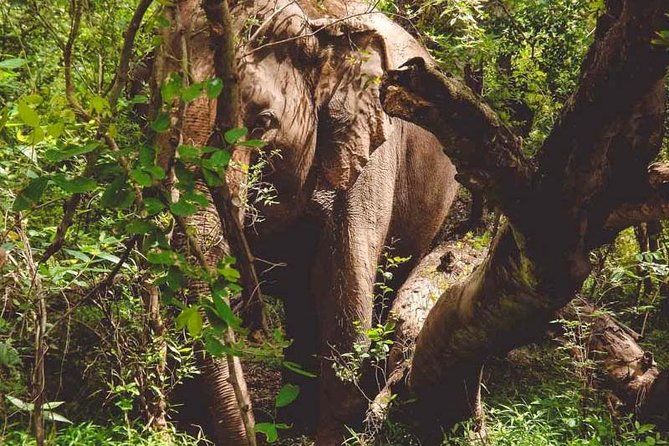
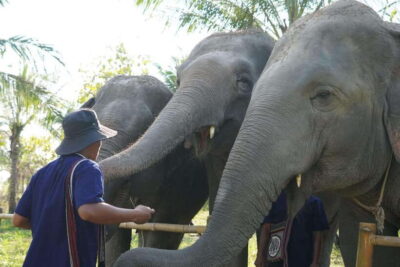
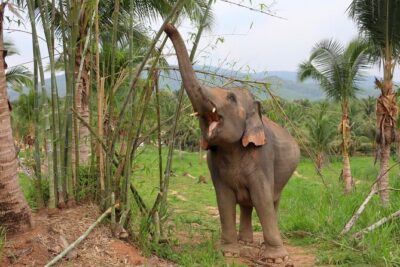
This is the heart of the experience for most people. You visit the Kanchanaburi Elephant Sanctuary, with about 1 hour on site. This part is praised so consistently for good reason: it’s hands-on in a way that centers care and companionship.
What I like here is the focus on daily routines. You’re not just watching from a distance. The program described includes things like preparing food, feeding elephants, walking with them toward the riverside area, and participating in a scrub bath and bathing session. Some experiences include playful water moments too, so expect to get wet.
A key point for ethical travelers: the elephant experience is described as a sanctuary model, with no riding and no forced-labor setup highlighted in the way the day is explained. Instead, you participate in care tasks, and it feels like you’re working alongside staff rather than treating the elephants like a prop.
Of course, elephant interactions always deserve careful expectations. You should go in understanding you’ll have responsibilities during the session. Pay attention to the staff instructions, keep safety first, and go with a calm, respectful energy.
The best guides can make this part feel thoughtful. People have credited guides such as Peter and Nan for guiding the elephant experience well, with clear explanations and a calm vibe. If you end up with a guide who is rushing photos or not communicating clearly, it can reduce the value of this stop, even though the elephants themselves are still the star.
Thai sanctuary visits got read closely, riding-free

Bridge over the River Kwai: a landmark you can walk
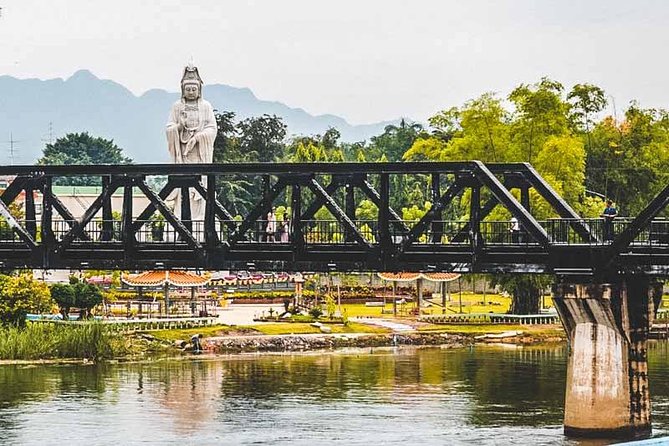
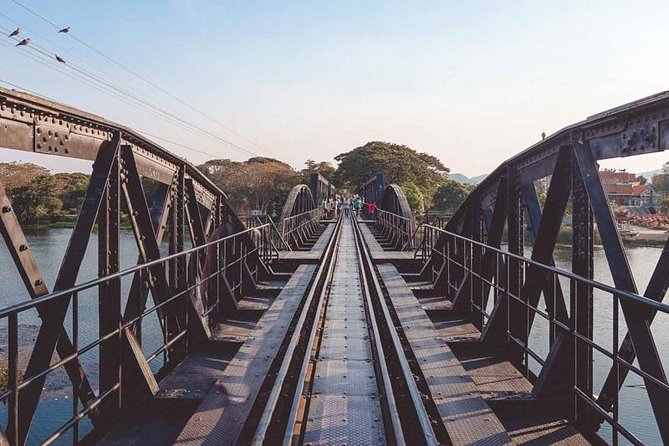
To finish the day, you’ll visit the Bridge Over the River Kwai. This is about 1 hour, including time to walk along the bridge and absorb the scene.
What I like about ending here is the way it wraps the day’s story together. You’ve seen waterfalls and then learned about the railway and nearby POW history. Now you’re on one of the best-known WWII symbols in Thailand, and it feels more real because you’ve already built context.
This isn’t just a photo line. Walking the bridge forces you to slow down for a minute. You feel the length, the metal structure, and the geography tied to the river. Even if you’re not a history fanatic, it’s a memorable way to close the circuit.
Price and value: what $227.66 buys you (and what it doesn’t)
At $227.66 per person, this isn’t a budget half-day. But for a full 12-hour private tour from Bangkok, it can be good value when you price it like a real day out.
Here’s what you’re getting that would cost extra if you DIY:
- Hotel pickup and drop-off
- Private transportation in an air-conditioned vehicle
- Professional guide
- Lunch and bottled water
- All entrance fees handled
If you’ve ever tried to stitch together Kanchanaburi logistics on your own, the time and transport costs add up fast, especially early in the morning when you’re trying to reach Erawan and not lose half your day.
Also, some stops have free admission on the schedule, so you don’t feel like you’re paying again and again. Even so, the tour still handles the practical stuff that matters, like timing and getting you from place to place without hassle.
Where the price can feel steep is if you’re mainly chasing only one highlight. If you don’t care about elephants or don’t care about WWII sites, you might end up paying for a lot of stops you don’t personally value. But if you want nature plus animals plus history in one day, the package does a lot for your money.
Logistics that actually matter: timing, fitness, and guide differences
This is a long day. Plan around that. You’ll start early, and you’ll be on the move much of the time. That makes good sense for beating crowds at the waterfall, but it also means you should think like a day hiker, not like a museum guest.
Fitness-wise, the tour asks for moderate physical fitness. The waterfall is the main test, especially if you push beyond the easier lower pools. The steps from level 3 upward can slow you down, so wear shoes you trust on slippery stone and take breaks when needed.
One more real-world factor: guide performance can change your overall experience. Many guides are described as excellent. People specifically praise guides like Peter, Yokie, Ann, Nan, and Preecha for knowledge, English skills, and taking care of the group. There are also a couple of complaints where communication or engagement felt weaker, or where a guide focused more on photos than on narration. That doesn’t mean the tour is bad. It means you should be open to the guide as a big part of the value you’re buying.
Car condition also came up once. Most praise points to a clean, comfortable vehicle with great AC. But if you are sensitive to rough rides, know that the route involves long-distance travel on roads that can feel bumpy.
What to pack and how to enjoy Erawan and the elephants

If you want the day to feel easy, pack like you’re doing a water day and a warm day.
What I’d bring based on the experience:
- Swimsuit
- Water shoes or sandals with grip
- A quick-dry towel if you have one
- Dry clothes for after the elephant part
- A hat and sunscreen for the waterfall hike area
- A small plan for hydration, even though bottled water is included
And mentally: go to Erawan expecting stairs and wet paths, then go to the elephants expecting you’ll actively participate. If you treat both stops as actual activities, not passive sightseeing, the day feels worth it.
Who should book this private tour
This tour fits you if you want:
- A one-day look at Kanchanaburi that covers nature, WWII sites, and elephants
- A private format with pickup and drop-off so you can focus on the sights
- A hands-on elephant sanctuary experience focused on care, not riding
- A guide who can connect what you see to why it matters, especially at the Death Railway points
It might not fit you as well if:
- You dislike long drives or packed schedules
- You want a fully relaxed day with lots of free time
- You have mobility limits that make stair climbing at the waterfall difficult
Should you book Erawan Waterfall and Elephant Care to Kanchanaburi?
I’d book it if your ideal day looks like this: start early, spend your morning swimming at Erawan, get a focused dose of WWII context, then end with a sanctuary-style elephant interaction that puts you close to the daily care side of elephant life.
I’d be cautious about booking if you’re looking for a slow, flexible pace. The day is full, and the waterfall can be physically demanding. Also, since guide quality strongly shapes how the day feels, choose this when you’re comfortable trusting the experience and being adaptable.
Bottom line: for animal lovers and history-curious travelers who want convenience, this is a solid value private day trip from Bangkok.
FAQ
What time does the tour start?
It starts at 6:30 am.
How long is the day trip?
It runs for about 12 hours.
Is pickup and drop-off included?
Yes, pickup from your Bangkok hotel and hotel drop-off are included.
What’s included in the price?
You get a professional guide, air-conditioned private transportation, lunch, bottled water, and all entrance fees.
Can I swim at Erawan Waterfall?
Yes. You’ll have time to swim in the waterfall pools if you like.
What are the main stops during the day?
You’ll visit Erawan Waterfall, the Death Railway Museum and Research Centre, Tham Kra Sae Bridge, the Kanchanaburi Elephant Sanctuary, and the Bridge over the River Kwai.
What happens if the weather is bad?
This experience requires good weather. If it’s canceled due to poor weather, you’ll be offered a different date or a full refund.
What else made it into the Thailand notebook
Sanctuary visits, and how the elephants are actually kept
The Death Railway and the war cemeteries, continued
What else made it into the Bangkok notebook
- Mahanakhon SkyWalk Entry Ticket
★ 4.3 · 20 reviews - Bangkok: Nimitr Rooftop by 137 Pillars
★ 4.8 · 20 reviews - Bangkok: Cook authentic Thai food with Smart Cook
★ 5.0 · 20 reviews - Bangkok: Travstore Original Bangkok Discovery Tour
★ 4.5 · 20 reviews - Bangkok: Chao Phraya Princess Dinner Cruise & Hotel Transfer
★ 4.2 · 20 reviews - 1 Hr Private Bangkok Canal Boat Tour: Traditional Flat Boat
★ 4.5 · 20 reviews
Kanchanaburi and the Death Railway, compared.
 ★ 4.5Erawan Park & Kanchanaburi Small-Group TourFrom $591,582 reviews
 ★ 4.6Historical Day Tour to River KwaiFrom $51868 reviews
 ★ 4.5Bridge on the River Kwai and Thailand-Burma Railway TourFrom $108658 reviews
 ★ 4.5Erawan Waterfalls and Bridge Over River Kwai Tour from BangkokFrom $56372 reviews
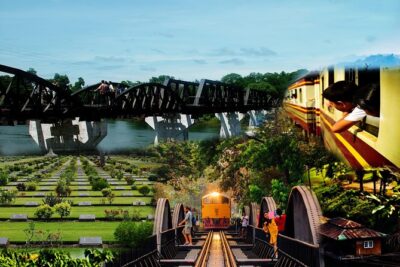 ★ 4.5Bridge on the River Kwai and Thailand-Burma Railway Guided TourFrom $94353 reviews
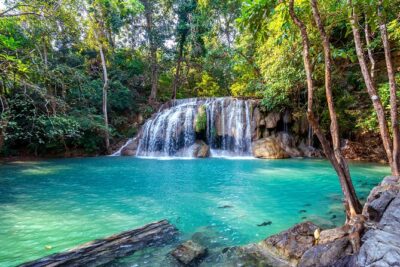 ★ 5.0Kanchanaburi Full Day Tour: River Kwai and Erawan FallsFrom $87327 reviews
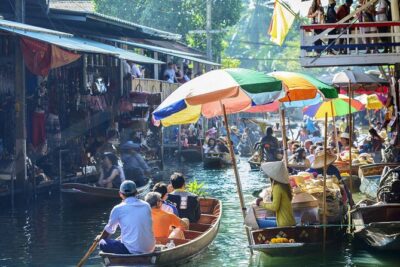 ★ 4.0Floating Markets and Bridge on River Kwai Tour from BangkokFrom $85253 reviews
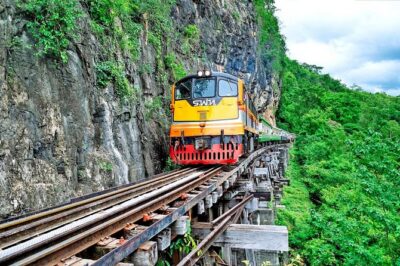 ★ 4.5River Kwai Day Tour from Bangkok – History, Scenery & CultureFrom $97206 reviews
Browse the lists this tour appears in