
REVIEW · THAILAND
Chiang Mai : Traditional Lanna Bamboo Fan Weaving
A handmade fan cools you twice. This 90-minute Chiang Mai workshop turns simple bamboo into a graceful, wave-like fan, with real coaching from Baannoi Nornmuan (Bunnoi). I love the hands-on small-group attention and the butterfly pea with lime and honey drink, but plan to get there yourself since no pickup is included.
It is a private group class, so families and couples can ask questions and get time at the workbench instead of rushing through. You’ll also be in a calmer part of town in the Wat Gate area, which makes the skill feel like something local, not a performance.
In This Review
- Key things to know before you go
- 90 Minutes in Rat-U-Thit: The workshop pace that actually works
- Meet Baannoi Nornmuan, with English and Thai guidance
- From bamboo strips to a wave-like fan shape
- The drink break: butterfly pea tea, lime, and honey
- Lanna bamboo weaving: what you learn and why it matters
- Take-home results, plus small practical tips
- Price and value: why $22 feels fair here
- Who should book this, and who might want a different activity
- Book it or pass: my decision guide
- FAQ
- How long is the Chiang Mai bamboo fan weaving workshop?
- Where does the workshop take place?
- What does the price include?
- Is food or pickup included?
- What languages will the instructor speak?
- Can I cancel and get a refund?
Key things to know before you go
- A real take-home result: you finish a bamboo fan you can use or display.
- Lanna fan-building techniques: you learn how the woven structure creates that wave movement.
- English and Thai support: your instructor can guide you in both languages.
- Small, private pacing: you should feel comfortable going at your own speed.
- A local-family setting in Chiang Mai: you practice in a neighborhood vibe, not a factory.
- Included butterfly pea drink: a sweet-sour refreshment while you work.
Narrowing it down? Here is what else got written up around Chiang Mai.
- Half-Day Thai Cooking Class at Organic Farm in Chiang Mai★ 5.0 · 19,087 reviews
- Chiang Mai: Elephant Sanctuary, Waterfall & Bamboo Rafting★ 4.9 · 9,160 reviews
- Chiang Mai: Doi Inthanon National Park Eco-Friendly Tour★ 4.6 · 6,667 reviews
- Chiang Mai: Elephant Sanctuary & Waterfall Group Tour★ 4.9 · 5,780 reviews
90 Minutes in Rat-U-Thit: The workshop pace that actually works
This class is set up for short attention spans and travel-fatigue. The whole experience runs about 90 minutes, with instruction and hands-on time focused on getting you to a finished fan rather than just watching demonstrations. At $22 per person, the value is less about a fancy souvenir and more about paying for a practical skill you keep.
You’ll start at the beginning, then move step by step into the weaving process that shapes the fan. Bamboo work is mostly about patience and small motions, so the timing matters. Too short, and you’d feel rushed. Too long, and it turns into a chore. Ninety minutes hits a sweet spot for most people.
Before you go, think about your outfit. Wear something comfortable and easy to move in, since you’ll be sitting close to the work. You probably won’t need anything special, but you will want clothes you do not mind getting a little bamboo dust on.
Also, since it is a private group, you should expect the session to feel flexible. If your group includes kids or elders, that matters, and the flow should adjust so everyone can participate.
Meet Baannoi Nornmuan, with English and Thai guidance

The heart of this workshop is the host, Baannoi Nornmuan, often called Bunnoi. The vibe from past participants is consistent: warm welcomes, lots of attention, and a calm pace that helps you learn without pressure. That kind of host makes a difference, especially if your Thai is limited.
The instructor(s) provide help in English and Thai, so you are not stuck in silence if you do not catch a step the first time. One nice detail is that the class setting pushes you to communicate, even if you need a few extra words or gestures. It is a simple way to feel connected to Chiang Mai beyond ordering food and taking photos.
This is also a family-friendly setup in practice, not just on paper. People have done the activity with multiple generations, and the experience is structured so everyone can get enough time to make their own fan. If you are traveling with kids, this is the kind of activity that gives them something to do with their hands while also teaching patience.
From bamboo strips to a wave-like fan shape
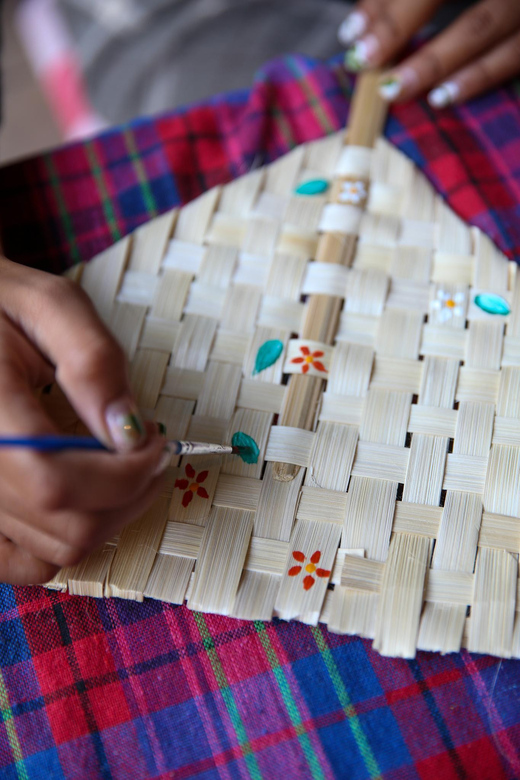
The goal is clear: you leave with a handmade bamboo fan. The learning begins with an introduction to bamboo weaving, including why it is significant in the Lanna tradition. Then you move into techniques for fan construction, which is where the magic happens.
You are not just weaving random patterns. The fan’s look comes from how the bamboo is arranged and woven so it flexes into that gentle wave motion. In other words, the structure is functional as well as decorative. When you hold your finished fan, it should feel like something built to work, not merely something to admire.
As you work, you’ll likely notice that the technique is all about tension and alignment. Too loose and the fan won’t hold its shape. Too tight and it becomes harder to keep the weaving even. This is exactly why patient instruction matters. A good teacher helps you correct the small mistakes early, before they snowball.
At the end, you take your fan home. That matters more than you might think. Many workshops leave you with a photo and a vague memory. Here, the product is physical and useful, which makes your time feel purposeful rather than just recreational.
Also, because the workshop is private and guided, you should feel comfortable asking questions. If a step feels confusing, you can slow down and get another explanation instead of watching the rest of the group move on.
The drink break: butterfly pea tea, lime, and honey
Included in the workshop is a drink: butterfly pea with lime and honey. It is served while you work, so it functions like a reset button for your brain and hands. If you have spent several days bouncing between temples, markets, and tours, this is the kind of break that feels restorative.
Butterfly pea drinks are known for their striking color, but the real value here is how the flavor balances the time at the table. Lime adds brightness, and honey rounds it out. You’re not just sitting with a beverage. You’re pausing between weaving steps, then continuing with fresher focus.
This is also a small cultural touch. You are not only learning a craft, you are being hosted in a home-like setting where food and drink are part of the experience. If you have ever had a class where the only perk is a certificate, you’ll appreciate how this one treats the group like people, not ticket numbers.





Lanna bamboo weaving: what you learn and why it matters
The workshop includes cultural insights tied to Lanna bamboo fan weaving. You’ll hear the history and significance of bamboo weaving, and how these skills connect to daily life and local identity. The way it is taught matters. Instead of turning the craft into a lecture, the cultural context is woven into the process, so you understand why the technique exists.
Bamboo weaving is a practical skill because bamboo grows well and can be turned into light, useful objects. Fans are one of the easiest examples of that practicality, especially in Thailand’s warm climate. But the Lanna angle is that the fan becomes more than a tool. It is also a visual expression of careful work.
What I like about this kind of teaching is that it gives you something to look for after the workshop. When you see bamboo fans later, you can think about the labor and decisions involved. You also notice the differences in weaving style and structure, instead of just seeing a souvenir.
If you care about crafts, hand skills, and learning how locals preserve tradition, this is a strong match. If you only want something quick to photograph, you might find the slower rhythm more satisfying if you come with patience.
Take-home results, plus small practical tips
Your final product is your own bamboo fan, built during the session. That makes the workshop more than an activity. It becomes a memory you can use. Even if you do not think you’ll fan yourself in daily life, it still works as a practical reminder of the day.
Before you finish, keep an eye on two things while you weave: the fan’s overall shape and how cleanly the layers sit together. Good instruction should guide you, but you can also check your progress as you go. If something looks uneven early, fix it early, not at the end.
After the workshop, be ready for the fact that handmade items are never factory-perfect, and that is the point. Your fan will likely reflect your group’s pace and your own choices. If you enjoy crafts, that personal touch will feel satisfying instead of disappointing.
One more practical point: since no food is included, plan your meal around the class time. If you arrive hungry, you might focus less on weaving details. A simple snack before you go can make the whole experience smoother.
Price and value: why $22 feels fair here
At $22 per person, this workshop feels like a good value because you receive multiple core things that are expensive to produce on the local end.
First, you get instruction in English and Thai, not a solo self-guided craft kit. Coaching takes time, and the host’s attention matters, especially for groups that include kids or grandparents.
Second, materials are included. Bamboo is not just the theme, it is the actual working material for your fan. You do not need to buy supplies elsewhere or worry about finding a shop later.
Third, you get an included drink, butterfly pea tea with lime and honey. That might sound small, but it signals that this is a hosted experience with comfort built in.
What is not included is also clear. There’s no food, and there is no pickup car. So you’ll want to budget for transport to the address and consider eating beforehand or after. Once you account for that, the price still compares well to craft activities that focus only on a short demonstration.
For value, the real test is what you take home. Here, you leave with something you made. That justifies the cost far more than a class that gives you only a stamp or a quick souvenir.
Who should book this, and who might want a different activity
This workshop fits best if you want a break from nonstop sightseeing and you enjoy doing something with your hands. It is especially good for families because the private format supports different ages and attention levels. People have brought grandparents, parents, and children and still felt everyone got enough time to make their own fan.
It is also a strong option if you want interaction with local hosts. The class takes place in a neighborhood setting, and the connection comes from sitting with a local family and learning directly. If that sounds like your kind of travel, you’ll likely love the day.
On the other hand, if you hate slow, careful tasks, or if you want a high-energy tour with lots of movement and photo stops, this may feel too calm. The point here is steady weaving, not a sprint.
Also consider language expectations. Even with English and Thai support, you should still be ready to communicate your needs. If your group prefers everything ultra-structured with no back-and-forth, you might find it slightly more personal and less scripted than a typical tourist workshop.
Book it or pass: my decision guide
You should book this workshop if you want a meaningful Chiang Mai day that stays simple: learn a traditional Lanna bamboo technique, get guided in English and Thai, and take home a fan you actually made. The private group setup and the warm family-host feel are a big part of why this is worth your time, especially if you are traveling with kids or mixed-age relatives.
I would skip it if you are looking for a full-day cultural itinerary with multiple stops, because this is a focused craft session. It is also not the best choice if you rely on pickup transport, since you will need to make your own way to the address at 7/6 Rat-U-Thit rd., Soi 4, T. Wat gate, A. Muang Chiang Mai, 50000.
If you want a calm, hands-on, local experience with real results in 90 minutes, this one is an easy yes.
FAQ
How long is the Chiang Mai bamboo fan weaving workshop?
The workshop lasts about 90 minutes (about 1 to 1.5 hours).
Where does the workshop take place?
It takes place at 7/6 Rat-U-Thit rd., Soi 4, T. Wat gate, A. Muang Chiang Mai, 50000.
What does the price include?
Materials (bamboo) and a drink are included, plus instruction during the workshop.
Is food or pickup included?
No. Food is not included, and pickup car is not included.
What languages will the instructor speak?
The instructor speaks English and Thai.
Can I cancel and get a refund?
Yes. Free cancellation is available up to 24 hours in advance for a full refund.
What else made it into the Thailand notebook
What else made it into the Chiang Mai notebook
- Walk With Monks Collecting Alms(meeting point maybe change)
★ 4.9 · 8 reviews - Doi Suthep and Hmong Hilltribe Half Day Tour in Chiang Mai
★ 3.5 · 8 reviews - Aroidee’s Farm-Fresh Thai Cooking Experience
★ 5.0 · 8 reviews - 2- Days in Doi Inthanon National Park
★ 4.5 · 8 reviews - Khantoke Dinner Experience & Cultural Dance Show with Transfers
★ 4.0 · 8 reviews - Sticky Waterfalls Private Half Day Fun Escapades
★ 4.5 · 8 reviews