
REVIEW · TOURS
Bangkok: Jim Thompson House and Baan Krua Community Tour
A visit to Thai silk starts with a house. You’ll see Jim Thompson House and its traditional teak buildings, then cross over to the Baan Krua canal neighborhood where silk weaving is still a living skill. I like that the stops are connected, the house tells the story, and the community shows what’s still made today.
Two things I really like: the house complex is carefully staged, with teak structures brought from across Thailand, and it’s grounded in a real timeline, including that the construction was completed in 1959. The second win is practical, you get a chance to shop from the Baan Krua silk makers directly instead of only buying souvenirs from a faraway store. One drawback to keep in mind, the community side can feel smaller than you might expect, and shopping time can turn into a sales moment, so set a budget before you start browsing.
In This Review
- Key highlights worth planning for
- From hotel pickup to teak houses: the Jim Thompson House experience
- What I think you should watch for inside
- The real story shift: heading to Baan Krua Nhua by the canal
- Uncle Aood’s home workshop and what “quality silk” means in real life
- A quick guide-name detail worth knowing
- How the guide and driver can make or break a half-day
- Price and value: is $55 fair for a 4-hour silk and house day?
- Timing, what fits best, and how to plan your day
- Who this tour fits best
- Pros, cons, and the bottom-line vibe
- Should you book this Jim Thompson House and Baan Krua tour?
- FAQ
- How long is the Jim Thompson House and Baan Krua Community Tour?
- What time does the tour typically start in Bangkok?
- Where do you get picked up from?
- What transportation is provided during the tour?
- What does the ticket include?
- Is lunch included?
- Which languages are available for the guide?
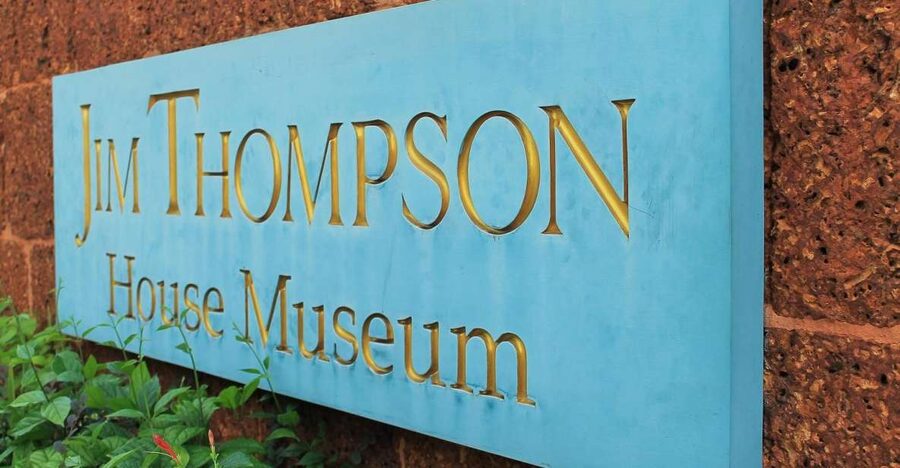
- What do you see at Jim Thompson House?
- Can you buy silk during the tour?
- What is the cancellation policy?
Key highlights worth planning for
- Hotel pickup in central Bangkok around 08:30, plus an air-conditioned car and private round-trip transfers
- Jim Thompson House tour with an English-speaking guide and an entrance ticket included
- A traditional teak-house complex completed in 1959, with houses originally sourced from different parts of Thailand
- Baan Krua Nhua by the Klong Saen Saeb River, tied to the Cham community since King Rama I
- See Uncle Aood’s home workshop, one of the last families still weaving for a living
- Buy Thai silk on site, focusing on quality texture, color, and durability
From hotel pickup to teak houses: the Jim Thompson House experience
This tour is built for a smooth half-day, starting with pickup from your hotel in central Bangkok (around 08:30). You ride in an air-conditioned car, which matters in Bangkok heat and traffic, especially if you want to see the museum before your day gets crowded. If you’re the kind of traveler who likes a clear game plan, this schedule gives you one.
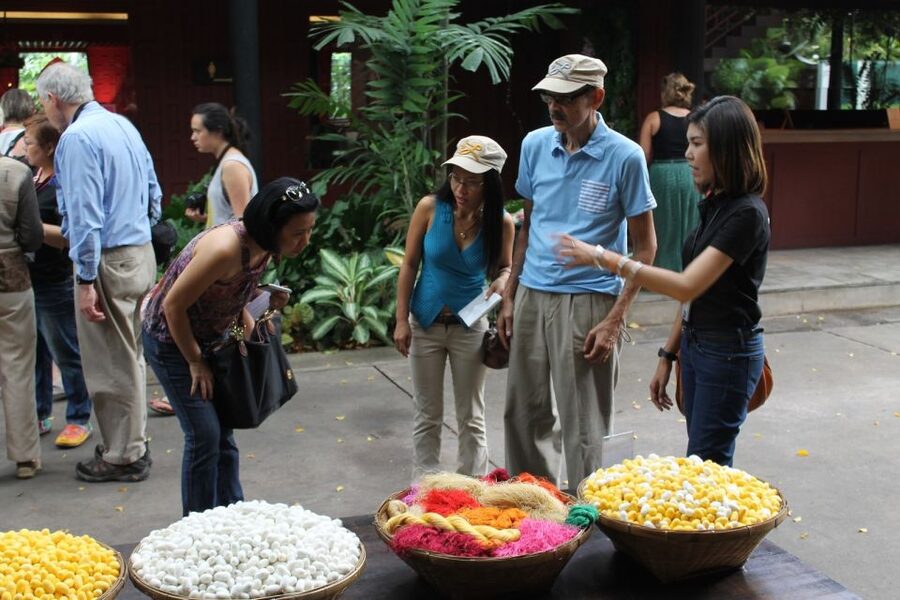
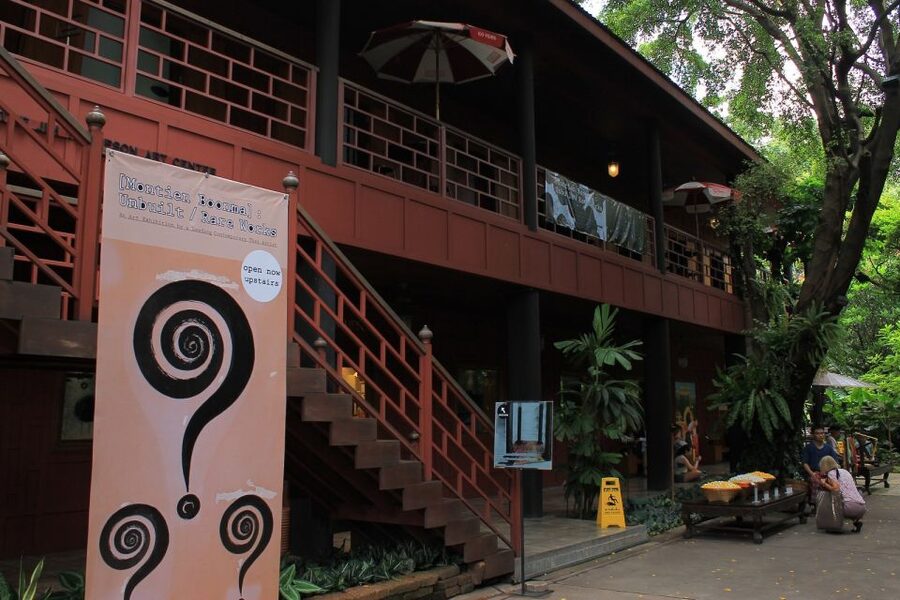
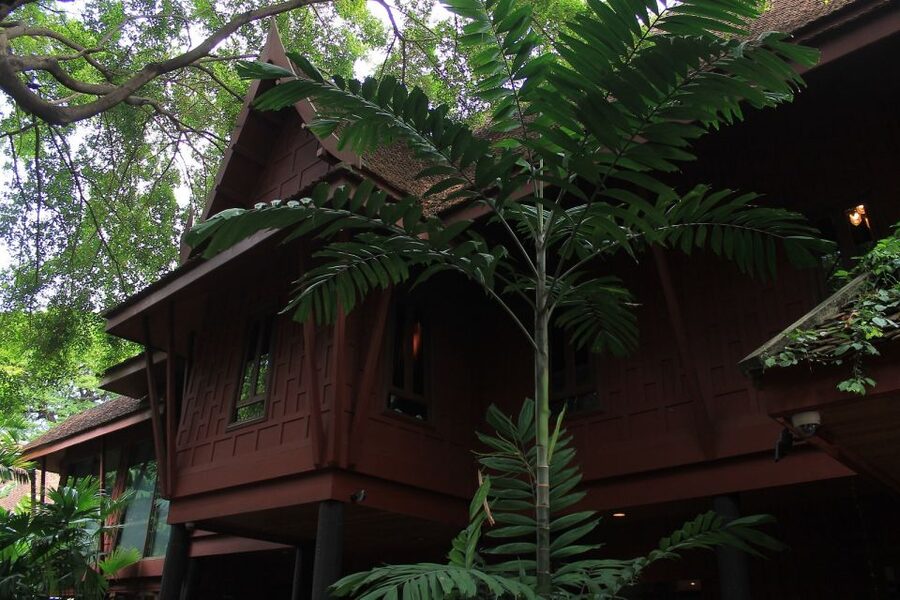
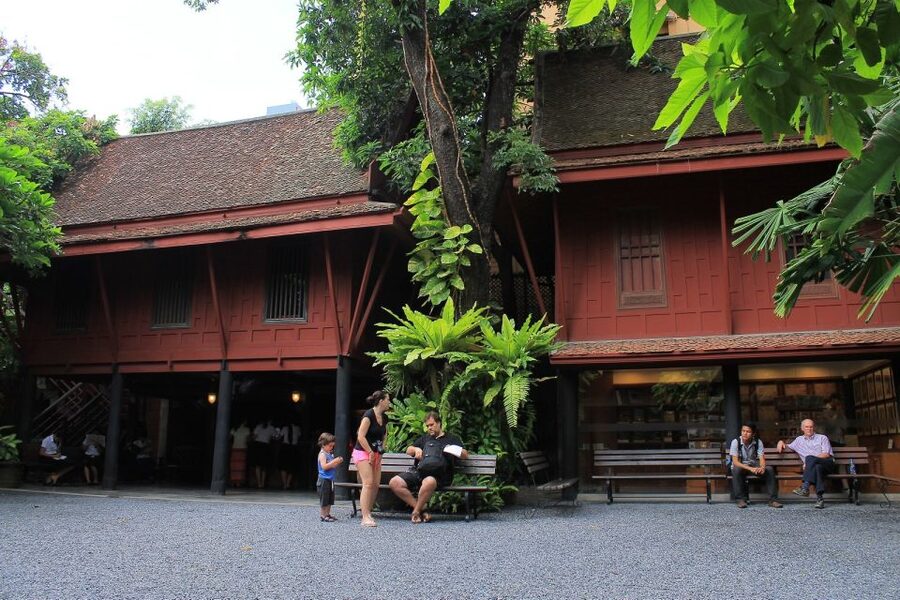
At Jim Thompson House, your guide usually gives you some context before you go inside. Then you enter a complex made of multiple traditional Thai-style houses, described here as six teak structures that were purchased from different owners and brought to this location from across Thailand. It’s not just architecture as decoration, the whole setup is meant to show how traditional wooden homes function and how art and objects are arranged.
One of the details I found most useful for understanding the place is the timeline. The complex construction is described as completed in 1959, and since Jim Thompson’s disappearance in 1967, little has changed in the home that once acted as a major social center in the city. That continuity is part of what makes the visit feel less like a generic museum stop. You’re walking through a home that still reads like a home, not only a display.
Inside, your guide escorts you through different sections. This is where an English-speaking guide earns their keep. You can see the rooms and learn the basics on your own, but the guide’s job is to connect the space to the larger story of Thai culture and silk. Also, guided pacing matters here. You’ll know where to look, what to notice, and how to avoid rushing through the best parts.
What I think you should watch for inside
The house is teak, woodwork, and layout. So keep your attention on:
- How rooms connect and how the complex feels like a living compound rather than a single building
- Decorative details that hint at regional Thai styles
- Arrangement choices, since the place gained meaning through Thompson’s role in Thai silk and collecting
If you already love Thai architecture and textiles, you’ll probably enjoy the house more than you expect. If you’re not that kind of museum person, you can still get value from the next stop in Baan Krua, because the tour ties the two together.
The real story shift: heading to Baan Krua Nhua by the canal
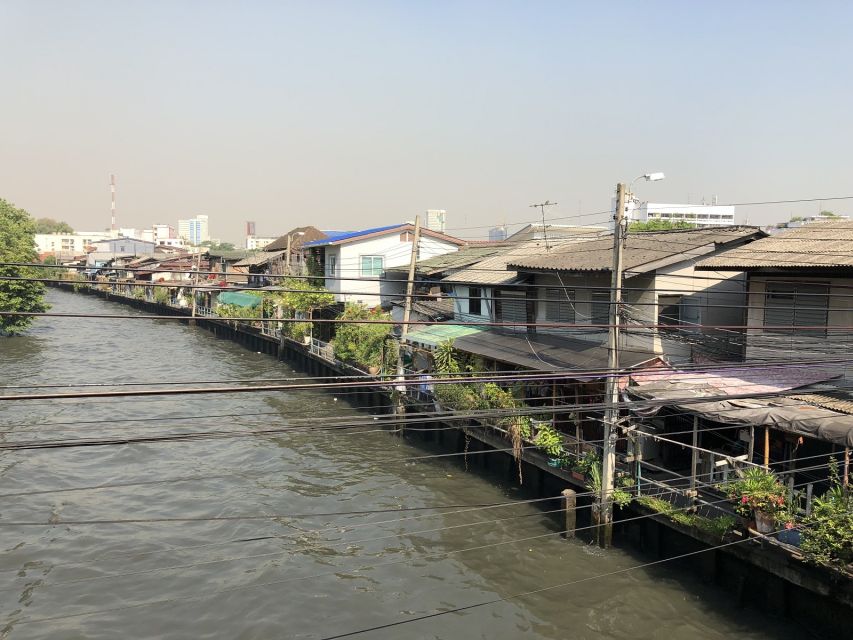
After the house, you transfer to Baan Krua Nhua, located on the bank of the Klong Saen Saeb River. This neighborhood link is not a random add-on. The community has long been associated with the Cham people, described here as working as fishermen and silk weavers since the reign of King Rama I.
This is the moment where the tour becomes more than sightseeing. Jim Thompson is often remembered through the house, but this area brings the story down to real labor and real craft. The silk weaving tradition here is presented as a thread that connects history, community work, and international demand.
Your guide explains the legend of Jim Thompson’s connection to Thai silk, including how he was fascinated by the craft and supported weaving in the community. It’s also explained that he bought silk weaving output into his company, helping the Jim Thompson brand become well known. In other words, the tour isn’t just romantic, it’s about trade links and how a niche craft became famous.
And then you see what happens today.
Uncle Aood’s home workshop and what “quality silk” means in real life
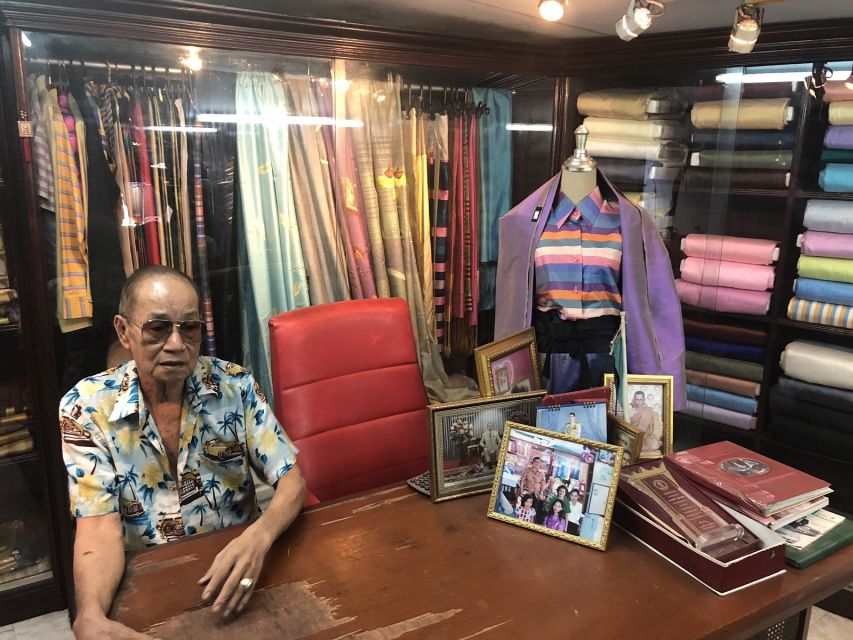
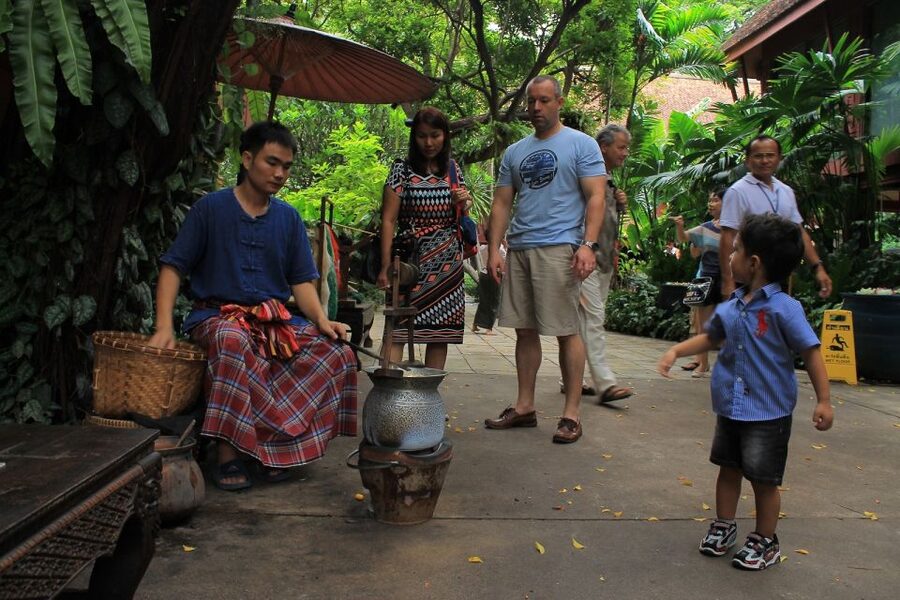
One of the standout elements of this tour is the visit to the house of Uncle Aood, described as one of the last family members in the community who still makes silk for a living. Meeting the last link in a chain like this changes how you read the word tradition. It stops being a concept and becomes a person, a routine, and a set of tools.
You’ll also have the chance to buy silk products directly from the original community place. The tour description emphasizes silk quality through its texture, color, and durability. That’s the right kind of claim to look for when you shop, not just patterns that look pretty in a store window.
Here’s how I suggest you handle the shopping part without getting stressed:
- Treat the purchase as optional. If the prices feel high, that’s your call.
- Ask what you’re buying in simple terms, especially if you’re trying to distinguish garments versus fabric.
- Keep your budget in mind before you enter the shop zone.
One balancing note from real-world experience with this kind of stop: some communities doing craft work have shifted over time. In this case, the silk weaving is still alive, but the scope can be limited. So you may find that only certain parts of the neighborhood are actively weaving on looms, while other production may happen elsewhere. That doesn’t ruin the value, but it helps you set expectations.
A quick guide-name detail worth knowing
Good guides can make the craft section feel clear and human. Names that have come up for English guides include Tum Tum and Kiwi (pronounced like the fruit). The useful part isn’t the name itself, it’s the pattern: these guides tend to connect history to how silk is made and take time to answer questions rather than moving you along like you’re in a hurry.
How the guide and driver can make or break a half-day
This tour leans hard on people skills, and it shows. The setup includes pickup and return transfers, so you’re spending time in the car, and Bangkok traffic is not the time to be annoyed. Professional, friendly driving and a guide who knows how to explain without rushing have a big impact on your comfort.
A detail that matters: your guide is expected to be English-speaking, with some Thai mentioned as well. That means you’re not relying on a pamphlet. Instead, you can ask what you actually want to know, like how the traditional houses were gathered, why the Cham community became known for weaving, or what makes silk here different.
You may also get shopping direction, like suggestions for where to shop depending on what you care about. That kind of guidance can save you money and time later, because you’ll know what you’re looking at when you see it around town.
Price and value: is $55 fair for a 4-hour silk and house day?
At $55 per person for about four hours, the best way to think about value is what’s included. You’re getting:
- Private round-trip transfers from Bangkok CBD hotels
- The Jim Thompson House entrance ticket
- An English-speaking guide
- All taxes and fees
What’s not included is also clear: no lunch, and personal expenses are on you.
So is it a good deal? It’s fair if you want the guide for interpretation and the car for convenience. Without a guide, you’d still be able to visit the Jim Thompson House museum, but you might miss the connected narrative that leads you to Baan Krua and helps you understand why silk matters in this city. Without transfers, you’d spend extra time coordinating transport, which is often the hidden cost in Bangkok.
If you already plan to DIY two separate stops and you’re comfortable navigating on your own, the value can shrink. This tour shines when you want one smooth morning or late morning with context and minimal friction.
Timing, what fits best, and how to plan your day
The tour is described as starting around 08:30 AM, with the duration listed as about four hours. That’s a smart length if you want to see something meaningful without sacrificing the rest of your Bangkok day. After you get back, you’ll have time to do another neighborhood walk, try street food, or squeeze in a second museum without feeling like you’re running a marathon.
Because lunch is not included, you have two realistic options:
- Eat before you go, then keep snacks or water on hand if you get hungry
- Plan a lunch stop right after you’re dropped off
Also, since this is a house-and-community type of visit, wear comfortable shoes. You’ll be moving through traditional spaces, and you’ll likely spend enough time outside around the community area that good footing matters.
Who this tour fits best
This is a strong match if you:
- Like culture that connects architecture to craft
- Want an educational stop without spending all day inside a museum
- Enjoy buying directly from makers, not just mass-market souvenirs
It’s less ideal if you:
- Hate any shopping pressure at craft stops
- Only want the museum and would rather skip the community visit
Pros, cons, and the bottom-line vibe
Here’s the balanced take. The Jim Thompson House portion is the anchor, and it’s especially good if you want traditional Thai teak homes with built-in context. The Baan Krua portion adds the human layer, and it’s the part that makes your silk shopping feel grounded in a real community practice.
The possible downside is expectation management. The community weaving side may feel limited in scope, and the selling element can be noticeable. If you treat it like an encounter with craft and ask questions, it’s rewarding. If you go in with the idea of a full, sprawling weaving village, you might find it narrower than you imagined.
Should you book this Jim Thompson House and Baan Krua tour?
I’d book it if you want a half-day that connects Bangkok’s best-known silk story to the people who still keep the skill going. The value is strongest because it bundles entry, interpretation, and door-to-door transfers into a single four-hour block.
Pass, or at least reconsider, if your goal is strictly museum time and you dislike craft shops where purchases are encouraged. In that case, you may prefer a self-guided house visit and then choose a different activity for the rest of your morning.
If you do book, my main advice is simple: go in curious, set a shopping budget, and use your guide’s time. That’s where this tour turns from a nice outing into a memorable slice of Thai life.
FAQ
How long is the Jim Thompson House and Baan Krua Community Tour?
The duration is listed as 4 hours, with starting times that can vary, so you should check availability for the exact start.
What time does the tour typically start in Bangkok?
The guide meets you at your hotel in Bangkok around 08:30 AM.
Where do you get picked up from?
Pickup is included from your central Bangkok hotel (Bangkok CBD area).
What transportation is provided during the tour?
You travel in an air-conditioned car, with private round-trip transfers between your hotel and the tour stops.
What does the ticket include?
The tour includes the entrance ticket to Jim Thompson House, an English-speaking guide, and all taxes and fees.
Is lunch included?
No. Lunch is not included, so you will need to plan your meal separately.
Which languages are available for the guide?
The guide is listed as English-speaking, with Thai also noted.
What do you see at Jim Thompson House?
You visit the Jim Thompson House museum, described as a complex of traditional Thai-style teak houses completed in 1959.
Can you buy silk during the tour?
Yes. You visit the Baan Krua community and have an opportunity to buy quality Thai silk products directly from the community, including from the last family member still making silk for a living.
What is the cancellation policy?
Free cancellation is offered up to 24 hours in advance for a full refund.
Tours, compared.
 ★ 4.7Ayutthaya Temples Guided Tour with LunchFrom $2810,535 reviews
 ★ 4.6Doi Inthanon National Park Eco-Friendly TourFrom $466,667 reviews
 ★ 4.9Elephant Sanctuary & Waterfall Group TourFrom $505,780 reviews
 ★ 4.9Cooking Class, Market & Thai Herbs Garden TourFrom $314,824 reviews
 ★ 4.8Elephant Sanctuary Feeding Program Half-Day TourFrom $274,527 reviews
 ★ 4.5City Highlights Temple and Market Walking TourFrom $423,990 reviews
 ★ 4.5Half-Day Railway Market and Floating Market Tour in ThailandFrom $323,924 reviews
 ★ 5.0Bangkok by Night: Temples, Markets and Food Tuk-Tuk TourFrom $793,752 reviews