
REVIEW · PHI PHI ISLANDS AND MAYA BAY TRIPS
2 Days PADI Advanced Course from Phi Phi
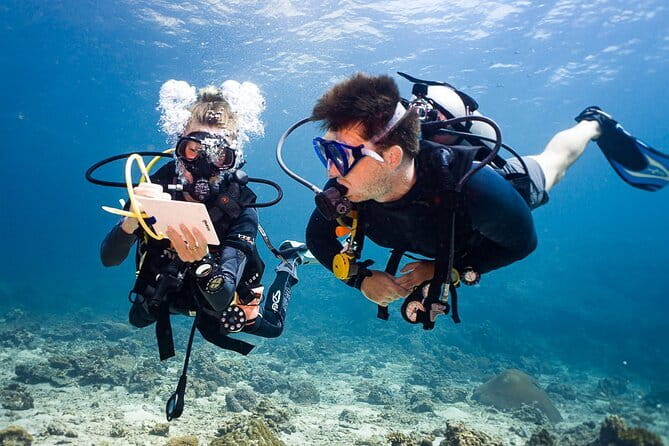
Underwater skills, minus the crowds. This 2-day PADI Advanced course from Phi Phi is built for serious progress in a place known for big scenery and busy boats, with a team that aims to find space and focus. You get a strong mix of classroom prep, controlled training, and time at famous Phi Phi islands like Ko Bida Nok and Ko Phi Phi Le.
What I like most is the small group size (max 10), which usually means you spend more time actually working on skills, not waiting your turn. I also love the center’s safety-first, eco-minded approach, plus the fact that they use the official PADI online program as part of the course flow.
One drawback to plan for: the Phi Phi National Park underwater fees are not included in the main price. You’ll pay these to rangers on-site, and the listed amounts are 800 THB for a 2-day option (or 1000 THB if you extend to 3 days).
In This Review
- Key things that make this course worth your time
- Why Phi Phi Advanced training here feels focused
- Two days, tight group size, and what that does for your confidence
- Your prep night: PADI eLearning review with your instructor
- Day 1 plan: Ko Bida Nok and learning that sticks
- Day 2 plan: Ko Phi Phi Le, plus your 30-meter performance check
- What you get for the money: $417.93 and the real value check
- Equipment, boats, and why smooth operations reduce stress
- Eco-minded training: conservation that changes how you act underwater
- Instructor fit: who you want teaching your 30-meter skills
- Weather, health, and when to be cautious
- Who this course suits best (and who might look elsewhere)
- Should you book this PADI Advanced course from Phi Phi?
- FAQ
- How long is the PADI Advanced course?
- What is the maximum group size?
- What’s included in the price?
- Are there extra fees you pay on top of the course price?
- How deep do you go during the course?
- Do you need to do PADI eLearning before the water sessions?
- Is this course recommended if I have asthma?
Key things that make this course worth your time
- Small classes (max 10): more hands-on time and less scrambling between briefings.
- Official PADI online program included: you prep in the same system you’ll certify through.
- Safety and professionalism emphasized: confidence-building instruction and structured training steps.
- Two iconic Phi Phi sites: Ko Bida Nok on day one, Ko Phi Phi Le on day two.
- A real 30-meter depth target: your first deeper-water session tops out at 30 metres.
- Good value add-ons: lunch, equipment use, a rental underwater computer, and certification fees are covered.
Boats out to Phi Phi and Maya Bay also got written up
- From Phi Phi: Sunrise & Beat The Crowds to Maya Bay by Speedboat★ 5.0 · 124 reviews
- Highlights of Phi Phi Islands★ 4.5 · 86 reviews
- Phi Phi 7 Islands Full-Day Tour From Phi Phi by Longtail Boat★ 4.0 · 67 reviews
- From Phi Phi: Half Day Trip for Certified Divers (2 Dives)★ 5.0 · 49 reviews
Why Phi Phi Advanced training here feels focused
Phi Phi is gorgeous, but it is also popular, so the smartest way to learn is with a team that actively tries to avoid chaos. This course is run by Blue View Divers, a long-running scuba center that highlights small groups and careful planning so your underwater time stays productive.
Another reason this works well is the style of instruction. In past student experiences, instructors like Michael and Becca have been called out for being attentive and professional, not just loud and enthusiastic. That matters, because the PADI Advanced course is where good technique and calm decision-making matter more than raw excitement.
You also get an added layer of meaning from the eco angle. The center’s mission is conservation-focused, and you can feel that in how they talk about marine life and how divers should behave around corals and wildlife.
Two days, tight group size, and what that does for your confidence
This is a 2-day program with a cap of 10 travelers, and that size is a big deal. When groups are small, you get better briefings, quicker feedback, and less time waiting on a boat while everyone else catches up.
It also helps with one of the hardest parts of Advanced-level training: managing your body, breathing, and attention at the same time. When an instructor can see what you’re doing clearly, they can correct small habits before they become bigger issues underwater.
The course is also positioned as a personal-service experience. The team is described as safety focused and professional, and that usually translates to practical coaching rather than vague advice. If you want to feel like you’re progressing step-by-step, this structure supports that.
One more detail that helps: the center uses the official PADI eLearning flow. That means the knowledge checks and course content aren’t random add-ons. You’re working inside the same framework you’ll be tested on.
Your prep night: PADI eLearning review with your instructor
Before you even hit the water, there’s a prep step. The day before the course starts, you meet your instructor to review eLearning chapters so you go into the training day prepared.
This is one of those small-seeming touches that pays off. If you show up already familiar with the material, you waste less time the next morning on fundamentals you could have handled the night before. You’re free to focus on skills, buoyancy, and decision-making, which is what you came for.
The course includes the PADI eLearning and certification fees, so you’re not paying extra just to get the paperwork and platform access sorted. You’ll still want to complete your eLearning chapters on your side, but the instructor review is built in.
Day 1 plan: Ko Bida Nok and learning that sticks
On day one, you meet near Phi Phi Pier about 30 minutes before departure for a briefing. That timing matters because the best briefings are calm, not rushed. You’ll want that moment to understand the plan, the equipment setup, and what you’ll be practicing.
Then you head to Ko Bida Nok for your day’s underwater sessions. This is where the course starts feeling like real ocean work, not just pool drills. The goal on day one is building comfort with Advanced skills while also seeing how those skills matter in open water conditions.
The course summary notes that the center uses a location with a training pool and view. Even if you’re doing most of the practice in open water, training setup like that can help you feel less “thrown in.” When you already know what your gear should do and how you should position yourself, your learning curve gets easier.
In the end, day one is about setting your baseline. You get the chance to build familiarity, then adjust during the next day when the course pushes you deeper into the skills.
Thai dive courses got read for the small print

Day 2 plan: Ko Phi Phi Le, plus your 30-meter performance check
Day two starts the same way: you’re back at the pier area for briefings before heading out. This repeat routine helps, because you’ll know what to expect on the boat and you can focus on the actual training tasks.
The main site is Ko Phi Phi Le, and day two includes a deeper-water component. On your first deeper-water session, the listed maximum depth is 30 metres. That’s the key benchmark for PADI Advanced style training, because depth changes how you manage breathing, buoyancy, and awareness.
There’s also a neat learning angle tied to the deeper-water session: you’ll compare colors as you go deeper. It sounds simple, but it reinforces how conditions change with depth and helps you understand why your perception is not the same at different meters.
Also, your experience should include structured coaching around safety and control. The center is repeatedly described as emphasizing safety and giving clear guidance, with instructors like Becca highlighted for making divers feel secure while educating them on eco-friendly behavior.
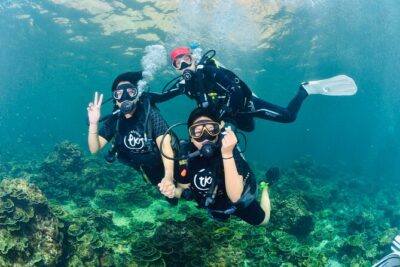
If you’re hoping to see big marine life, this is the part where many people feel the course delivers more than skills. Corals, turtles, and sharks have all been mentioned in student experiences, which is a reminder that learning and wonder can happen together if your training stays focused.
What you get for the money: $417.93 and the real value check
At $417.93 per person for two days, this course is priced like a full learning package, not a barebones tour. And the inclusions are meaningful, not just marketing bullets.
Included items:
- Scuba equipment use
- Lunch
- PADI eLearning course and certification fees
- Coffee or tea at the center
- Rental of an underwater computer
- Insurance listed as Basic Redemption only policy
- All fees and taxes
There are two value angles here.
First, equipment and certification fees are included. If you tried to separate those pieces on your own, you’d likely spend time and money stitching things together.
Second, the rental computer matters more than people expect. You’ll want clear tracking for depth and time, especially when your training includes a 30-meter target. A provided computer removes guesswork and helps you follow course guidance accurately.
The part to budget separately is the national park underwater fees. These are paid to rangers, and the listed amounts are 800 THB for a 2-day option. That’s not a tiny amount, but it’s also not unusual in popular protected areas. If you plan for it early, it feels like a straightforward add-on rather than a surprise.
Equipment, boats, and why smooth operations reduce stress
The course also sounds logistically smooth. Communication is described as strong, booking as seamless, and the whole flow as organized. That might not sound “underwater exciting,” but it makes a difference when you’re doing training.
Less stress on land means you reach the water calmer. And calm is the secret ingredient for buoyancy control and breathing rhythm.
You’ll also be in a controlled small-group setting, and that reduces the chance of equipment delays or last-minute confusion. Student feedback also praises the equipment quality, which is what you want in a course where your body position and gear setup affect your learning.
The boats are described as nice, and you’ll likely appreciate that on long course days. Comfort on the ride matters because it helps you keep energy for the training.
Eco-minded training: conservation that changes how you act underwater
This center explicitly frames itself as eco focused. That doesn’t mean you sit through a lecture and forget it. In practice, it usually shows up in how you’re coached to move in the water and how you treat living things on the reef.
You should expect guidance that supports conservation-minded habits, like minimizing contact with corals and keeping your buoyancy stable so you’re not bumping the bottom. For Advanced divers, those habits are part of responsible technique, not just rules.
There’s also a social layer. When an instructor frames marine life respectfully, you tend to look more carefully. That can be part of why student experiences include highlights like turtles and sharks, with a sense of excitement that isn’t careless.
If you’re the type who wants your scuba training to feel meaningful, this eco approach is one of the strongest reasons to choose this center.
Instructor fit: who you want teaching your 30-meter skills
A big part of whether an Advanced course feels great comes down to the instructor. In the past, names like Michael and Becca have been singled out for professional, attentive coaching and for boosting confidence.
That’s especially important here because the course includes deeper-water work. A good instructor doesn’t just set tasks, they also help you manage nerves and stay methodical.
What you can look for in your own fit:
- Clear explanations before each session
- Reassurance and direct feedback after each practice
- Safety checks that feel systematic, not rushed
Based on the teaching style described, the center seems to emphasize safety and professionalism consistently. That reduces the chances that you feel lost or pressured.
If you’re coming from Open Water and want to level up without feeling overwhelmed, this structure tends to suit that goal.
Weather, health, and when to be cautious
Like most Phi Phi water days, the schedule depends on conditions. The experience is described as requiring good weather, and if the course is canceled due to poor conditions, you’re offered a different date or a full refund.
Health-wise, there’s a clear caution: it’s not recommended for travelers with asthma. If that applies to you, you should talk with a dive medical provider before committing to any training that involves pressure changes.
The course also calls for moderate physical fitness. You don’t need to be an athlete, but you should be comfortable enough with typical day-on-the-boat energy and the effort involved in gear handling and controlled breathing.
Finally, note the overall experience terms: it’s non-refundable and cannot be changed. That’s a big deal when you’re deciding. If your dates are flexible, you might be safer elsewhere. If your timing is solid and you’re ready to commit, it’s easier to justify.
Who this course suits best (and who might look elsewhere)
This Advanced course makes strong sense if you want a structured step up from basic scuba training and you care about learning in a calm, organized way. The small-group limit helps, and the inclusion list supports the idea that you’re paying for a real course, not just a boat trip.
It’s also a good match for divers who want a balance of skills and marine life. The course sites are selected to showcase marine life while respecting delicate ecosystems.
Consider alternatives if:
- You have asthma and can’t safely do scuba training
- You dislike fixed commitments (the non-refundable nature is real)
- You’re on a very tight budget once you add the national park underwater fees
Should you book this PADI Advanced course from Phi Phi?
If you want an Advanced PADI course with small groups, strong safety emphasis, and instructors described as professional and confidence-building, this is a solid choice. The package value is also clear because equipment use, lunch, eLearning and certification fees, and an underwater computer are included.
I’d especially recommend it if you like the idea of learning with an eco-minded team and spending your two days on well-chosen Phi Phi sites rather than bouncing around aimlessly.
My main push to decide is budgeting plus commitment. Plan for the Phi Phi National Park underwater fees and be comfortable with the non-refundable terms. If those two boxes check out for you, this course looks like a smart, focused way to build real scuba confidence in a place that’s famous for what you can see.
FAQ
How long is the PADI Advanced course?
It runs for 2 days (approx.).
What is the maximum group size?
The experience has a maximum of 10 travelers.
What’s included in the price?
It includes all fees and taxes, scuba equipment use, lunch, PADI eLearning course plus certification fees, coffee or tea, insurance (Basic Redemption only policy), and rental of an underwater computer.
Are there extra fees you pay on top of the course price?
Yes. Phi Phi National Park underwater fees are payable to rangers. The listed amounts are 800 THB for a 2-day option (and 1000 THB for a 3-day option).
How deep do you go during the course?
On your first deeper-water session, the maximum depth is 30 metres.
Do you need to do PADI eLearning before the water sessions?
Yes. Before the training days, you meet your instructor to review eLearning chapters so you are prepared.
Is this course recommended if I have asthma?
No. It is not recommended for travelers with asthma.
What else made it into the Thailand notebook
Dive courses, and what the certification actually covers
Boats to Phi Phi and Maya Bay, continued
What else made it into the Ko Phi Phi Don notebook
- From Phi Phi Don | Half Day Discover Scuba Diving 2 Dives
★ 5.0 · 8 reviews - Half Day Tour Around Phi Phi Islands By Private Longtail Boat From Phi Phi
★ 3.5 · 9 reviews - Explore Phi Phi Islands by Ferry – Snorkeling & Lunch Included
★ 4.0 · 10 reviews - Travel from Koh Phi Phi to Krabi by Ferry/Speedboat
★ 4.0 · 10 reviews - Half-Day Morning Bamboo Island Tour from Phi Phi by Longtail Boat
★ 3.5 · 11 reviews - 2 Days PADI Advanced Course from Phi Phi
★ 5.0 · 13 reviews
Phi Phi Islands and Maya Bay Trips, compared.
 ★ 4.3Phi Phi Islands Speedboat Day TourFrom $513,340 reviews
 ★ 5.0Phi Phi Islands Adventure Day Trip w/ Seaview Lunch by V. MarineFrom $913,295 reviews
 ★ 4.4Phi Phi Islands and Maya Bay Day Trip with LunchFrom $343,204 reviews
 ★ 4.2Half-Day Longtail Boat Tour with SnorkelingFrom $241,733 reviews
 ★ 4.2PhiPhi, Maya Bay & Khai Island Day Tour with LunchFrom $471,607 reviews
 ★ 5.0Luxury Small Group Phi Phi Sunrise from PhuketFrom $1741,447 reviews
 ★ 5.0Full-Day Phi Phi Islands Tour with Lunch from KrabiFrom $1221,392 reviews
 ★ 4.1Phi Phi, Maya Bay, & Khai Islands Premium TripFrom $521,328 reviews
Browse the lists this tour appears in