
REVIEW · BANGKOK CHINATOWN FOOD WALKS
PRIVATE – STEET FOOD TOUR CHINA TOWN incl. food and drinks
Chinatown at night is a food maze. This private Bangkok street food tour helps you eat your way through Yaowarat with five food and drink tastings, plus guided stops at major landmarks, so you spend less time guessing and more time chewing. I especially like the private, personalized pace and the fact that you get both food time and quick culture stops, not just random stall hopping. One consideration: it is Thai-Chinese food with pork, so it is not a great fit for vegetarians.
You also get flexible evening departures, a mobile ticket, and a guide who knows how to navigate the streets when it is loud, crowded, and easy to miss the good stuff. If you plan to stay near Chinatown, traffic delays are less of a stress factor when your start point is on Rama IV.
In This Review
- Key things to know before you go
- Bangkok’s Yaowarat tastes better with a guide
- Price and value: what $112.31 buys you
- Meeting point and how to avoid a travel headache
- Stop 1: Wat Traimit introduction, but the Golden Buddha is closed
- Stop 2: The Chinatown gateway stop that sets the tone
- Stop 3: Kuan Yim Shrine at Thian Fa Foundation
- Stop 4: Yaowarat street food time with five Thai-Chinese tastings
- Guides, pacing, and why private feels different in Chinatown
- Food reality check: pork-heavy tastings and allergy caution
- Timing and comfort in a 3-hour night plan
- How this stacks up against DIY Chinatown eating
- Who should book this Chinatown street food tour?
- Should you book this tour?
- FAQ
- How long is the Chinatown street food tour in Bangkok?
- What does the tour include?
- Where do I meet, and where does it end?
- Will I go inside Wat Traimit to see the Golden Buddha?
- Is this tour suitable for vegetarians?
- What food can I expect during the main Chinatown tasting?
Key things to know before you go
- Private tour, just your group with a guide who keeps you moving and ordering with confidence
- Five tastings, four stops, so you get variety without turning the night into an endurance test
- Evening departures make it easier to slot into your Bangkok schedule
- Landmark stops included (Wat Traimit intro, Chinatown gateway, Kuan Yim Shrine) for context beyond the food
- Pork is common, so plan around your dietary needs
- Rain gear is handled in practice, since guides have been ready with ponchos when weather shifts
Yaowarat eating walks sat in the same folder
- Bangkok Authentic Tasting Thai-Chinatown Walking Food Tour★ 4.9 · 852 reviews
- Bangkok: Tuk Tuk Adventure Chinatown Michelin Food & Temples★ 4.3 · 725 reviews
- Bangkok Tuk-Tuk Tour by Night with Chinatown Street Food Meal★ 5.0 · 635 reviews
- Bangkok by Night Food Tour with 10+ Tastings in Chinatown★ 5.0 · 545 reviews
Bangkok’s Yaowarat tastes better with a guide
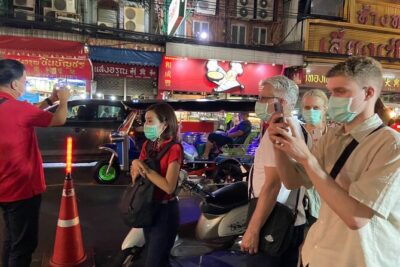
Bangkok’s Chinatown, centered on Yaowarat, can feel like a switch flips the moment evening arrives. The smells hit first, then the street motion starts, then you realize you are supposed to pick from dozens of options without a map or a translator.
This tour fixes that problem the practical way. You follow your guide through the area, and you get pointed toward stalls that match the style of Thai-Chinese street food the neighborhood is known for. You also learn what you are seeing as you walk, like the Chinatown landmarks and the Chinese-influenced details around the shrines.
I like that the experience is not just about eating. The schedule includes short stops that give you context fast, so you understand why certain places matter, even if you are only there briefly. It is a good format when you do not want to spend your whole trip in a classroom, but you also do not want food with zero meaning.
Price and value: what $112.31 buys you
At $112.31 per person for about 3 hours, this is not a cheap snack crawl. But when you break it down, the cost starts to make sense for the kind of night you get.
First, you are paying for a guide, not just food. In a private setup, the guide can adapt to your group, keep timing tight, and handle ordering and moving through crowded lanes. Second, you get five tastings plus drinks, which means you are not paying out of pocket for every small purchase. Third, the tour includes local fees and travel insurance, which reduces the hidden extras that can pop up when you DIY.
Where you should be honest with yourself is how you handle dietary limits and how hungry you actually are. Since the food is mostly pork, you want to be sure you are comfortable with that. If you do not eat pork, you will likely be stuck with fewer options than the tour is designed for.
Meeting point and how to avoid a travel headache
Your start point is at 1 Thanon Rama IV, near Khwaeng Maha Phruttharam, Khet Bang Rak. The tour ends back at that same meeting point, and there is no hotel pickup or drop-off, so you need to be ready to reach the area yourself.
This matters because Bangkok traffic can turn “nearby” into “why is it taking so long.” A tip that comes up in real feedback: if you can, staying closer to Chinatown helps you avoid the timing chaos. If your hotel is far, plan extra buffer time for getting to Rama IV.
Good news: the tour notes that you are near public transportation. That is useful in Bangkok, where routes can be easier than road travel when rush hour hits.
Stop 1: Wat Traimit introduction, but the Golden Buddha is closed
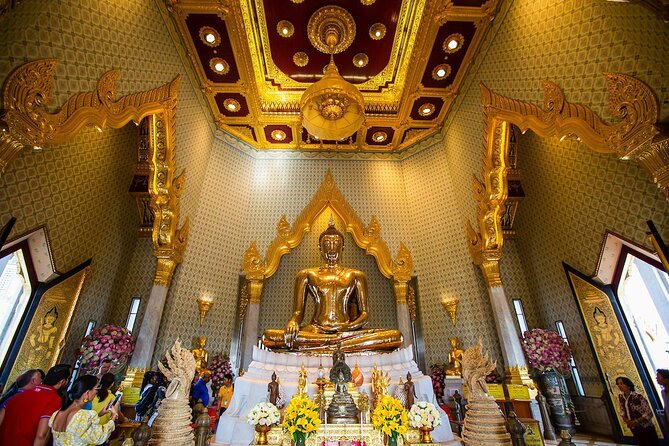
Your first landmark stop is Temple of the Golden Buddha, Wat Traimit. This is where you get an intro to the place and the significance of the area.
A key detail: you will not go inside to see the golden Buddha image, because the temple is listed as closed during the visit. You still get the orientation piece, and you get the chance to understand what the temple represents before moving on.
Is it a downside? Only partially. If you came specifically for the interior golden Buddha moment, you might feel a little frustrated. But the trade is that you lose less time overall, and you can put that energy into the tastings later when the neighborhood is at its most energetic.
Thai eating and drinking bookings got a going over
Stop 2: The Chinatown gateway stop that sets the tone
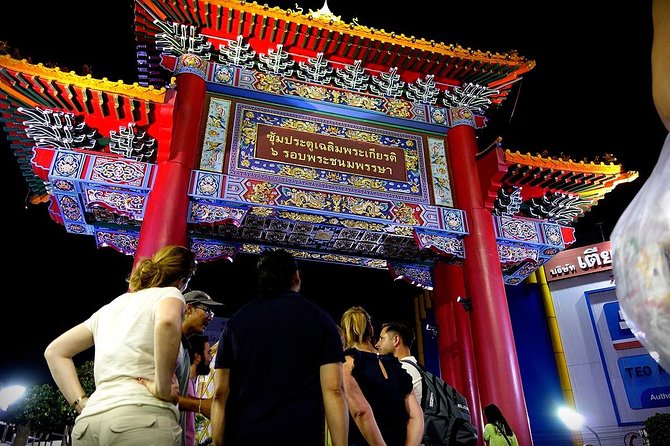
Next you stop at the ซุ้มประตูเฉลิมพระเกียรติ 6 รอบพระชนมพรรษา gateway. This is a quick orientation moment, about 10 minutes, where your guide gives background on Chinatown and what to pay attention to as you walk.
I like these short “context checkpoints.” They act like a mental reset. Instead of wandering streets blindly, you get a few anchor points for how the area is laid out and what cultural influences you will see in the food and architecture.
And because it is brief, it does not steal your appetite. It is the kind of stop that makes the next stretch of Yaowarat feel more purposeful.
Stop 3: Kuan Yim Shrine at Thian Fa Foundation
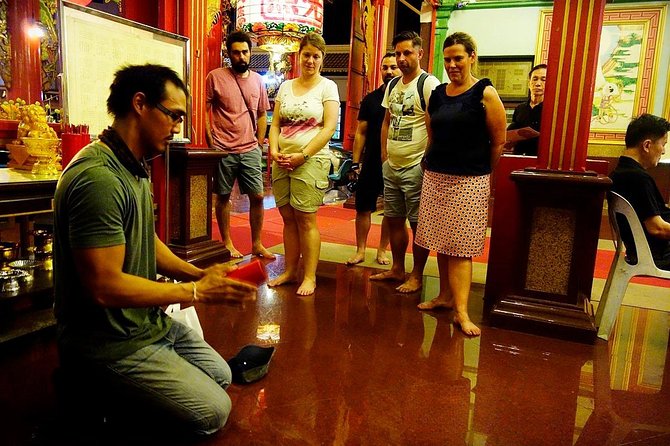
Then you visit Kuan Yim Shrine (Thian Fa Foundation). The focus here is Chinese architecture and learning the story around Kuan Yim and the foundation hospital idea.
This stop is a useful contrast to the food-only version of a Chinatown tour. You get to see how Chinese community traditions show up in the physical spaces, and that helps you understand why the neighborhood’s foods and offerings often feel so distinct from typical Thai street food.
Also, it is short enough to stay practical. About 10 minutes keeps you moving, so you do not lose momentum before the main eating portion.
Stop 4: Yaowarat street food time with five Thai-Chinese tastings
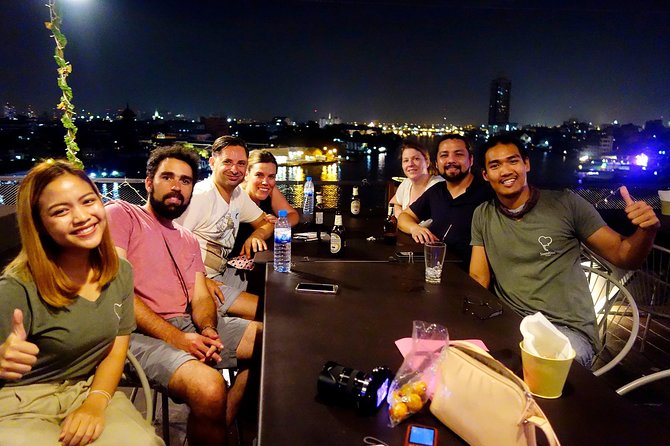
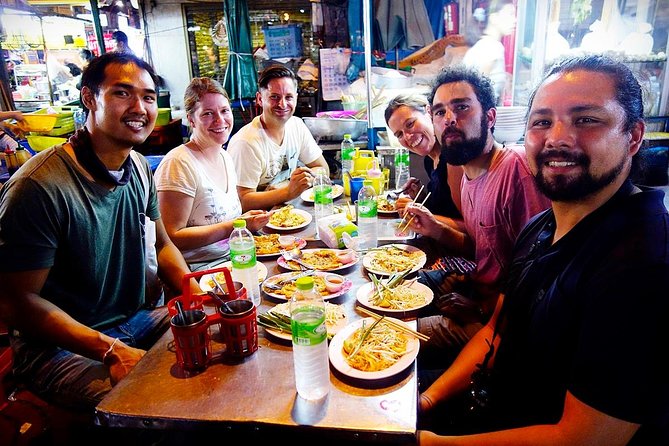
The heart of the tour is the nighttime walk through Chinatown, centered on Yaowarat, for about 1 hour 30 minutes with four stops and five dishes. Admission is listed as free for this portion, but the value is in what you eat and how the guide structures the experience.
Thai-Chinese food is its own lane. You should expect flavors that show Chinese culinary influence, often paired with Bangkok-style street staples. And as noted, pork is common, so many dishes will likely include it.
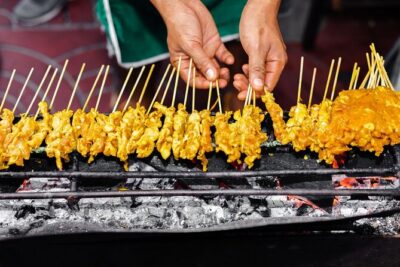
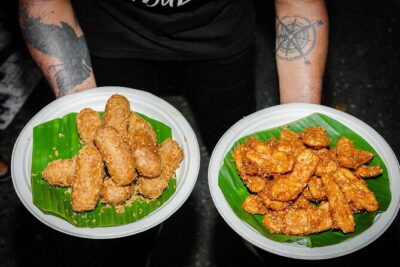
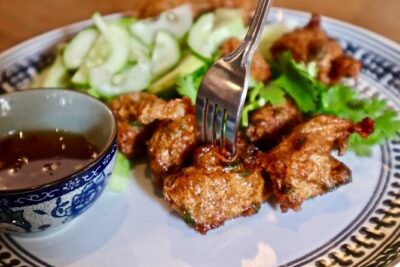
From guide-led experiences shared in feedback, you may encounter favorites like pad Thai, an omelette, soups, a pancake, and sticky rice with mango. Not every group will get the exact same set, but these examples give you a sense of the range. You are not just eating one category of food, you are sampling sweet, savory, and comforting street classics.
One small practical bonus: when your guide is managing the ordering and timing, you are less likely to end up too full too early or missing the best timing window at a stall. That is one reason these structured tastings feel better than random “let’s just try this” choices.
And yes, weather can matter. In at least one group experience, guides were ready with ponchos when it rained. That kind of preparation matters in Bangkok, where a short downpour can turn street-walking plans into wet misery fast.
Guides, pacing, and why private feels different in Chinatown
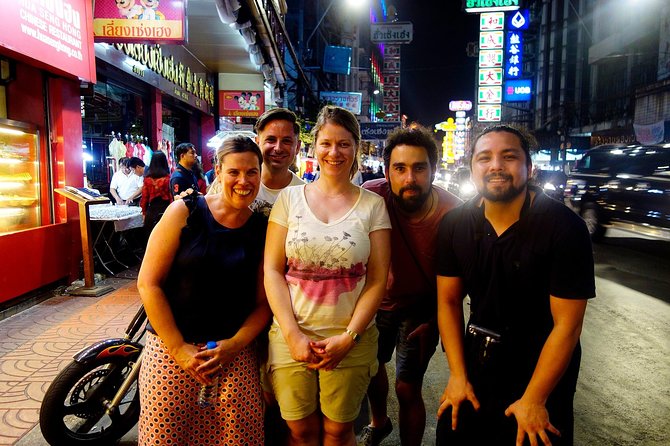
A private tour is not just a marketing label here. It changes the street-food rhythm.
Your guide can adjust pace for your group size and energy. They can slow down when you want photos or speed up when you are ready to eat. And they can steer you away from the wrong kind of tourist trap, which is not always obvious when you arrive in a new neighborhood for the first time.
In the feedback, you will see different guide names like Nun, Tina, and Golf. The common theme is that the guides are getting people into good eating spots and keeping the experience fun, not frantic. One theme also shows up: eating enough to feel fully satisfied, so you do not have to scramble for dinner plans afterward.
If you like a tour that feels like a friend leading you through a local area, this is that style. It is part street walk, part guided explanation, part careful food timing.
Food reality check: pork-heavy tastings and allergy caution
The tour’s food is Thai-Chinese, and it is mostly served with pork. The notes also say it is not suitable for vegetarian.
That is the big thing to take seriously when deciding. If you are vegetarian, you may end up disappointed or forced into very limited substitutions. If you eat pork but have allergies or strong aversions, you should plan to mention them clearly to the guide before you start. The tour listing does not spell out specific allergen handling steps, so you should treat it as a “communicate early” situation.
If you are comfortable with pork, you are likely to enjoy how many different parts of Thai-Chinese street cooking show up across five tastings. You will get mix-and-match textures, brothy items alongside fried or griddled dishes, and a sweet finish like sticky mango rice when the timing works.
Timing and comfort in a 3-hour night plan
This tour runs about 3 hours and includes evening departures. That gives you options, especially if you are arriving in Bangkok during daylight and want your Chinatown experience after dark.
Short landmark stops keep the schedule moving, then the longer Yaowarat segment is where you get the big reward. For many people, that sequence works well because the hunger builds as you walk through the orientation stops. You start eating with context in your head, then you relax into the street-food portion.
Comfort tips you can actually use:
- Wear shoes you can walk in. Chinatown streets are not a place for slippery soles.
- Bring a light layer. Even warm Bangkok nights can feel cooler when you pause for shrine photos.
- If rain is in the forecast, plan for it. In practice, guides have handed out ponchos, but it is still smart to be ready.
How this stacks up against DIY Chinatown eating
You can DIY Chinatown, but it is harder than it looks.
Without a guide, you face three problems: picking from dozens of stalls, figuring out what is best at that exact moment, and avoiding time loss. Street food is often about timing, not just flavor. When you are wandering alone, you may end up at a place that looks good but misses the best batch or the most consistent option.
This tour is basically “DIY plus structure.” You keep the fun of walking the streets, but you outsource the guesswork about what to order, how to move between stops, and how to balance savory and sweet. It also helps you see the cultural side of the neighborhood, not just the food counters.
The private element is the icing. If you are traveling as a couple, honeymooning, or simply want your night to stay focused, a private setup is a big quality jump from random groups shuffling through lanes.
Who should book this Chinatown street food tour?
This tour is a strong match if:
- You want a guided Bangkok Chinatown evening without needing to research stalls for hours
- You like Thai-Chinese street food and you are comfortable with pork-based dishes
- You prefer a private experience where the pace can match your group
- You want a mix of food plus quick landmark context, not just a list of dishes
You should skip or consider another option if:
- You are vegetarian or need guaranteed meat-free meals
- You want a fully independent, DIY wandering style where you pick every dish yourself
- You are very sensitive to crowded night streets and dislike guided group movement (even private tours still mean moving through busy areas)
Should you book this tour?
If you want the simplest way to enjoy Bangkok’s Chinatown street food, I think it is a good choice. The biggest win is the combination of five tastings plus quick cultural stops, all wrapped in a private, guided plan that takes the stress out of ordering in a chaotic food neighborhood.
Book it if you eat pork and you want a night plan you can trust. Don’t book it if you need vegetarian meals, because the tastings are designed around Thai-Chinese dishes that often include pork.
If you are deciding between this and DIY, ask yourself one thing: do you want to spend your limited Bangkok time researching and guessing, or do you want a guide to handle that while you focus on eating and enjoying Yaowarat?
FAQ
How long is the Chinatown street food tour in Bangkok?
It runs for about 3 hours.
What does the tour include?
The tour includes food and drinks, local fees, and travel insurance. You’ll also have the guided landmark stops and tastings.
Where do I meet, and where does it end?
The tour starts at 1 Thanon Rama IV, Khwaeng Maha Phruttharam, Khet Bang Rak, Krung Thep Maha Nakhon 10500, Thailand. It ends back at the same meeting point.
Will I go inside Wat Traimit to see the Golden Buddha?
No. You stop at Wat Traimit for an introduction, but you will not get inside to see the golden Buddha image because the temple is listed as closed during the visit.
Is this tour suitable for vegetarians?
No. The food is Thai-Chinese and is mostly served with pork, so it is not suitable for vegetarians.
What food can I expect during the main Chinatown tasting?
The Chinatown portion includes 4 stops and 5 dishes. The program is Thai-Chinese food, and it commonly features items like dishes such as pad Thai, omelette, soups, pancake, and sticky rice with mango in the tasting lineup.
Guided Thai outings, continued
What else made it into the Thailand notebook
Yaowarat after dark, plate by plate
What else made it into the Bangkok notebook
- Discover UNESCO World Heritage Sites – Ayutthaya to Khao Yai National Park
★ 5.0 · 7 reviews - Damnoen Saduak Floating Market & Maeklong Train Market Tour
★ 5.0 · 7 reviews - Unique and Scenic Slow Boat Tour from Bangkok to Ayutthaya
★ 5.0 · 7 reviews - Bangkok Tour: Highlights & Hidden Gems & Long Tail Boat
★ 4.5 · 7 reviews - Silom Thai Cooking Experience with Market Visit
★ 5.0 · 7 reviews - Private Tour: Grand Palace,Wat Phra Kaew, Museum&Cooking Class
★ 5.0 · 7 reviews
Bangkok Chinatown Food Walks, compared.
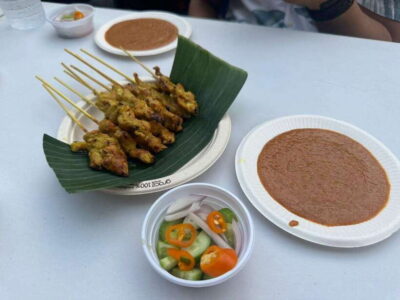 ★ 4.9Bangkok Authentic Tasting Thai-Chinatown Walking Food TourFrom $43852 reviews
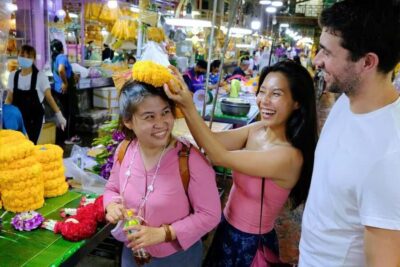 ★ 4.3Tuk Tuk Adventure Chinatown Michelin Food & TemplesFrom $18725 reviews
 ★ 5.0Bangkok by Night Food Tour with 10+ Tastings in ChinatownFrom $46545 reviews
 ★ 4.6Bangkok Tuk-Tuk by Night with Chinatown Street Food MealFrom $40263 reviews
 ★ 4.8Chinatown Food Tour with Michelin Food StallsFrom $36226 reviews
 ★ 5.0Bangkok Night Michelin Foodie Tour in Chinatown with 15+ tastingsFrom $56189 reviews
 ★ 5.0Night Street Food Tour of Bangkok’s ChinatownFrom $58173 reviews
 ★ 4.2Discover a Taste of Chinatown – 2 Hr Walking TourFrom $64152 reviews
Browse the lists this tour appears in