
REVIEW · FARMS
Old Phuket Farm Ticket – Countryside Local Life Culture
Phuket’s farm life beats the beach circuit. This short countryside visit gives you hands-on practice with everyday Thai agriculture, from meeting buffaloes to trying tin panning, and it also helps you make sense of how rubber and rice actually fit into island life. I like the clear flow from animals to crops to food making, but one thing to think about is that the buffaloes may have nose piercings, which can feel uncomfortable if you are sensitive to animal appearance.
You get a real sense of rhythm here, not just photo stops. The group stays small, up to 10 people, and the whole experience runs about 2 hours, so it works even if you are trying to keep your day simple.
If you want air-conditioned, sit-down sightseeing, this is not that kind of outing. You should plan for outdoor time and good weather, and bring basic sun protection, even though most people can participate.
In This Review
- Key highlights to notice before you go
- Old Phuket Farm in plain terms: what you’re really doing
- Price and value for the $38.88 ticket
- Two-hour timing: how to plan your day
- Stop 1 at Old Phuket Farm: the real storyline of the day
- Buffaloes and Thai farming: why the first stop matters
- Rubber tapping and rice fields: seeing production, not just photos
- Tin panning and the pineapple taste: fun activities with a purpose
- Traditional rice milling and winnowing: how grain turns into meals
- Thai house time: coconut grating and curry paste-making
- Guide and group size: why max 10 feels different
- Who should book this Old Phuket Farm experience
- Quick practical advice before you go
- Should you book Old Phuket Farm?
- FAQ
- How long is the Old Phuket Farm ticket experience?
- Where is the experience located?
- What is included with the ticket?
- How much does it cost per person?
- Is there a limit on group size?
- Is the tour suitable for children?
- Will I get a ticket on my phone?
- Do I need good weather?
- What is the cancellation policy?
Key highlights to notice before you go
- Buffalo lessons you can see, including why they matter in local farming routines
- Rubber tapping and rice work explained in plain language you can follow fast
- Tin panning as a hands-on activity tied to Phuket’s mining legacy
- Taste-based stops, from farm-grown pineapple to traditional food prep
- Classic Thai house experiences, including coconut grating and curry paste-making
- Small group size (max 10), which keeps the pace friendly for families
Narrowing it down? Here is what else got written up around Phuket.
- Phang Nga Bay Sea Cave Canoeing & James Bond Island by Big Boat★ 5.0 · 4,666 reviews
- Phuket: Elephant Jungle Sanctuary Ethical Feeding Experience★ 4.8 · 4,359 reviews
- From Phuket: Phang Nga Bay and Canoeing Tour by Big Boat★ 4.7 · 3,528 reviews
- Phi Phi Islands Adventure Day Trip w/ Seaview Lunch by V. Marine★ 5.0 · 3,295 reviews
Old Phuket Farm in plain terms: what you’re really doing
This tour is built like a short walk through how people live and work on Phuket. You are not stuck at a single viewpoint. You move through farming areas and activity points that connect into a simple story: animals help with field work, crops follow seasonal rhythms, and food culture grows out of everyday ingredients.
What I like most is that you get more than watching. You are guided through tasks and explanations in a way that makes the systems feel understandable. When you see rubber tapping, then switch to rice fields, your brain starts connecting the dots between labor, timing, and the materials that show up at market and at home.
Another big plus is the variety in a compact time window. You get agriculture, food, and a house visit in about 2 hours. That means you can fit it alongside a beach morning or a temple afternoon without turning the day into a long grind.
Price and value for the $38.88 ticket
At $38.88 per person, this is priced like an activity, not like a museum admission. The value comes from three things you usually do not get together: a small-group farm setting, multiple agriculture topics, and real food-related demonstrations.
If you’ve done Phuket tours before, you might notice most of them focus on one theme. Here you get several in one loop: buffalo farming, rubber production from tree to sheet, rice planting and harvesting, tin panning, and Thai house food prep like coconut grating and curry paste-making. For many people, that combination is the sweet spot for learning without committing to a full day.
The other value factor is that the experience is designed for most travelers. That matters because it keeps the pace reasonable. It is also set up for families, couples, and solo travelers, so you can expect a mix of ages rather than a class that moves too fast.
Two-hour timing: how to plan your day
Plan for roughly 2 hours total, and expect you will spend that time moving through different activity areas. Because this is outdoors and depends on weather, you should build it into a day with some flexibility. If conditions are poor, you may be offered a different date or a full refund, so it is smart to choose a time when you can adjust.
You’ll also want to pack like you are going to a farmyard. That means sun protection, a hat if you like one, and shoes you do not mind getting a bit dusty. Even when activities are short, farm paths can be uneven or damp.
The tour is near public transportation, which is helpful if you do not want to build your whole day around private rides. Still, do check local transit timing when you plan, since the start time can matter for a smooth arrival.
Stop 1 at Old Phuket Farm: the real storyline of the day
Everything happens around Old Phuket Farm, where the schedule follows a simple rhythm: animals first, then crops, then hands-on activities, then food.
That structure is practical. If you start with buffaloes, you understand why local farming practices developed the way they did. If you then go to rubber trees and rice fields, the explanations make more sense because you already have context about work and natural cycles.
By the time you reach food, you are not just watching cooking. You are seeing how ingredients connect back to the land you visited earlier.




Buffaloes and Thai farming: why the first stop matters
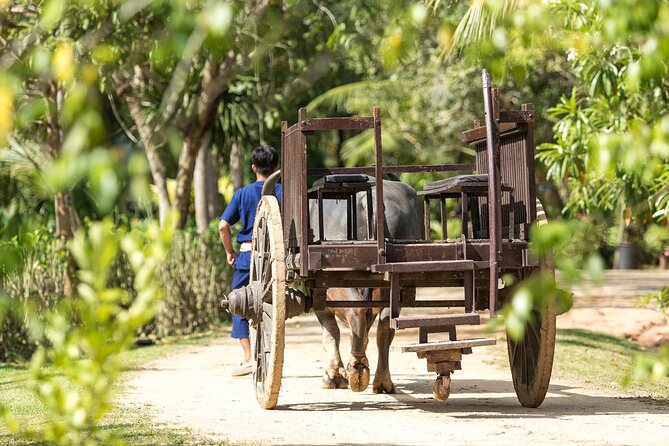
Meeting buffaloes sets the tone immediately. Buffaloes have been part of Thai agriculture for a long time, and the tour explains their role in farming. The goal is not just a close-up animal encounter. It is context.
You learn why buffaloes are historically significant in local agriculture and how they fit into field work. It is a quick lesson, but it gives you a framework for what you see next. When you understand how animals support field routines, the whole farm visit feels more coherent.
One consideration: some visitors may be uneasy about buffalo appearance, because they can have nose piercings. If you know you are sensitive to that kind of detail, it helps to go in with eyes open. You can still enjoy the educational side, but be aware that the animals’ look may tug at your emotions.
Rubber tapping and rice fields: seeing production, not just photos
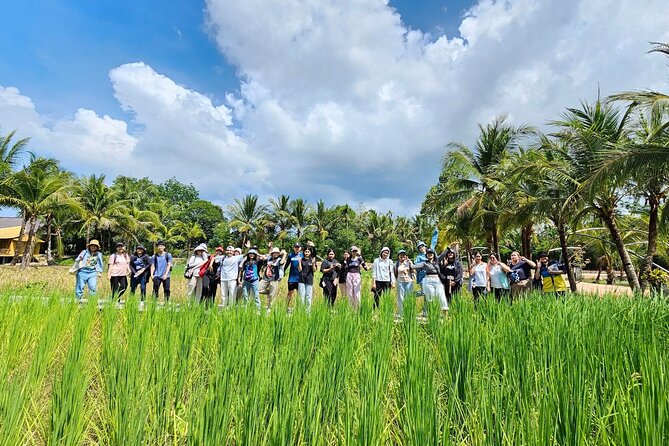
After buffaloes, you move into rubber tapping and the life cycle behind rubber production. You’ll learn about the process from tree to sheet. The usefulness here is clarity. Many people see rubber products at home but never get the basic idea of how it starts.
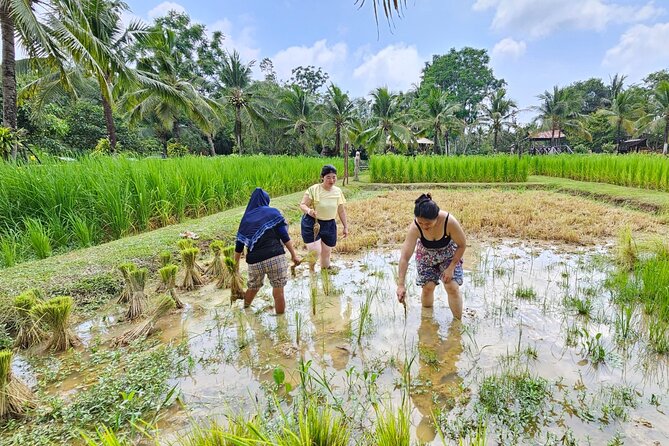
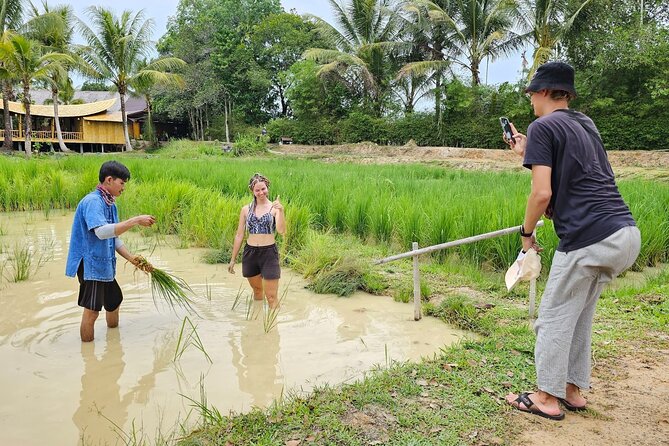
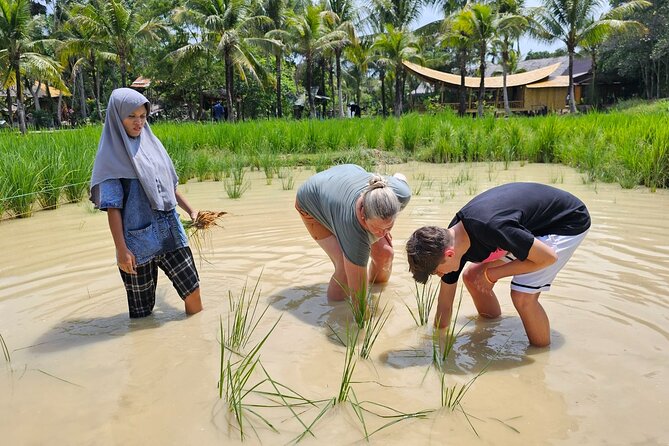
Then you shift into rice fields for planting and harvesting. You get to see traditional techniques and how seasonal work shapes the landscape. This is one of those parts where your questions come fast, because the work is both physical and time-sensitive. Even if you only catch it for a short stretch, you come away with a better sense of why rice farming is such a central part of Thai life.
Possible drawback: because the tour is short, you will not master every step. If you are hoping for an academic class on agriculture, you may feel it moves quickly. But if your goal is to understand the basics and see the workflow in action, this format is a good match.
Tin panning and the pineapple taste: fun activities with a purpose
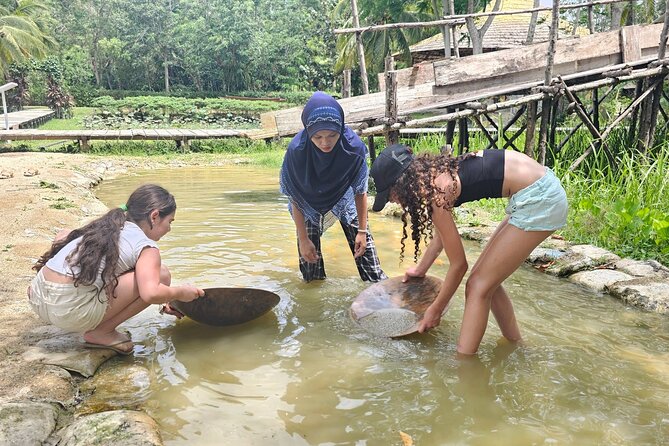
Tin panning is one of the more memorable experiences on this kind of farm day because it’s tactile. You get to try your hand at it, and the tour connects the activity to Phuket’s tin mining legacy. That connection matters because otherwise panning would feel like a gimmick.
Then you get a taste of pineapples grown on the farm. This is simple, but it’s smart. You already learned about crops and production. Eating the fruit turns the lesson into something you can immediately understand.
These two stops also break up the day in a good way. Rubber and rice are more about systems. Tin panning and pineapple are more about your senses and your hands.
Traditional rice milling and winnowing: how grain turns into meals

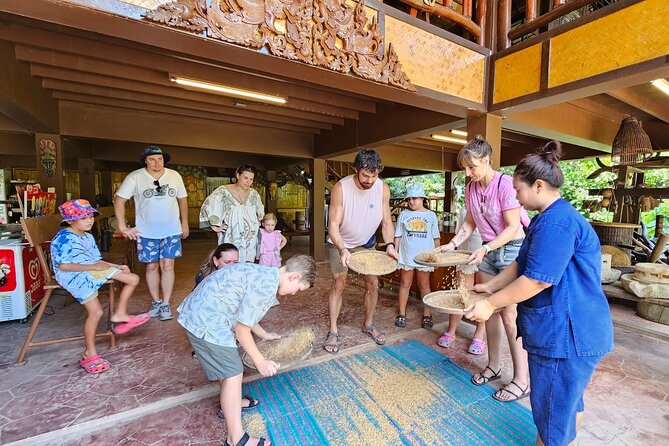
After you spend time in rice fields, you get to see the next phase: traditional rice milling and winnowing. Even if you do not know much about the process before you arrive, you will start noticing how much work goes into turning harvested grain into what people actually cook at home.
This part is valuable for two reasons. First, it links field labor to kitchen reality. Second, it shows that food culture is not separate from farming. It’s the same story continuing after harvest.
For most people, this is also a calmer segment, where you can slow down and watch the steps. If you are traveling with kids, it often works because you can point out what changes at each stage.
Thai house time: coconut grating and curry paste-making
A classic Thai house visit adds a home-life layer to the farm day. You are not only learning what grows. You are learning how ingredients become meals.
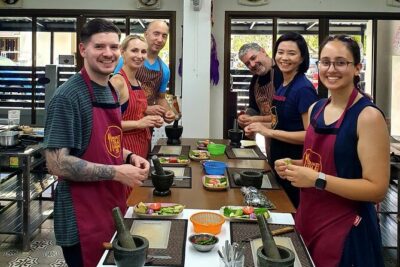
You’ll see coconut grating and curry paste-making. These are small tasks, but they pack a lot of cultural meaning. Coconut, herbs, and spices are everyday building blocks in southern Thai cooking, and the tour helps you connect those flavors to ingredients you just learned about in the broader farming context.
If you enjoy food, this is the part you will probably remember most. It also gives you ideas for how to recognize what you see at markets later, because you’ll have a clearer sense of what goes into the paste before it hits a pot.
Guide and group size: why max 10 feels different
The tour runs with a maximum of 10 travelers. That small size is more than a comfort perk. It affects how much you can ask and how easy it is for the guide to keep the pace moving without leaving people behind.
In the reviews, the guide quality comes up strongly, with people describing the experience as informative and fun, especially for kids. That matches how this itinerary is designed. When the content is practical like farming steps and food prep, a good guide is the difference between feeling lost and feeling like you actually understand what you’re seeing.
One name that shows up in official replies from the operator is Tawan from Oh-Hoo Team. While that is not a guarantee of who leads you, it does suggest the team is actively involved in follow-up and customer care.
Who should book this Old Phuket Farm experience
This is a great choice if you want a countryside day that feels educational without being heavy. It suits families, couples, solo travelers, and groups because the format is varied. Kids tend to like hands-on parts like tin panning, while adults usually appreciate how it connects animals, crops, and food.
It’s also a good fit if you are trying to avoid the same old Phuket loop. Even if you spend your vacation bouncing between beach and temple visits, this gives you a different lens: how local life actually works.
You might want to skip or reconsider if you have strong concerns about animal handling or appearances, especially given the possibility of nose piercings on the buffaloes. And if you hate outdoor activities in the heat, you may find the farmyard setting less comfortable.
Quick practical advice before you go
- Bring sunscreen and something for sun protection. Even in a short 2-hour outing, the Phuket sun adds up.
- Wear closed-toe shoes you can get a bit dusty. Farm paths are not designed for sandals.
- Keep your expectations realistic. This is hands-on and explanatory, not a long, deep academic course.
- Ask questions. The itinerary covers many topics, so the best learning comes when you connect them with your own curiosity.
Should you book Old Phuket Farm?
If you want a short, well-rounded taste of rural Thai life, I think you’ll like this. The ticket price makes sense when you consider the mix of buffalo work, rubber and rice basics, a hands-on tin panning moment, and Thai house food prep like coconut grating and curry paste-making. You also avoid big crowds thanks to the small group size.
Book it if your goal is to leave with clear ideas about how Phuket’s farming connects to food and daily routines. And bring a gentle mindset about animals, because one part of the experience involves buffaloes and their visible accessories, which can affect how some people feel.
If that animal detail would bother you too much, or if you only want indoor, air-conditioned sightseeing, then you may prefer a different kind of Phuket day. But for most travelers, this is a smart way to spend 2 hours on the island without falling into the tourist trap rhythm.
FAQ
How long is the Old Phuket Farm ticket experience?
The tour lasts about 2 hours.
Where is the experience located?
It is in Phuket, Thailand.
What is included with the ticket?
The admission ticket is included.
How much does it cost per person?
The price is $38.88 per person.
Is there a limit on group size?
Yes. The maximum group size is 10 travelers.
Is the tour suitable for children?
Yes. Child ticket age is 4 to 11 years.
Will I get a ticket on my phone?
Yes. The tour uses a mobile ticket.
Do I need good weather?
Yes. The experience requires good weather, and if it is canceled due to poor weather, you will be offered a different date or a full refund.
What is the cancellation policy?
You can cancel for a full refund up to 24 hours before the experience starts. If you cancel less than 24 hours before the start time, the amount paid is not refunded.
What else made it into the Thailand notebook
What else made it into the Phuket notebook
- The Phuket Rites of Passage Eco Adventure
★ 5.0 · 8 reviews - Thai Cooking Class with Market Tour in Phuket by VJ
★ 5.0 · 8 reviews - Similan Islands Snorkeling Tour By Speed Catamaran From Phuket
★ 4.5 · 8 reviews - Phuket Night Food Walking tour
★ 5.0 · 8 reviews - Refresher scuba diving trip, 3 dives at Racha Noi and Racha Yai
★ 5.0 · 8 reviews - Private Tour: Phuket Highlights by Van and Licensed Guide
★ 4.5 · 8 reviews
Farms, compared.
 ★ 5.0Half-Day Thai Cooking Class at Organic Farm in Chiang MaiFrom $2919,087 reviews
 ★ 4.9Authentic Cooking Class with Market & Farm VisitFrom $344,546 reviews
 ★ 4.9Cooking Class with Organic Farm at Mama NoiFrom $321,151 reviews
 ★ 5.0Full Day Thai Cooking at Farm (Chiang Mai)From $391,127 reviews
 ★ 5.0Floating & Railway Market and Coconut Farm Tour [Optional Luxury]From $88835 reviews
 ★ 4.9HALF-DAY COOKING COURSE at a Thai Cooking FarmFrom $28705 reviews
 ★ 5.0The Rice Barn Thai Cooking Farm ChiangmaiFrom $29603 reviews
 ★ 5.0Cooking Class with Organic Farm in Chiang Mai at Mama NoiFrom $32502 reviews