
REVIEW · BANGKOK CHINATOWN FOOD WALKS
Bangkok: Chinatown Night Food Tour
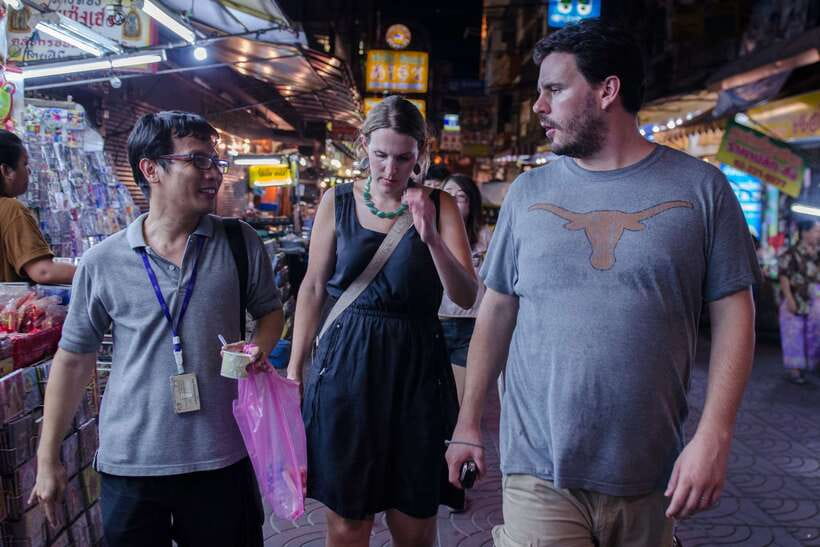
Chinatown smells like dinner and possibility. This Bangkok Chinatown Night Food Tour sends you through Yaowarat after dark, with a live English guide and seven food tasting stops during about 210 minutes in Thailand’s famed 200-year-old Chinatown area. What I like most is the mix of street vendors and proper restaurants, plus the way the guide ties each bite to culture and neighborhood stories, including topics like the Pig Alleys.
One thing to consider: it is a walking food tour, and you will eat at every stop, so if you do not want a lot of food at once, go in with a plan.
Key tour takeaways
- Seven tasting locations, ranging from street stalls to well-known dining spots
- 210 minutes of guided walking through Yaowarat at night
- Culture and landmark stops between tastings, not just eating and leaving
- Dessert and drink variety, including lychee ice cream, tropical fruit drinks, and black sesame dumpling in ginger tea
- Guides who stay hands-on and patient, with named examples like Jongkie, Ninee, Nood, Olive, and Mae
- Meet at Bangkok Center Hotel (Hua Lumphong MRT Exit 4) and ignore anyone claiming the tour is cancelled
In This Review
- Yaowarat at Night: What You Taste and Why It Matters
- From Bangkok Center Hotel to Seven Eateries: The Walking Rhythm
- What You’ll Actually Eat: Street Staples to Black Sesame Dumplings
- Stories Between Bites: Culture, Landmarks, and Pig Alleys Curiosity
- Meeting Point at Hua Lumphong MRT Exit 4 and the Scam Warning
- Private Group Comfort, No Big Bags, and Weather Reality
- Guides Make the Difference: Jongkie, Ninee, Olive, and Nood
- Price, Portions, and Getting Your Money’s Worth at $57
- Should You Book This Bangkok Chinatown Night Food Tour?
- FAQ
- How long is the Bangkok Chinatown Night Food Tour?
- How many food tastings are included?
- What is the price of the tour?
- Where do I meet the tour guide?
- Is the tour guide available in English?
- Are there any restrictions on what I can bring?
Yaowarat at Night: What You Taste and Why It Matters
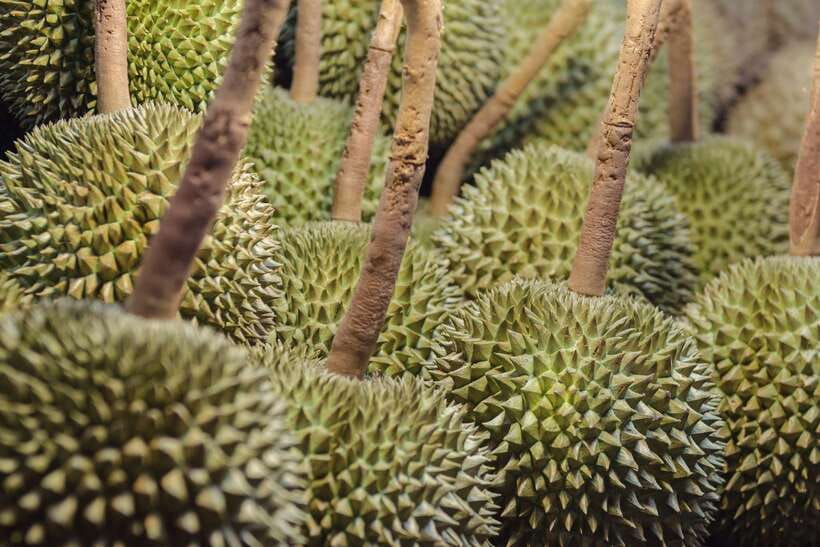
This tour is built around a simple idea: Chinatown food makes more sense when you understand the neighborhood. You are walking through Yaowarat, a part of Bangkok shaped by Chinese and Thai communities for generations, and the evening vibe makes it feel like a living street market. You start with tastings, then you pause often enough to learn what you are looking at and where it fits.
The big win is the variety of tastings. You are not limited to one type of food, and you are not stuck only with the smallest stalls either. The tour is set up so you sample famous Thai street food alongside more established eateries, which helps you get a wider picture of what people actually eat here.
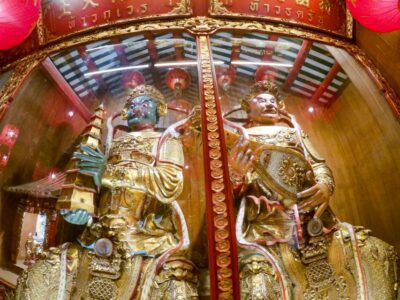
The other thing I like is the way culture shows up between bites. Instead of treating the tour like a checklist, you get stories about characters of the food bazaar and you visit religious and cultural landmarks as you move through the area. That context makes the street scenes feel more personal, and it helps you remember what you tried.
From Bangkok Center Hotel to Seven Eateries: The Walking Rhythm

The rhythm is very straightforward. You meet at Bangkok Center Hotel near Hua Lumphong MRT (Exit 4), then you head into Chinatown on foot. Between each of the seven tasting locations, your guide stops the group to point out what you are seeing and adds context about the area.
Because the tour runs about 210 minutes, you get time for a real food crawl without feeling like you are racing through it. The pacing also matters because you will be standing and walking in a lively night market environment. Your guide uses the gaps between tastings to slow you down just enough to take it in, hear the stories, and then move on when you are ready.
What I find practical is that you end up with a full arc to the evening. You start with savory and snack-style sampling, then the food keeps coming, and you finish with sweets and tea-type treats like lychee ice cream and other desserts. By the end, you are not just full, you also have a mental map of what this part of Bangkok is known for.
What You’ll Actually Eat: Street Staples to Black Sesame Dumplings
This is a food tour, so the smartest approach is to accept one key fact: you are going to eat a lot. The good news is that the tastings are diverse, so you are usually switching flavors and textures instead of repeating the same dish.
Here are the specific items the tour experience includes, so you can plan your appetite:
- Lychee ice cream
- Thai tropical fruit drinks
- Black sesame dumpling in ginger tea
Beyond the named sweets and drinks, the tour also leans into the types of dishes people associate with Chinatown food culture, including options like seafood, soups, and noodles. You should expect a mix that includes both classic street-food styles and dishes served at more established places. In other words, you are not stuck only with tiny bites that never fill you up.
If you are worried about eating something you will not like, look at it this way: the tour forces you to try things you may skip on your own, but you are not doing it blindly. Your guide explains what you are tasting and why it matters in this neighborhood. That makes it easier to decide whether to go for the next bite or slow down for a sip of a fruit drink.
Stories Between Bites: Culture, Landmarks, and Pig Alleys Curiosity
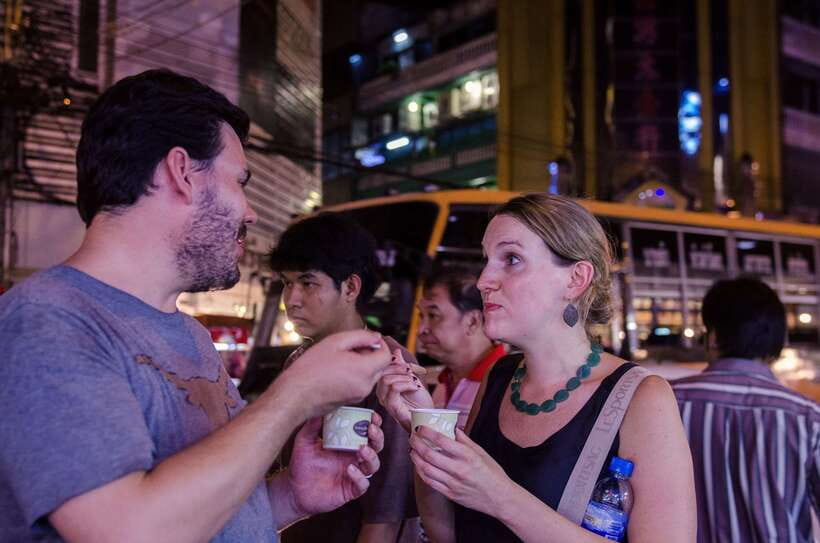
One of the most praised parts of this tour is the storytelling. The guide connects the food to the people and patterns of the neighborhood, which is why the tour feels more like a night introduction to Chinatown rather than only a snack run.
You also get a structured look at the area. Between tasting locations, the guide brings you closer to what makes Yaowarat distinctive, including visits to religious and cultural landmarks. That matters because it anchors the experience in more than just food stalls and neon signs. Chinatown is a living community, and the landmarks help you understand why certain foods, habits, and shop scenes exist where they do.
A specific example from the kinds of history that come up is the curiosity around the Pig Alleys topic. Not every tour goes there with you, but when it does, it gives you a sharper feel for the alley-level life that shaped the food economy in the area.
Meeting Point at Hua Lumphong MRT Exit 4 and the Scam Warning
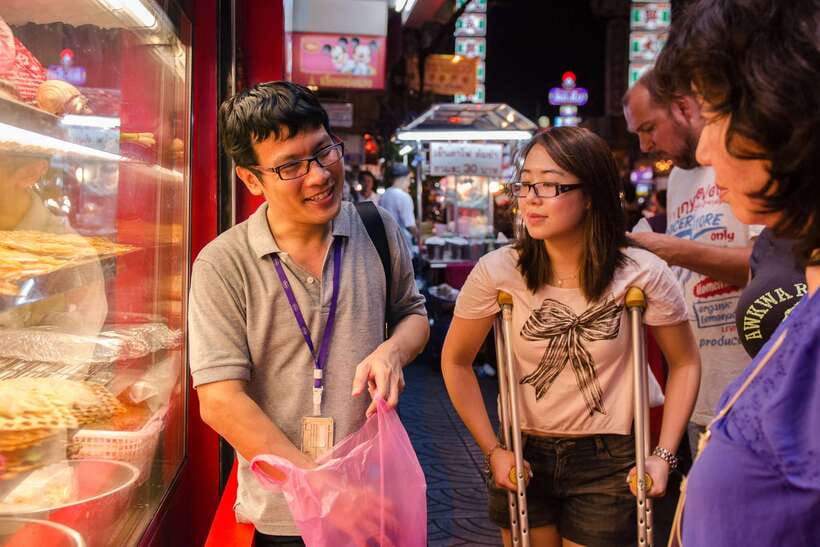
Logistics can make or break a night tour, and this one has a clear meeting spot. Your guide will wait in front of Bangkok Center Hotel, near Exit 4 of Hua Lumphong MRT. If you take the MRT, go to Exit 4 and then take the stairs up. If you go by taxi, tell the driver you are going to Bangkok Center Hotel, then look for Exit 4 of the MRT station nearby.
Guides are easy to identify, too. They usually wear a green T-shirt with the Bangkok Food Tours name.
Now for a practical safety note that is worth taking seriously. There can be strangers who try to tell you the tour is closed. Do not fall for it. The warning here is that they are trying to redirect you to other shops, so the best move is to stay at the meeting point and wait. In practice, that usually means your guide is just finishing up a check or spotting late arrivals.
Private Group Comfort, No Big Bags, and Weather Reality
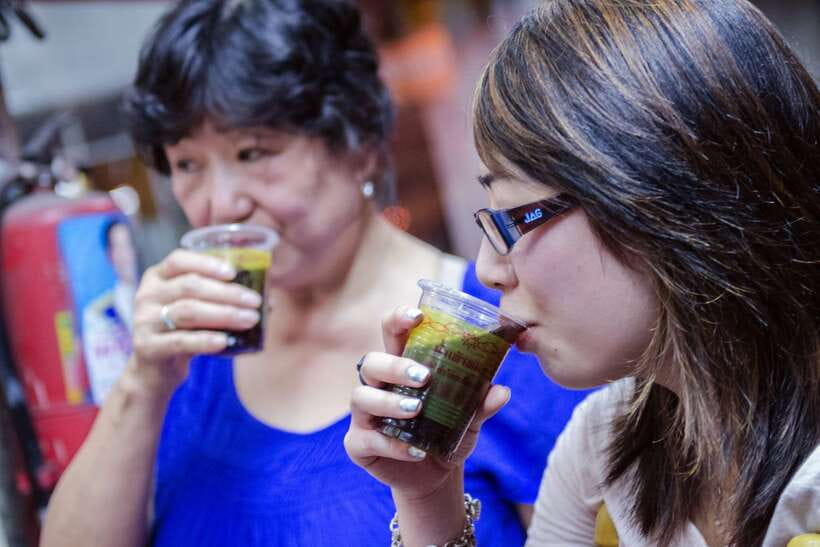
This tour is a private group, and that changes how the evening feels. With fewer people, it is easier for the guide to pace the tastings, answer questions, and keep everyone together through the streets. It also means you can ask for clarification when you see a dish you do not recognize.
There are a few restrictions you should plan around:
- No pets
- No smoking
- No luggage or large bags
That matters more than people expect on a walking tour in a tight market district. You will move between crowded lanes and restaurant entrances, so keep your belongings minimal. If you carry a small crossbody bag, that is usually the type of thing that keeps you mobile, but the key rule is no large bags.
Finally, remember that this is an evening food experience in Chinatown. It is built for night energy, not quiet comfort. Wear shoes you can walk in for a few hours, and come hungry enough that you can enjoy the whole sequence, including the dessert and ginger tea finish.
Guides Make the Difference: Jongkie, Ninee, Olive, and Nood
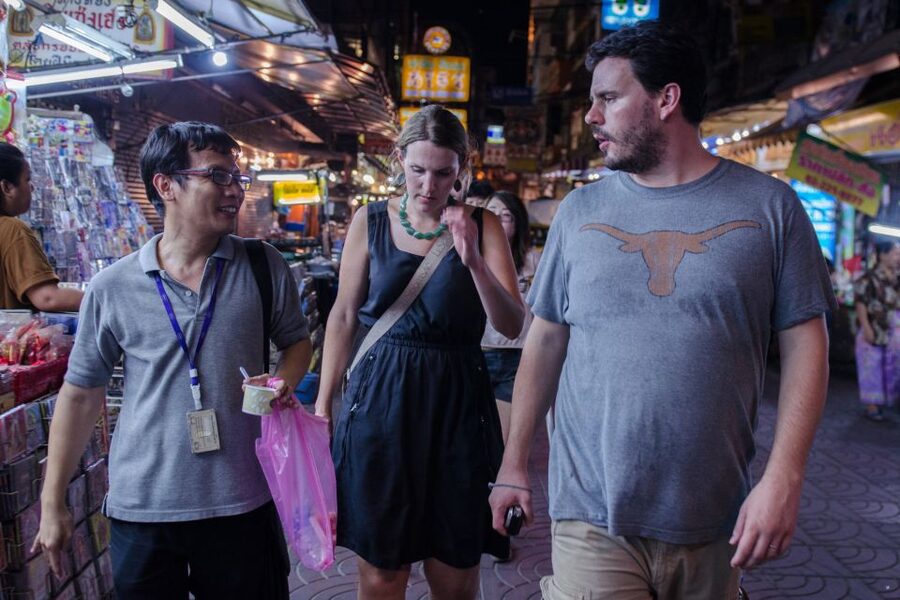
The quality gap on food tours is often the guide. This one has multiple guides who show up with a consistent pattern: they explain, they pace, and they keep the group comfortable while you try unfamiliar dishes.
Here are examples of guide names that have been praised:
- Jongkie for being especially knowledgeable and handling a small group really well
- Jongkie again, specifically noted for history and for taking plenty of photos during the nightlife walk
- Ninee for making the tour enjoyable and guiding smoothly through Chinatown at night
- Nood for patience, not rushing people, and for balancing food with cultural context
- Olive for strong attention to details and for arranging a tuk tuk home for one group
- Mae for being well spoken and delivering great food throughout
- Lily for excellent, unique food choices and a great overall guide style
You can use this as a practical decision tool. If you care about both food and context, this format is designed for you. And if you want a guide who will not just talk, but also slow down when someone needs extra time, the pattern in the feedback points that way.
Price, Portions, and Getting Your Money’s Worth at $57
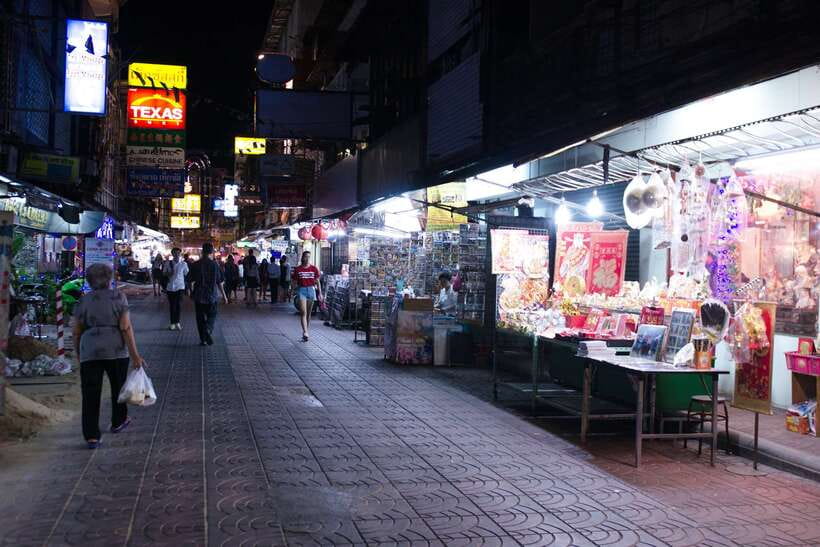
At $57 per person for about 210 minutes, you are paying for three things: a live guide, the walking route through Yaowarat, and the food itself. The key value question is whether the tour gives enough variety and enough quantity to justify the cost.
Based on how the tour is structured, the value is built in:
- All food tastings are included
- You hit seven tasting locations
- You end with named treats like lychee ice cream, tropical fruit drinks, and black sesame dumpling in ginger tea
- You get guided context between stops, including landmark visits
So the best way to get your money’s worth is to show up hungry and commit to each tasting without overthinking it. If you arrive full from dinner, you may end the tour feeling stuffed earlier than you want. If you arrive hungry, you get a full survey of Chinatown flavors in one evening.
Is it worth it for everyone? If you love street food but hate planning, yes. If you want to sit through a meal with minimal walking, this may feel intense. But for most people who want a guided night introduction and a lot of tastings, the price-to-experience ratio is solid.
Should You Book This Bangkok Chinatown Night Food Tour?
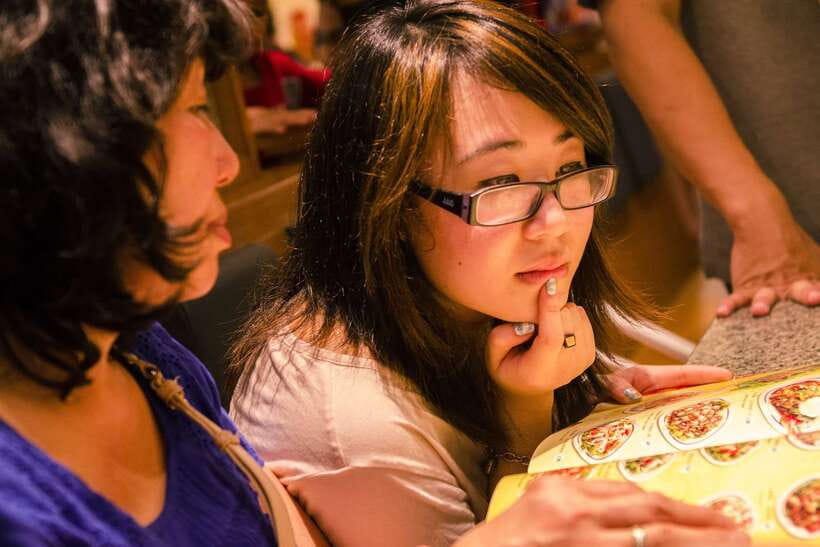
Book it if you want an evening that mixes food, neighborhood stories, and real Chinatown atmosphere in about three and a half hours. The tour is also a good fit if you like tasting widely, because the lineup includes classic street-style dishes as well as more established restaurant stops, plus sweets and drinks with the lychee and sesame options.
Skip it if you prefer a low-key night out, or if you would rather order a single meal than sample across multiple places. Also skip or reconsider if you cannot follow the simple rules about no large bags or if you do not want to walk for the duration.
My final take: for $57 you get a guided, structured night in Yaowarat where the food is the main event and the stories make the whole thing easier to understand. If that sounds like your kind of Bangkok evening, this is a smart way to do Chinatown.
FAQ
How long is the Bangkok Chinatown Night Food Tour?
The tour duration is 210 minutes.
How many food tastings are included?
You will have food samples at 7 tasting locations, with all food tastings included.
What is the price of the tour?
The price is $57 per person.
Where do I meet the tour guide?
Meet in front of Bangkok Center Hotel, close to Exit 4 of Hua Lumphong MRT Station. If using the MRT, take the stairs up from Exit 4. If using a taxi, ask to be dropped at Bangkok Center Hotel.
Is the tour guide available in English?
Yes. The tour includes a live English guide.
Are there any restrictions on what I can bring?
Pets are not allowed, and smoking is not allowed. Luggage or large bags are also not allowed.
Bangkok Chinatown Food Walks, compared.
 ★ 4.9Bangkok Authentic Tasting Thai-Chinatown Walking Food TourFrom $43852 reviews
 ★ 4.3Tuk Tuk Adventure Chinatown Michelin Food & TemplesFrom $18725 reviews
 ★ 5.0Bangkok by Night Food Tour with 10+ Tastings in ChinatownFrom $46545 reviews
 ★ 4.6Bangkok Tuk-Tuk by Night with Chinatown Street Food MealFrom $40263 reviews
 ★ 4.8Chinatown Food Tour with Michelin Food StallsFrom $36226 reviews
 ★ 5.0Bangkok Night Michelin Foodie Tour in Chinatown with 15+ tastingsFrom $56189 reviews
 ★ 5.0Night Street Food Tour of Bangkok’s ChinatownFrom $58173 reviews
 ★ 4.2Discover a Taste of Chinatown – 2 Hr Walking TourFrom $64152 reviews
Browse the lists this tour appears in