
REVIEW · BANGKOK CHINATOWN FOOD WALKS
Bangkok: Chinatown By Night Walking Tour
Neon Chinatown after dark is a treat, and this walk makes Yaowarat and Talat Noi feel like a living map. I like the street-food tastings and the expert storytelling that ties together gold-trade legends, shopfront culture, and the Chinatown Gate. One name you may hear in the guide roster is Nam, and the vibe is consistent: clear, friendly explanations that help you read what’s happening on the street.
One possible drawback to plan around, there are no headphones, so you’ll need to keep close to your guide in louder stretches. Also, entry to any attractions is not included, so if a stop charges a fee, you’ll pay that on your own.
In This Review
- Key things I’d circle before you book
- Why Bangkok Chinatown by night feels different than daytime
- Price and timing: what $15 gets you, realistically
- Meeting point and the 6:30 pm reality check
- Route walkthrough: the Chinatown-to-Talat Noi story in 2 hours
- Chareon Chai Community museum, an old house with a purpose
- An old mosque built like a European villa
- Chinatown’s Old Market (Talat Kao) off Yaowarat Road
- Near the Marine Department orange express line station, a temple view from the river
- So Heng Tai Mansion, a 19th-century Chinese courtyard house
- An old royal monastery established during the Ayutthaya era
- Zhou Si Kong Shrine, 200 years along the Chao Phraya River
- Street food tastings: how the tour helps you choose
- Chinatown Gate, shopfronts, and the neon-sign lesson
- Guide energy is the real difference-maker
- Group size and what to expect in the streets
- Vox City app bonus: use it the next day
- Who should book this Bangkok Chinatown night walk
- Should you book this tour or skip it?
- FAQ
- What time does the Bangkok Chinatown night walking tour start?
- How long is the tour?
- Where do I meet the tour?
- What is included in the experience?
- Are attraction entry fees included?
- Are headphones provided?
- Can I cancel for a full refund?
Key things I’d circle before you book
- A tight 2-hour route at 6:30 pm, designed for seeing the sights when Chinatown lights up.
- Street-food tastings are part of the experience, not an optional add-on.
- Multiple historical stops, including a community museum and a 19th-century Chinese courtyard house.
- Temples and shrines by the river, including a site along the Chao Phraya where people pray for luck and health.
- Mobile ticket and a Vox City app bonus, with 3 free self-guided tours included.
- Group size capped at 99, so you get variety without it turning into chaos.
Yaowarat eating walks sat in the same folder
- Bangkok Authentic Tasting Thai-Chinatown Walking Food Tour★ 4.9 · 852 reviews
- Bangkok: Tuk Tuk Adventure Chinatown Michelin Food & Temples★ 4.3 · 725 reviews
- Bangkok Tuk-Tuk Tour by Night with Chinatown Street Food Meal★ 5.0 · 635 reviews
- Bangkok by Night Food Tour with 10+ Tastings in Chinatown★ 5.0 · 545 reviews
Why Bangkok Chinatown by night feels different than daytime
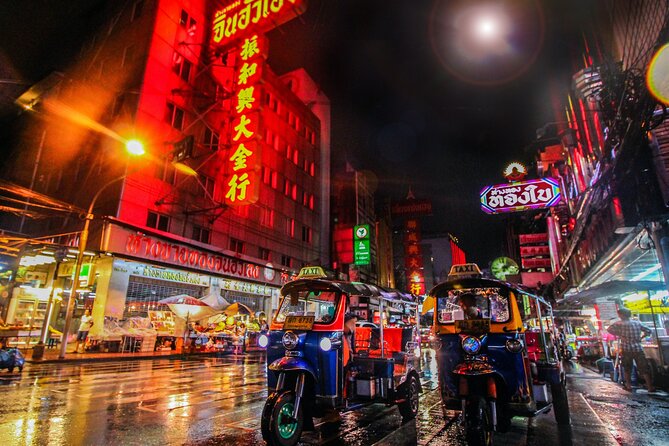
Bangkok’s Chinatown is easy to find on a map, and hard to understand from the curb at noon. This tour gives you a rhythm to follow. You move step by step through neon streets while your guide connects the dots between people, trade, and place names.
I like that the focus stays practical. You get context for why certain businesses cluster together, what older community buildings are preserving, and how the mix of Chinese and Thai cultures shows up in everyday life. The route also keeps an eye on the “night logic” of the neighborhood, where food stalls, shop signs, and temple areas all have their own tempo.
You’ll also get a strong sense of the river side angle. Even when the walking is in the heart of Chinatown, the Chao Phraya keeps showing up in the story, especially near the Marine Department orange express line area.
Price and timing: what $15 gets you, realistically
At $15 per person for about 2 hours, you’re buying something simple: guided interpretation plus street-food tastings across a concentrated area. The value isn’t just the walk itself. It’s the way a good guide helps you know what you’re looking at, which dishes make sense to try, and which sights matter even if you’re not buying tickets.
A key detail for planning, headphones are not included. That means you should expect to hear the guide directly and stay near the group. If you know you prefer a quieter experience, choose an attitude of “close and curious,” not “farther back and listening from a distance.”
Also note: entry to attractions isn’t included. Many of the stops you’ll see are likely viewable from outside or from street level, but if a site charges, you’ll handle it on your own.
Meeting point and the 6:30 pm reality check
The tour starts at 6:30 pm at Hua Lamphong, Rong Muang, Pathum Wan, Bangkok 10330, Thailand. That area is well placed for getting to the start, and the activity is described as near public transportation.
Two practical tips for a night walk like this:
- Wear shoes you can trust. Chinatown streets can be uneven, and you’ll be walking continuously.
- Bring light layers. Even when it’s warm, evening can feel different once you’re moving for two hours.
If you’re traveling as a family, this is the kind of tour that can work well. One account highlights a guide watching closely when a child felt the heat, which tells me the best outcome comes when you let the guide know early if anyone needs a slower pace.
Route walkthrough: the Chinatown-to-Talat Noi story in 2 hours
This tour threads through Chinatown with history-minded stops that are still very much part of daily life. Here’s what each major stop adds, and what to watch for.
Thai walking routes sat in the same notebook

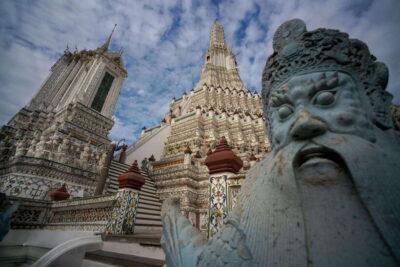
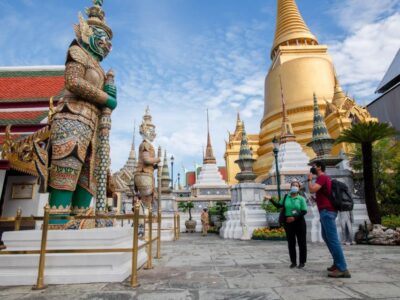
Chareon Chai Community museum, an old house with a purpose
Your first stop is an old house turned into a community museum preserving the Chareon Chai Community history, culture, and way of life. This sets the tone fast. Before you hit the busiest food streets, you get a sense that Chinatown isn’t only shops and signs, it’s also communities with memory.
What you’ll likely get out of this: a clearer understanding of how community spaces work in Bangkok, and why older structures get reused instead of erased. The drawback is timing. In a night tour, you don’t want to spend too long staring at things you don’t understand yet. Use the guide’s explanations to connect what you see to the later street scenes.
An old mosque built like a European villa
Next comes an old mosque with an unusual design, described as being built in the style of a European villa. That detail matters because it’s a quick lesson in how Bangkok absorbed influences through trade and immigration.
What to watch for: architectural cues. Even if you can’t read every design element, your guide can point out what makes the building feel different from the neighborhood around it. This is one of those stops that turns “interesting building” into “here’s why that exists.”
Chinatown’s Old Market (Talat Kao) off Yaowarat Road
Then you get to Chinatown’s Old Market, also known as Talat Kao, in a long narrow alley off Yaowarat Road. This is where the tour’s energy makes sense. Narrow alleys create a specific atmosphere, and street-level markets are where culture feels immediate.
If you care about food, this is the section that sets you up best. Your guide can steer you toward dishes that match the area’s flavors. One practical note from an account I saw: food inclusion should be clear, so if you’re choosing between tours, confirm you’re getting the tastings as part of the main experience.
Near the Marine Department orange express line station, a temple view from the river
After that, the route shifts toward a small temple area you can see from the riverside, near the Marine Department station on the Chao Phraya orange express line. Even without entering anything, the viewpoint aspect helps.
What this stop adds: a break from dense street crowds. You’ll get a different angle on the Chao Phraya, plus a better sense of how movement by water shaped the neighborhood.
A consideration here is pace. If the group is moving quickly, you’ll want to stay attentive so you don’t miss the “why this spot matters” explanation.
So Heng Tai Mansion, a 19th-century Chinese courtyard house
Next you’ll visit So Heng Tai Mansion, described as a nineteenth-century Chinese courtyard house in Talat Noi. Courtyard houses are a big deal in Chinese residential design because they help organize family life around inner space.
Why this stop is valuable: it turns Chinatown from a “shopping district” into a “settlement story.” You’re seeing how people lived, not only how they traded.
This is also a good moment to slow down mentally. Look for the courtyard layout and think about how families would have moved between indoor and semi-outdoor areas.
An old royal monastery established during the Ayutthaya era
Then you’ll reach an old royal monastery established during the Ayutthaya era. This adds the Thai religious layer to the China-and-Trade narrative.
What to expect: a shift in atmosphere from street food energy to a more reflective temple setting. Even if you’re not entering, the guide’s context helps you understand why royal monasteries often became cultural anchors.
Potential drawback: if you’re hoping for lots of photo stops, be aware that temple etiquette is real. Keep your voice down and follow the guide’s cues.
Zhou Si Kong Shrine, 200 years along the Chao Phraya River
The final cultural touchpoint is Zhou Si Kong Shrine, described as about 200 years old along the Chao Phraya River in the Talat Noi area. It’s used for worshiping and praying for good luck, good health, no illness, and strength throughout the year.
This stop is ideal if you want your visit to feel like more than sightseeing. Shrines like this are for ongoing belief, not just decoration. Notice how people approach the space, and let your guide explain what offerings or prayers are connected to the shrine’s purpose.
A consideration: this is a prayer space. Even if you’re just passing by, your behavior matters.
Street food tastings: how the tour helps you choose
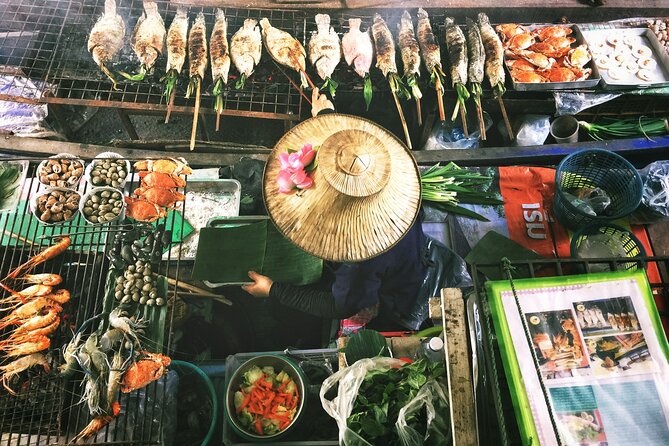
Street food is the big reason many people sign up for a Chinatown night walk, and this one is built around that idea. The plan includes tasting popular Thai street food, with guidance on what you’re trying and why it fits the neighborhood.
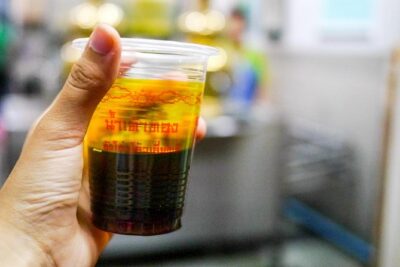
From the guidance style described in accounts, the best experience comes when you’re open to whatever the guide recommends in the moment. One account mentioned helpful street food suggestions and another called out Chinese herbal drinks. That tells me you may see more than just a standard list of fried snacks.
Here’s how I’d approach tastings so you don’t end up overwhelmed:
- Tell your guide about any dietary limits early. It saves time.
- Take small tastes if you’re unsure. You’re not trapped in a single dish.
- Ask what’s hot, sweet, sour, or herbal. In Chinatown, flavors can swing quickly.
If you like eating with context, you’ll enjoy how the guide links dishes to the wider story of the neighborhood.
Chinatown Gate, shopfronts, and the neon-sign lesson
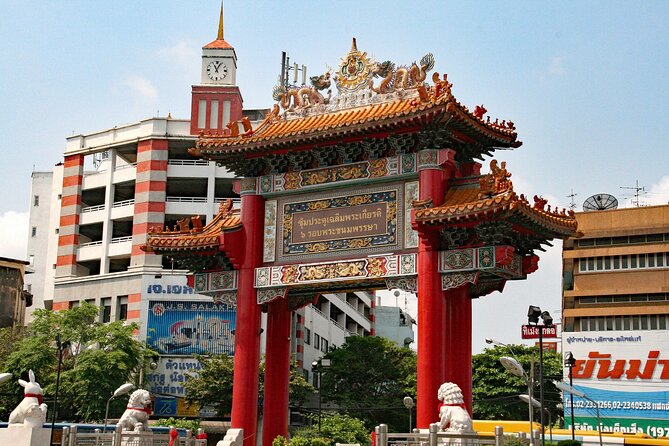
The overview mentions seeing the iconic Chinatown Gate and traditional shopfronts alongside trendy eateries. This is where the tour becomes a visual decoder.
You’ll learn how to read the area like a local:
- Which storefronts feel older and which are newer.
- How signage and branding reflect the Chinese-Thai blend.
- Why some items appear in clusters, because trade patterns bring related goods together.
This is also where the guide can help you avoid the common tourist trap: wandering into a stall, buying something random, then realizing you missed the dish that actually explains the area.
Guide energy is the real difference-maker
The most consistent praise across experiences is the guides. Names you may encounter include Nam, Jimmy, Tony, Bobby, Kim, Bass, and Dan. The common thread is passion and clarity, especially when explaining both history and food.
What I like about this tour type is that it turns a crowded neighborhood into a manageable sequence. A strong guide also handles the practical side of walking in heat and crowds. One account mentioned a guide noticing a child struggling with the heat and responding with extra care. That’s the kind of small behavior that makes a night tour feel safer and smoother.
If you get a talkative guide, it can feel like a walking class. If you get a quieter guide, it’s still about the route. Either way, your best move is to stay close enough to hear, especially on narrow alleys.
Group size and what to expect in the streets
The maximum group size is 99 travelers. In real life, the number you experience can vary by date, but the cap matters. It suggests you’re walking as a real group, not a small private bubble.
How this affects you:
- More people can mean more stopping, more waiting, and less room to drift.
- A good guide should keep everyone moving and prevent the group from scattering, especially in the Old Market alley.
If you prefer quiet and lots of personal space, you might feel crowded at certain points. If you like energy and conversation, the group size can work in your favor, because you can hear other questions your guide answers.
Vox City app bonus: use it the next day
The tour includes 3 free self-guided tour options in the Vox City app. Even though this night walk is short, the bonus can extend your Chinatown time without paying for another guided session.
I’d treat the app tours like a follow-up. After seeing the big sights at night, you’ll be better at spotting the same landmarks in daylight, and you’ll know what to look for.
Who should book this Bangkok Chinatown night walk
This is a strong fit if you:
- Want a short, efficient way to see Yaowarat and Talat Noi after dark.
- Enjoy street food and want it paired with explanations.
- Like temples and shrines when someone can explain why people pray there.
- Travel with kids or friends who handle a two-hour walk.
It’s less ideal if you:
- Want a quiet, headphone-based experience (headphones are not included).
- Need lots of time inside attractions, since entry isn’t included and the overall duration is about 2 hours.
Should you book this tour or skip it?
Book it if you want value, structure, and story. For $15, the combination of a guided route, street-food tastings, and multiple cultural stops makes sense. It’s also a good call if you’re new to Bangkok, because the route helps you learn the neighborhood logic quickly.
Skip it if you already know Chinatown well and you mainly want freedom to wander without stopping. This tour is designed to keep you on a sequence, not to let you drift for hours.
If you’re deciding right now, here’s the simplest decision rule: if street food plus temple context sounds like your kind of night, this walk is a smart bet. If you’d rather browse at your own pace, you might prefer a self-guided evening.
FAQ
What time does the Bangkok Chinatown night walking tour start?
It starts at 6:30 pm.
How long is the tour?
The duration is about 2 hours.
Where do I meet the tour?
The meeting point is Hua Lamphong, Rong Muang, Pathum Wan, Bangkok 10330, Thailand.
What is included in the experience?
The tour includes a Chinatown walking tour, local insights, expert storytelling, and 3 free self-guided tour options in the Vox City app. It also includes tasting popular Thai street food as part of the experience.
Are attraction entry fees included?
No. Entry to attractions is not included.
Are headphones provided?
No. Headphones are not included.
Can I cancel for a full refund?
You can cancel for a full refund if you cancel at least 24 hours before the experience start time. If you cancel within 24 hours, no refund is provided.
Guided Thai outings, continued
What else made it into the Thailand notebook
Yaowarat after dark, plate by plate
What else made it into the Bangkok notebook
- Discover UNESCO World Heritage Sites – Ayutthaya to Khao Yai National Park
★ 5.0 · 7 reviews - Damnoen Saduak Floating Market & Maeklong Train Market Tour
★ 5.0 · 7 reviews - Unique and Scenic Slow Boat Tour from Bangkok to Ayutthaya
★ 5.0 · 7 reviews - Bangkok Tour: Highlights & Hidden Gems & Long Tail Boat
★ 4.5 · 7 reviews - Silom Thai Cooking Experience with Market Visit
★ 5.0 · 7 reviews - Private Tour: Grand Palace,Wat Phra Kaew, Museum&Cooking Class
★ 5.0 · 7 reviews
Bangkok Chinatown Food Walks, compared.
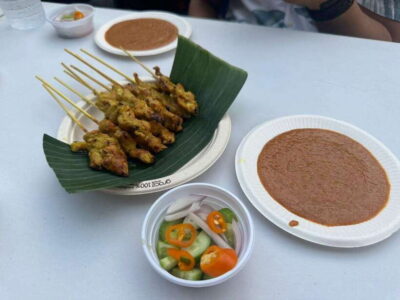 ★ 4.9Bangkok Authentic Tasting Thai-Chinatown Walking Food TourFrom $43852 reviews
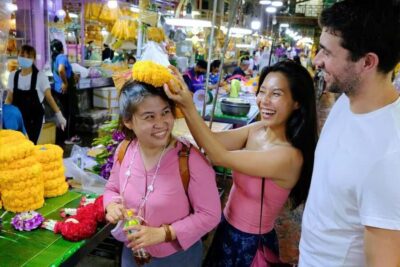 ★ 4.3Tuk Tuk Adventure Chinatown Michelin Food & TemplesFrom $18725 reviews
 ★ 5.0Bangkok by Night Food Tour with 10+ Tastings in ChinatownFrom $46545 reviews
 ★ 4.6Bangkok Tuk-Tuk by Night with Chinatown Street Food MealFrom $40263 reviews
 ★ 4.8Chinatown Food Tour with Michelin Food StallsFrom $36226 reviews
 ★ 5.0Bangkok Night Michelin Foodie Tour in Chinatown with 15+ tastingsFrom $56189 reviews
 ★ 5.0Night Street Food Tour of Bangkok’s ChinatownFrom $58173 reviews
 ★ 4.2Discover a Taste of Chinatown – 2 Hr Walking TourFrom $64152 reviews
Browse the lists this tour appears in