

REVIEW · CHIANG RAI WHITE AND BLUE TEMPLE TOURS
1 Day Trekking in Chiang Rai forest (walk only)
A forest walk that feels like real life. You start from the hot springs, move through bamboo and farmland, and finish with Huai Kaew waterfall time plus a bamboo lunch in the jungle.
Two things I loved: the hands-on meal where you cook with bamboo containers, and the way the day lets you see Lahu and Akha village life up close. It’s not a quick look from a doorway, you’re actually walking through parts of the communities and their routines.
One possible drawback: the trail is uneven, and the first stretch can feel hard with steep, rocky, or slippery spots. Also, the hot springs ending can be underwhelming for some people, more like warm water in a basin, sometimes with construction around the pool area.
In This Review
- Key things to know before you go
- Starting at the hot springs, then walking into the jungle day
- The Lahu and Akha village route, beyond the photo stop
- Bamboo forest and community farmland, where the day slows down naturally
- Huai Kaew Waterfall swim, the moment people remember
- Bamboo cooking lunch, why this feels more real than a served meal
- Tea plantations and a Chinese village stop, a quick look at working countryside
- Walking time, fitness reality, and what gear actually matters
- Guides are the secret sauce, from Thor to June to Addie and Chai
- Price and value for a $57 1-day forest trek
- Should you book this Chiang Rai forest walk?
- FAQ
- How long do I spend walking on this trek?
- Where is pickup included?
- Is transportation included?
- What activities are included besides trekking?
- What should I bring for the day?
- Is mosquito repellent included?
- What languages is the guide available in?
Key things to know before you go
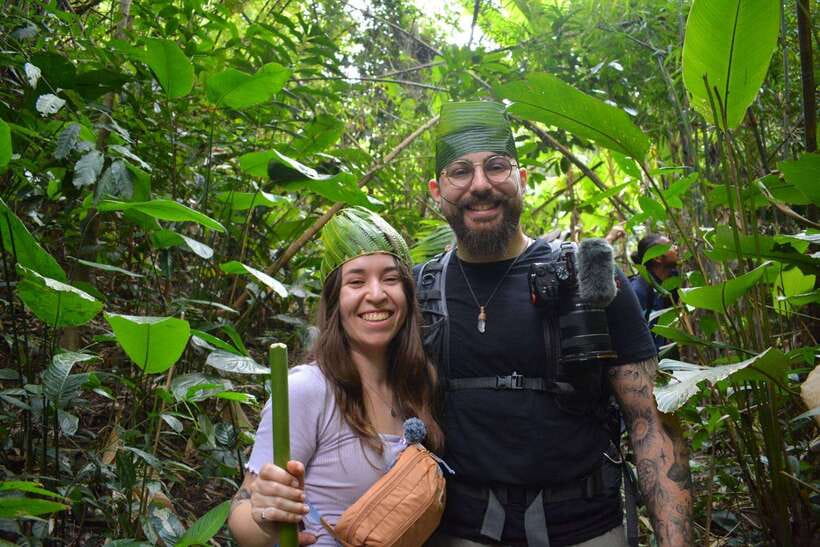
- The walk time adds up: about 5 hours on foot in total, even though the day includes driving and breaks.
- Village visits are part of the route: you’ll see Lahu and Akha communities as you hike through their area.
- Huai Kaew waterfall is the big water stop: you can swim and relax there.
- Lunch is cooked the bamboo way: you make a bamboo lunch using bamboo containers on an open fire setup.
- Guides shape the whole experience: you might meet guides like Addie, June, Thor, or Chai, and the best days come with lots of energy and plant talk.
- Expect real jungle walking, not a stroll: even if you’re “average fit,” agility matters on rocky sections.
Wat Rong Khun runs also got a going over
- Chiang Rai: Guided Highlights Guided Tour with Buffet Lunch★ 4.9 · 1,532 reviews
- Chiang Rai: Iconic Temples & 7 Major Sites—River View Buffet★ 4.9 · 692 reviews
- Chiang Rai: White, Blue, Red Temples, Long Neck Tour★ 4.8 · 652 reviews
- Sightseeing Join Tour Chiang Rai / PICK UP ONLY IN CHIANG RAI★ 4.5 · 398 reviews
Starting at the hot springs, then walking into the jungle day
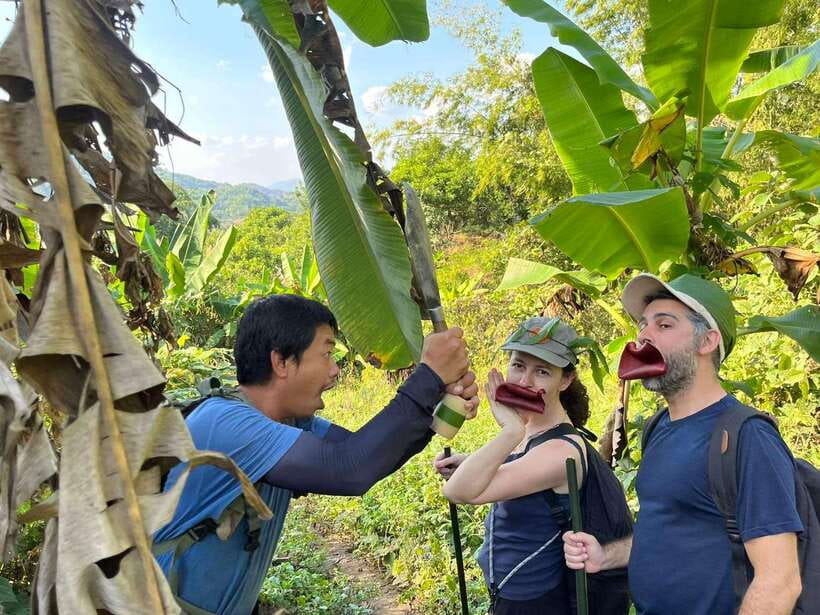
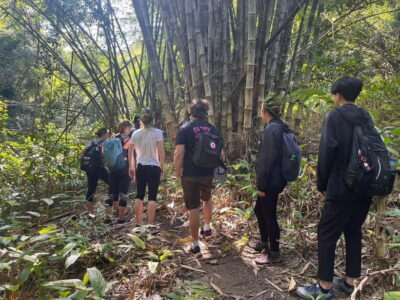
This is a walk-only style trek in Chiang Rai, meaning most of the “experience” happens on foot, not on a comfort loop. You begin from the hot springs area, then the route quickly turns into forest walking through bamboo and community farmland.
The pickup is from the Mueang Chiang Rai District area, then you ride by jeep or SUV for about 40 minutes before you start trekking. That matters because it sets expectations: you’re not going to just wander near the city. You’re using the car to get you to a rural trail system, then you’re earning the views with your own legs.
In a perfect world, you’d imagine the hot springs stop as a deep, relaxing soak. In reality, it can be more like warm springs in a cement basin. One traveler also noted the hot pool was under construction on their day. I’d treat it as a bonus stop, not the main event. The real payoff is what happens after you leave the hot springs: bamboo forest shade, the mix of farmland and trail, then the big waterfall swim later.
If you’re sensitive to motion or you want flat, easy ground the whole time, this may not be your best Chiang Rai day. The trail includes slopes and rocky footing, and at least one person said they wouldn’t recommend it for people with motion problems. For everyone else, the best strategy is simple: wear proper shoes, walk at the pace your guide sets, and use the rest spots when they appear.
The Lahu and Akha village route, beyond the photo stop
A big reason this trek gets such high marks is the village portion. You’re not just passing by. You trek to Lahu and Akha hill tribe villages as part of the day’s walk, so you see daily life woven into the route.
What I like about this approach is that it feels practical. You’re walking through the same kind of path locals might use to move between forest, fields, and homes. That makes it easier to connect the dots between what you’re learning in the moment and what you see in front of you.
From the experience descriptions, the day’s flow looks like this: after bamboo forest and community farmland, you continue on toward the Lahu and Akha villages. You get to see their way of life, then you keep trekking onward toward the waterfall stop. That “moving through” feeling helps you avoid the bored, waiting-around vibe you sometimes get on structured tours.
That said, village visits are always more meaningful if you go with the right mindset. Bring patience, dress respectfully, and remember you’re entering real community space, not a theme park set. If you’re hoping for a scripted cultural show, you may feel there’s less performance and more everyday rhythm.
Guide choice makes a difference here. People specifically praised guides like Addie and June for being energetic and informed, and Thor and Chai for keeping the day fun and full of practical nature info. On the days that shine, you’ll get both the human connection and the behind-the-scenes explanations, like what plants are around you and how water can be found in bamboo.
Bamboo forest and community farmland, where the day slows down naturally
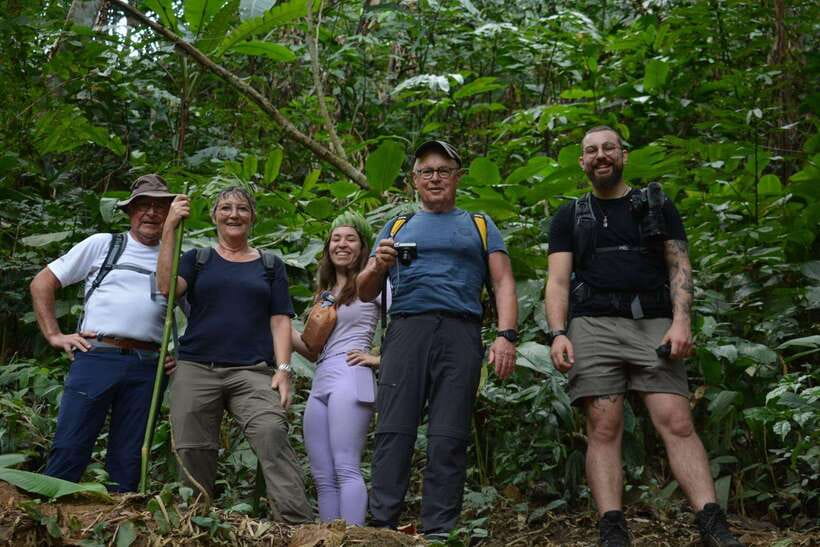
Before you reach the villages and Huai Kaew waterfall, you’re walking through a mix of forest and cultivated areas. That mix is part of the value. Pure jungle trekking can feel repetitive. Pure farmland walking can feel like you’re just passing through. Here, you get a blend.
The route starts with bamboo forest segments, then moves past community farmland. You’re also likely to hear explanations about local nature along the way. Some travelers mentioned guides pointing out fruits, berries, trees, and how to find water sources. You might even watch your guide make small items from bamboo or leaves during breaks, which turns waiting time into something useful and fun.
This is also where you should think about pacing. Multiple people said the trek is strenuous enough to feel like a real effort, but it isn’t a no-excuses endurance event if you’re reasonably fit. One person with average fitness in their late 40s managed the walking fine. Another said the first two hours can be difficult, then it opens into more beautiful views and easier rhythm.
My advice: treat the first chunk as your warm-up workout, even if you start feeling winded. Stop when your guide tells you to stop. Hydrate, and consider taking a slower pace to save your energy for the steep or slippery bits. You’ll enjoy the waterfall more if you arrive with legs that still work.
Huai Kaew Waterfall swim, the moment people remember
The highlight that most people track is the big water stop: Huai Kaew Waterfall. This is described as the second largest waterfall in Chiang Rai Province, and it’s also where the day gives you that classic jungle reward.
What makes this stop practical is the ability to swim. You can play in the water and relax there, which changes the whole feeling of the trek. Instead of finishing exhausted, you get a chance to reset your body and cool down.
At the same time, I’d come prepared for the reality of waterfall conditions. Paths to and from the waterfall can include uneven ground. If you’re wearing slippery footwear, you’ll feel it fast. Bring swimwear because it’s not just a photo moment.
Also, remember that this trek is happening in heat and humidity, especially during warmer months. If you tend to burn quickly or feel tired in hot sun, use the shade when it’s available. One traveler specifically said the guides helped keep morale high through the heat, which tells me rest timing and encouragement are part of how the day stays enjoyable.
The best days likely have a guide who times the group so you’re not stuck waiting in peak sun. If you’re lucky, you’ll arrive when the setting feels calm enough to truly relax for a while, not just rush through.
Thai walking routes sat in the same notebook
Bamboo cooking lunch, why this feels more real than a served meal
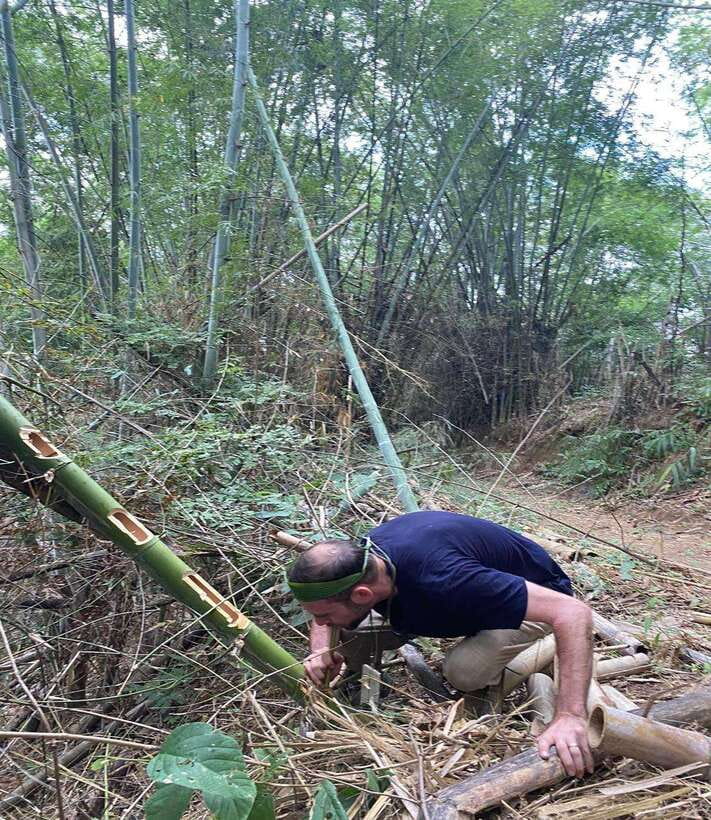
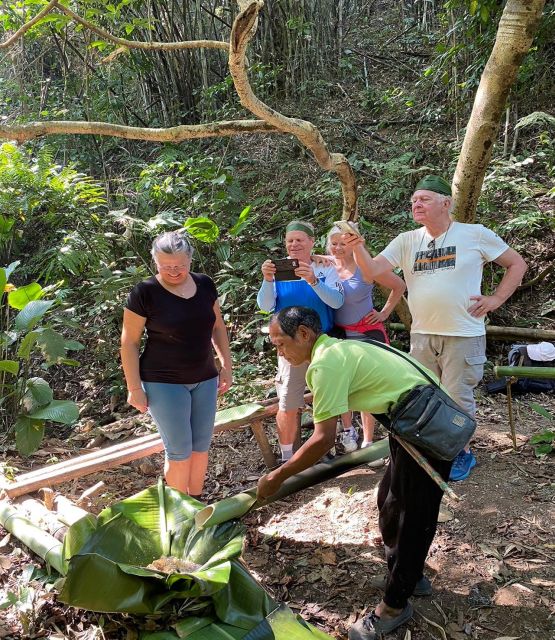
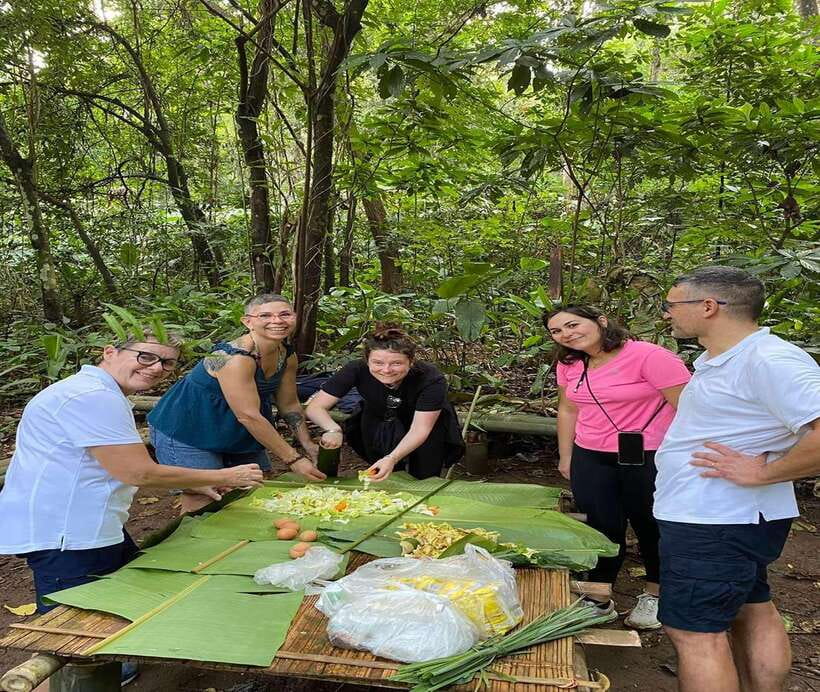
The lunch experience is a major reason this trek stands out. You’ll make bamboo lunch using handmade bamboo containers, then cook and eat as part of the forest day.
Here’s what makes this more valuable than a standard lunch stop: you’re not just being served food. You’re participating in the process. Travelers described seeing bamboo cooking on an open fire and praised the food as delicious. Several also called out specific items such as roasted pork on a spit, soup, and an egg dish.
You’ll likely spend time right where the cooking happens, which helps you understand the effort behind the meal. Bamboo cooking requires careful timing and attention to the containers, heat, and prep. Even if you don’t remember every step, you’ll walk away with a clear “how they do it” feeling.
Guides like Thor were singled out for leading the bamboo cooking portion with enthusiasm, and people also mentioned they could join in, not just watch. If you enjoy food experiences that are hands-on, this is one of the better uses of a day in Chiang Rai.
A practical note: bring an appetite you can trust. This is not a small snack. The walk is long enough that you’ll want the fuel. Also, the tour includes water, but energy drinks aren’t included, so if you rely on them for extra push, plan to carry your own.
Tea plantations and a Chinese village stop, a quick look at working countryside
After the waterfall and bamboo lunch, the day continues with a walk that includes a Chinese village and tea plantations. This part adds variety to the trek. Instead of only forest and water, you get a look at agriculture and rural settlement.
Some travelers mentioned seeing tea and rice plantations, and others connected the day to tea and coffee. The key point for your expectations is that this is still a walking route. You’re not touring a factory or a museum. You’re moving through rural areas where farming is part of life.
What this section does well is show you Chiang Rai beyond temples and markets. It helps you understand the region as a mix of forest resources, farmland, and village communities. It also extends your day experience so it doesn’t end right after the waterfall.
The potential drawback is that this portion may feel more “walk and observe” than “active participation,” depending on your guide and the pace of your group. If your ideal day includes constant activities without quiet walking segments, you might need to lean into the scenery and explanations your guide provides.
Walking time, fitness reality, and what gear actually matters
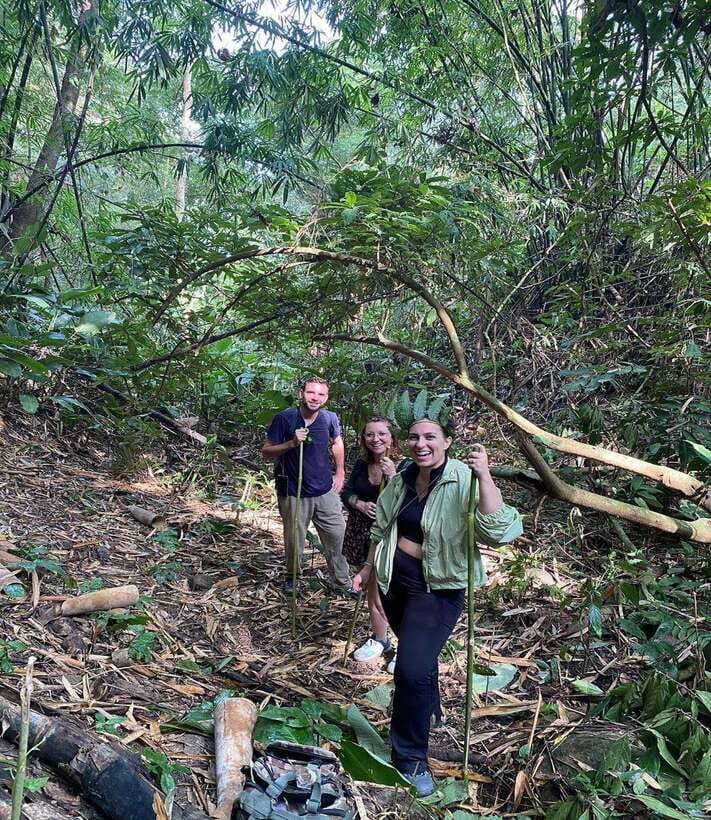
Total walking time is about 5 hours, but the day still includes breaks and transitions by jeep or SUV. Even so, you should plan like this is a real hike, not a light stroll.
From the experience descriptions and traveler feedback, here’s what to expect:
- Some parts include steep and rocky slopes.
- There can be slippery sections.
- Rest spots are part of the plan, so you are not left to suffer nonstop.
- People with moderate fitness can handle it, but it does require agility.
If you’re in your 40s or 50s, have decent walking habits, and you wear good shoes, you’ll likely be fine. If you have knee issues, balance problems, or you struggle on uneven ground, reconsider. One traveler specifically said if you have motion problems, it likely isn’t a good match.
Packing is straightforward and important:
- Swimwear, for the Huai Kaew waterfall swim time.
- Hiking shoes with grip for rocky or slippery trail segments.
- Biodegradable insect repellent, since mosquito repellent is not included.
Also consider energy drinks if you need them. Water is included, but not energy beverages. A few people might feel fine on water and rest, but if you know your routine, bring what works for you.
Guides are the secret sauce, from Thor to June to Addie and Chai
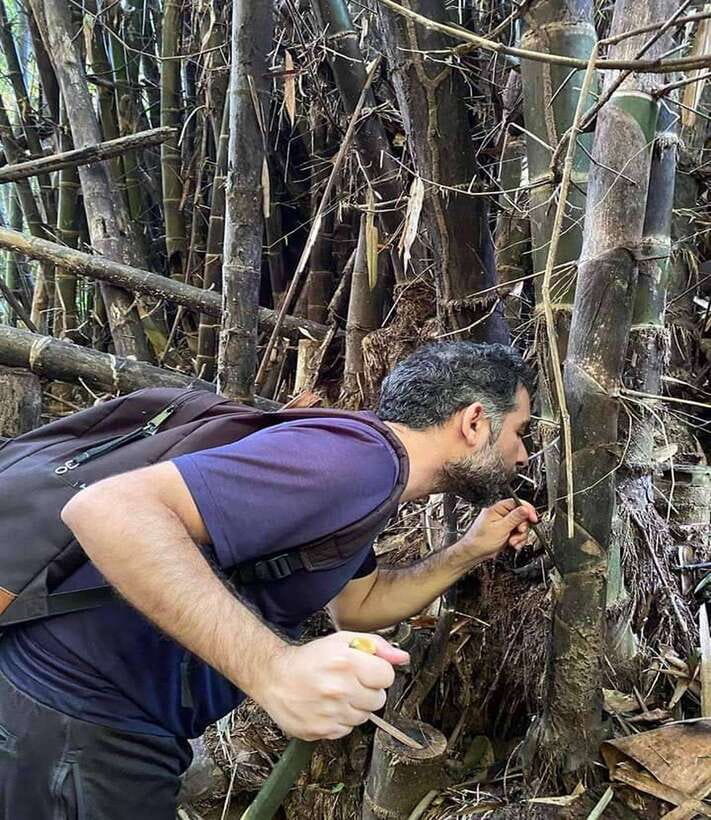
In a tour like this, the guide matters more than usual because you’re in nature for hours. You’re walking through paths you might miss without local help, and you’re also learning along the way.
The names you might meet include Addie, June, Thor, and Chai. Travelers praised them for different strengths, but a common theme is energy and connection. People described guides as fun, funny, and highly motivated. Others highlighted specific abilities like surviving skills, plant and herb explanations, and bamboo craft moments during breaks.
One traveler even noted that their guide cared for someone who suddenly felt unwell. That’s a quiet but important kind of quality. You want a guide who watches the group, not just leads them.
What you should look for in a good day is a guide who:
- sets a pace that keeps you moving but not panicked
- gives short, useful nature context during breaks
- keeps morale up when the heat hits
- supports the village portion with respect and clear explanations
If your guide brings that mix, the trek feels like a story that keeps going forward, not a list of stops.
Price and value for a $57 1-day forest trek
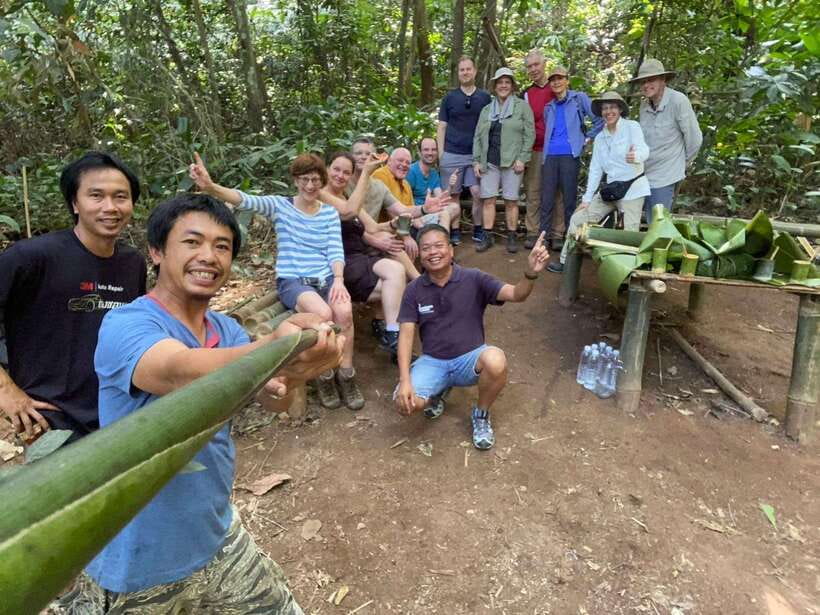
At $57 per person for a 1-day trek, the value is mostly about what’s included. You get hotel pickup and drop-off at Chiang Rai, transportation, a tour guide, bamboo cooking, water, and insurance. You also get the big environmental anchors, hot springs time, villages, and the Huai Kaew waterfall.
What’s not included matters too: energy drinks and mosquito repellent. Those are small add-ons, but you should budget them if you use them.
So is it worth it? If you want a day that’s active, culturally connected, and food-based, yes, it tends to feel like a good deal. You’re paying for a full day guide and access to rural route points that are not as easy to DIY. You’re also getting a hands-on lunch experience, which often costs more on its own.
The price is less convincing if your priorities are comfort and predictability. This is walking heavy. If you want a mostly seated day, or you dislike uneven trails, you’ll feel the cost more than the value.
Should you book this Chiang Rai forest walk?
Book it if you want:
- a walk-only day with about 5 hours on foot
- village visits to the Lahu and Akha hill tribes as part of the route
- a true waterfall swim at Huai Kaew
- a hands-on bamboo cooking lunch using bamboo containers
- guides who keep things energetic and informative, with names like Thor, June, Addie, and Chai showing up often
Skip or reconsider if:
- steep or slippery trails are a hard no for you
- you get motion sick easily
- you expect the hot springs stop to be a major, relaxing spa moment (it may be warm water in a basin, and sometimes construction affects it)
If you’re the kind of traveler who likes real countryside, doesn’t mind a hike, and enjoys learning while walking, this is one of the best ways to spend a single day in Chiang Rai beyond the usual route.
FAQ
How long do I spend walking on this trek?
Total walking time is about 5 hours during the day.
Where is pickup included?
Hotel pickup and drop-off are included in Chiang Rai city, and pickup includes the Mueang Chiang Rai District area.
Is transportation included?
Yes. You’ll use jeep or SUV transport as part of the day.
What activities are included besides trekking?
You’ll do bamboo cooking and you’ll have time at Huai Kaew Waterfall where you can swim and relax.
What should I bring for the day?
Bring swimwear, hiking shoes, and biodegradable insect repellent.
Is mosquito repellent included?
No. Mosquito repellent is not included.
What languages is the guide available in?
The live tour guide is available in English and Thai.
Thailand at walking pace, continued
What else made it into the Thailand notebook
The White Temple and the Blue Temple, continued
What else made it into the Chiang Rai notebook
- One Day Group Tour Experience in Chiangrai
★ 5.0 · 22 reviews - Chiang Mai to Chiang Rai: 3 Temples & Hot Springs & Pickup
★ 4.0 · 22 reviews - Chiang Rai: Discover 7 Must-See Spots & Lunch Included
★ 4.7 · 26 reviews - Private Choui Fong and Golden Triangle Explorer from Chiang Rai
★ 4.0 · 27 reviews - Chiang Rai: Guided Full-Day Highlights tour with Lunch
★ 5.0 · 30 reviews - Chiang Rai: Discover 7 Must-See Spots & Lunch Buffet
★ 5.0 · 47 reviews
Chiang Rai White and Blue Temple Tours, compared.
 ★ 4.6Chiang Rai White Temple and Blue Temple Day TourFrom $273,366 reviews
 ★ 4.9Guided Highlights Guided Tour with Buffet LunchFrom $371,532 reviews
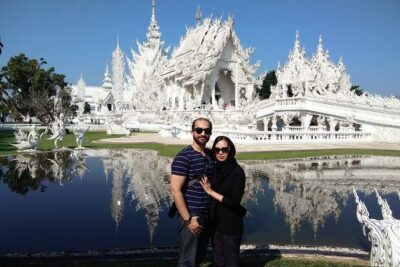 ★ 5.0Chiang Rai Temples: Private Tour from Chiang MaiFrom $1441,267 reviews
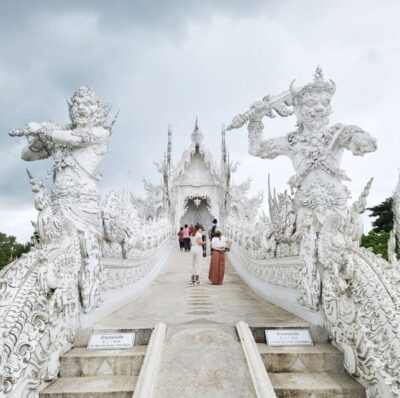 ★ 4.5Chiang Rai’s Temples Exploration Day TripFrom $51871 reviews
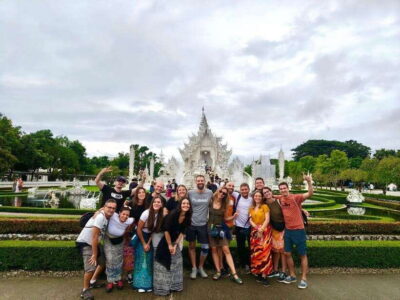 ★ 4.9Iconic Temples & 7 Major Sites—River View BuffetFrom $37692 reviews
 ★ 4.5Chiangmai to Chiangrai: 3 Temples, Hot Springs& Lalitta CafeFrom $41659 reviews
 ★ 4.8White, Blue, Red Temples, Long Neck TourFrom $57652 reviews
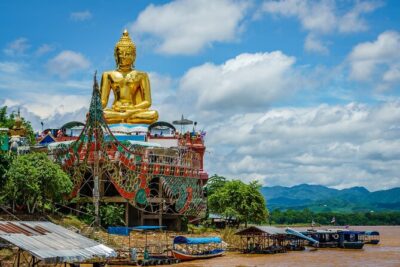 ★ 4.5Chiang Rai White Temple, Blue Temple and more from Chiang MaiFrom $39605 reviews
Browse the lists this tour appears in