
REVIEW · TRAIN EXPERIENCES
Floating and Railway Markets Private Tour
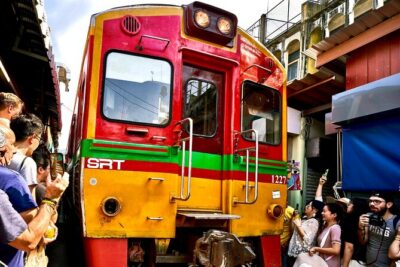
A train is coming, so stalls pull back. This is a private Bangkok day built around two famous market styles, one on water and one on the tracks, with a guided walk and rides that keep things moving. I especially love the Mae Klong train moment and the motorboat ride at Damnoen Saduak. One drawback to plan for is that the floating market can get very crowded, so moving for photos takes patience.
This tour is also good value if you want structure. You get hotel pickup and drop-off, a licensed English-speaking guide, and rides that are usually tricky to organize on your own, especially the railway part. At around 7 hours total, it’s a full day, and the drive time to the markets area is part of the deal.
In This Review
- Key points that make this tour worth your time
- Why these markets go together so well
- Price and what $126.94 per person really buys
- The real schedule: expect a full day, not a quick hit
- Stop 1: Bangkok pickup and the drive toward Maeklong
- Stop 2 in Samut Sakhon: the sea salt field context
- Stop 3: Mae Klong Railway Market, where timing is the product
- Stop 4: Coconut sugar farm, from nectar to palm sugar loaf
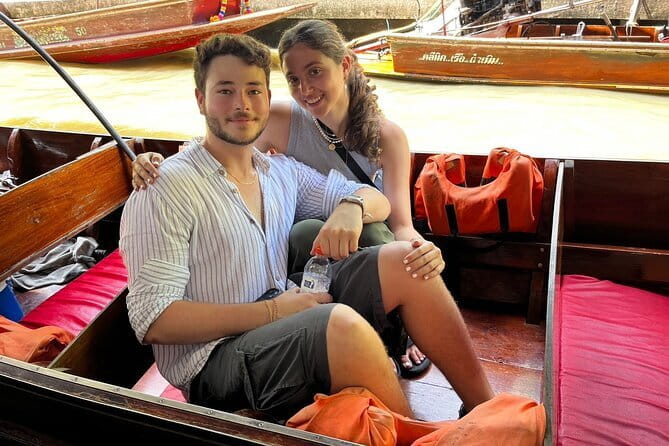
- Stop 5: Damnoen Saduak Floating Market by motorboat
- Comfortable private transport is the hidden win
- Lunch, shopping, and what to do with your time
- Who this tour is best for
- Quick decision checklist: should you book this?
- FAQ
- How long is the Floating and Railway Markets Private Tour?
- Is hotel pickup and drop-off included?
- What rides are included?
- Is lunch included in the price?
- What language is the guide?
- Are tickets included?
- What happens if I need to cancel?
Key points that make this tour worth your time
- Railway market drama in real time, with a train arrival that changes everything fast
- Damnoen Saduak by motorboat, giving you a better perspective than just standing on shore
- Coconut sugar and sea salt context, so you learn what you are actually seeing and buying
- Hotel pickup and private AC vehicle, which saves you from Bangkok traffic math
- High satisfaction score, 4.9 out of 5 with strong marks for organization and timing
Thai rail bookings sat in the same notebook
- Bangkok: Damnoen Saduak Market and Maeklong Railway Market★ 4.5 · 26,723 reviews
- The Old Siam: Damnoen Saduak and Maeklong Railway Market★ 4.5 · 10,992 reviews
- Bangkok: Train Market & Floating Market with Boat Ride★ 4.7 · 9,547 reviews
- Half-Day Railway Market and Floating Market Tour in Thailand★ 4.5 · 3,924 reviews
Why these markets go together so well
Some Bangkok market days focus on one place only. This one links two very different scenes, and that contrast is the point. You’ll shift from narrow water lanes to a railway line where the market reacts instantly.
The Mae Klong railway market stop is the headline because the timing is built in. As the train approaches, sellers retract their setups, so you see commerce adapt to infrastructure, not the usual static stalls.
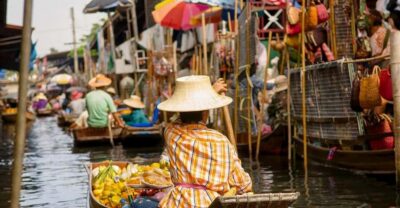
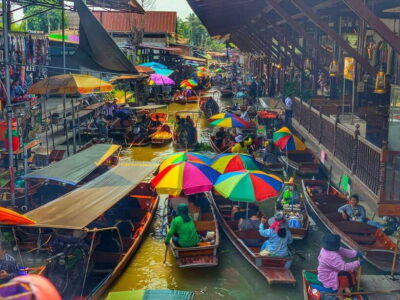
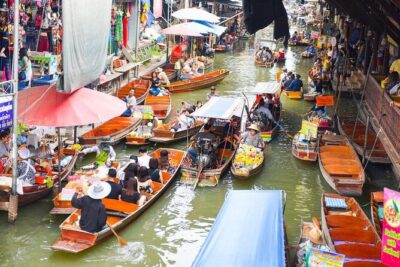
Then you move to Damnoen Saduak, where the rhythm is slower and more visual. Instead of a single rail track controlling the moment, you’re navigating a floating market environment where boats, goods, and conversation blend together. It’s a different kind of spectacle, and that makes the day feel like more than one tourist stop.
Price and what $126.94 per person really buys
At $126.94 per person for a private tour, the value depends on one thing: how much you want someone else to handle the logistics. You are paying for a licensed English-speaking guide, a private air-conditioned vehicle, hotel pickup and drop-off, plus the included motorboat ride and the train ride.
Here’s what that means in real terms. If you tried to DIY this whole loop, you would spend time figuring out transport, timing, and how to manage the railway market safely. This tour folds all of that into a day plan, with rides included rather than optional add-ons.
A nice bonus is the travel accident insurance up to 1,000,000 THB per person. It’s not the main reason to book, but it’s reassuring on a day that includes both road travel and close-up market movement.
Two more cost notes. Lunch is not included, so plan for your own meal. Also, some admissions are listed as free while other parts are included, so you are not hit with a long list of separate ticket payments.
The real schedule: expect a full day, not a quick hit
This is about 7 hours total, and the roundtrip travel time between Bangkok and the railway market area is listed at approximately 3.2 hours. In other words, you’re not just doing markets for 7 hours on the clock, you’re also doing road time that eats part of your energy.
The good part is that you get pickup and drop-off from your hotel using a private AC vehicle. That matters in Bangkok, where getting around can turn into a guessing game if you are relying on public transport.
Your best time management move is simple. Treat the day like a “see it all” outing. If you come in expecting time for endless shopping and long lingering, you may feel the pace. If you come in ready to watch, photograph, and absorb the different market styles, the schedule makes sense.
Stop 1: Bangkok pickup and the drive toward Maeklong
Your day starts with hotel pickup and travel toward the Maeklong area. The plan is straightforward: get you out of Bangkok and into the market zone without making you figure out the routes.
Admission is listed as free at the Bangkok-to-market stage, which is common for the “travel day” portion. The main value here is the human part. A guide helps you understand what you’ll see next, and that makes the first market moment land better later.
One practical tip for your comfort. Wear shoes that handle uneven walkways and quick stepping. Even before the big “train is coming” moment, the market zone involves short walks, changing crowd density, and surfaces that are not always smooth.


Stop 2 in Samut Sakhon: the sea salt field context
The itinerary includes a stop in Samut Sakhon tied to sea salt production. It’s described as a whitish salt field, and the point is to show how Thai local wisdom turns salt farmers’ work into something used for cooking and skincare.
This stop is listed as about 10 minutes. That’s not a long farm tour, so it works best as a quick scene-setting stop. If you want hands-on production learning, you might find this portion brief.
There is also wording that suggests it may function as a special bonus depending on the booking context. So keep your expectations flexible. If you do get the salt field stop, you’ll likely appreciate it more as background than as the main event.
If animals are a serious concern for you, do a quick mental check here. The itinerary is about food production, but one review flagged animal-respect concerns at the floating market. That means you should keep your eyes open at every stop, including any where people handle or display living creatures.
Stop 3: Mae Klong Railway Market, where timing is the product
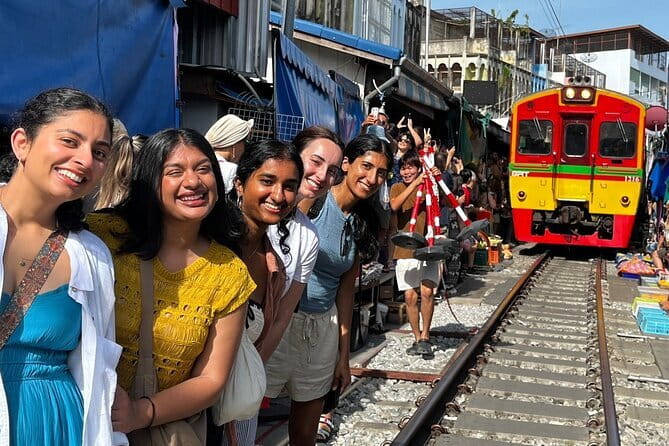
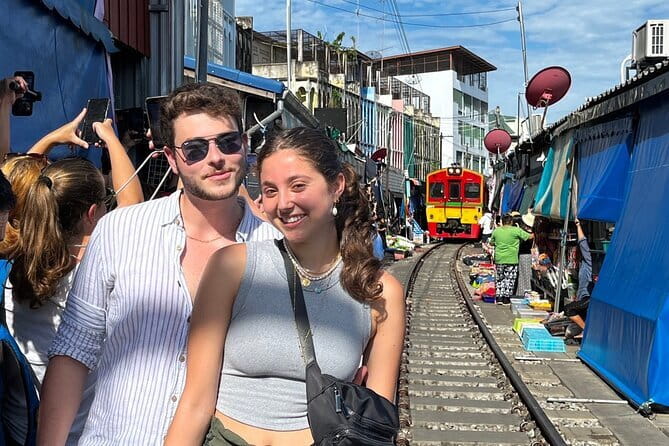
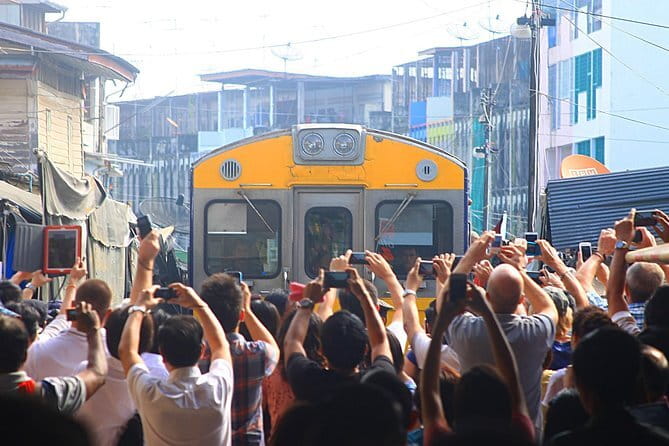
This is the stop you plan around. Mae Klong Railway Market, also called Hoop Rom Market, is famous because it’s called the life-risking market, humorously and by description. The key idea is that the railway passes through the market area, so sellers must react when the train approaches.
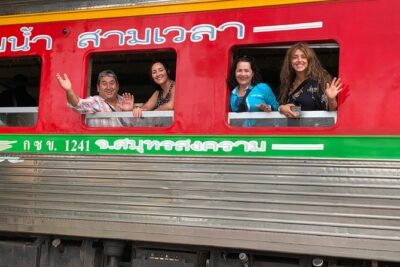
You’ll take a local train ride toward the Mae Klong station. While you are on the train, you get a “watch it happen” view of the market and its rhythm. Then you have time to stroll and see the stalls for yourself from closer up.
The value of this stop is not just photos. It’s the understanding that what looks like a fixed marketplace is actually a flexible system. The sellers retract their stalls when the train comes through, which turns a normal market visit into an event.
What to watch for:
- The crowd can tighten quickly as the train time nears.
- You’ll need to move with the flow rather than against it.
- The best photos often happen in quick windows, so ready your phone or camera before the moment.
One consideration: the time allocation can feel a bit rushed if you want slow wandering. You’ll want to balance curiosity with quick positioning, especially near where people naturally gather.
Stop 4: Coconut sugar farm, from nectar to palm sugar loaf

After the railway drama, the coconut sugar farm stop slows the day down a notch. You’ll spend about 20 minutes here, with a demonstration-style flow.
The focus is on how farmers produce coconut nectar and palm sugar loaf. You will see processes described as coconut flower cutting, pouring nectar into a bamboo container, and using preservation woods as part of the curing steps.
Even in 20 minutes, this is worth it because it gives you a lens for what you might buy later. A package of sugar is just a product. A short demonstration turns it into a story you can taste.
There’s a timing trade-off. This is not a long workshop. If you are the type who loves learning every step in detail, you may want more time than a short stop provides. Still, for most visitors, it’s a solid cultural and food-production primer.
Stop 5: Damnoen Saduak Floating Market by motorboat
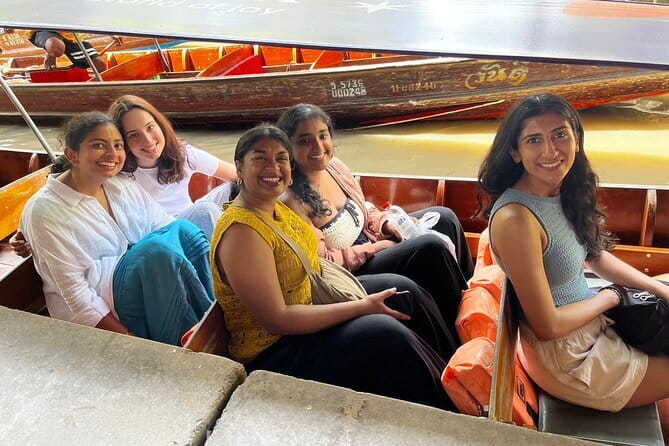
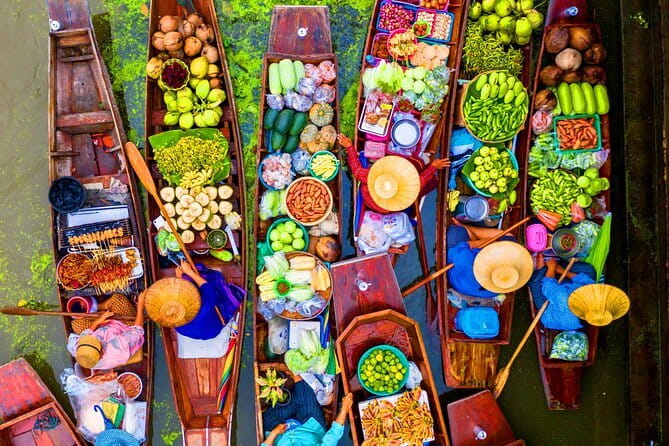
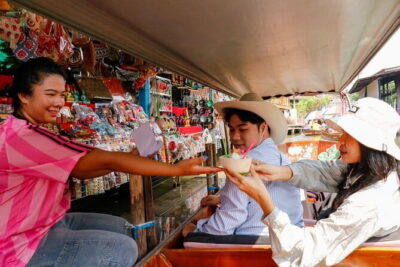
Damnoen Saduak is the water-market payoff. Your visit includes a motorboat ride, which is a big deal. It’s much easier to understand the layout and the movement of boats when you’re on the water instead of only on the shore.
You’ll also have time for the market itself, with the expectation of seeing historic and captivating market life on the canals. The tour frames it as an eye-opening experience, and the reason is simple: it’s not just shopping, it’s choreography.
One downside to take seriously is crowding. The floating market area can be crammed with tourist boats, which can make it harder to pass and harder to get a clean shot. Plan for slower movement and bring a realistic mindset: you are sharing space with many boats and many people.
How to make it easier:
- Keep your route flexible. If you find a jam, step aside and try another pocket.
- Take photos early, then shift to shopping and watching.
- Expect close quarters, especially near the most popular vendor clusters.
If you care deeply about animals, keep your awareness on. One unhappy review specifically raised animal-respect concerns tied to this floating market environment. The tour itself is focused on markets and food products, but real life on the canal matters, so you should be ready to decide how you feel while you are there.
Comfortable private transport is the hidden win
The included hotel pickup and drop-off, plus a private air-conditioned vehicle, is more than a convenience line. It changes how much you enjoy the day.
When you are doing two distant market stops, you want fewer moving parts. You don’t have to negotiate rides between sites, and you don’t have to worry about missing a train timing window because you misread directions.
In one positive account, the experience was praised for being well organized with comfortable transport and pickup directly at the hotel. That’s exactly what you want on a full-day itinerary where delays can cascade.
Language also matters. The tour includes a licensed English-speaking guide, and that is a key quality marker. Still, one review mentioned that in Thailand, guide English and accents can sometimes be challenging. My advice is to come prepared with a few simple questions and be patient if you need a slower explanation.
Lunch, shopping, and what to do with your time
Lunch is not included, so build your plan around that. If you have dietary restrictions, don’t assume you can easily grab exactly what you want at the market. Decide ahead of time if you want to eat during the drive time or after the floating market stop.
For shopping, keep it practical. Coconut sugar, salt products, and small market goods are easy souvenirs to justify, because they are tied to what you learn during the farm and production stop. On the water, you’ll also see ready-to-buy snacks and items linked to the canal market life.
For photos, pick your priorities. The railway market is a timed event, so treat it as the moment for action shots. Damnoen Saduak is better for atmosphere, vendor scenes, and canal motion shots, but crowded conditions make it harder to move like you would in a quiet neighborhood market.
Who this tour is best for
This private tour makes the most sense for people who want a guided day without the hassle of arranging transit and timing themselves.
It’s a great fit if:
- You want two iconic market types in one day
- You value hotel pickup and a private AC vehicle
- You like guided context for food production like coconut sugar and salt
It’s also family-friendly in the sense that it includes visual wow moments. One review called out that children enjoyed the scenes at both the markets, which tracks with the train-and-boat spectacle.
If you are someone who hates crowds, the floating market may be tough. The railway market is controlled by timing, so crowds are manageable if you follow the flow. The floating market congestion is more about the canal layout and number of boats, so it may feel more chaotic.
Quick decision checklist: should you book this?
Book it if you want a structured private market day with included rides, hotel pickup, and a guide who helps you understand what you are looking at. The price is fair for the amount of transport and activities you get, especially the railway train ride plus the floating market motorboat ride.
Pass or book with extra expectations management if you:
- Strongly dislike crowded environments, since Damnoen Saduak can feel packed
- Care most about slow, deep learning, since the sea salt and coconut sugar stops are short
- Have animal-welfare concerns. If that’s your priority, plan to observe closely on-site and choose based on what you see.
FAQ
How long is the Floating and Railway Markets Private Tour?
The tour lasts about 7 hours.
Is hotel pickup and drop-off included?
Yes. Hotel pickup and drop-off are included.
What rides are included?
You get a motorboat ride at the floating market and a train ride as part of the railway market experience.
Is lunch included in the price?
No. Lunch is not included.
What language is the guide?
The guide is licensed and provides English in person.
Are tickets included?
Some admissions are listed as free, and the coconut sugar farm has admission included. The motorboat and train rides are included.
What happens if I need to cancel?
You can cancel for a full refund up to 24 hours before the experience start time.
Thailand by rail, continued
Guided Thai outings, continued
What else made it into the Thailand notebook
What else made it into the Bangkok notebook
- Mahanakhon SkyWalk Entry Ticket
★ 4.3 · 20 reviews - Bangkok: Nimitr Rooftop by 137 Pillars
★ 4.8 · 20 reviews - Bangkok: Cook authentic Thai food with Smart Cook
★ 5.0 · 20 reviews - Bangkok: Travstore Original Bangkok Discovery Tour
★ 4.5 · 20 reviews - Bangkok: Chao Phraya Princess Dinner Cruise & Hotel Transfer
★ 4.2 · 20 reviews - 1 Hr Private Bangkok Canal Boat Tour: Traditional Flat Boat
★ 4.5 · 20 reviews
Train Experiences, compared.
 ★ 4.5Damnoen Saduak Market and Maeklong Railway MarketFrom $2526,723 reviews
 ★ 4.5The Old Siam: Damnoen Saduak and Maeklong Railway MarketFrom $3210,992 reviews
 ★ 4.7Train Market & Floating Market with Boat RideFrom $259,547 reviews
 ★ 4.8Floating Market and Train Market ExperienceFrom $253,998 reviews
 ★ 4.5Half-Day Railway Market and Floating Market Tour in ThailandFrom $323,924 reviews
 ★ 4.7Damnoen Saduak, Train Market & Mahanakhon Day TripFrom $232,162 reviews
 ★ 4.5Damnoen Saduak Floating Market and Maeklong Railway Market TourFrom $441,588 reviews
 ★ 5.0Day Trip to Bangkok Floating Market & Maeklong RailwayFrom $301,528 reviews
Browse the lists this tour appears in