
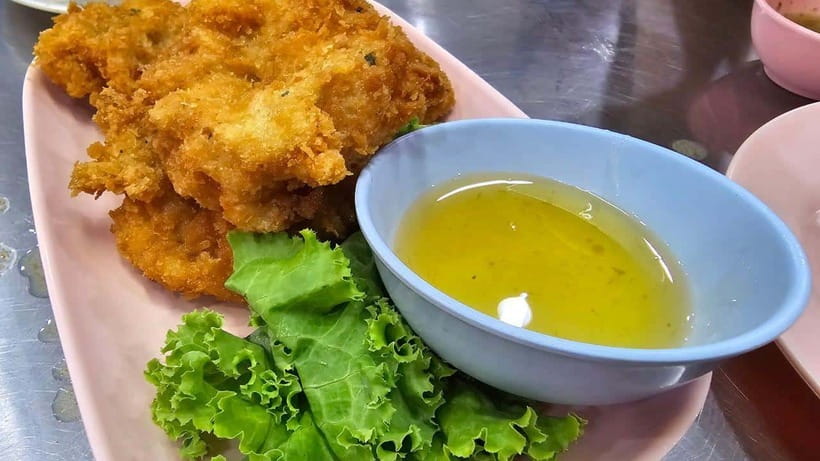
REVIEW · THAI STREET FOOD TOURS
Bangkok: Street Food Tasting Tour at Night
Bangkok’s night streets taste better with a guide, and Chinatown turns into a food map you can follow. I like the six tasting stops because they keep the pace rolling and prevent that awkward, should we eat here or not moment. I also like how guide Sophie ties what you’re eating to Thai-Chinese food traditions and the neighborhood’s past.
One consideration: this tour is strict about food and rules, so it may not work well if you avoid shrimp, peanuts, pork, or dairy, or if you need gluten-free or vegan options.
In This Review
- Quick highlights
- Finding the group at Wat Mangkon, and why MRT beats taxi
- 150 minutes in Chinatown: the pacing that keeps you eating
- Stop-by-stop style tastings: 6 moments, Thai-Chinese classics
- First bites, then you learn how to read the stall menu
- A dumpling stop that shows the neighborhood specialty
- A sweet pastry moment to balance out the tour
- The top-ranked local dish test
- A homemade menu with a secret ingredient
- Final stops that wrap your palate and your Chinatown story
- Why the guide matters, especially with Sophie’s history links
- Price and value: $49 for 6 tastings plus guided time
- Rules and restrictions: who should skip, and who just needs a plan
- Comfort and street smarts: shoes, crowds, and how to get through
- Should you book this night Chinatown street food tasting tour?
- FAQ
- How long is the Bangkok Chinatown street food tasting tour?
- Where do I meet the guide?
- How much does the tour cost?
- What is included in the tour price?
- Is hotel pick-up and drop-off included?
- What foods and diets is the tour not suitable for?
- Are electronic devices and alcohol allowed?
Quick highlights
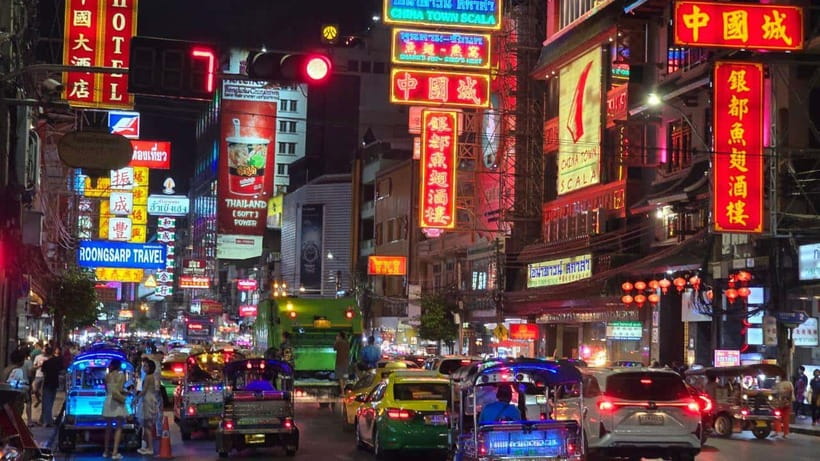
- Six tastings in one guided loop across Chinatown, usually in about 150 minutes
- Thai-Chinese best-sellers you can’t easily rank yourself when the stalls are packed
- Top-ranked local dishes in town, plus an added stop featuring a homemade menu and a secret ingredient
- Street culture plus short sightseeing as you move through narrow lanes and busy food corners
- English live guide with history context that makes the flavors make sense
- Rules that keep the tour focused (no alcohol, and electronic devices not allowed)
Thai street eating routes also got a going over
- Bangkok Backstreets Food Tour with 15+ Tastings★ 5.0 · 1,926 reviews
- Bangkok: Michelin Guide Street Food Tour by Tuk Tuk★ 4.4 · 1,274 reviews
- Bangkok: Tuk Tuk Adventure Chinatown Michelin Food & Temples★ 4.3 · 725 reviews
- Bangkok Tuk-Tuk Tour by Night with Chinatown Street Food Meal★ 5.0 · 635 reviews
Finding the group at Wat Mangkon, and why MRT beats taxi
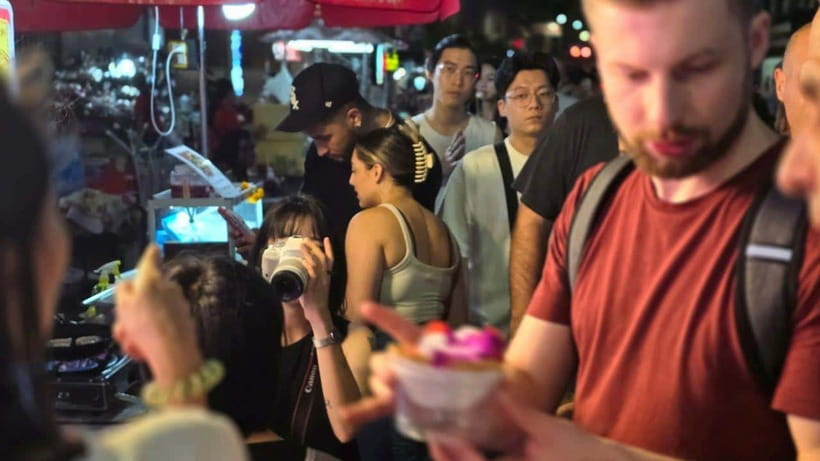
The whole night is built around one simple idea, you start in the Chinatown area and walk your way through it. You meet outside the MRT station Wat Mangkon at exit no. 3, and the tour begins around 449 Charoen Krung Road. If you’re coming by car or taxi, skip that plan. This area gets heavy traffic, and the walk is a big part of the experience.
Using the MRT also helps you arrive calm, not rushed. In a night market zone, arriving early means you can get your bearings without getting swept into the crowd. Pack light and plan on short, frequent stops while you eat.
150 minutes in Chinatown: the pacing that keeps you eating
This is a 150-minute street food crawl, with about three hours in Chinatown for both street food and sightseeing. The tour is designed so you’re not just wandering and snacking randomly. Instead, you follow the guide from one eating spot to the next, with just enough time at each stop to try, learn, and move on.
That pacing matters in Chinatown. Food places can get crowded, and lines can shift quickly. A guided route helps you avoid time sink moments, like waiting too long for a dish that might be out, or accidentally picking stalls that are great for locals but hard for first-timers to order from.
Also, be ready for walking that feels continuous. This isn’t a sit-and-plate dinner. It’s street-level sampling, so comfortable shoes are a must, and you’ll likely stand more than you sit.
Stop-by-stop style tastings: 6 moments, Thai-Chinese classics
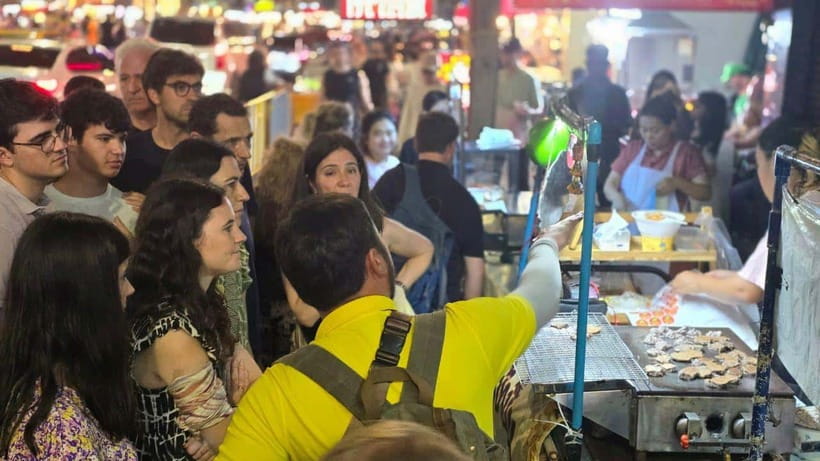
Across the tour, you’ll hit 6 different places for food tastings. The focus is Thai-Chinese style menus, which is a big deal in Bangkok. You’ll see the influence in the flavors, sauces, dumpling culture, and the way some stalls blend Chinese technique with Thai seasoning.
The tour description points to a mix of savory dumplings and sweet pastries, and that mix is part of why the experience works. If you only do savory, you can end the tour stuffed and bored. If you only do sweets, you miss the main show. The guide’s job is to balance the sequence so your palate keeps resetting.
Here’s how the tasting flow typically feels, even if the exact stalls swap when seasons change or during public holidays:
First bites, then you learn how to read the stall menu
At the start, you usually get your first taste of the area’s best-selling comfort foods. This early stop is where you’re learning the pattern of ordering, like what to try as a signature dish and what’s worth skipping. It also sets expectations for the rest of the night, so by the time you reach the later stops, you understand the logic behind the guide’s picks.
Thai eating and drinking bookings got a going over


A dumpling stop that shows the neighborhood specialty
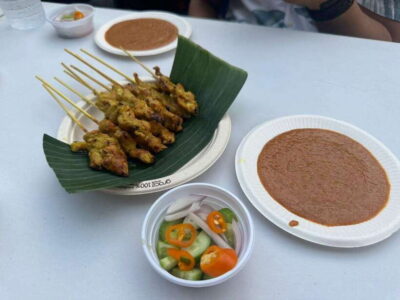
Then you move into another classic direction, dumplings. This type of dish shows up across Chinatown because it’s practical, portable, and tuned for street cooking. Expect a savory bite that’s more filling than it looks, and notice how sauces and fillings are handled differently from what you might be used to outside Bangkok.
A sweet pastry moment to balance out the tour
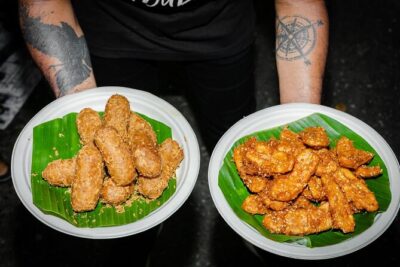
After savory, you should get at least one stop aimed at sweet pastries. This is where the tour stops feeling like a single-note meal. You start tasting contrast, crisp versus soft, lightly sweet versus rich, and sometimes a pastry that’s best when it’s warm.
The top-ranked local dish test
One highlight is that you get to taste the #1 ranking local dishes in town. The exact dish can vary, and the tour also warns that some menus may not be available depending on the holiday calendar and seasonal changes. Still, the point is clear, you’re not just sampling randomness. You’re tasting something the neighborhood treats as a must.
A homemade menu with a secret ingredient
Another standout is a highlighted homemade menu with a secret ingredient. This is where you can really feel the difference between a quick street snack and a dish someone has refined. Even without the exact name provided here, the format suggests you’re getting a more personal, recipe-driven stop, not only a generic item from a mass line.
Final stops that wrap your palate and your Chinatown story
By the end, the last two tasting moments are usually about rounding out the flavor story. You might notice one more signature Thai-Chinese flavor style, or you may get another dish that connects back to what the guide explained earlier about food culture.
One practical tip: pace yourself. Street food servings can be smaller than a restaurant plate, but you’re eating six times. If you rush the first stop, you’ll struggle later. Take a slower bite, drink some water between stops if available, and don’t force it when you’re full.
Why the guide matters, especially with Sophie’s history links
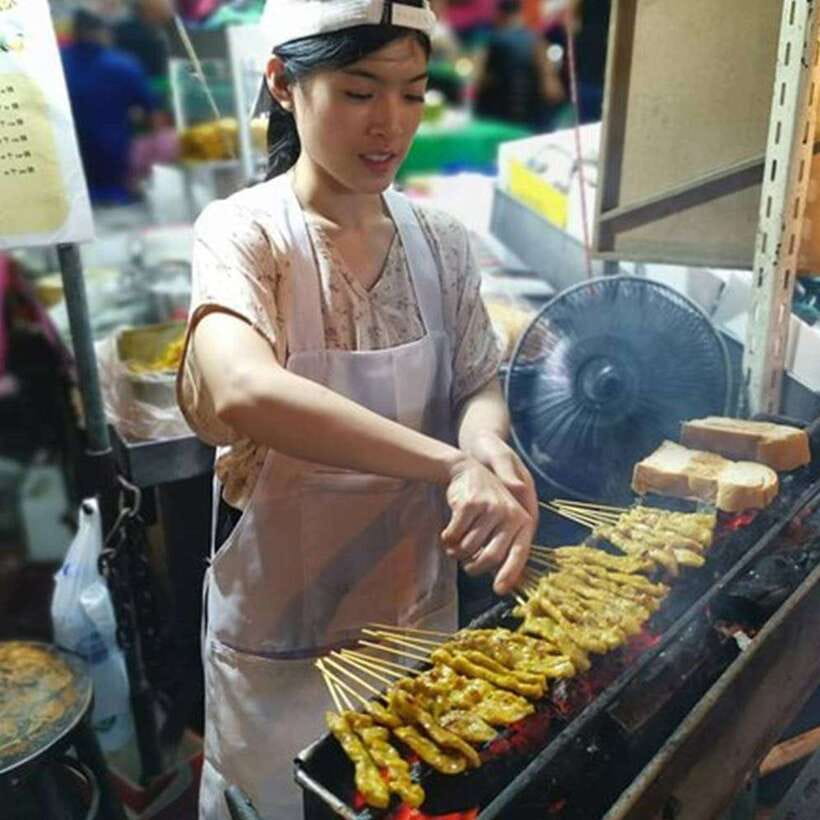
What makes this tour feel worth the money is the guide’s role beyond pointing at food. With Sophie, the experience includes history and context, not just a script of what to eat. In the reviews you can tell she explains the why behind the flavors and the connections between dishes and Bangkok’s Chinatown.
That matters because Chinatown food can look confusing at first. You’ll see similar-looking items across multiple stalls, and it’s hard to tell what’s actually special. A good guide turns that confusion into confidence. You stop thinking, is this good, and start thinking, why do locals care about this version.
You should also expect the guide to steer the group through narrow lanes and hidden corners. That’s not just for convenience. Those back-street moments help you see how street food fits into daily life, not only as a tourist activity.
Price and value: $49 for 6 tastings plus guided time
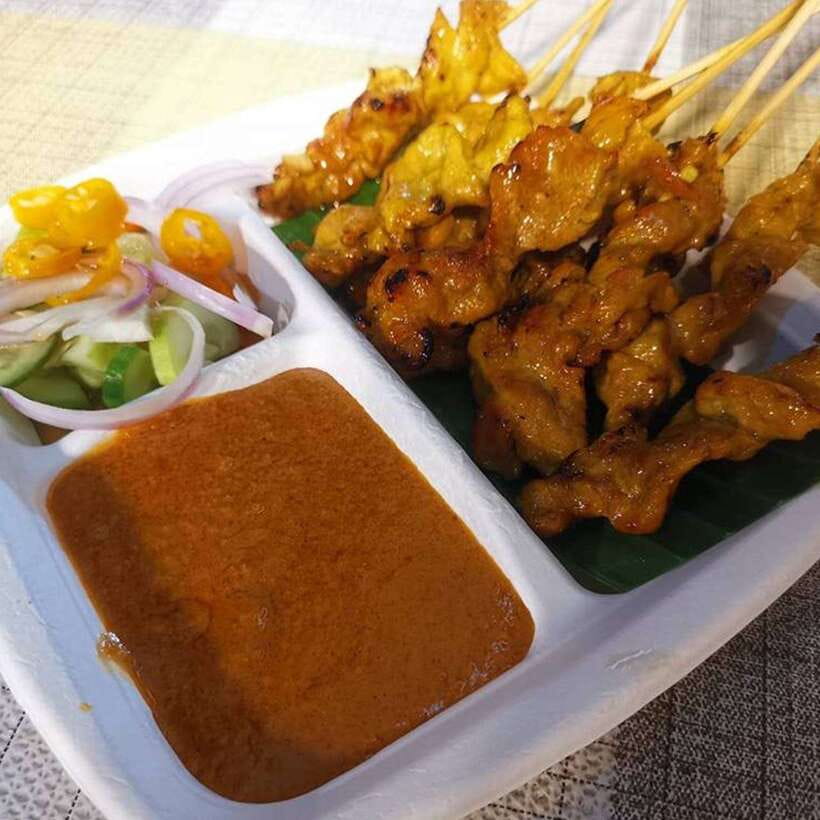
Let’s talk real value. At $49 per person, you’re paying for a guided evening plus six food tastings. If you were to try to copy this on your own, you’d face two costs you might not budget for: time and decision stress. You’d need to locate reliable stalls, figure out what to order, and spend extra time standing in lines without knowing whether you chose well.
This tour gives you a structured route, a live English guide, and a set number of tasting stops. It’s not an all-you-can-eat deal, and alcohol isn’t included. But for the mix of Thai-Chinese dishes and the added context, the price feels like paying for direction as much as food.
My practical rule for tours like this: if you’re the type who wants to sample lots of options without getting overwhelmed, the $49 makes sense. If you prefer slow wandering on your own, you might spend less money, but you’ll likely spend more time figuring things out.
Rules and restrictions: who should skip, and who just needs a plan
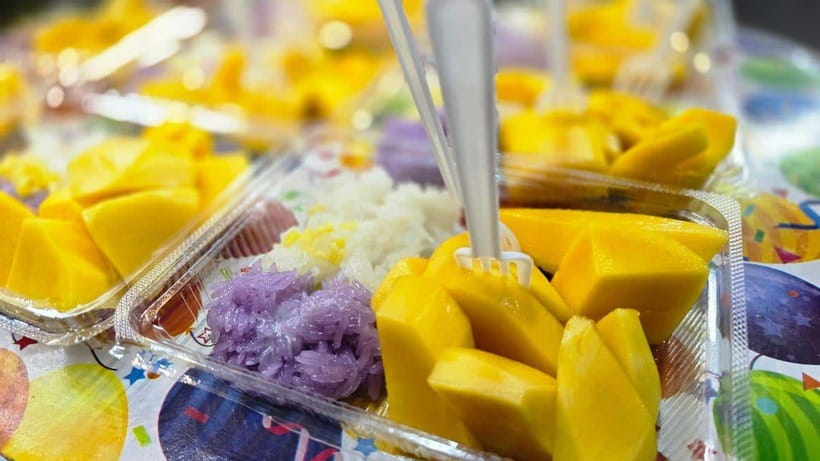
This tour is not designed for everyone. The biggest issue is food needs. The tour notes it may not be suitable for vegetarian, vegan, or gluten-free diets. It also flags allergies to shrimp, peanuts, pork, and dairy, plus nut allergies and gluten intolerance.
In plain terms, this is a meat, seafood, and dairy reality check tour. Even if you avoid one ingredient, cross-contact risk exists in street food environments, and the tour’s own guidance is to avoid booking if your restrictions are a problem.
It’s also not suitable for people with mobility impairments, wheelchair users, or those with claustrophobia. Chinatown lanes can feel tight, and the route is a walking crawl. If you prefer wide sidewalks, low crowd density, or lots of seated time, this might feel stressful.
There are also clear activity rules:
- Alcohol and drugs are not allowed
- Electronic devices are not allowed
- Bare feet are not allowed
That electronic device rule can surprise you if you’re used to documenting everything. It’s smart for group flow and for keeping the focus on eating, but it does change the vibe.
Comfort and street smarts: shoes, crowds, and how to get through
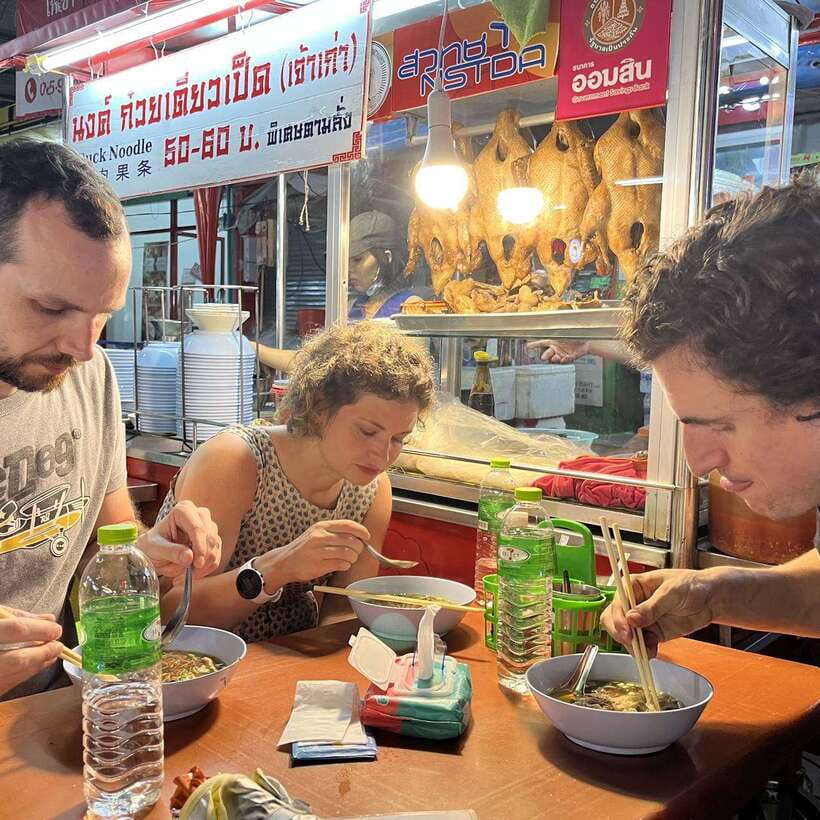
Bring comfortable shoes. That’s not a throwaway line, it’s the difference between enjoying the night and feeling miserable halfway through. Street food tours are standing-friendly for short stretches, but they can still mean lots of steps, uneven pavement, and quick lane turns.
For your mental comfort, expect a crowd atmosphere. Chinatown at night is exactly the kind of place where people squeeze past each other and stalls can feel close. If you don’t handle tight spaces well, seriously consider skipping.
Finally, remember you’re walking and eating, not sightseeing from a distance. This is why the tour includes sightseeing within Chinatown. You’ll see the neighborhood up close, and you’ll understand why certain stalls matter.
Should you book this night Chinatown street food tasting tour?
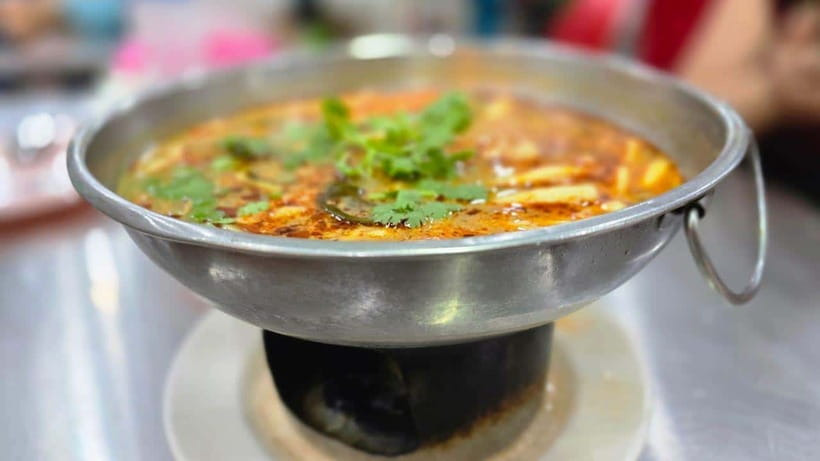
Book it if you want a guided way to try six Thai-Chinese tastings in Chinatown without guessing. It’s especially a good fit if you like your food tours with context, like how guide Sophie connects dishes to neighborhood history and tradition. The $49 price works best when you value direction and want to avoid wasting time figuring out what to order.
Skip it if your diet is restrictive or if you have allergies to shrimp, peanuts, pork, or dairy, or if gluten or nuts are an issue. Also pass if mobility limits or claustrophobia would make the walking routes uncomfortable. This is a street-focused crawl with tight navigation, not a gentle restaurant loop.
If you match the sweet spot, you’ll come away with more than full stomach. You’ll leave with a clearer sense of Chinatown’s food logic, and a better instinct for what’s worth ordering again on your own.
FAQ
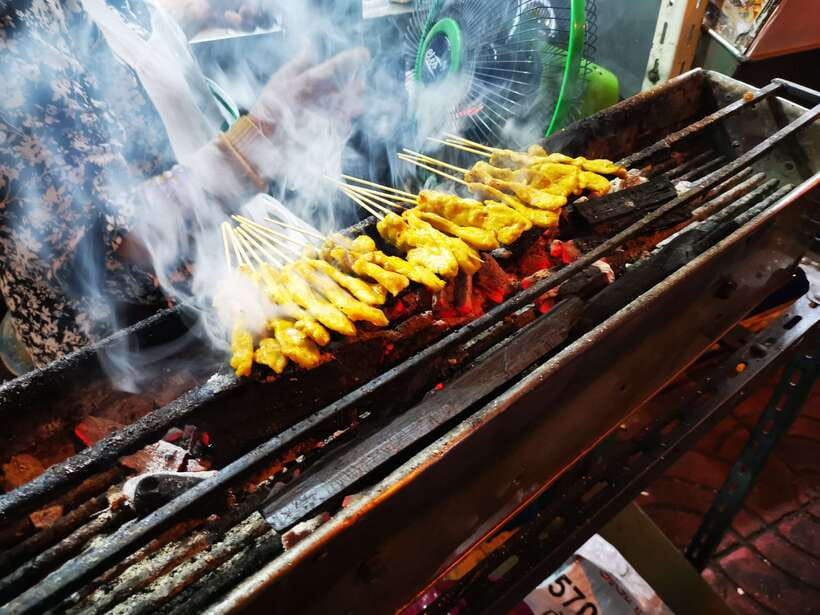
How long is the Bangkok Chinatown street food tasting tour?
The tour lasts about 150 minutes.
Where do I meet the guide?
You meet outside the MRT Wat Mangkon station at exit no. 3 in Chinatown.
How much does the tour cost?
The price is $49 per person.
What is included in the tour price?
You get a tour guide and six different places for food tastings.
Is hotel pick-up and drop-off included?
No, hotel pick-up and drop-off services are not included.
What foods and diets is the tour not suitable for?
The tour may not be suitable for vegetarians, vegans, or people following a gluten-free diet, and it warns against booking if you have allergies to shrimp, peanuts, pork, or dairy. It also lists nut allergies and gluten intolerance as not suitable.
Are electronic devices and alcohol allowed?
Alcohol is not allowed, and electronic devices are not allowed during the tour.
Guided Thai outings, continued
What else made it into the Thailand notebook
Thai street eating, plate by plate
What else made it into the Bangkok notebook
- Mahanakhon SkyWalk Entry Ticket
★ 4.3 · 20 reviews - Bangkok: Nimitr Rooftop by 137 Pillars
★ 4.8 · 20 reviews - Bangkok: Cook authentic Thai food with Smart Cook
★ 5.0 · 20 reviews - Bangkok: Travstore Original Bangkok Discovery Tour
★ 4.5 · 20 reviews - Bangkok: Chao Phraya Princess Dinner Cruise & Hotel Transfer
★ 4.2 · 20 reviews - 1 Hr Private Bangkok Canal Boat Tour: Traditional Flat Boat
★ 4.5 · 20 reviews
Thai Street Food Tours, compared.
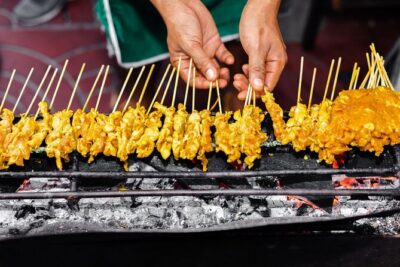 ★ 4.9Backstreets Food Tour with 15+ TastingsFrom $622,880 reviews
★ 5.0Bangkok Backstreets Food Tour with 15+ TastingsFrom $591,926 reviews
★ 4.9Backstreets Food Tour with 15+ TastingsFrom $622,880 reviews
★ 5.0Bangkok Backstreets Food Tour with 15+ TastingsFrom $591,926 reviews
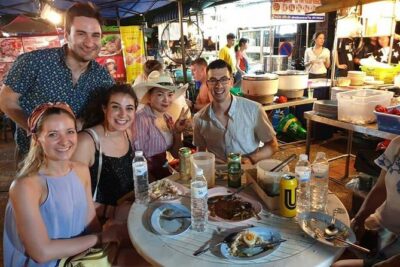 ★ 4.5Small-Group Chiang Mai Evening Street Food TourFrom $42826 reviews
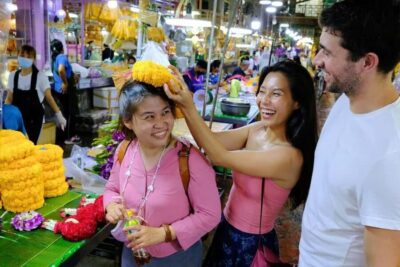 ★ 4.3Tuk Tuk Adventure Chinatown Michelin Food & TemplesFrom $18725 reviews
 ★ 4.8Evening Local Street Food Market TourFrom $40604 reviews
 ★ 5.0Bangkok by Night Food Tour with 10+ Tastings in ChinatownFrom $46545 reviews
 ★ 4.8E-Scooter Night Tour with Local Street FoodFrom $39488 reviews
 ★ 4.8Hands-on Learn to Cook 3 Popular Thai’s street foodFrom $28417 reviews
Browse the lists this tour appears in