
REVIEW · FLOATING MARKETS AND THE MAEKLONG RAILWAY
Amphawa Floating & Maeklong Railway Train Market (Small Group)
A train passes right where people shop. That is the hook of this Bangkok day trip, plus two more stops that feel worlds away from the city: Wat Bang Kung and the riverside Amphawa Floating Market. You get a small group (max 9), an English-speaking guide, and a planned flow that saves you from juggling schedules on your own.
I like how this outing combines the loud, unusual spectacle of the Mae Klong Railway Market with calmer, visual temple time at Wat Bang Kung, wrapped in banyan tree roots. I also like that it is designed for convenience, with an air-conditioned vehicle and bottled water, and a guide who helps you time your photos and walking. One thing to consider: the day is long, and traffic or extra stops can affect how quickly you get back to Bangkok, so plan a flexible evening.
In This Review
- Key highlights
- A Small-Group Day Trip That Actually Fits Into Your Bangkok Plans
- Getting to Mae Klong Railway Market (Hoop Rom Market) Without Stress
- Watching Trains Roll Through the Market: The Real Value of Mae Klong
- Wat Bang Kung: Banyan Roots, Shrine Corners, and a Slower Pace
- Amphawa Floating Market: Canal Food, Shopping, and Realistic Expectations
- Timing and Traffic: The Part You Should Plan For
- Price and What $42 Actually Buys You
- Who This Tour Suits Best (and Who Might Want a Different Plan)
- The Guide Makes a Difference, So Use That to Your Advantage
- Should You Book This Trip?
- FAQ
- How long is the Amphawa Floating & Maeklong Railway Train Market tour?
- What stops are included on this tour?
- Is hotel pickup included?
- Is the paddle boat ride at the floating market included?
- What is the group size?
- Where does the tour start and end?
- Is the tour guided in English?
- Do I need admission tickets for the stops?
- Can I cancel for a full refund?
Key highlights
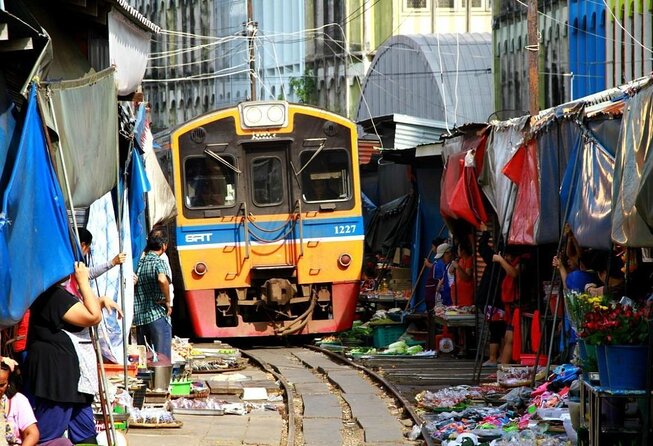
- Mae Klong Railway Market, also called Hoop Rom Market, where vendors move aside stall awnings for trains
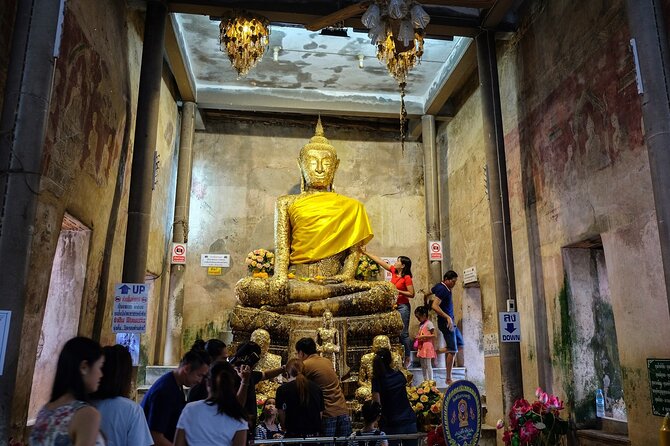
- Wat Bang Kung’s banyan roots, with a shrine and statues tied to Thailand’s 1800s soldier history
- Amphawa Floating Market on the canal, with street food and riverside browsing, though the floating scene can vary
- Small-group limit of 9 travelers, which makes the pacing easier and photo time less stressful
- Optional add-on paddle boat at the floating market, typically extra (THB 150 per person)
Damnoen Saduak and Maeklong runs also got the same treatment
- Bangkok: Damnoen Saduak Market and Maeklong Railway Market★ 4.5 · 26,723 reviews
- The Old Siam: Damnoen Saduak and Maeklong Railway Market★ 4.5 · 10,992 reviews
- Bangkok: Train Market & Floating Market with Boat Ride★ 4.7 · 9,547 reviews
- Half-Day Railway Market and Floating Market Tour in Thailand★ 4.5 · 3,924 reviews
A Small-Group Day Trip That Actually Fits Into Your Bangkok Plans
This is one of those Bangkok tours that works best when you want a different kind of day, not just another temple and a quick market stop. You leave the city, you hit three distinct “wow” moments, and you return to the same meeting point. The small-group size matters here. With a maximum of 9 travelers, the guide can keep everyone together without turning the day into a herding exercise.
The schedule also makes sense for first-timers. You start with an attention-grabbing, clearly-defined event at the railway market, then you switch gears to a temple that rewards slower looking. Finally, you end at Amphawa, where the canal setting gives you something to watch besides just shopping.
The biggest practical catch is time. The tour is about 8 hours 30 minutes overall, and you should assume Bangkok traffic can throw off the return. In real life, “approx.” times can turn into “later than you hoped,” so keep dinner plans loose or already flexible.
Getting to Mae Klong Railway Market (Hoop Rom Market) Without Stress
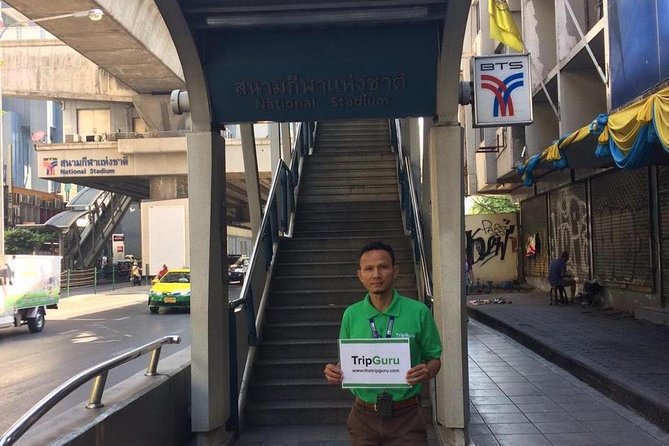
The day starts with a meeting point at National Stadium BTS Station. If you choose hotel pickup, you get complimentary pickup and drop-off within Bangkok, which is a big deal. Bangkok navigation can be fast, but it can also eat time. Having the driver meet you, run you out there, and bring you back saves mental energy for the actual sightseeing.
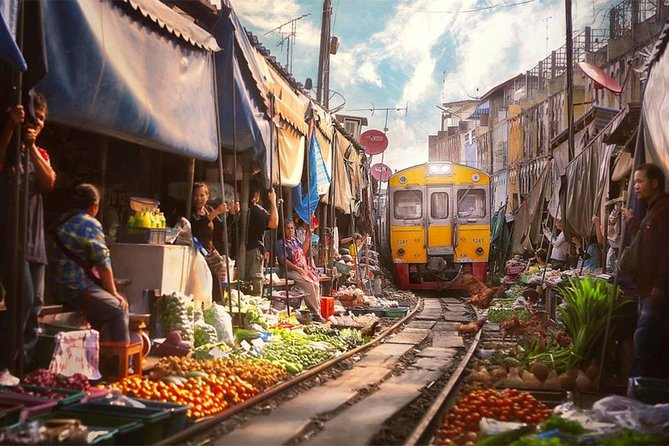
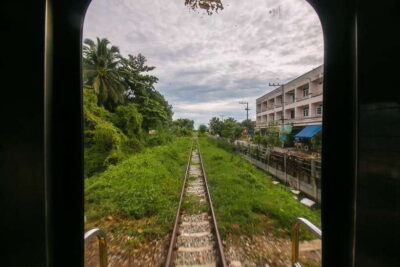
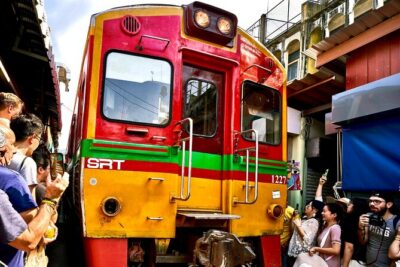
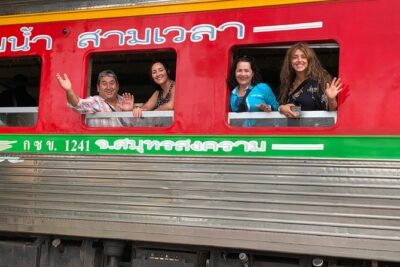
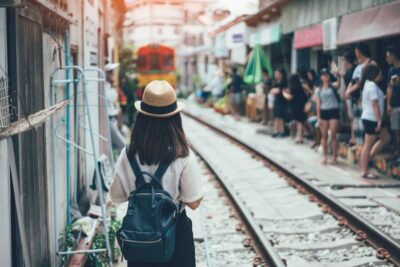
Once you arrive at Mae Klong Railway Market, the experience is very specific. This is not just a market near tracks. The tracks run through it, and trains come through on schedule. Vendors prepare by adjusting stall awnings and moving items so the train can pass cleanly. That is why the place feels like theater, even if you are just standing there and watching.
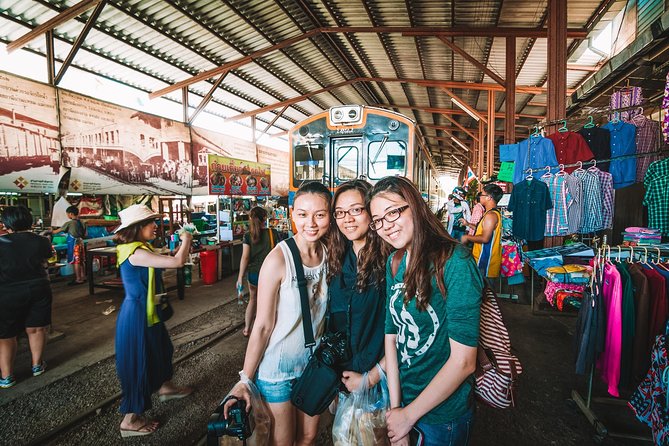
What I’d do to get the most out of your visit: arrive prepared for crowds and phones. When the train approaches, it turns into a surge of people trying to film the same second. If you want photos without chaos, follow your guide’s placement advice and keep your footing. Also, bring a light layer if you get cold in the AC van later, because the weather swings can be noticeable.
Watching Trains Roll Through the Market: The Real Value of Mae Klong
Here is what makes Mae Klong the main draw: it is a living example of how daily commerce adapts to infrastructure. You are watching people respond in real time, not just looking at a tourist setup. The market has a short, focused window to see everything, so it is best when you treat it like a quick “show” you attend, not a place you plan to shop for an hour and a half like a mall.
Expect the timing rhythm to feel intense. The train is the headline, and everything shifts around it. That is also why you should set expectations before you go in. If you want a calm market stroll, this is the wrong tool. If you want to witness something you probably will not see anywhere else, it is hard to beat.
One more practical note: plan your priorities. The train moment is the star, but you will still have time to walk the stalls before and after. If you only have energy for one thing, let it be the train run. Everything else is optional bonus.
Wat Bang Kung: Banyan Roots, Shrine Corners, and a Slower Pace
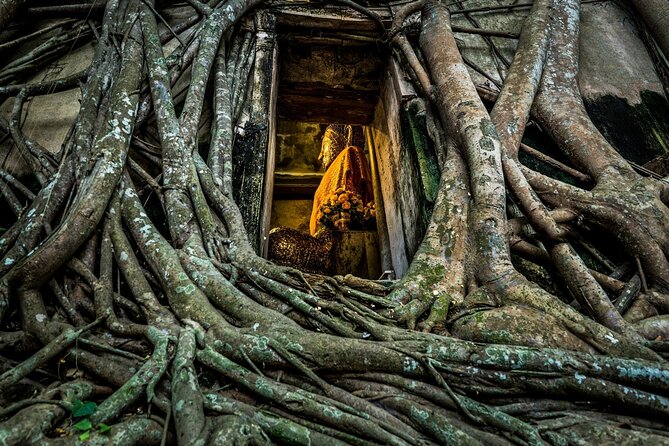
After the railway market, the tour shifts to Wat Bang Kung, which is known for a banyan tree whose roots have grown around the temple structures. The visual payoff here is straightforward: you get dramatic root formations and a sense of age. The contrast with Mae Klong is real. Instead of the track drama, you get quiet looking, shade, and photo angles that feel less “everyone in one line.”
You will also see elements connected to Thailand’s 1800s history, including a shrine and statues honoring soldiers who defended the country. It helps to remember that this is a working place of worship as well as a sight. Keep your voice down, dress respectfully, and follow any guidance your guide gives.
Timing is fairly gentle compared to the market: about an hour. That is enough to see the roots, take photos, and read a few details, but not enough to linger for a full deep wander. If you are someone who likes to sit and absorb, you might want to focus on fewer zones so you do not end up feeling rushed.
Thai market visits sat in the same notebook
Amphawa Floating Market: Canal Food, Shopping, and Realistic Expectations
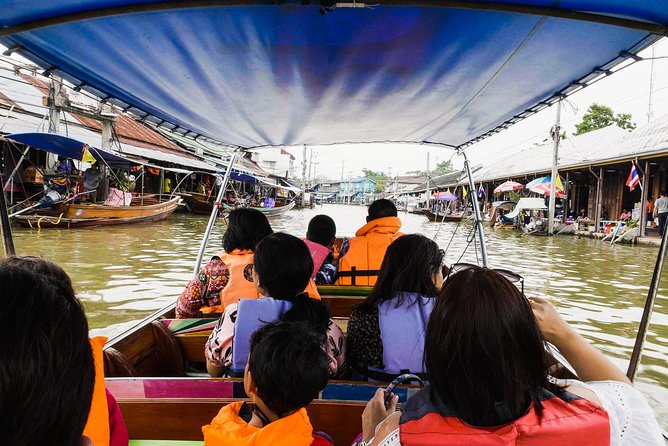
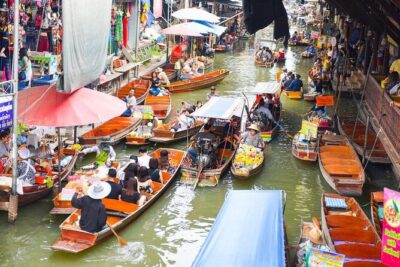
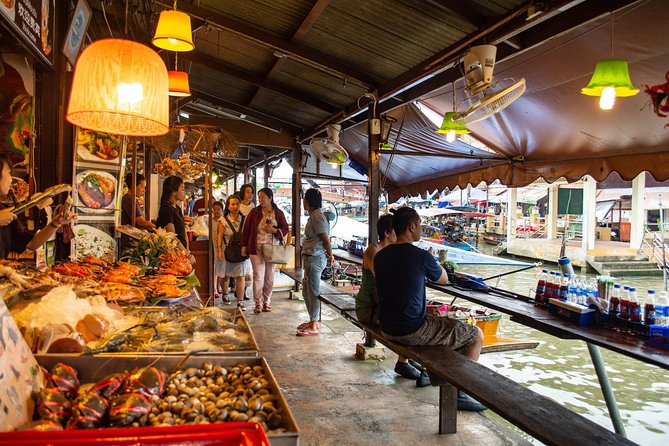
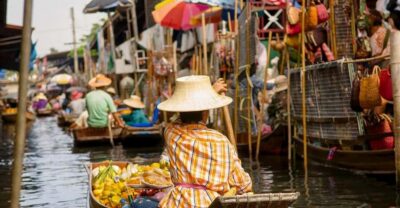
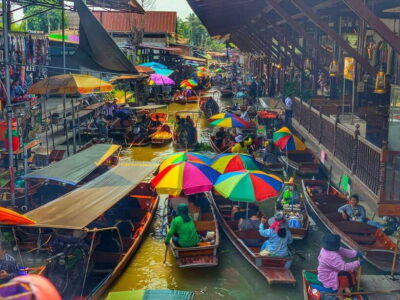
Then comes Amphawa Floating Market, set along the canal. This is where you shift into “food and wandering” mode. You can sample street food, browse local goods, and enjoy the water traffic passing by. The canal setting changes how the air feels and how you move. Even if you do not buy anything, watching the boats and people creates a relaxing rhythm.
Now the important part: Amphawa is not guaranteed to look like a constant row of floating vendors every single day. The floating element can vary depending on the day and conditions. So if you are picturing permanent floating stalls, adjust your mental picture. Treat it as a riverside food and market experience, with some canal activity.
You will likely see the “floating market” moments most clearly as you walk along the water. If you want the best chance at feeling the canal atmosphere, walk slower. Pause at food spots, then head back toward the waterline. And yes, you can add a paddle boat ride. The paddle boat is extra, typically THB 150 per person, so decide in the moment based on crowding and your interest in short time on the water.
Timing and Traffic: The Part You Should Plan For
This tour is built around a full day outside central Bangkok. That is great for value because you get three major experiences. It is also why transport timing matters. Several practical issues can crop up on road days: late starts, slower returns, and the classic Bangkok problem of traffic that no one can fully predict.
Some people report that the return took longer than expected when the van had to detour for drop-offs. Others mention that the day’s start time shifted from what they expected, and that their schedule got tight when they were waiting for others. I’m not saying it will happen to you, but I am saying you should plan for it.
If you have dinner reservations, do not schedule them for right after the tour ends. Instead, give yourself buffer time, or pick something flexible. This is also a good day to bring water and light snacks, even though bottled water is included. Food at Amphawa can be tempting, and long road time can work up an appetite fast.
Price and What $42 Actually Buys You
At $42 per person, this day trip is priced like a practical, not-too-expensive way to see “big character” Thailand outside Bangkok. What you are paying for is not just the sights. You are paying for transportation out and back, the guide, and an organized plan that covers Mae Klong, Wat Bang Kung, and Amphawa in one go.
Inclusions are solid for a one-day schedule: an English-speaking tour guide, an air-conditioned vehicle, bottled water, and hotel pickup and drop-off if you select that option. The first stop’s admission is free, and the Wat Bang Kung admission is included. The one extra that commonly comes up is the paddle boat ride at the floating market (THB 150 per person).
If you are comparing DIY, the main cost savings likely come from transport and guide organization. But DIY adds friction: you still need to time the railway market, figure out how to get to Amphawa, and solve the return logistics. For many people, $42 is worth paying so you can focus on the experience, not the spreadsheet.
Who This Tour Suits Best (and Who Might Want a Different Plan)
This is a great fit if you want unusual Thailand in one day and you like structured sightseeing. It is especially good for first-timers who want to see the train market spectacle and then balance it with a temple that is visual and slower paced.
It also fits families and solo travelers because the group is small and the guide can help with practical details like pacing and photos. One parent specifically mentioned that the outing felt doable with a baby stroller, which tells me the logistics can work when the guide is paying attention.
If you are the kind of traveler who hates any schedule uncertainty, you might feel tense. When you are on a road day with fixed stops, timing can shift. And because Amphawa’s “floating” look can vary, it may not match the exact mental image you have from photos online.
The Guide Makes a Difference, So Use That to Your Advantage
A tour like this lives or dies by the guide. At Mae Klong, you want help with where to stand so you are not fighting for space. At the temple, you want someone pointing out what to notice. At Amphawa, you want guidance for what to try and how to spend your time.
In past departures, guides such as Chai, Tar, Oum, Jeerawat, Annie, Eddy, Jacky, and Kit have been highlighted for keeping the day running well and helping with photos, explanations, and accommodating requests. That variety also matches what you should look for when booking: clear communication matters, especially if you are not confident with Thai.
If your tour time feels like it is getting chaotic, speak up early. Ask for a plan: where you should meet if separated, where the train moment view point is, and how long you will have at Amphawa before moving on.
Should You Book This Trip?
Book it if you want a single day that mixes a truly unusual show (trains through a market), a temple with roots you can see and photograph, and a canal market day where food and water watching do most of the work.
Skip or consider a different option if you have a tight evening schedule, because return timing can run late. Also, if your ideal version of Amphawa is nonstop floating vendors, adjust expectations ahead of time. This is more accurate as a riverside food and market outing with some canal moments, not a guaranteed full “floating street” scene.
If you do book, I’d treat this like a day trip with one mission: see the railway market train pass. Then let Wat Bang Kung and Amphawa be the bonuses that make it feel like you left Bangkok for real.
FAQ
How long is the Amphawa Floating & Maeklong Railway Train Market tour?
It runs about 8 hours 30 minutes (approx.).
What stops are included on this tour?
You visit Mae Klong Railway Market (Hoop Rom Market), Wat Bang Kung, and Amphawa Floating Market.
Is hotel pickup included?
Hotel pickup and drop-off are included if you select that option.
Is the paddle boat ride at the floating market included?
No. The paddle boat ride is extra and is typically THB 150 per person.
What is the group size?
The tour has a maximum of 9 travelers.
Where does the tour start and end?
It starts at National Stadium BTS Station and ends back at the same meeting point.
Is the tour guided in English?
Yes. The tour includes an English-speaking tour guide.
Do I need admission tickets for the stops?
Mae Klong Railway Market admission is listed as free, and Wat Bang Kung admission is included. Amphawa Floating Market admission is included as well.
Can I cancel for a full refund?
You can cancel up to 24 hours in advance for a full refund. The tour requires good weather, and you may be offered a different date or a full refund if canceled due to poor weather.
Thai market mornings, continued
What else made it into the Thailand notebook
Canal markets and the umbrella tracks, continued
What else made it into the Bangkok notebook
- Bangkok hotel to Pattaya hotel transportation
★ 4.5 · 20 reviews - Private Longtail Boat Bangkok Canal Tour
★ 4.5 · 20 reviews - Nakhon Nayok adventure full day trip with lunch
★ 5.0 · 20 reviews - Mystical Waterfall and River Kwai Tour (Private & All-Inclusive)
★ 5.0 · 20 reviews - From Bangkok: Full Day Customizable Private Tour to Pattaya City
★ 5.0 · 20 reviews - Bangkok by Night Tuk Tuk Tour: Markets, Temples & Food
★ 4.5 · 20 reviews
Floating Markets and the Maeklong Railway, compared.
 ★ 4.5Damnoen Saduak Market and Maeklong Railway MarketFrom $2526,723 reviews
 ★ 4.5The Old Siam: Damnoen Saduak and Maeklong Railway MarketFrom $3210,992 reviews
 ★ 4.7Train Market & Floating Market with Boat RideFrom $259,547 reviews
 ★ 4.7Ayutthaya & Ayothaya Floating Market Day TripFrom $486,084 reviews
 ★ 4.8Floating Market and Train Market ExperienceFrom $253,998 reviews
 ★ 4.5Half-Day Railway Market and Floating Market Tour in ThailandFrom $323,924 reviews
 ★ 4.7Damnoen Saduak, Train Market & Mahanakhon Day TripFrom $232,162 reviews
 ★ 4.4Damnoen Saduak Floating Market Guided TourFrom $1222,020 reviews
Browse the lists this tour appears in