
REVIEW · CYCLING TOURS
Past and Present Bike Tour of Bangkok
Bangkok on two wheels turns the city into a moving story. This half-day ride strings together Chinatown, flower markets, and a ferry crossing that lands you on Thonburi’s temple skyline. You get to cover ground without feeling rushed, and the guide keeps the stops from becoming just checkboxes.
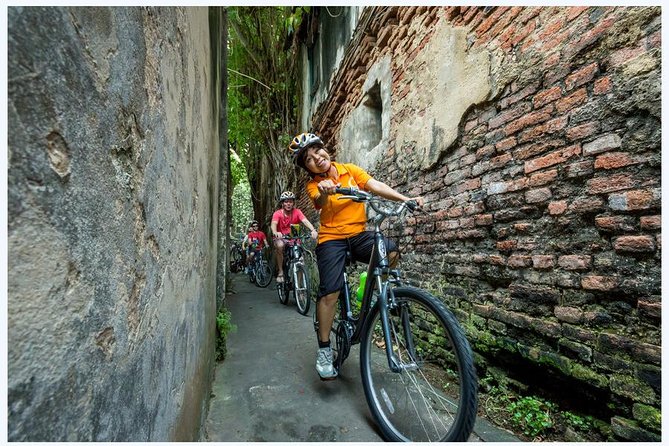
I especially like the way the route threads together different communities, starting with a Muslim area and then shifting into Chinatown, where symbolism like red good-luck colors comes up in a natural, in-the-moment way. I also love the small-group vibe, with guides such as Woody, Té, Qing, Kim, and Jig leading the way and creating time to pause when you want a closer look.
The one drawback to plan for is the mix of bike time plus moderate walking at temple and market stops, plus narrow streets where you have to stay alert.
In This Review
- Key things to know before you pedal
- Bangkok Past and Present by bike, with the river built in
- Start at Talad Luang, and why the group stays small
- Muslim community to the Old Customs House: the first real taste of old Bangkok
- Chinatown lanes and the red good-luck story that feels personal
- Flower and vegetable markets: stop, look, then keep moving
- Ferry across the Chao Phraya, then into Thonburi’s temple zone
- Wat Arun, Wat Prayoon, and Wat Kalayanamitr: three stops, one riverside skyline
- The 4 hours in real life: pace, safety, and when it runs longer
- Price and value: what $35.68 buys you in Bangkok
- What to bring and how to prep for the right bike fit
- Guide quality you can feel on the street
- Who should book this bike tour
- Should you book the Past and Present Bike Tour of Bangkok?
- FAQ
- How long is the Past and Present Bike Tour of Bangkok?
- Where does the tour start, and where does it end?
- How many people are in a group?
- What’s included in the price?
- What is not included?
- Are children allowed on the tour?
- Do I need an ID or passport?
- Is there walking during the tour?
- Do you cross the river during the tour?
Key things to know before you pedal
- Small group, max 6 people, so the pace stays human and your guide can spot issues quickly.
- Ferry across the Chao Phraya is included, a simple way to switch from Bangkok side streets to Thonburi.
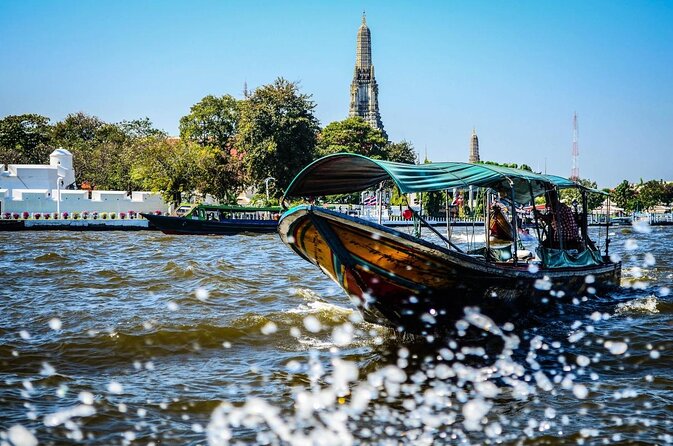
- Three major temples on one side of the river, including Wat Arun with views over the water.
- Snacks and drinks after the tour include cold water and soft drinks, with alcoholic drinks available to buy afterward.
- Bike comfort matters, because you must provide height for the right frame size and you’ll have helmet use.
- Souvenir photos are emailed, so you get more than just a few phone snapshots.
Thai rides also got written up
- Bangkok: Temples, Canals & Local Life Bike Tour★ 4.9 · 3,511 reviews
- Experience Real Bangkok by Bike★ 5.0 · 2,439 reviews
- Bangkok: Bike and Canal Boat Tour with Lunch★ 4.9 · 1,350 reviews
- Bangkok: Night Bike Tour with Temples & Flower Market Visit★ 4.8 · 751 reviews
Bangkok Past and Present by bike, with the river built in
This is a “past meets present” tour in a very practical way. Instead of only looking from a viewpoint, you ride through living neighborhoods, stop at places locals actually use, then finish with temples that face the broad river. The ferry crossing is a smart hinge in the story: you feel the geography change, and your camera batteries usually survive longer too.
The route also has a good sense of pacing. You get time to watch street life, not just move past it. And when the guide explains why certain corners matter, it clicks because you’re physically there, squeezing through the same kind of alleys that shape daily life.
Start at Talad Luang, and why the group stays small
You’ll meet at Bangkok Bike Tours, 69, 2 Soi Charoen Krung 44, Talad Luang, Bang Rak, Bangkok. The tour duration is about 4 hours, and you can choose either a morning or afternoon departure.
That departure choice matters more than it sounds. Morning rides tend to feel fresher for cruising narrow lanes and then transitioning to river views. Afternoon rides can be nicer for temple light and a relaxed vibe, though you’ll want to bring sun protection and stay hydrated either way. Either option still stays in that half-day window, so it slots well between other Bangkok plans.
A big quality point is the cap of 6 travelers. In a city with tight turns and scooters weaving through traffic, that small size helps the guide manage the group smoothly. Reviews also mention smooth, secure route management, which is what you want on a bike in Bangkok.
Muslim community to the Old Customs House: the first real taste of old Bangkok
The tour begins with a journey through a Muslim community and then heads to the Old Customs House along the river. This is the “how travelers entered Bangkok” kind of stop, not just a building photo.
Here’s why it works for you: it sets the city’s trade-and-people story early. You start on a river-linked site, then you move into Chinatown with context, so it feels like one connected day instead of separate attractions.
If you’re the type who hates staring at a sign and moving on, you’ll probably like how the guide frames this area as the first stop for ancient travelers entering Bangkok. It gives you a mental map before the alley maze begins.
Chinatown lanes and the red good-luck story that feels personal
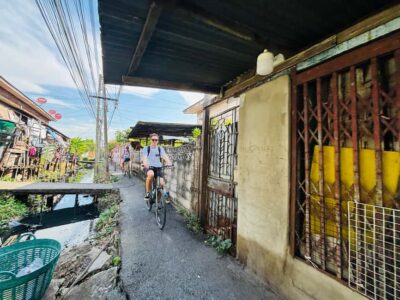
Then comes Chinatown, often the highlight for anyone who likes street-level Bangkok. You’ll weave through the maze of woven streets and alleys with a guide who keeps the cultural thread tight.
One detail mentioned in the tour description is the red symbolism in Chinese culture, tied to luck. That could sound abstract on a brochure, but on the ground, it makes sense because the color, signage, and temple touches are all around you. You’re not just riding past; you’re noticing why things look the way they do.
This part also tends to be the most “memorable by smell and sound,” meaning you’ll actually feel the neighborhood. You’ll see the living side of Chinatown, not the idea of it. And since this tour is built around bike access, you can get close to the energy without standing in one place the whole time.
Flower and vegetable markets: stop, look, then keep moving
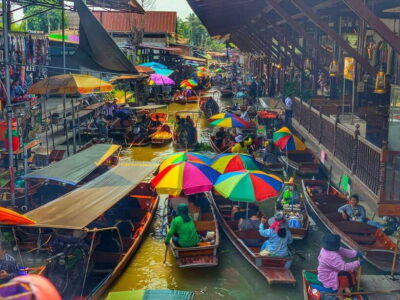
After Chinatown you’ll visit flower and vegetable markets. Markets can be chaotic when you wander alone. With a guide, you get a cleaner path through the lanes and more confidence about where to pause.
Expect a strong sensory hit, but also expect that you can control your pace. The guides leading this tour, including names like Kim, Té, Woody, and Jig in past groups, have a style that includes stopping when you want time to look, rather than rushing the whole show.
This is also where the bike tour format helps. You can do the “what am I seeing” part of market browsing, then you’re off to the next scene without it turning into a long, tiring slog on foot.
Ferry across the Chao Phraya, then into Thonburi’s temple zone
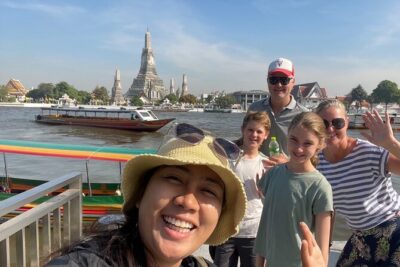
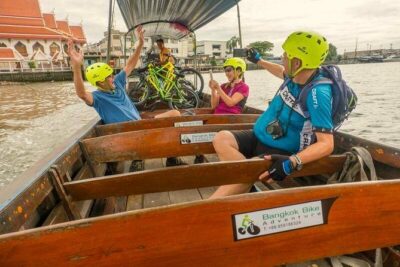
Crossing the Chao Phraya River by ferry is included in the price and it’s genuinely useful. It breaks the route. It also gives you a breather for your legs and eyes before temples.
Once you reach the Thonburi side, the tour shifts into “riverbank Bangkok.” This area is where the skyline feels different. You’re moving from dense street grids to broader views that set up the temple visit nicely.
Ferry time also means something practical: it reduces the distance you need to bike through traffic patterns. For a first Bangkok bike experience, that matters.
Wat Arun, Wat Prayoon, and Wat Kalayanamitr: three stops, one riverside skyline
On the Thonburi side, you’ll visit Wat Arun, then Wat Prayoon, and Wat Kalayanamitr. These are the classic Thai temple stops tied to the river’s view lines, so you’re not just walking into temples, you’re also stepping into Bangkok’s visual identity.
Wat Arun in particular is described as having flower gardens and exhibitions for a leisurely enjoy moment. That’s a nice contrast to the earlier market pacing. You can slow down, step aside, and look around at garden elements and displays before moving on.
Two practical notes for you:
- Plan for some walking at temples. The tour is bike-forward, but stops include a moderate amount of walking.
- Bring a respectful attitude with clothing. The temples are part of the core experience, so treat that time like a cultural visit, not a quick photo stop.
If you’ve only seen temples from postcards, this sequence helps you understand scale. You’ll likely find yourself comparing river views between stops, because the buildings and water lines frame each other.
The 4 hours in real life: pace, safety, and when it runs longer
The tour is listed as about 4 hours, and that’s a reasonable estimate. One review also mentions the schedule going over past 4 hours, into more than 5. That lines up with what you should expect in real neighborhoods: stops for photos, pauses for questions, and time to handle the flow of bikes and foot traffic.
Safety and route management matter here. The tour uses helmet, provides secure handling of the route, and keeps the group small enough for the guide to steer you through narrow streets. Reviews highlight guides stepping in quickly when there’s a bike issue or someone needs help, which is comforting.
The moderate walking detail matters too. You won’t be doing a multi-hour hike, but you will step off the bike for temple and market time. If you have limited mobility, this might feel like too much. If you’re comfortable walking a bit and riding a bike, you’ll be fine.
Price and value: what $35.68 buys you in Bangkok
At $35.68 per person, you’re paying for more than a bike ride. The included items are the real value story:
- Local guide
- Bicycle and helmet
- Ferry fees
- Lockers at the HQ
- Souvenir photos emailed after the tour
You’re also not paying extra for getting to the main river crossing, since that ferry is covered. And the photos are a small but practical perk. In Bangkok, where traffic and tight lanes make it harder to take perfect selfies on the move, having guide-shot photos afterward can save you time.
Lunch and drinks aren’t included. You’re also not getting hotel pickup or drop-off, so you’ll want to plan to reach the meeting point on your own.
But overall, it’s good value because the tour covers multiple key zones in a short time while bundling the ferry cost. If your goal is to see a lot without wasting half a day stuck in transit, this format fits.
What to bring and how to prep for the right bike fit
Here’s what you should plan ahead of time:
- You’ll need a current valid passport or ID number on the day of travel for insurance purposes.
- You must provide your height at booking so the bike frame size matches you.
- Expect some walking during stops, so wear comfortable shoes.
For your day-of kit:
- Sun protection and water. The tour provides cold water and soft drinks after the tour, but you should still arrive ready for Bangkok weather during the ride.
- A light layer that covers shoulders or legs if you want to be ready for temple clothing rules without scrambling.
- A phone or small camera with enough space for alley photos.
One small logistics point that helps: since the tour starts and ends at the meeting point, think about where you’ll keep your bags. Lockers are available at the HQ, which makes it easier to travel light.
Guide quality you can feel on the street
This tour lives or dies on the guide, because Bangkok streets require confidence. Past groups have praised guides by name, including Woody, Té, Qing, Kim, and Jig. The consistent theme is not just facts, but flow: managing route safety, choosing good stop moments, and giving you breathing room.
A detail I like from the reviews: guides are flexible about customizing when the group situation changes, such as when rain affected another participant and a private tour ended up happening. That kind of flexibility usually means you get more than a rigid script.
If you’re hoping for a guide who can connect Chinatown culture, riverbank sites, and temple visits into one story, this tour is built for that.
Who should book this bike tour
This one is a strong fit if:
- You can ride a bike comfortably on city streets and like narrow lanes.
- You want a compact way to see Chinatown, markets, ferry views, and temples in one half-day.
- You enjoy guides who explain why places look and work the way they do.
It’s also family-friendly, as long as children are accompanied by an adult. The moderate walking suggests that very small kids might be more challenging unless they can handle short stretches off the bike.
If you’re looking for a pure temple day with long quiet exploration, this may feel paced. If you want a balanced mix of street life plus major temples, this hits the sweet spot.
Should you book the Past and Present Bike Tour of Bangkok?
Yes, if you want a practical, high-value way to see real Bangkok without spending the day hopping between separate taxi trips. The combo of Chinatown lanes, market stops, and a Chao Phraya ferry crossing does more than add variety. It changes the rhythm of the day, and that’s what makes the experience feel like more than just sightseeing.
Book it especially if you:
- Want small-group riding (max 6) instead of a bigger tour crowd.
- Like the idea of seeing Wat Arun, Wat Prayoon, and Wat Kalayanamitr as part of a connected route facing the river.
- Prefer having a guide handle the flow so you can focus on noticing details.
If you’re very sensitive to walking, or you’re unsure about biking on busy city streets, consider whether you’d be more comfortable with a walking-focused tour instead. Otherwise, this half-day ride is a smart use of your time, and it offers a memorable blend of past and present that’s hard to replicate on your own.
FAQ
How long is the Past and Present Bike Tour of Bangkok?
It runs about 4 hours.
Where does the tour start, and where does it end?
It starts at Bangkok Bike Tours, 69, 2 Soi Charoen Krung 44, Talad Luang, Khet Bang Rak, Bangkok, and ends back at the same meeting point.
How many people are in a group?
There is a maximum of 6 travelers per booking.
What’s included in the price?
The tour includes a local guide, bicycle use, helmet use, lockers at the HQ, souvenir photos emailed after the tour, and ferry fees.
What is not included?
Alcoholic drinks are not included (available to purchase after the tour only), lunch is not included, and there is no hotel pickup or hotel drop-off. Transportation to and from attractions is also not included.
Are children allowed on the tour?
Yes, it is family friendly, but children must be accompanied by an adult.
Do I need an ID or passport?
Yes. A current valid passport/ID number is required on the day of travel for insurance purposes.
Is there walking during the tour?
There is a moderate amount of walking at places you stop, even though you are mostly on the bike.
Do you cross the river during the tour?
Yes. The itinerary includes a ferry across the Chao Phraya River.
Thailand on two wheels, continued
Guided Thai outings, continued
What else made it into the Thailand notebook
What else made it into the Bangkok notebook
- Mahanakhon SkyWalk Entry Ticket
★ 4.3 · 20 reviews - Bangkok: Nimitr Rooftop by 137 Pillars
★ 4.8 · 20 reviews - Bangkok: Cook authentic Thai food with Smart Cook
★ 5.0 · 20 reviews - Bangkok: Travstore Original Bangkok Discovery Tour
★ 4.5 · 20 reviews - Bangkok: Chao Phraya Princess Dinner Cruise & Hotel Transfer
★ 4.2 · 20 reviews - 1 Hr Private Bangkok Canal Boat Tour: Traditional Flat Boat
★ 4.5 · 20 reviews
Cycling Tours, compared.
 ★ 4.9Temples, Canals & Local Life Bike TourFrom $243,511 reviews
 ★ 5.0Experience Real Bangkok by BikeFrom $652,439 reviews
 ★ 4.7ATV Quad Bike Safari TourFrom $571,394 reviews
 ★ 4.9Bike and Canal Boat Tour with LunchFrom $471,350 reviews
 ★ 4.8Night Bike Tour with Temples & Flower Market VisitFrom $35751 reviews
 ★ 4.9Must-Try Hidden Bike & Food ExperienceFrom $59613 reviews
 ★ 5.0Bangkok Jungle Bike Tour – Hotel-pickup & LunchFrom $81489 reviews
 ★ 5.0Must-Try: Hidden Bangkok Bike and Food TourFrom $60455 reviews
Browse the lists this tour appears in