
REVIEW · THAILAND
Amazing 3 Temples
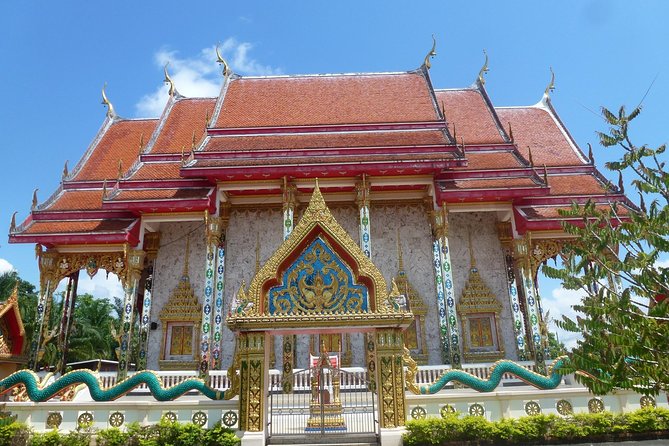
Three temples in one jam-packed Phang Nga day. It is a small-group Khao Lak tour that pairs cave temple mystery, hilltop pagoda architecture, and a monk legend, all wrapped around Phang Nga views and lunch.
I especially like the way the guides bring Thai Buddhism to life, including with backgrounds like Gift and Oil who share the customs behind what you see at each stop. I also like that your day includes a proper Thai lunch mid-route, not just a quick snack, and the setting is part of the experience.
One real consideration: the vehicle can feel a bit tight when the group is full, and the morning pickup can include stops for other nationalities before the driving starts. If you are picky about comfort in vans, plan for it.
In This Review
- Key points that make this tour worth your time
- A tight 12-person temple day from Khao Lak
- Dragon Cave Temple: cave stairs, Buddha statues, and monk-made herbal medicine
- Bang Rieng Pagoda Temple: hilltop Thai architecture with Chinese and Hindu-style influences
- Lunch with Phang Nga limestone and mangroves, plus hydration stops
- Manisii Maha Tat Temple: the black Por Than Klai statue and a real blessing moment
- Temple etiquette in Thailand: dress code and what to wear
- Price and logistics: is $104 good value for a full day?
- Who this tour suits best, and who should reconsider
- Should you book the Amazing 3 Temples tour?
- FAQ
- What time does the tour start and how long is it?
- Where is the tour meeting point?
- Which temples are included in the itinerary?
- Is lunch included?
- What dress code do I need for temple visits?
- Is bottled water provided?
- Is the tour physically demanding?
- How many people are in the group?
- Are children allowed?
- What is the cancellation policy and what if weather is poor?
Key points that make this tour worth your time
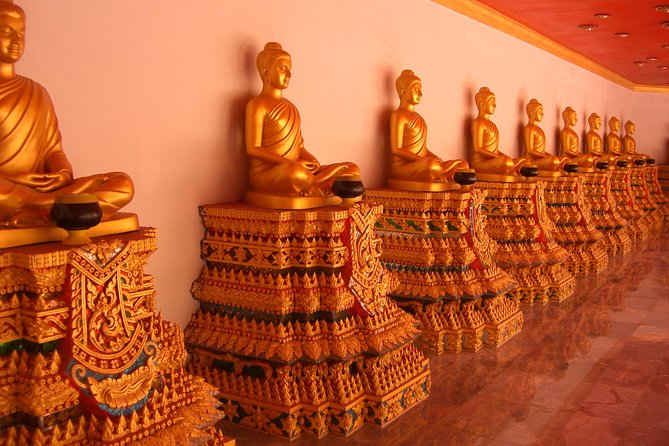
- Dragon Cave Temple includes a cave climb, Buddha statues along the way, and monks making herbal medicine
- Bang Rieng Pagoda blends Thai, Chinese, and Hindu-style influence on a hilltop with a huge golden Buddha
- Manisii Maha Tat Temple is famous for the massive black statue of monk Por Than Klai (1876-1970)
- Lunch stop comes with big Phang Nga limestone and mangrove views, plus bottled water and soft drinks
- Temple rules matter: knees and shoulders covered, or entry can be refused
Narrowing it down? Here is what else got written up around Khao Lak.
- Ethical Elephant Sanctuary Experience in Khao Lak★ 4.8 · 778 reviews
- Thai Cooking Class in Khao Lak by Amazon Prime Series Chef★ 5.0 · 661 reviews
- Khaolak: Bamboo Rafting, Waterfalls, and Turtle Conservation★ 4.7 · 622 reviews
- Khao Lak: Elephant Bathing and Turtle Center Visit★ 4.9 · 490 reviews
A tight 12-person temple day from Khao Lak
This is an 8-hour, small-group temple outing based in Khao Lak. You get picked up from the Khuk Khak Beach area, then spend the day moving between three very different sacred sites around Phang Nga, with time to learn what you are looking at.
The group size is capped at 12 guests, which keeps the pace smoother than the big coach-style tours. Still, you should expect a full day with driving time and walking at each temple, especially at the first stop.
The tour runs in all weather conditions, but it is the kind of day where heat and sun can wear you down. If you are traveling in hotter months, go in planning to move slowly at the temple stairs and use the breaks you are given.
Dragon Cave Temple: cave stairs, Buddha statues, and monk-made herbal medicine
Your morning starts at the Dragon Cave Temple, a limestone cave with a strong spiritual vibe and a lot going on visually. You climb a long set of steps as the cave opens and the statues guide you upward, so the “temple experience” here is tied directly to the climb itself.
What makes Dragon Cave Temple more than just a scenic stop is the local herbal medicine. You will learn that residential monks make herbal remedies, including one used for lowering blood cholesterol. It is one of those details that makes the religious site feel connected to everyday health and tradition, not just sightseeing.
You will also notice an Indian influence, since the temple site includes Hindu elements. If you are curious about how religions mix in Thailand’s temple culture, this is where you see it most clearly. One highlight mentioned during the visit is the healer figure Aslath, which you can explore as part of the site.
Practical note: the stairs can be demanding. One review called out about 280 steps for the cave climb, so bring footwear with solid grip and expect your calves to feel it by the time you reach the top views.
Bang Rieng Pagoda Temple: hilltop Thai architecture with Chinese and Hindu-style influences
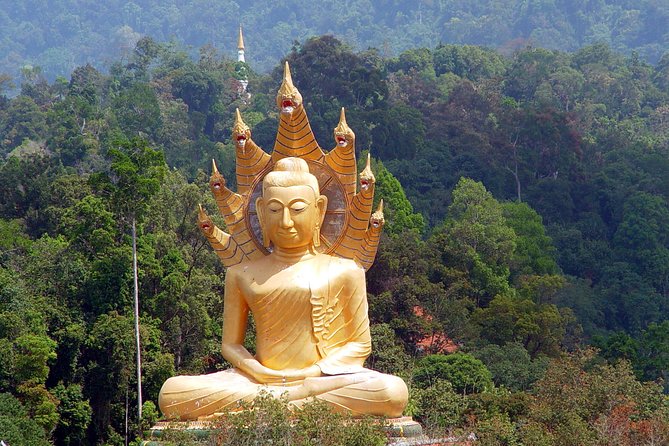
After the first cave climb, you head to Bang Rieng Pagoda Temple, a hilltop stop that feels like a change of mood. This site is described as a combination of Thai, Chinese, and Indian-style influence, so it is not a single-style temple. Instead, it is a visual mix that helps you understand how Thai Buddhism has absorbed different cultural threads over time.
The pagoda sits up high and is known for a huge seated golden Buddha. Expect the architecture to be ornate, and expect time to take it in from different angles as you move through the grounds.
The guide typically sets up the context before you start looking closely. You will get a few insights into Buddhism and why these design choices matter, like where statues are placed, how spaces are used, and what worship practices look like at a real temple, not a staged museum display.
This stop also helps balance the day. Dragon Cave is physical and cave-like, while Bang Rieng Pagoda is open-air and more ceremonial. If you are traveling with family or you just want a breather from heavy stair climbs, this is usually a welcome shift.
Lunch with Phang Nga limestone and mangroves, plus hydration stops
Between temples, you get lunch at a restaurant with major Phang Nga views. The setting is described as overlooking limestone rocks and mangrove forest, so the meal has a sense of place rather than feeling like a forced restaurant detour.
The food is Thai lunch, and it is generally framed as delicious and plentiful. One useful detail: some groups are steered toward dishes that are not too spicy, which can matter if you are heat-sensitive or if you are traveling with kids.
On the comfort side, the tour includes bottled water and soft drinks, and you should expect regular chances to cool off through the day. Reviews also mention cold towels at temple stops, which is exactly the kind of small touch that makes temple touring feel less punishing in warm weather.
If you tend to get carsick, it helps that the day is paced with breaks, and at least one review notes the driver took extra care for a motion sickness situation. The routes include curvy and hilly roads, so if you are prone to nausea, plan ahead with whatever usually helps you.
Manisii Maha Tat Temple: the black Por Than Klai statue and a real blessing moment
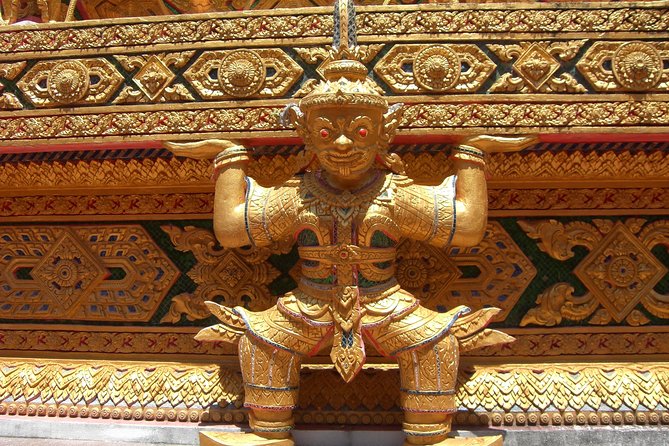
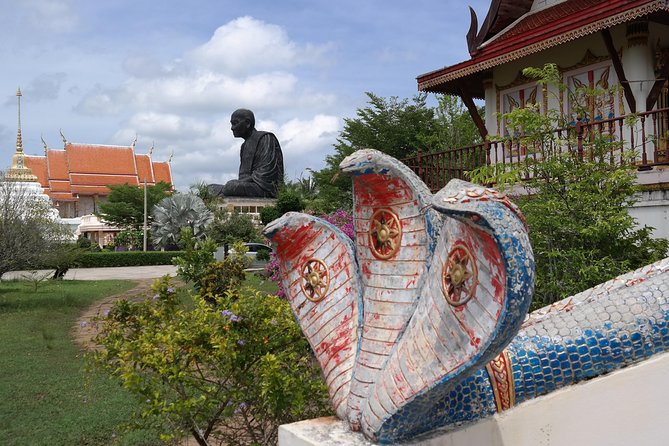
The final stop is Manisii Maha Tat Temple, a site that many people remember most strongly because it feels dramatic. It is known for a massive black statue of monk Por Than Klai and for a beautiful main temple building.
Por Than Klai is listed as one of the most famous monks of his generation, born in 1876 and passed away in 1970. You will also hear the story that whatever he predicted came true. That kind of local legend is often what turns a temple visit into something personal, especially if your guide connects the tale to everyday beliefs.
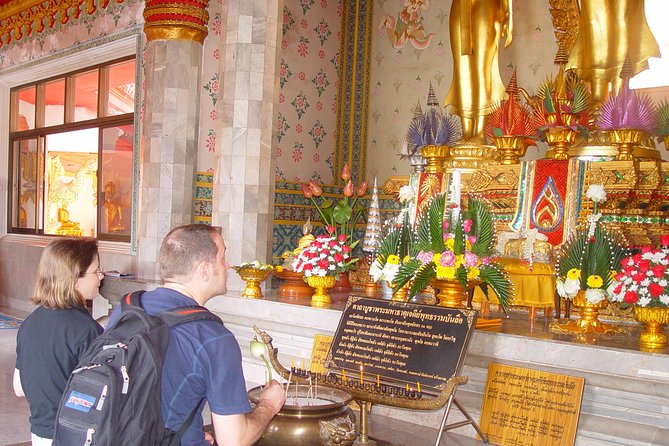
Another reason this stop can stick in your memory is what can happen during the visit. Several reviews mention a blessing moment with the temple monk, including having a bracelet placed on wrists. If you are curious about how Buddhism shows up in concrete gestures, this is where you see it.
As with the other temples, dress code rules apply. Plan to cover up properly before you arrive, so you do not lose time.
Temple etiquette in Thailand: dress code and what to wear
This tour is very clear about temple entry rules, and it is smart to treat them as strict. You will need knees and shoulders covered. That means no shorts and no sleeveless tops for both men and women.
If you show up without the right coverage, you risk being refused entry. Since the temples are the whole point of the day, it is worth packing a light layer or something you can quickly wear over your outfit, especially if you are coming straight from beach time.
Also keep in mind that you are climbing and walking in warm conditions. Even if you dress for temples, choose comfortable shoes. Your goal is to keep moving steadily without slipping or getting sore too fast.
Price and logistics: is $104 good value for a full day?
At $104, you are paying for a full-day guided itinerary with three temple visits, hotel pickup (from the Khuk Khak Beach area), lunch, and an air-conditioned vehicle. You also get bottled water and soft drinks, plus a multilingual local guide.
When you compare that to the cost of doing only one temple plus transport, the value is better than it looks. You are essentially paying for transportation across multiple sites plus guided interpretation that explains what you are seeing, like the herbal medicine practice at Dragon Cave and the Por Than Klai legend at the last temple.
The main trade-off is that it is a full day with driving and a long cave climb. Reviews also note the van can feel cramped when it is full, and one person mentioned an hour of pickup time for other passengers of different nationalities. If you want your day to start quickly and stay super spacious, you might feel that cost.
But if you want a structured cultural day with a guide who can connect temple art to belief and practice, this pricing can make sense.
Who this tour suits best, and who should reconsider
This is best for people who enjoy temple architecture, cultural stories, and a guided explanation rather than a solo temple wander. It is also a good fit for first-timers in the Phang Nga area, because the three stops give you a quick snapshot of how Thai Buddhism can look and feel across different influences.
It suits families with older kids who can handle a stair climb and a long day. One review described the experience as enjoyable for teens, including ages 17 and 14.
If you are traveling with very young kids, you might find the day long and information-heavy, because it is still three major stops packed into one outing. Also, if you are sensitive to motion sickness, the curvy roads mean you should take steps to manage it.
For most people with moderate fitness, the key challenge is the first temple climb. The day is still broken up by drives and lunch, and you will have ways to cool down.
Should you book the Amazing 3 Temples tour?
Book it if you want one day that covers three standout temples around Phang Nga, with a real Thai lunch and a guide who explains both the religion and the details. I think it is especially worth it if temple architecture and stories are your thing, because the stops are varied, not repetitive.
Skip or adjust plans if you hate long van rides, get uncomfortable in tight seating, or cannot handle stairs. Also, if you are coming from the beach, make sure you sort the dress code early so you do not lose time to last-minute changes.
If you are the kind of traveler who likes learning while you walk, this is a strong value way to see Khao Lak’s temple side without having to figure out transport yourself.
FAQ
What time does the tour start and how long is it?
The activity starts around 8:00 am, and hotel pickup is typically around 8:30 am. The total duration is about 8 hours.
Where is the tour meeting point?
The tour starts near Khuk Khak Beach in Khao Lak, and the experience ends back at the meeting point.
Which temples are included in the itinerary?
You visit Dragon Cave Temple, Bang Rieng Pagoda Temple, and Manisii Maha Tat Temple.
Is lunch included?
Yes. Lunch is included and it is Thai food, served with views over Phang Nga limestone rocks and mangrove forest.
What dress code do I need for temple visits?
You must cover your knees and shoulders. No shorts or sleeveless tops, and entry can be refused if you do not follow these rules.
Is bottled water provided?
Yes. Bottled water is provided, along with soft drinks.
Is the tour physically demanding?
It is best for people with moderate physical fitness. The first temple includes a significant stair climb.
How many people are in the group?
The tour has a maximum of 12 travelers.
Are children allowed?
Children must be accompanied by an adult.
What is the cancellation policy and what if weather is poor?
You can cancel up to 24 hours in advance for a full refund. If it is canceled due to poor weather, you will be offered a different date or a full refund.
What else made it into the Thailand notebook
What else made it into the Khao Lak notebook
- Similan Islands Snorkeling Tour By Sea Star Andaman From Khao Lak
★ 4.0 · 24 reviews - Tsunami Museum + Temple + Old Town + Street Food Market
★ 5.0 · 24 reviews - Similan Islands Snorkeling Tour By Speed Catamaran From Khao Lak
★ 4.5 · 25 reviews - James Bond – Phang Nga with canoe (Full-Day Tour)
★ 4.5 · 25 reviews - Similan Islands Snorkel Tour by Fantastic Similan Travel from Khao Lak
★ 3.5 · 26 reviews - Surin Islands- Early Bird Snorkeltour from Khao Lak in English, French, German, Italian
★ 4.5 · 28 reviews